
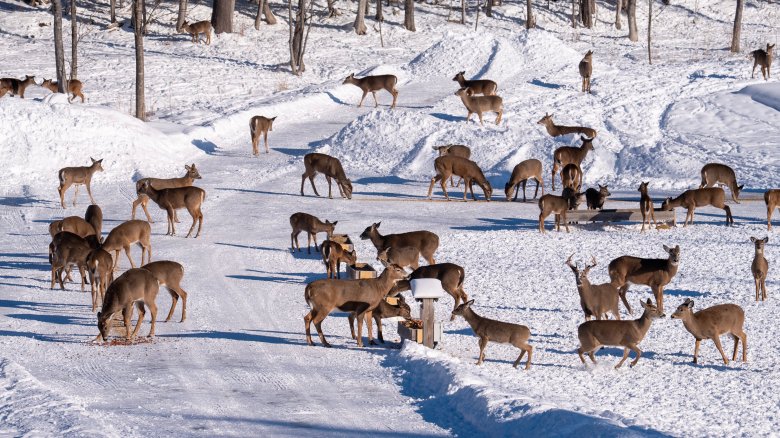
BROWNVILLE – When Brenda Grimes of Waterville wants to know the time, she doesn’t check her watch. The 71-year-old glances at her television, where a livestream of deer plays at all hours.
There must be 125 deer by the troughs this morning, she thinks, watching the TV screen as the first brave few edge out of the woods toward the piles of oats. Ice crunches under their hooves. A man fills the final trough, waves to the camera on his way out. Grimes settles into her armchair to enjoy the show.
It’s 8:56 a.m., and in Brownville, that means feeding time.
Every winter for 17 years, the McMahon family has fed deer on their property in Brownville to help sustain them through northern Maine’s coldest months.
But not everyone is a fan of the food pantry. State officials, for one, say it’s more natural to let deer fend for themselves.
Maine residents are allowed to feed deer between Dec. 16 and April 30, but the Maine Department of Inland Fisheries and Wildlife does not condone it. They say feeding deer can disrupt migration, impact long-term behavior and cause deer to starve because they can’t digest certain foods, like hay.
The McMahons say they follow state guidelines on what’s safe to give them. What started with a few bags of oats each morning has grown into an industrial-level feeding operation, attracting thousands of live viewers to the McMahons’ YouTube channel, Brownville’s Food Pantry for Deer.
“We get hundreds of donations, and thank-yous, praising us: ‘Thank god, it makes me so calm,’” said Richard McMahon, 79. “I think it’s all because it’s real, and it’s close to nature.”
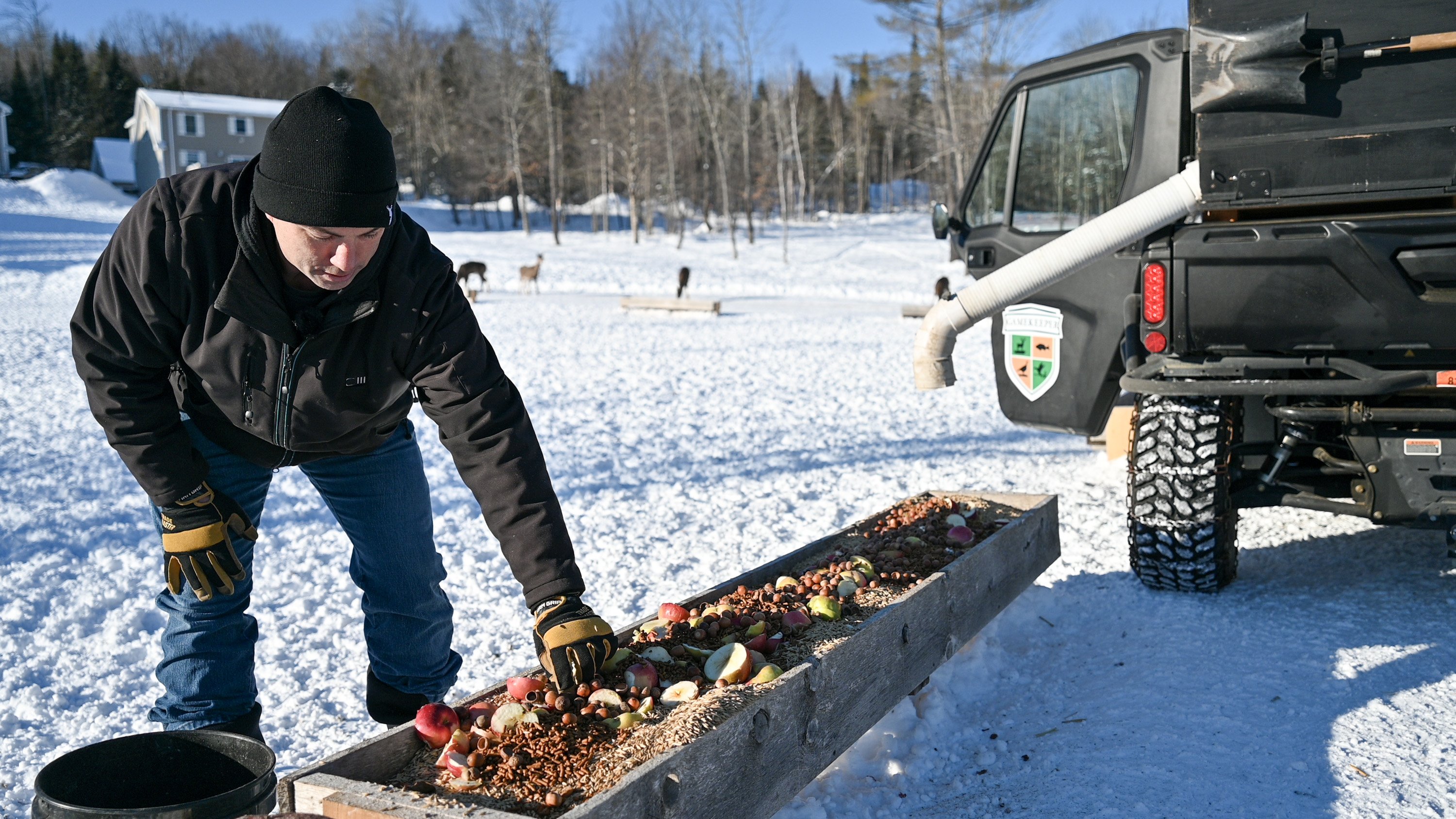 Randy McMahon picks out sticks and acorn caps from a trough already filled with oats while feeding the deer Wednesday January 28, 2026 at BrownvilleÕs Food Pantry For Deer in Brownville. (Joe Phelan/Staff Photographer)
Deer normally eat woody browse, a high-fiber amalgamation of twigs, leaves, vines and other finds from the forest floor, which humans can simulate with maple, ash and birch, or artificial feed. The state says feed should be distributed in several places to reduce competition among the deer.
If people do choose to feed deer, they should locate feeding sites near softwood tree cover and at least half a mile away from plowed roads, to minimize the risk of them being killed by passing vehicles.
“Obviously when you concentrate animals, it’s an unnatural situation, so they’re more stressed,” said Bob Humphrey, a wildlife biologist and Registered Maine Guide. “That burns up more energy, potentially puts them in a worse situation for winter survival.
“Worse, though, is if you concentrate them in and around the trappings of man, near roads, near pets.”
MORNING ROUTINE
The McMahons, who have 12 acres of property off a dead-end road, say they get little vehicle traffic, except for the people who pull off the road to watch the deer, a number that has increased with the livestream’s success.
The family used to run a construction business, but after experiencing health issues, Richard’s 42-year-old son, Randy, began focusing on expanding the pantry full-time.
The family puts out 1,000 pounds of oats every morning, which comes out to around 3 to 5 pounds per deer. Around 8:30 a.m., they drive an all-terrain vehicle, the “oat-mobile,” down to the troughs, which are spread out. They slice apples in half and add acorns to simulate woody browse.
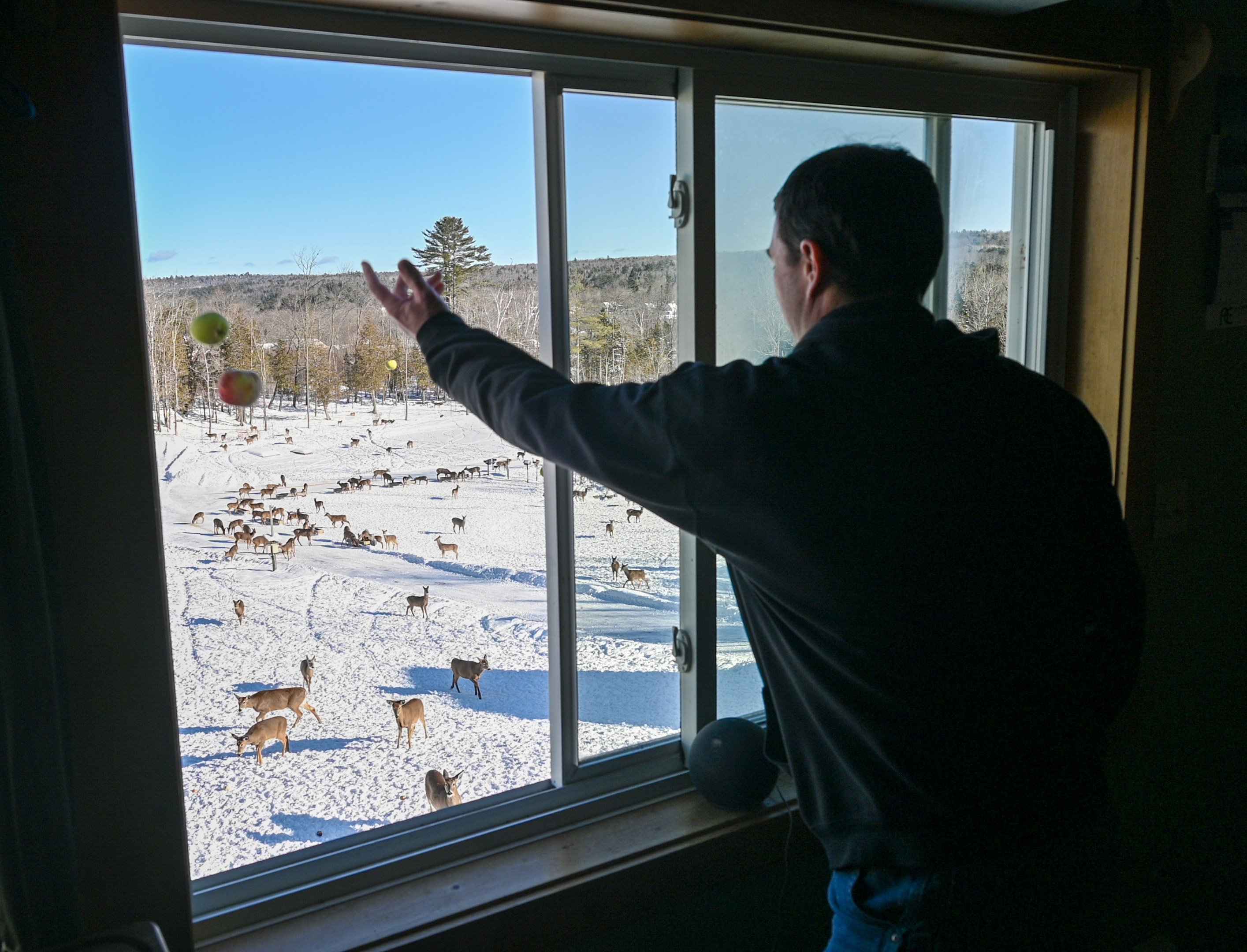 Randy McMahon tosses apples from a second-floor window to waiting deer. (Joe Phelan/Staff Photographer)
It’s all captured on camera. In 2016, Randy McMahon set up cameras around the yard and began streaming to YouTube to help pay for the deer pantry’s operating costs, which include $25,000 spent on feed each year.
Donations from viewers have covered feeding costs for nine years in a row, said Randy.
Their revenue from the YouTube channel was $101,266 in 2025. Randy said they’ve made $57,121 in just the last 90 days. The channel sees millions of streaming hours from fans like restaurants and pet owners who leave it up all day. People watch from 172 countries, and there’s always a spike in viewership between 8:30 and 9 a.m.
Brenda Grimes is one of those fans. “I get up in the morning, my regular routine: I knit, I check my phone and then I see what the deer are doing,” Grimes said.
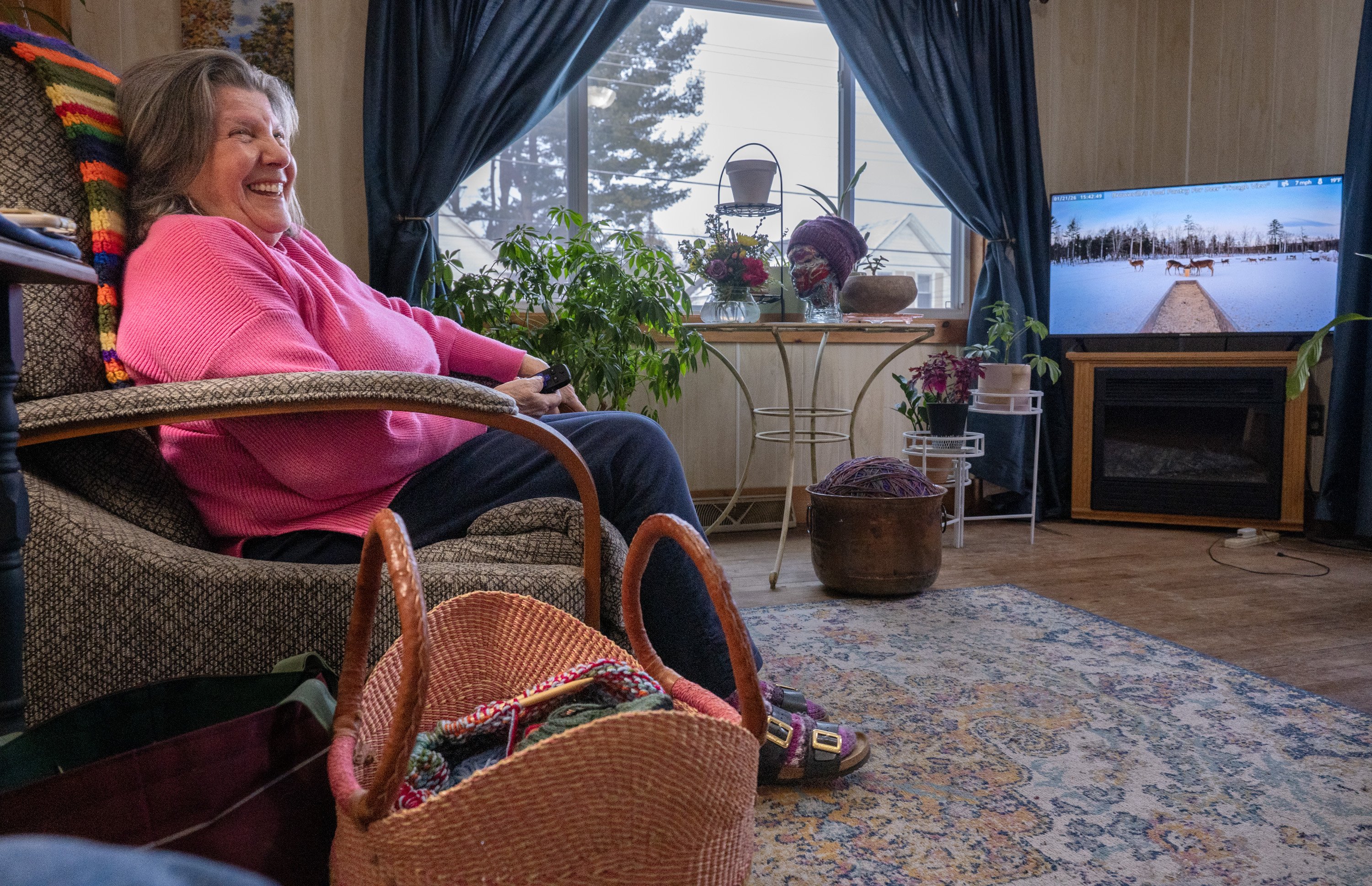 Brenda Grimes talks about Brownville’s Food Pantry For Deer Youtube channel during an interview Wednesday January 21, 2026 in her Waterville home. (Joe Phelan/Staff Photographer)
‘HOW WOULD YOU STOP IT?’
The family says they’re the latest stewards of a tradition dating back to the 1980s, when a Brownville resident started siphoning grain from a railcar that parked overnight in town, prompting hundreds of deer to gather there. The McMahons started feeding the deer in their yard in 2007.
Maine lost almost half of its deer population to severe winters, habitat changes and increased hunting pressure in the 1960s, but a series of mild winters and new harvest restrictions later in the century promoted rapid population growth, mostly in southern Maine. It’s been more difficult for the herd to grow in northern Maine, which state officials assigned a “severe” winter rating, signifying an above-average deer mortality rate, in the winter of 2023-24.
There are between one and five deer per square mile in the northern part of the state, compared to 15 to 40 in central and southern Maine.
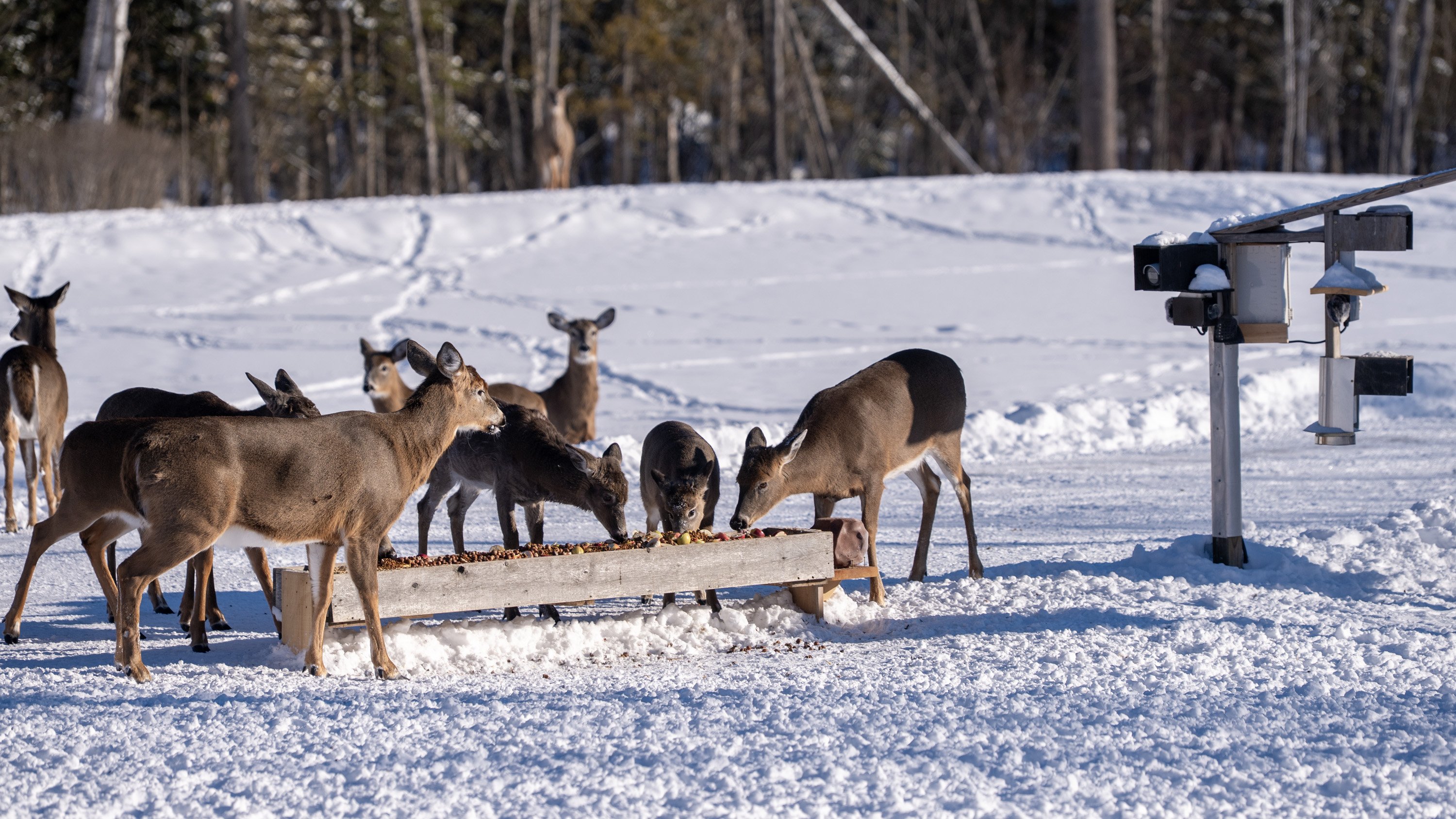 A camera broadcasts feeding deer on Youtube. (Joe Phelan/Staff Photographer)
Experts say people seeking to feed deer should start early in the winter, and keep feeding them until spring greenery emerges.
But Humphrey said most of the state’s deer can survive a regular season without human intervention.
“People tend to think: ‘OK, I put the food out, then the deer show up, eat the food and go lay down,’” he said. “But in most cases, if they come to a feeding situation, they probably arrive with a near full belly from stuff that they just get in the environment.”
Richard McMahon said feeding Brownville’s deer for decades has made them more dependent.
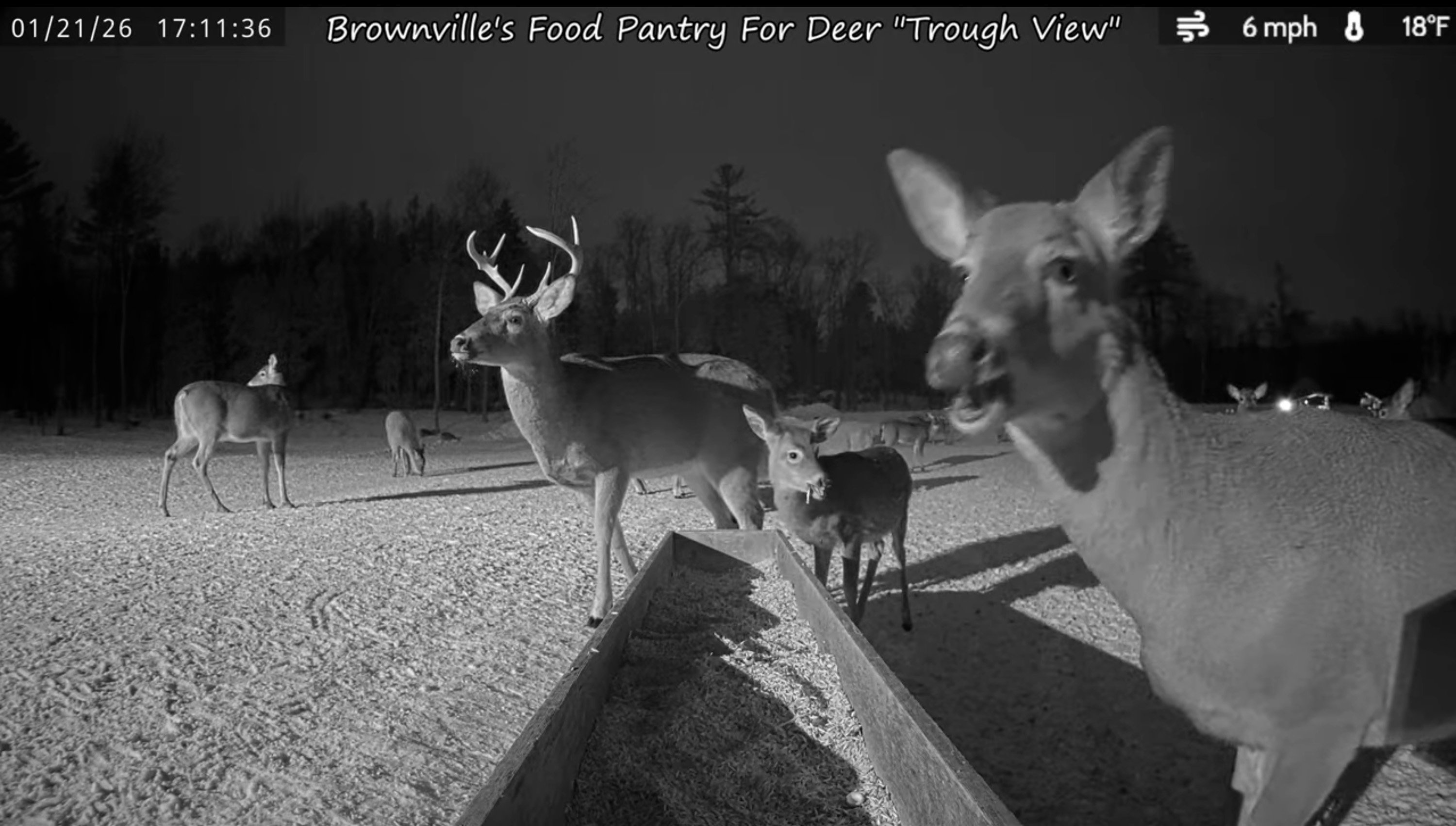 A screenshot from the Brownville’s Food Pantry For Deer Youtube channel.
“How would you stop it?” he said. “These deer are all going to show up, they were all born and they’ve spent their whole life here every winter. I don’t see how to shut it off.”
The McMahons say they are the first to tell other hopeful deer feeders what not to do. No corn, no hay and certainly no bread. If someone asks for advice on how to start a feeding program, they get a recommendation to contact their local wildlife biologist instead.
Maine officials say concentrating deer in a smaller area can increase their vulnerability to predators or disease, including chronic wasting disease, a fatal, contagious neurological disease sometimes referred to as zombie deer disease. There haven’t been any cases reported in Maine, but the disease has been found in Pennsylvania, New York and Quebec.
Randy says he reaches out to a wildlife biologist anytime he notices a deer has an injury. If chronic wasting disease reached Maine, he said, “we would know it immediately.”
KEEPING TRACK OF THE DEER
Each morning, Richard sits in front of split-screen computer monitors, swiveling his manual broadcast camera and pointing out interesting deer activity to viewers, who flood the channel with comments. Several moderators – fans who have special YouTube privileges – help the McMahons by responding to questions in real time.
One moderator lives in Japan, one watches from New Zealand and another, a Massachusetts plumber named Gary, chimes in during his breaks.
Some of the deer have names, too. Viewers can pick out Shaggy by his skin condition, Champ by the bullet wound in his shoulder and Vincent’s towering antlers that haven’t fallen off yet, a rarity this far into winter. Deer from 40 or 50 miles away are occasionally recognized in Brownville.
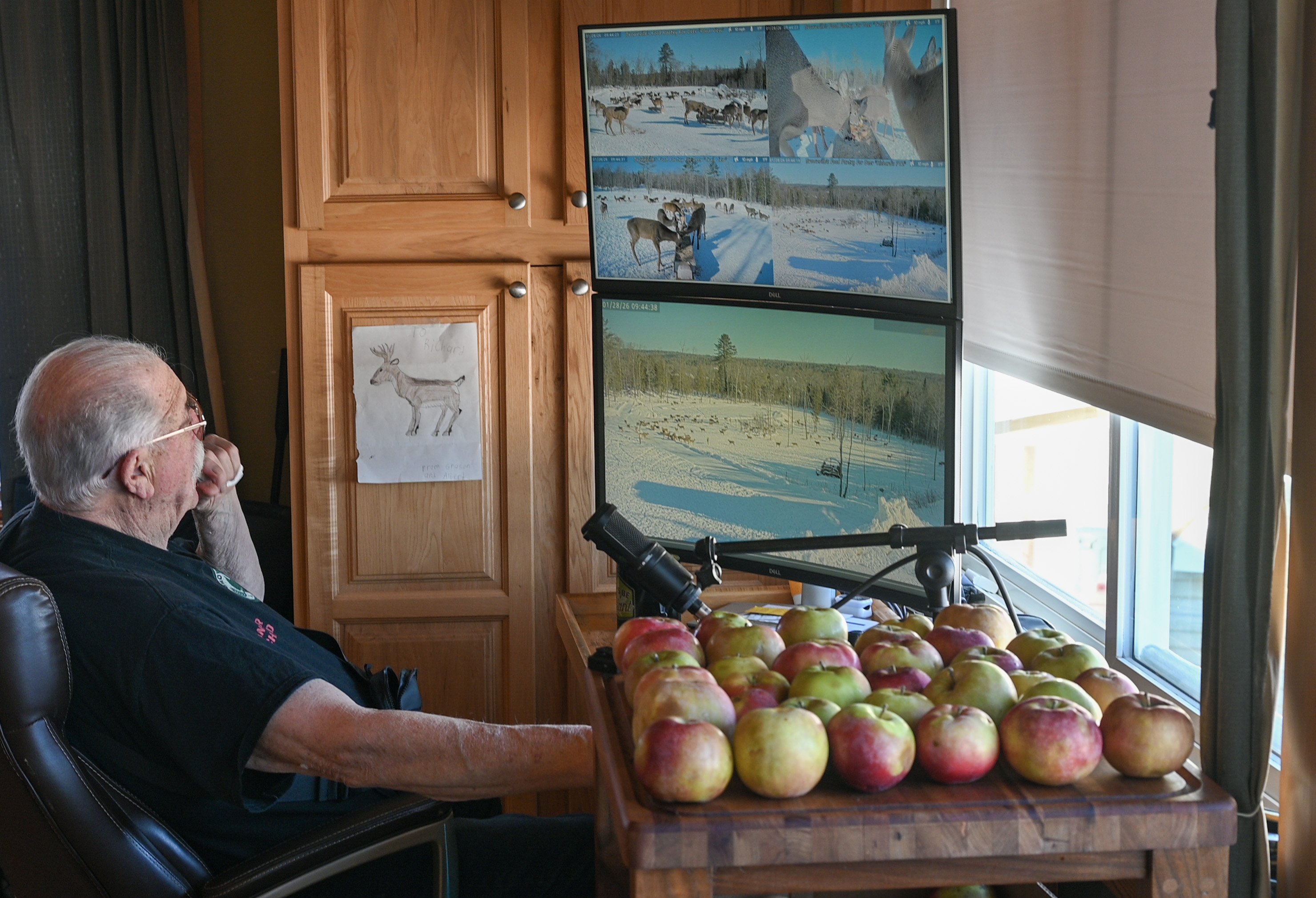 Richard McMahon watches the feed from five cameras on Jan. 28. The cameras broadcast a livestream on the Youtube channel Brownville’s Food Pantry For Deer. (Joe Phelan/Staff Photographer)
The family hopes state biologists will eventually help them move the pantry into nearby woods, away from roads and rail tracks. Although the state approved an electronic deer-tagging pilot program for hunting purposes last year, Randy McMahon says wider tracking could mean a more accurate understanding of Maine’s herd count and population health. They’d also know exactly how much feed to buy.
Toward early April, the deer leave on their own. Bird feeder cameras replace the trough views, spring greenery shrugs off its winter coat and sap flows in the trees.
The livestream will return when the first deer finds its way back to Brownville next winter.
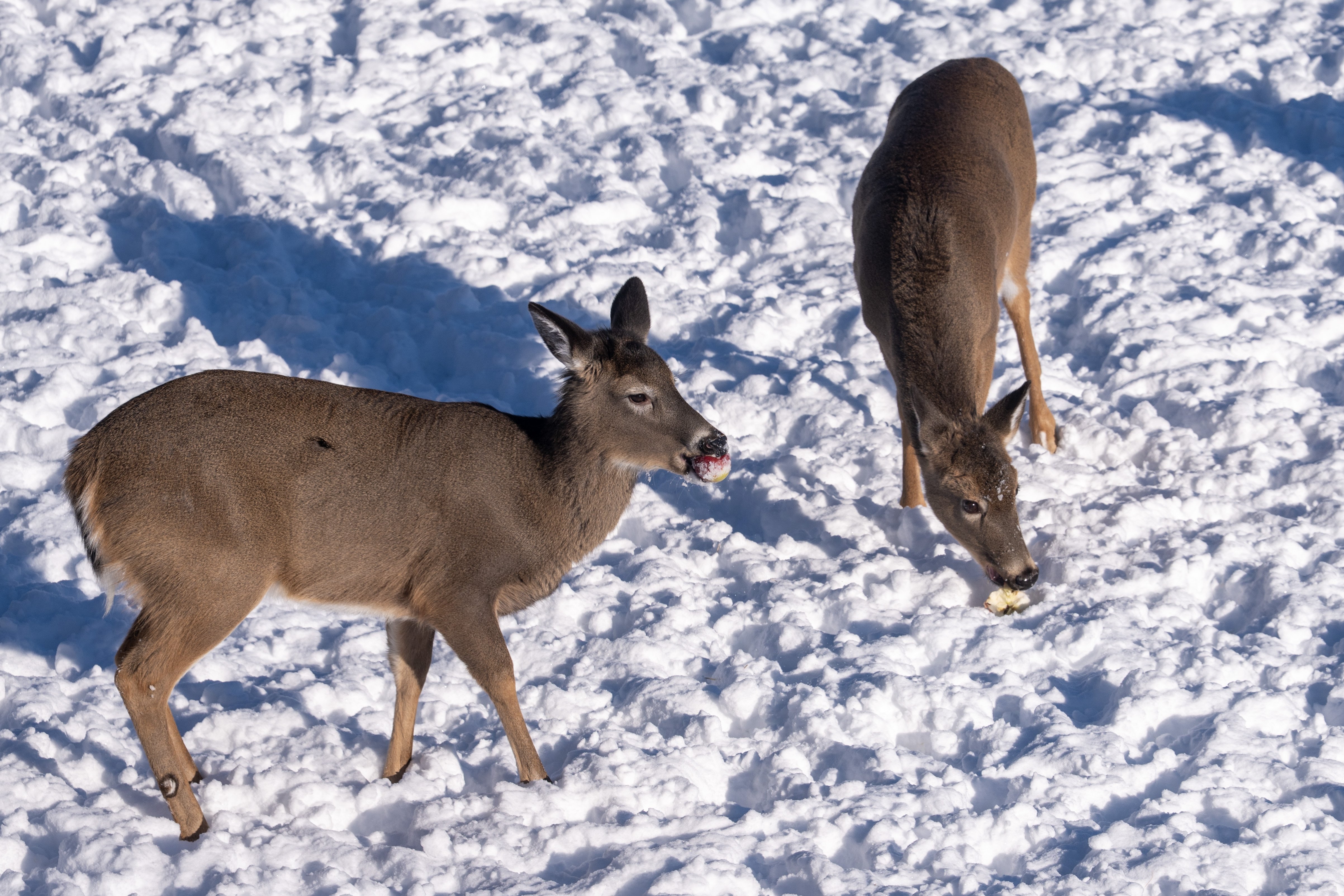 Deer feed on apples tossed from a window in Brownville. (Joe Phelan/Staff Photographer)