

 We all worry about the smog outside, right? The haze over Delhi or Mumbai makes headlines, people start wearing masks, and everyone suddenly feels the need to check the AQI app. But inside our homes, offices, or classrooms, air can be just as bad, sometimes worse, and hardly anyone talks about it.Indoor air pollution comes from all sorts of everyday things like cooking on a traditional stove, burning incense, smoking, using certain cleaning products, and/ or poor ventilation that can fill a room with tiny particles that our lungs don’t like. Mold, dust mites, and pet dander add to the mix. The scary part? Unlike outdoor pollution, we don’t see it. It’s invisible, sneaky, and slowly affecting our health.
Stop Ignoring The AQI Index: Long Exposure To Polluted Air Can Increase Your Risk Of Heart Attack
Why isn’t it discussed more? For one, it’s not dramatic. People don’t drop dead from indoor air in a single day. The effects, cough, asthma, allergies, even long-term risks like heart or lung disease, show up slowly. Also, we assume home is safe. We trust our living space, so it doesn’t feel like a “public” problem. And then there’s awareness. Most people don’t know what causes indoor pollution or how bad it can get. You might blame a persistent cough on dust, seasonal flu, or a cold, without realizing the air in your own living room could be a big culprit.
Indoor air pollution: The unseen threat to women and children in India
Indoor air pollution (IAP) from biomass fuels like wood, dung, and crop residue is a leading cause of respiratory and cardiovascular diseases in India, especially in rural households where close to 60% still rely on solid fuels. It contributes to 4-6% of the national disease burden, causing 400,000-550,000 premature deaths annually, mainly from COPD, pneumonia, and heart disease. Recent studies emphasize PM2.5 spikes during cooking (up to 3-4x outdoor levels) and links to heightened CVD risk. 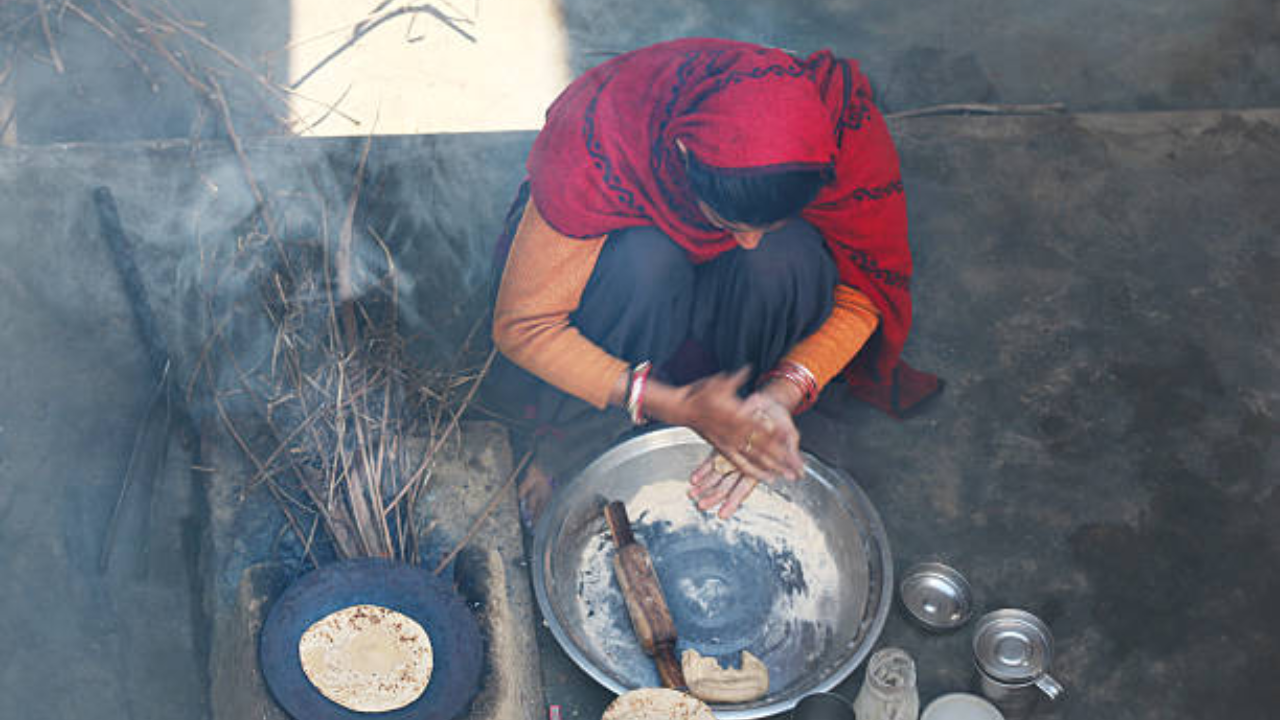 A 2014 study by Mukkannawar et al. measured indoor air quality (PM2.5, PM10) in 33 rural Pune households using chullah (biomass), kerosene stoves, and LPG. Chullahs (wood/dung) produced the highest levels of pollutants, PM2.5 at 1218 μg/m³, PM10 at 2993 μg/m³—exceeding NAAQS 81-97% of time. Kerosene produced 416/491 μg/m³ and LPG produced 122/341 μg/m³. PM2.5 was 25-66% of PM10, posing respiratory/cardiovascular disease risks. Biomass dominates rural India (90% households), urging cleaner fuels. Ventilation, fuel quantity, and residents influenced levels (p<0.01).Another 2024 reviewby Chavan et al. (published inJournal of Education and Health Promotion) analysed 10 studies on indoor air pollution health impacts in India. Biomass fuels cause respiratory symptoms (56.8%, e.g., eye irritation, COPD in women), CVD (ST depression down 74% post-cleaner stoves), adverse pregnancy outcomes (low birth weight, CHD), cognitive impairment (2x risk in elderly), and developmental delays. The study found that women and children are most vulnerable to pollutants.To create more awareness on indoor air pollution TOI Health spoke to Dr. Vijay Kumar Agrawal, Director- Pulmonology & Critical Care, Yatharth Super Speciality Hospital Faridabad. The doctor has discussed the different causes of indoor air pollution, the risks and what can be done to prevent the risks.
What are the most common household activities or products that contribute to indoor air pollution in Indian homes?
Indoor air quality in homes across India is mainly impacted by smoke from cooking, chemicals being released as fumes (e.g., from incense), and dust/other allergens (including household dust). The primary source of indoor air pollution is biomass fuel (e.g., wood, coal, cow dung) being used in traditional chulhas. Other significant sources of indoor air pollution are tobacco smoke, mosquito coils, incense sticks, candles, cleaning chemicals, room fresheners, dampness, dust mites and mold.
Are certain homes—like those in urban apartments or rural kitchens—more at risk for indoor air pollution? Why?
The amount of risk from indoor air pollution differs depending on the type of place where it occurs. In rural and semi-urban kitchens that use biomass fuels, pollution levels are generally higher due to the pollution produced due to heavy use of these polluting fuels combined with inadequate ventilation. In addition, women and children are the most affected by this pollution.While urban apartments generally have a cleaner type of fuel source like gas, a polluted apartment environment can still occur because of pollution created within the apartment due to stove, candles, aerosol cleaner, incense, and traffic outside that is trapped within a space that could not allow adequate air flow for the removal of pollutants.
How does indoor air pollution in India compare to outdoor air pollution in terms of health impact?
Indoor air is polluted by something that can harm you as much as outdoor pollution. This is true because you spend most of your time inside. You are exposing yourself to long-term exposure to indoor air pollution which increases your risk of developing asthma, COPD, respiratory infections, allergic reactions, and heart disease. Biomass smoke has been shown to severely impact the development of the lungs in children. Pregnant women, elderly individuals, and those who suffer from existing lung or heart conditions are the most vulnerable to these types of pollutants.
What simple changes can people make at home to reduce exposure without major renovations?
A person may reduce their exposures to indoor air pollutants by improving ventilation during cooking when using exhaust fans and/or keeping the windows open. Switching to clean fuels (e.g., liquefied petroleum gas [LPG] or induction cook tops) may also reduce exposure. In addition, eliminate the use of smoking indoors and reduce the use of mosquito coils and incense. Other recommended strategies for reducing exposure include the following, reduce the use of aerosol cleaners, wet mop all floors; control dampness within an apartment; early detection & repair of leaks, allow ample sunlight to enter the apartment; provide sufficient air flow through the apartment to help control dust and mould.Medical experts consulted This article includes expert inputs shared with TOI Health by: Dr. Vijay Kumar Agrawal, Director- Pulmonology & Critical Care, Yatharth Super Speciality Hospital FaridabadInputs were used to explain how dangerous is indoor air pollution for our health and what are some simple preventive measures to minimise the risk.