

But the breakup is getting messy, faster. In response to the breakup, Brigham’s corporate parent, Mass General Brigham, opened its own cancer institute, and now plans to stop using physician assistants from Dana-Farber, leaving their employment status uncertain.
According to an internal email sent by Dana-Farber, Brigham plans to phase out Dana-Farber physician assistants beginning in April, with all of them gone by the end of the year. Though the PAs are employed by Dana-Farber, Brigham contracts with them to work in its hospital.
 Renderings of the new Dana-Farber Cancer Institute cancer hospital building slated to open in 2031.Dana-Farber Cancer Institute
The notice, from chief medical officer Dr. Craig Bunnell, said Dana-Farber tried to reach “a mutually agreed upon transition plan” for “an organized ramping down” of the PAs’ service. Things apparently went in a different direction.
“This is not the transition approach we were working toward,” he said, adding the underline for emphasis.
Mass General Brigham, meanwhile, fired its own shot at Dana-Farber, offering the physician assistants a quick end to their employment limbo by coming to work for the Brigham.
“We want you on our team,” Mass General Brigham executives wrote in an internal email sent to Dana-Farber physician assistants.
Tensions between the two organizations had been simmering for years, as Dana-Farber clamored for its own hospital and vision and as Mass General Brigham integrated its flagship hospitals, the Brigham, and Massachusetts General Hospital. But if the fight over physician assistants is indicative, the cleaving of the institutions has ratcheted up the heat on their competition, and it will likely only get hotter.
“This is the kind of dynamic that leads to a medical arms race,” said Gary J. Young, a professor of strategic management and health care systems at Northeastern University. “Each one is competing furiously to cement their position as a leading cancer center. That will require big investment.”
The situation could lead to higher health care spending in the short term, Young said, as both institutions invest in technology and recruiting staff and high-priced oncologists. Long-term, such a consolidation of cancer care in Boston could take higher-margin patients away from community hospitals, weakening those already financially fragile institutions while raising overall health care spending.
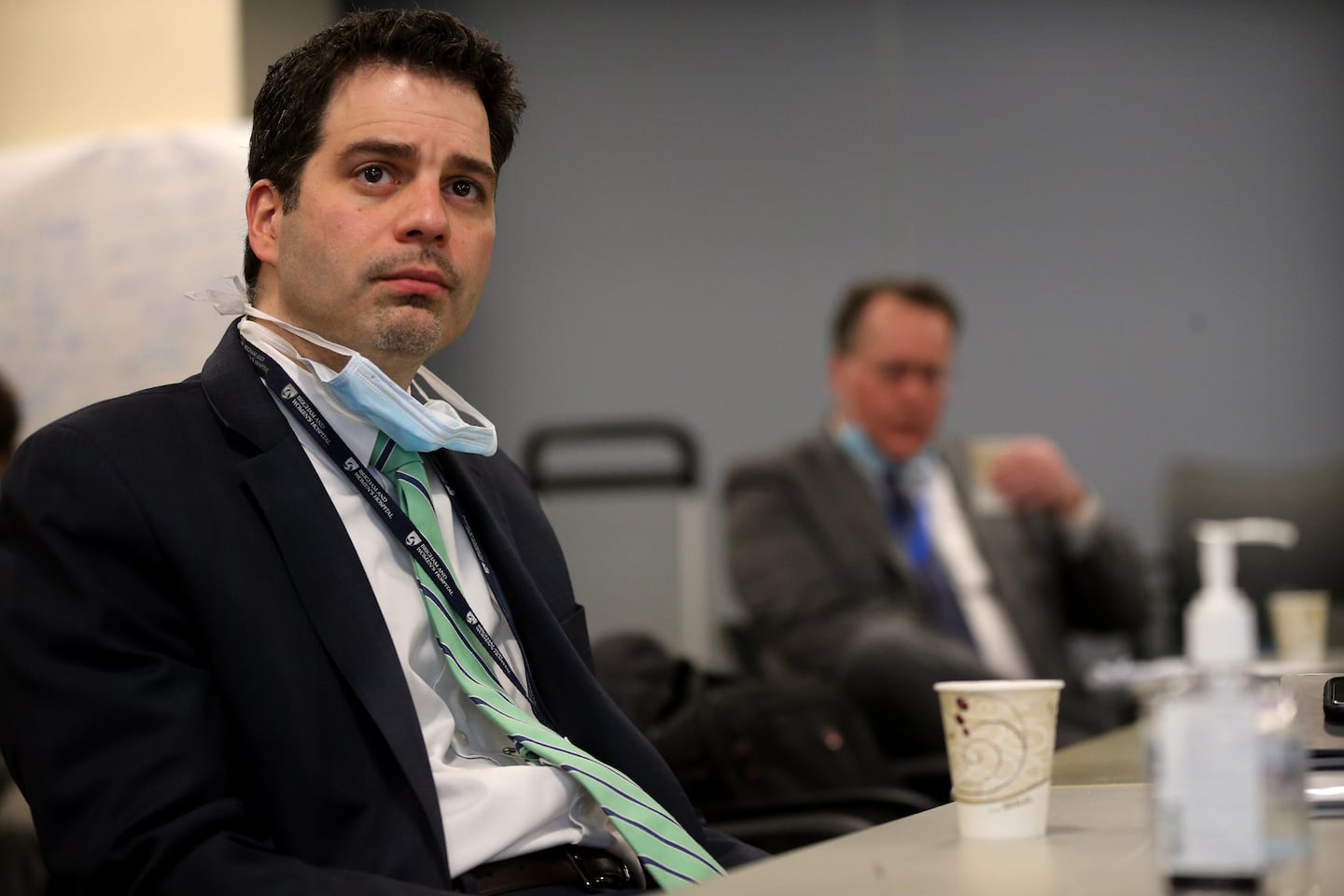 Brigham and Women’s Hospital chief operating officer Kevin Giordano listened during a team meeting in 2020.Craig F. Walker/Globe Staff
Already, there are signs of such kinds of outlays. Mass General Brigham is offering MGH physician assistants extra pay to pick up shifts at a new MGB cancer unit at the Brigham, the Massachusetts Nurses Association said.
Publicly, both hospitals said they are focused on patients, declining to comment on the specifics of behind-the-scenes negotiations.
The unwinding is particularly complicated for two organizations that have for so long worked hand in glove, symbolized by the bridge uniting the institutions. For decades, Dana-Farber patients received outpatient care, including chemotherapy infusions, at Dana-Farber, but inpatient care at Brigham and Women’s. Dana-Farber physicians provided oncology care to patients while they were at the Brigham, while Brigham doctors provided surgical oncology, radiation oncology therapy, radiology, and pathology services.
But separating these co-mingled efforts will be a challenge, and hints at other likely tussles to come.
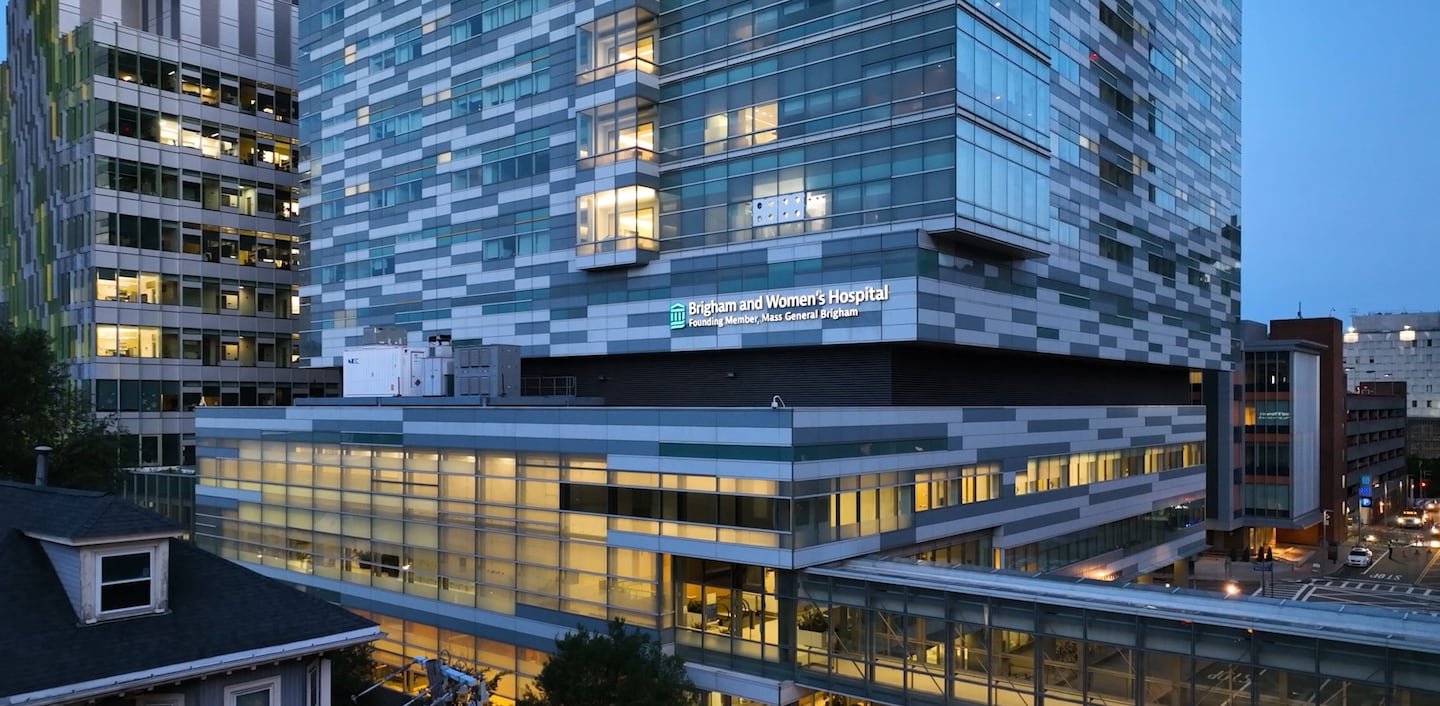 Mass General Brigham’s renderings of renovated floors for cancer care at Brigham and Women’s Hospital.Courtesy Mass General Brigham
As of yet, the sides have not yet signed an agreement on transition services, leaving many details of how and when things will wind down in the air.
Dana-Farber and Brigham had been working toward developing such an agreement that would minimize disruption of staff and prioritize patient care, Bunnell said in his email.
Mass General Brigham’s recent move, however, “represents a departure from those expectations,” his email said.
Yet Mass General Brigham positioned its efforts as a way to prepare for Dana-Farber’s uncertain timeline for moving patients and staff elsewhere, saying the Brigham must have staffed, trained, and stable teams to support inpatient oncology patients by 2028. Though the institutions had created a working group to make a transition plan, the work was still pending, the Brigham email said.
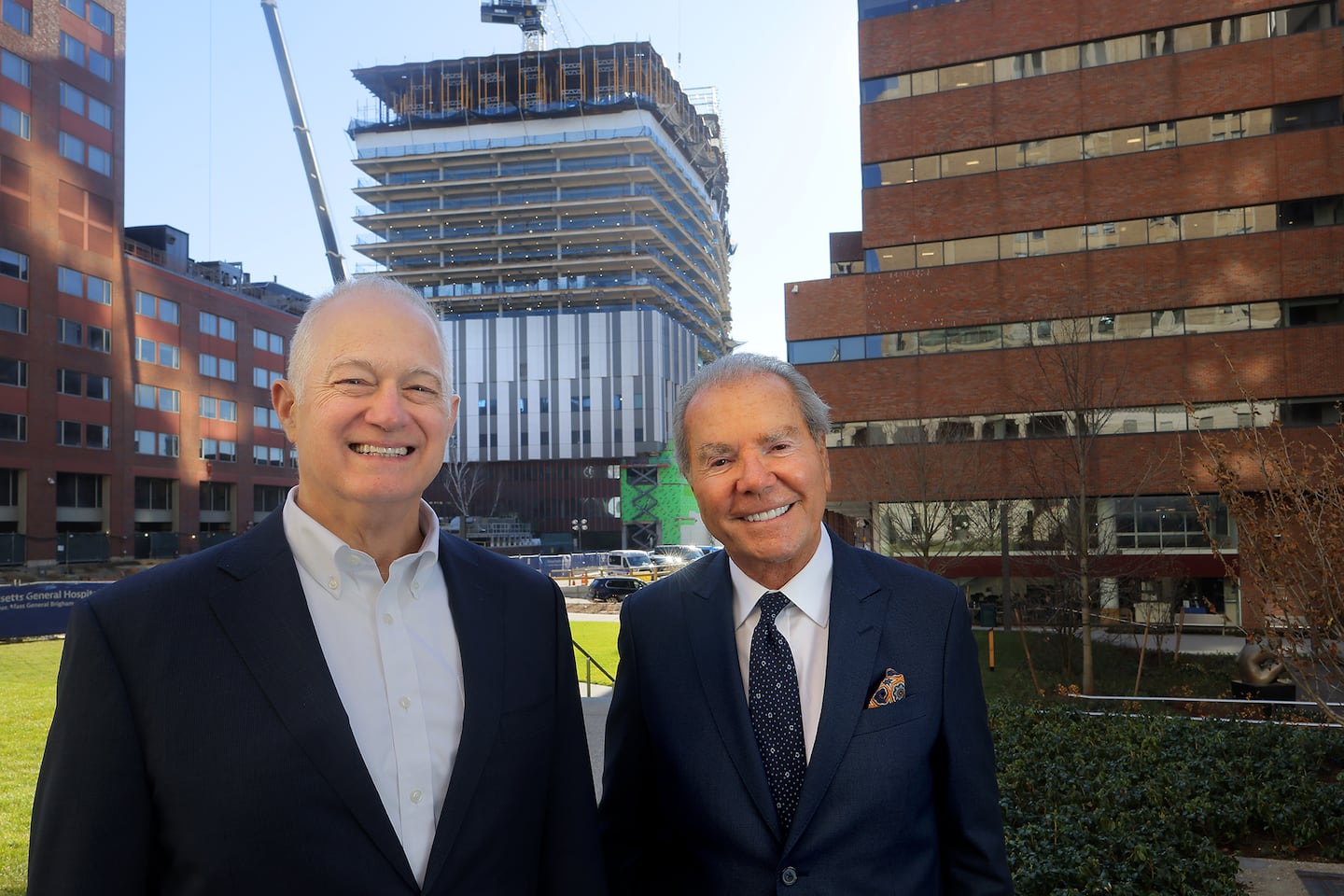 Local auto seller Herb Chambers donated $100 million for a cancer treatment tower that will bear his name at Mass. General Hospital. Chambers, right, was photographed with MGH president of Academic Medical Centers Dr. David Brown with the new tower behind them. Lane Turner/Globe Staff
It was unclear how many physician assistants would be affected by these changes, or whether Dana-Farber is providing job stability for those who chose to stay with the cancer hospital.
Even if Mass General Brigham entices more clinicians into its in-house cancer initiative, that program is itself in flux. Most of the 200 advanced practice providers at Mass General Brigham Cancer Institute — a group that includes physician assistants and nurse practitioners — recently signed cards to unionize with the Massachusetts Nurses Association.
As the organizations untangle care, Mass General Brigham is ramping up its own cancer care efforts, with the opening of a new inpatient oncology unit.
Last week, both Dana-Farber and Mass General Brigham also announced competing large donations focused on cancer care.
As the sides untangle care, they are also hyper aware of the financial implications.
And the stakes are high. MGB has previously said 40 percent of all Brigham surgeries are related to cancer. Brigham wants to keep that care and cement its position in the cancer treatment space, Young said, but for Dana-Farber, cancer is its entire business.
The provider dispute is only the latest tete-a-tete between the two institutions. As Dana-Farber sought permissions to build its new $1.7 billion cancer hospital, Mass General Brigham raised objections. In the aftermath of the split, MGB announced a new cancer initiative between its two flagship hospitals, with $400 million behind it.
Many of the regulatory and other approvals are behind Dana-Farber and BI. But the uncertainty and difficulty of realizing these new visions may only be starting.
Whether patients will notice those tensions, and how health insurers dictate which facility their members can access, remains to be seen.
“They want patients to see care as being largely seamless,” Young said. “But it will be a trick to pull off, because behind the scenes, there will be some substantial challenges.”
Jessica Bartlett can be reached at jessica.bartlett@globe.com. Follow her @ByJessBartlett.