
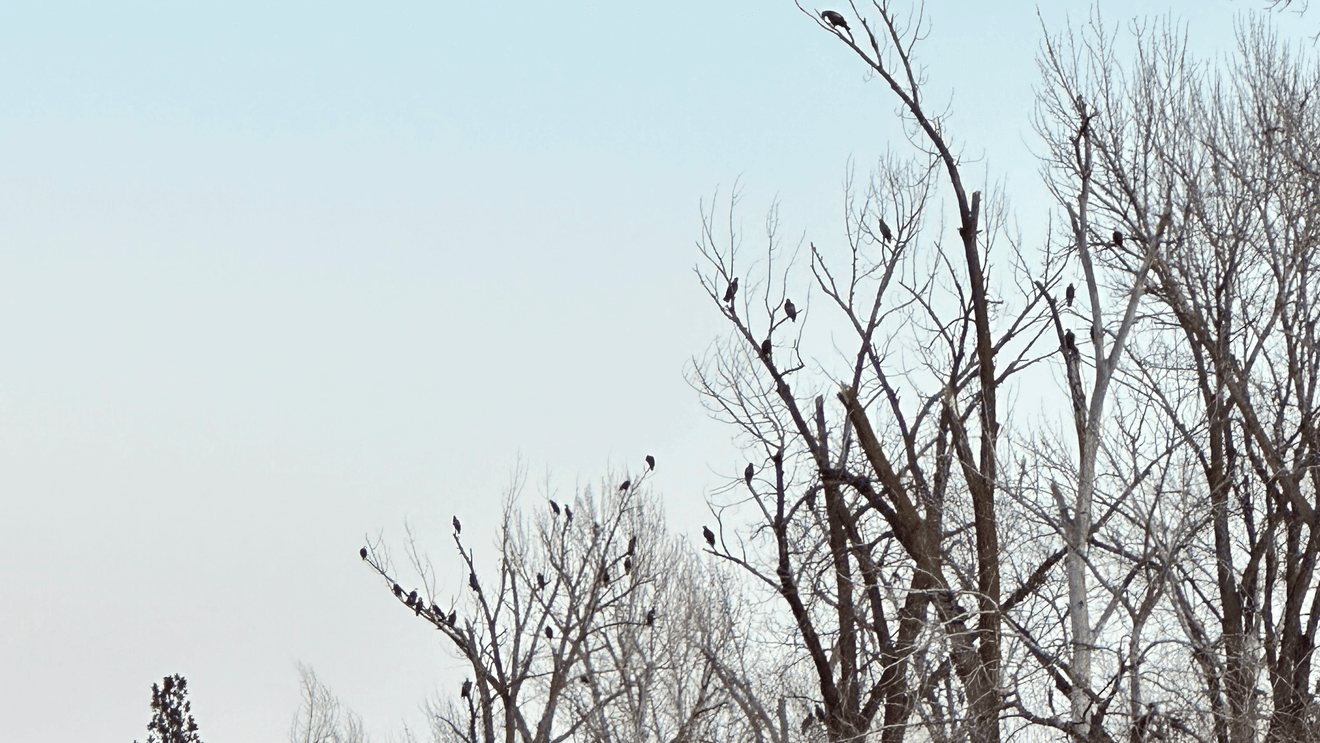
MISSOULA, Mont. — If you want the best bald eagle show in Missoula, set your watch for the last hour of daylight.
As the sun drops, eagles start to glide low over the river corridor and into the trees near the Kelly Island area on the Clark Fork River, a state fishing access site known for its cottonwood filled river bottoms and wildlife.
“It’s pretty amazing,” said Rob Domenech, founder and executive director of the Raptor View Research Institute in Missoula. “I’ve been hearing about this roost for years.”
The gathering is what researchers call a communal roost, a place where multiple eagles return night after night to rest, then disperse again when the morning comes.
Domenech says a big piece of what people are seeing in the Missoula Valley is seasonal movement.
“The bulk of these birds, I would guess, are northern birds, Canadian birds that come down here to winter,” he said.
In other words, not every eagle you see is a year-round resident. Many are wintering birds that shift south when conditions up north make finding food harder.
Domenech says the timing can vary, but the pattern is familiar.
“They really come in strong in October and November,” he said. “And in March, we’ll see the main push leave our area, heading to points north.”
If you have ever watched the trees fill up at dusk, you have probably asked the same question Domenech hears all the time.
“Everybody wants to know why are these eagles roosting communally in this particular area and why do eagles and other raptors roost communally, period,” he said. “And it’s a good question, and I don’t think anyone has clear answers on it.”
What researchers do have are strong theories. Domenech says communal roosts can include a mix of practical and social benefits.
“Communal roost could be associated with information sharing, information stealing,” he said. “In certain species, more eyes means safety.”
He also points to the river bottom itself. On especially cold days, conditions along the cottonwoods and water can be a little more forgiving than exposed hillsides.
Kelly Island is a large, undeveloped island habitat on the Clark Fork River with cottonwood bottoms and backwater sloughs that attract birds, especially in winter and spring.
Domenech says this stretch has what eagles need to settle in for the night: mature trees, a relatively quiet pocket of habitat and a central location that lets birds fan out to feed during the day and then return.
“One thought is that this cottonwood riparian complex is a relatively remote area for our region, so it offers a certain amount of quiet safety,” he said.
He added that what makes this roost especially interesting is how consistent the routine is.
“One thing we know is here they’re coming in the evening to roost and then they’re dispersing throughout the day to different areas around the valley,” Domenech said.
Domenech says there is another misunderstanding he runs into constantly when people are watching the evening flight.
Young bald eagles, up to about four years old, can be brown and blotchy and look a lot like golden eagles at a glance. That is why many people confidently call out “golden” when a big dark eagle swings in.
Domenech says it is also a very common misconception that golden eagles are bigger.
In reality, the two species overlap in size. He says young bald eagles can even look bulkier than adults because their first set of feathers is longer and still filling out, which gives them that big, shaggy look.
The simplest advice is also the most useful.
If you want to watch eagles arrive, do not come at midday. Come near sunset, when the birds start sliding into the cottonwoods to settle in for the night.
Domenech’s tip for anyone watching: bring binoculars, keep your distance so the birds can settle in and watch for leg bands that can help researchers learn where these eagles have been.
For the best chance to see the flight in, plan to be near the Kelly Island area for the last half hour of light.
Domenech says eagle watchers can genuinely help research by paying attention to bands and any auxiliary markers.
“I always say keep an eye out for bands on these birds because they could tell us so much about the history of the bird,” he said. “That number is much like a fingerprint that identifies that individual bird.”
If you can safely document a band, try to record:
The full band number, or even a partial readAny color band details (color, letters, numbers)Date and timeLocation (as specific as possible)A photo or video from a respectful distance
Domenech is the founder and executive director of Raptor View Research Institute, a Missoula based nonprofit founded in 2004.
You can learn more about RVRI’s work and find contact information at raptorview.org (phone and email are listed on the site).
For band and marker reporting, start at reportband.gov, which is linked from the Bird Banding Lab’s site.
For access site details on Kelly Island or Tower Street Trailhead and background on the habitat, you can also check Montana Fish, Wildlife and Parks’ site listing and the statewide visitor listing.