
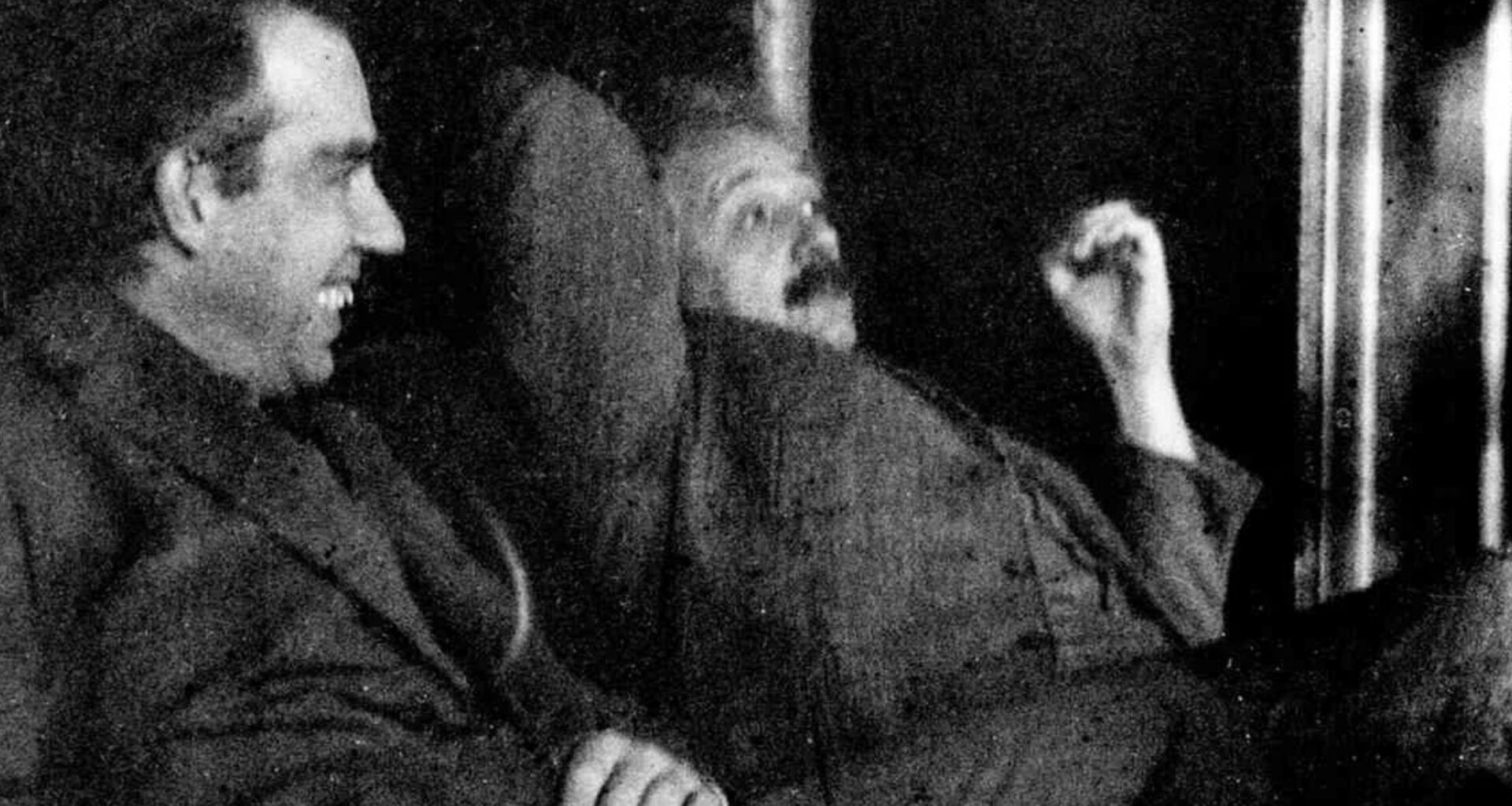
A single trapped atom has been used to carry out Einstein’s proposed test of the double-slit experiment, a challenge he believed could expose a flaw in quantum mechanics by measuring its recoil
The laboratory result was decisive: any attempt to track a particle’s path destroys the interference pattern, confirming Niels Bohr’s claim that wave-like and particle-like behavior cannot be observed at the same time.
Atoms, slits, and recoils

Inside a modern experiment that released photons, the smallest units of light, one at a time instead of as a beam, a movable barrier actually recoiled each time a photon struck it.
By controlling that recoil, Jian-Wei Pan at the University of Science and Technology of China (USTC) turned an old argument into data.
Pan’s team tuned how sharply the barrier’s kick could be read, and the famous fringes faded on cue.
Once the kick became informative enough, the pattern lost contrast, demonstrating Bohr’s claim that gaining path information eliminates interference.
Einstein’s movable slit
Back in 1927 Brussels, Einstein sketched a slit mounted on springs, so a passing photon would jolt it.
Measuring the slit’s recoil would reveal which route the photon took, even as the two-slit screen showed interference.
A December 1926 letter captured his stance on randomness, and it fueled the experiment he carried to Brussels.
“I am at all events convinced that He does not play dice,” wrote Albert Einstein, rejecting the idea that nature is governed by irreducible randomness.
Bohr’s strict limit
Bohr answered that the recoil measurement would not stay gentle, because the slit had to be movable.
Any tighter readout of that kick would scramble another property, a rule later called complementarity, wave and particle views cannot fully coexist.
Instead of blaming clumsy tools, Bohr treated the tradeoff as baked into nature, not a temporary engineering problem.
His reply turned Einstein’s plan into a prediction in which clearer path clues would steadily erase the interference pattern.
An atom as slit
Recreating the movable slit required something far lighter than a metal plate, yet steady enough to control.
A rubidium atom filled the role when the USTC team held it in an optical tweezer, a laser trap that grips tiny objects.
Cooling the atom close to its lowest motion kept its recoil honest, instead of being drowned out by random jitters.
With that ultralight target, the experiment finally matched Einstein’s premise, where the slit itself behaved like a quantum object.
Tuning the atom’s recoil
Changing the trap’s depth let the researchers decide how free the atom was to move during each hit.
In a deeper trap, confinement rose and the atom gained more momentum uncertainty, the spread of possible push values.
Loosening the trap did the opposite and made the recoil easier to read, because the atom started calmer.
Such tuning gave the team a clean dial between vague recoil and sharp recoil, without swapping materials or geometry.
Where interference goes
On the detector screen, bright and dark stripes appeared when the photon had no clear path record.
As recoil information sharpened, the stripes lost visibility, the contrast between bright and dark bands, until they nearly washed out.
“By varying the trap depth of the optical tweezer, we dynamically tune the atom’s intrinsic momentum uncertainty, thus enabling the observation of a gradual shift in the visibility of single-photon interference,” wrote Pan.
The smooth fade showed the old debate was never about opinion, but about what information a measurement creates.
Entanglement sets visibility
Behind that fading pattern sat a link between the photon and the moving slit, not just a blurry disturbance.
When the photon kicked the atom, quantum entanglement, a shared state where outcomes stay connected, linked their motion.
Stronger entanglement carried clearer path clues in the atom’s motion, and reduced the overlap needed for interference.
At the point where the atom became a trustworthy recorder, the experiment forced a choice between paths and stripes.
Noise versus limits
Even with careful tuning, not every loss of fringes came from quantum rules, because atoms can heat up.
Random heating adds classical noise, extra jitter from ordinary motion, and can blur a pattern for the wrong reason.
By measuring how heating changed the atom’s motion, the team separated that blur from the recoil effect they wanted.
The separation revealed a quantum-to-classical transition, where quantum behavior gave way to everyday statistics, once ordinary noise took over.
Why an atom’s recoil matters
Beyond settling a 98-year argument, the setup gives researchers a controlled way to study what measurement does.
Future runs at USTC can map the joint state directly and track decoherence, the gradual loss of quantum links to surroundings.
Scaling the slit’s mass upward should reveal when recoil becomes negligible, and when entanglement fades into plain noise.
Such results could guide designs for quantum sensors and networks, where extra information often comes at a real cost.
This single-atom remake turned a philosophical clash into a tunable system that shows how knowledge reshapes outcomes.
As teams push the same control to heavier objects, the boundary between quantum and everyday physics should become easier to pin down.
The study is published in Physical Review Letters.
—–
Like what you read? Subscribe to our newsletter for engaging articles, exclusive content, and the latest updates.
Check us out on EarthSnap, a free app brought to you by Eric Ralls and Earth.com.
—–