
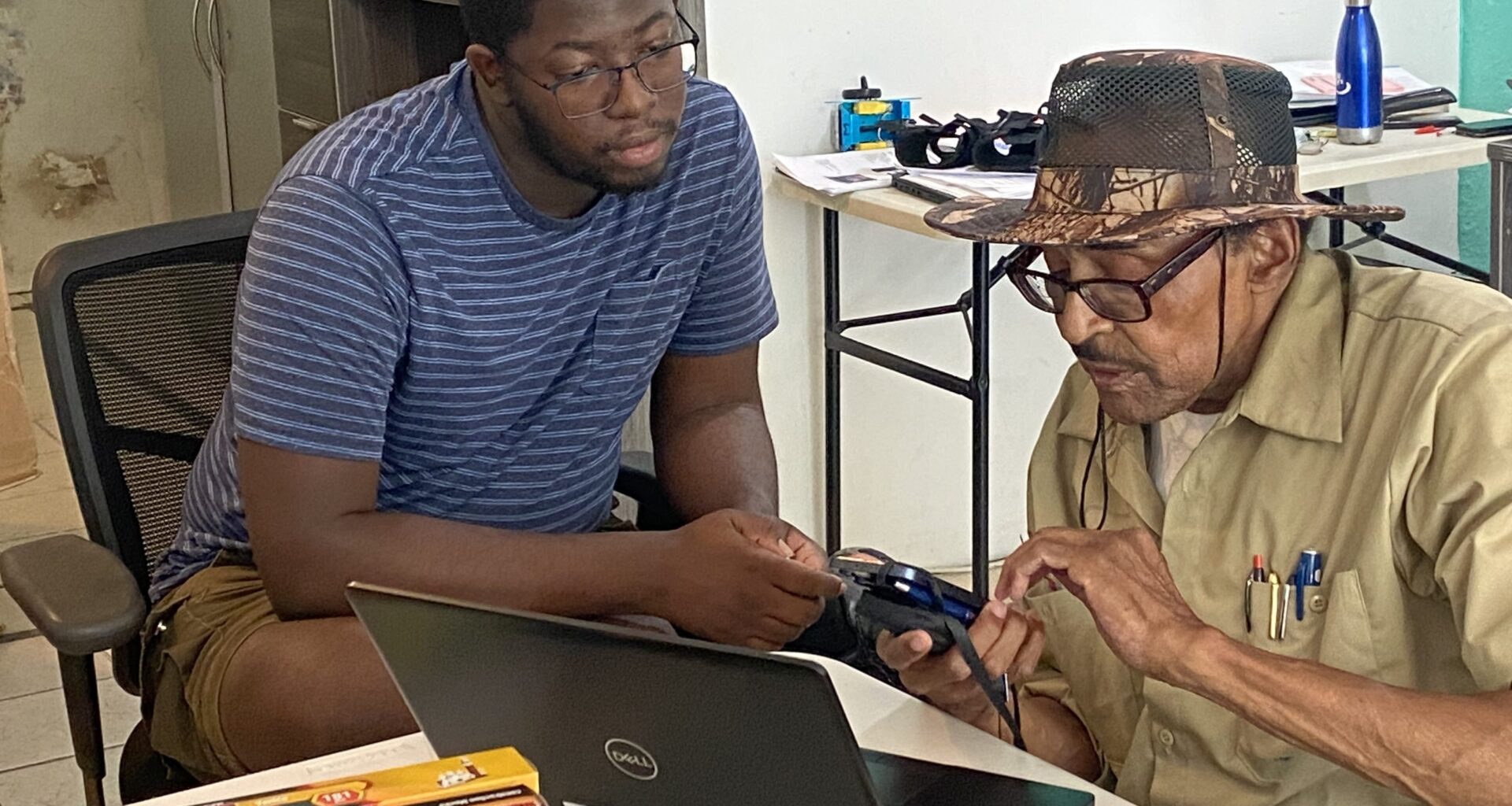
Robert C. Bradford rushes into the Ashbury Senior Community Computing Center in Glenville, laptop in hand. He’s looking a little worried and needs help.
The Glenville resident was attempting to fill out an online application for auto repair financing, when — poof! — it disappeared. A few minutes later, Bradford was meeting with Caleb Boyd, a digital navigator who helps people who are having difficulty completing online tasks. He patiently guided Bradford through completing his application. The tension in Bradford’s face had vanished.
“I don’t know what I would have done without his help,” said Bradford, adding that online was the only way to submit the application. “I really need this financing.”
We’re 100% local. 100% nonprofit.
Signal Cleveland is powered by people like you. We don’t have a paywall, and we don’t take orders from corporate media. Support our nonprofit newsroom with a tax-deductible donation today.
The Northeast Ohio Regional Digital Opportunity Alliance, which includes the Cuyahoga County Public Library, was planning to increase the number of digital navigators this year. It was part of a larger plan to expand efforts to close the digital equity gap. In many Greater Cleveland communities, many residents don’t have the computer skills needed to do such things as apply for a job, use MyChart or handle other matters that increasingly can only be performed online.
From Cleveland City Hall to Cuyahoga County Council, our free daily newsletter provides you with essential local government news.
More than 25,000 Clevelanders stay informed with Signals 216. Join them.
“*” indicates required fields
In May, the Trump administration canceled millions in federal digital equity funding, funds the president said were illegal, unconstitutional and “woke handouts based on race.” Federally funded programs such as the Ohio Digital Inclusion Grant Program aim to help several populations, including rural residents, veterans and racial and ethnic minorities. Now, the local alliance’s plan to expand has been placed on hold. Instead of about 10 digital navigators throughout Cuyahoga County, there are about half that number. CCPL avoided laying off digital navigators after three found jobs within the library system.
The alliance, which also includes partners in Lorain County, is not deterred by the federal funding being canceled and will look for other options, said Rebecca Ranallo, CCPL’s literacy and learning director. These include non-government grants and other funding. The alliance’s partners in Cuyahoga County had previously received both federal and local foundation grants.
“It is work that we will find a way to keep going because it is important to our ability to build a Northeast Ohio where residents can thrive,” she said.
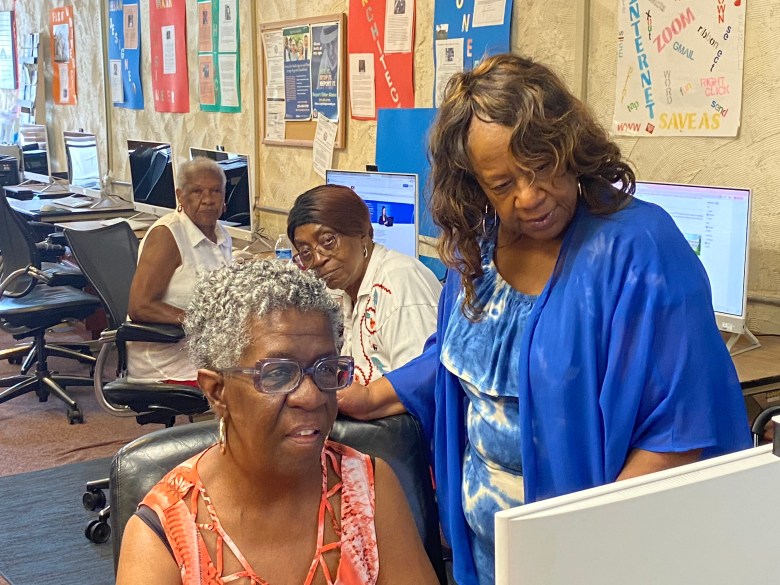 Wanda Davis, founder and executive director of Ashbury Senior Community Computing Center (ASC3) in Glenville (in blue) helps client Cynthia Felder of Glenville. Phyllis McLaughlin of Cleveland Heights (wearing glasses) and Priscilla Moore of Lee-Harvard observe. Credit: Olivera Perkins
The Ashbury digital literacy training center, also called ASC3, is one of the community-based groups with which CCPL partners. ASC3 runs several satellite locations and also has a center on Lorain Avenue. which opened about two years ago. Wanda Davis, ASC3’s founder and executive director, was counting on the federal digital equity funding to pay for three additional digital navigators. Her program currently has five digital navigators. After the federal funding was canceled, ASC3 stepped up fundraising. If the program can’t make up for the lost federal dollars, Davis said, layoffs could occur and the Lorain Avenue center could close.
ASC3 has two centers in Cleveland
11011 Ashbury Avenue
9926 Lorain Avenue
Classes are also held at other locations
Find class locations using this map
Young people can benefit from digital navigators, too
ASC3 programs serve not only seniors but people of all ages, including teens. Filling slots in its digital literary and other programs has never been a problem, Davis said. She said demand is probably higher now than it has been at any time since the Ashbury Avenue location opened in 2002.
During the pandemic many tasks that had been done with an in-person option, from submitting loan applications to even medical visits, moved online. As the capacity to do even more things online increases, government offices and businesses continue to limit or abandon in-person, phone and mail options. This is leaving many without computers, internet access, and most important, online skills woefully behind, she said.
Bradford used to avoid online options for conducting personal business. Back then, he didn’t have a computer or internet service. As more things became online only, he decided to take his first digital literacy course this year at ASC3. Bradford said the one-on-one help he has received from digital navigators has been key to his learning how to do such things as internet searches and applying for programs online. ASC3 helps clients get free or low-cost computers and assists them in signing up for high-quality, low-cost internet service.
One of the grants the alliance applied for was the $9 million Digital Equity Competitive Grant through the National Telecommunications and Information Administration. The application had made it to the last round of the selection process and things were looking promising, Ranallo said. Then, the funding was canceled. The grant would have been used to expand outreach efforts, hire more digital navigators and purchase laptops.
Boyd, one of the digital navigators, leads a program for young people at ASC3.
“A lot of younger people will understand how to use technology in so far as it relates to entertainment-based things,” Boyd said. “When it comes to things that are very important … things that you need to know to be able to do good research. Things that you need to know to be able to develop good critical thinking skills. Things that will help you once you become an adult … those skills are just not there.”
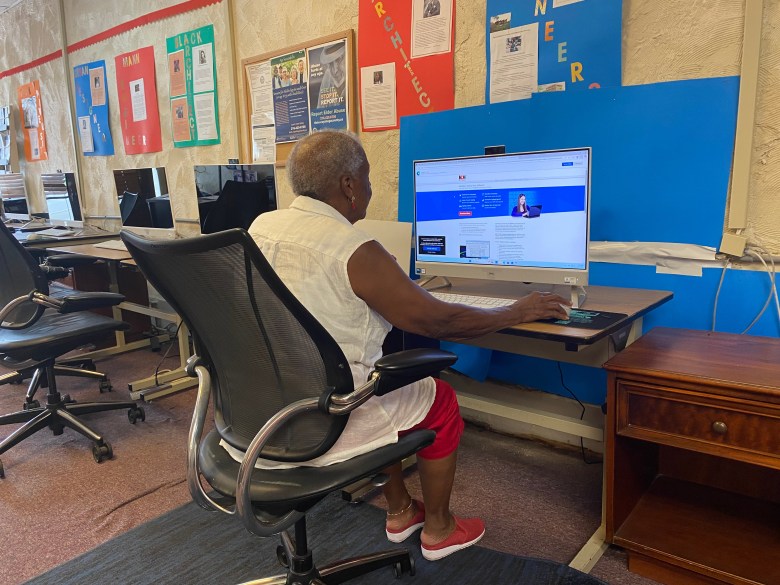 Priscilla Moore of Lee-Harvard is a client at the Ashbury Senior Community Computing Center (ASC3) on Ashbury Avenue in Glenville. Credit: Olivera Perkins
ASC3’s clients love learning even when class isn’t in session
ASC3 doesn’t usually hold digital literacy courses during the summer, but that doesn’t stop clients from showing up to get help during open lab or from a digital navigator.
On a recent weekday afternoon, Davis was in one of the computer labs with three women who have been coming to the program for years. They included Cynthia Felder of Glenville, Phyllis McLaughlin of Cleveland Heights and Priscilla Moore of Lee-Harvard.
McLaughlin said the individualized help is what has kept her coming back. She said she had started at another digital literary program but wasn’t able to master online skills to her satisfaction because there wasn’t much one-on-one help.
Moore said she is relying on one-on-one help from Davis and a digital navigator to learn how to do household budgeting using an Excel spreadsheet.
Felder has been coming for 10 years and will continue to come.
“I don’t know everything about computers, and technology is forever changing,” she said. “I want to stay up on things.”
It’s not surprising that ASC3 gets such positive feedback. Davis shaped her homegrown program, which has taught more than 10,000 people computer skills in more than two decades, with community input. She helped develop the digital navigators program based on interactions with clients.
Davis got the idea for the center after her mother was required to use a computer during a medical appointment at a local hospital. Her mother had difficulty using the computer, and the hospital hadn’t assigned staff to help people who were having difficulty. (Davis intervened after she found out what was happening and urged the hospital to assign staff to help clients.)
Before starting ASC3, Davis, a former community organizer, surveyed residents to see if they would be interested in a digital literacy center in the neighborhood. When they said yes, she started fundraising for computers, furniture and other equipment. She and her husband, Percel Davis, then went about converting three storefronts, where they had once run a hardware store and also an ice cream shop, into ASC3.
“Ever since, we have had a waiting list,” she said.
Davis said she won’t allow the canceled federal funding to detract her from her mission.
“We’re determined to continue digital inclusion activities for everyone,” she said.

For Clevelanders. Supported by Clevelanders.
Every day, our team tells the stories that reflect Greater Cleveland — its people, its challenges, and its progress. We hold leaders accountable, highlight real solutions, and make sure all voices are heard.
This year alone, we’ve broken down how policy decisions at the state and federal levels are impacting our neighborhoods. We’ve kept a close watch on local politics — from the race for Cleveland City Council to the decisions behind Mayor Justin Bibb’s $2.1 billion budget proposal.
We’re also celebrating Clevelanders — like Stefan Johnson, aka “Snack Daddy,” who became a viral sensation, and the East Tech High School robotics team chasing their championship dreams.
We’re here for Cleveland, every single day. And we’re always free to read.
Support from readers like you powers this work. Make a tax-deductible donation today and help us keep Cleveland connected and informed.

With gratitude,
Lila Mills
Editor-in-Chief
Signal Cleveland