
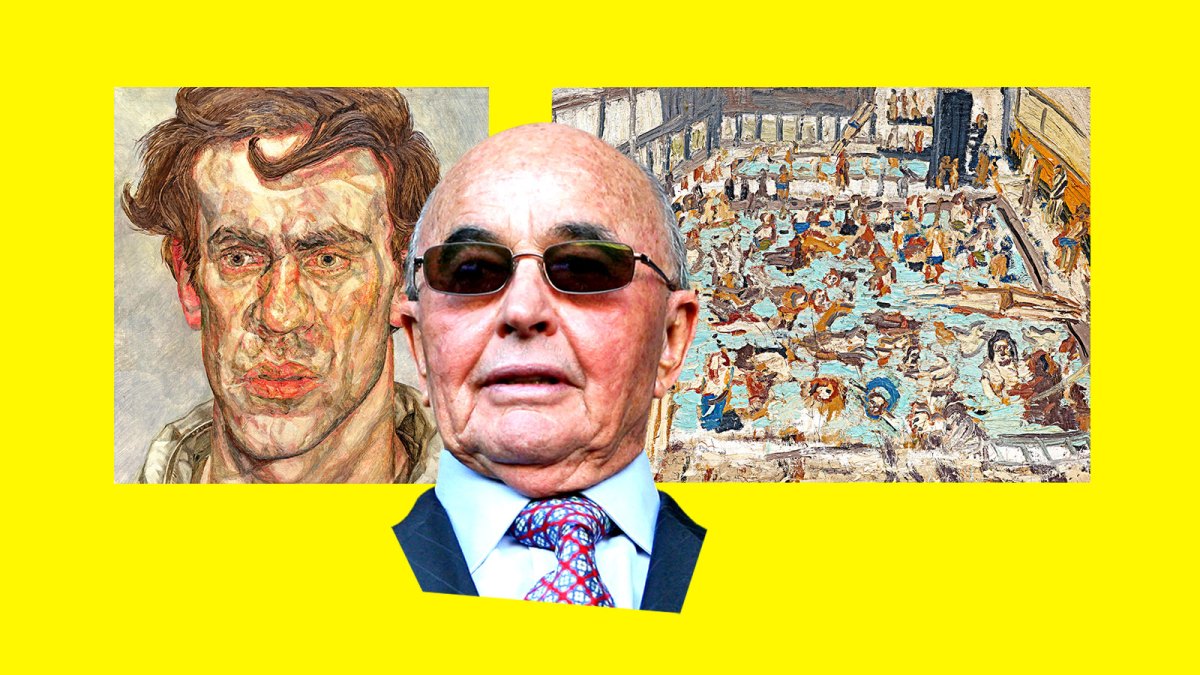
Four masterpieces of the “School of London” movement have come to light at auction, confirming years of rumours about the art collection of a British billionaire who grew up in poverty in the East End.
Two works by Lucian Freud, one by Francis Bacon and one by Leon Kossoff are to be sold by Joe Lewis, a currency trader whose family control Tottenham Hotspur. It is the first time Lewis, 89, who narrowly escaped a prison sentence two years ago after admitting insider trading, has identified himself as the vendor.
The pieces, with a combined estimate of nearly £30 million, are described as the “bedrock” of Lewis’s collection, which has spent much of the past three decades on his 98m superyacht, Aviva.
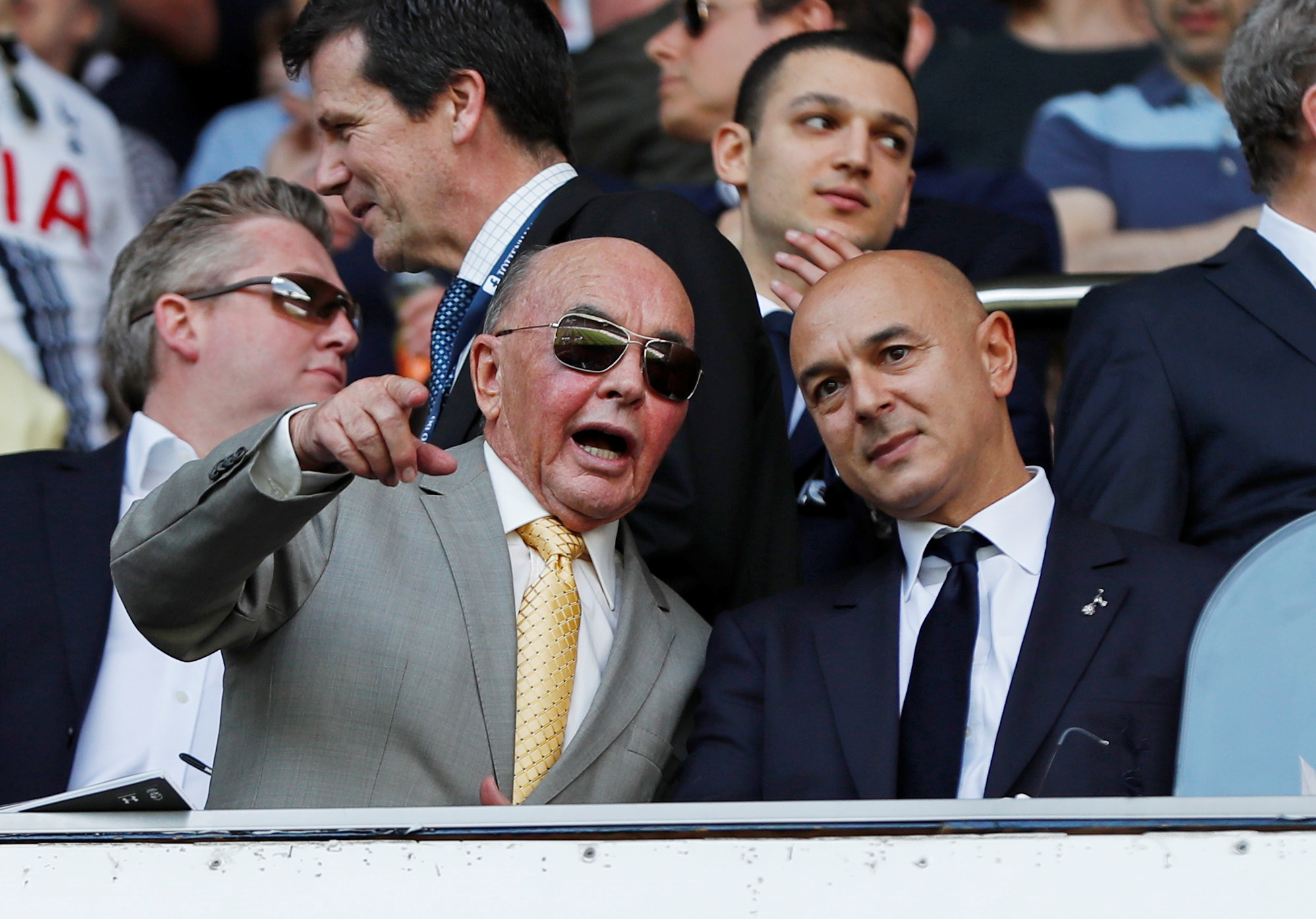
Lewis at a match in 2016
JOHN SIBLEY/REUTERS
Oliver Barker, the chairman of Sotheby’s, said that identifying Lewis as the vendor pointed to the family’s pride in their ownership of works of “this kind of quality”. He said that Lewis, who was born above the Roman Arms pub in Bow, east London, and left school at 15 to join his father’s catering company, had felt an affinity with the artistic school associated with his birthplace and many of whose members had Jewish roots like himself.
“As someone from the East End with a Jewish identity he would have identified with this group of post-war artists who were very deliberately looking at the post-war landscape and coming to terms with its environment,” Barker said. “I think it mirrored very much what Joe was doing. He was a completely self-made man.
“If he had been living in New York in the 1950s, 1960s then I suspect he would have bought American abstract expressionists, but it was London that was very core to his history.”
Although the four works have been lent to institutions — most recently the Bacon appeared in a 2024 exhibition at the National Portrait Gallery — they have not been on the market for the best part of three decades. Rumours of multimillion-pound purchases and sales related to Lewis’s collection have occasionally surfaced, including the unconfirmed sale in 2018 of a David Hockney painting for $90 million.
The set includes a Bacon self-portrait from 1972, the most treasured year for his self-portraits as he rebounded from the suicide of his lover George Dyer. Bacon initially gave the painting to the doctor who had stitched his face after a fight. It is valued at up to £12 million.

The Francis Bacon self-portrait is expected to fetch up to £12 million
SOTHEBY’S
There are also two Freud portraits, including his 1987 work Blonde Girl on a Bed, depicting his muse, Sophie de Stempel, who later married the actor Ian Holm, and his 1958 work A Young Painter, depicting his friend, the artist Kenneth Brazier.

Blonde Girl on a Bed
SOTHEBY’S

A Young Painter
SOTHEBY’S
The fourth painting is Kossoff’s 1969 work, Children’s Swimming Pool, 11 o’clock Saturday Morning, August, the most celebrated of his series of depictions of Willesden public baths.

Children’s Swimming Pool, 11 o’clock Saturday Morning, August
SOTHEBY’S
Barker said that the sale was the “holy grail” for buyers because the pieces were “first-rate works with an absolutely first-rate provenance and which are completely fresh to market with modest estimates attached”.
Lewis has been on the Sunday Times Rich List for years. His net worth was estimated last year at £5.77 billion, ranking him 33rd. He is widely reported to have made a fortune on Black Wednesday in 1992, when Britain crashed out of the European exchange rate mechanism, and has since built up stakes in about 200 companies through the Tavistock Group.
He has probably been best known in recent years, however, for his ownership of Tottenham Hotspur football club, which is now effectively run by his children, Vivienne and Charles. Although its football fortunes have been mixed, the club has been turned into a commercial juggernaut and is the ninth richest club in the world.
Lewis’s reputation was tarnished in January 2024 when he pleaded guilty to insider trading in New York. He was fined £4 million and sentenced to three years of probation. He had told friends and employees to buy shares in a pharmaceutical company that he knew was about to announce positive results for a new drug.
His children are thought to increasingly control the family’s businesses, and Barker confirmed that Vivienne, in particular, was a driving force in the family’s art collection. She was “extremely actively involved in the art scene”, he said, adding that the family were still buying works.
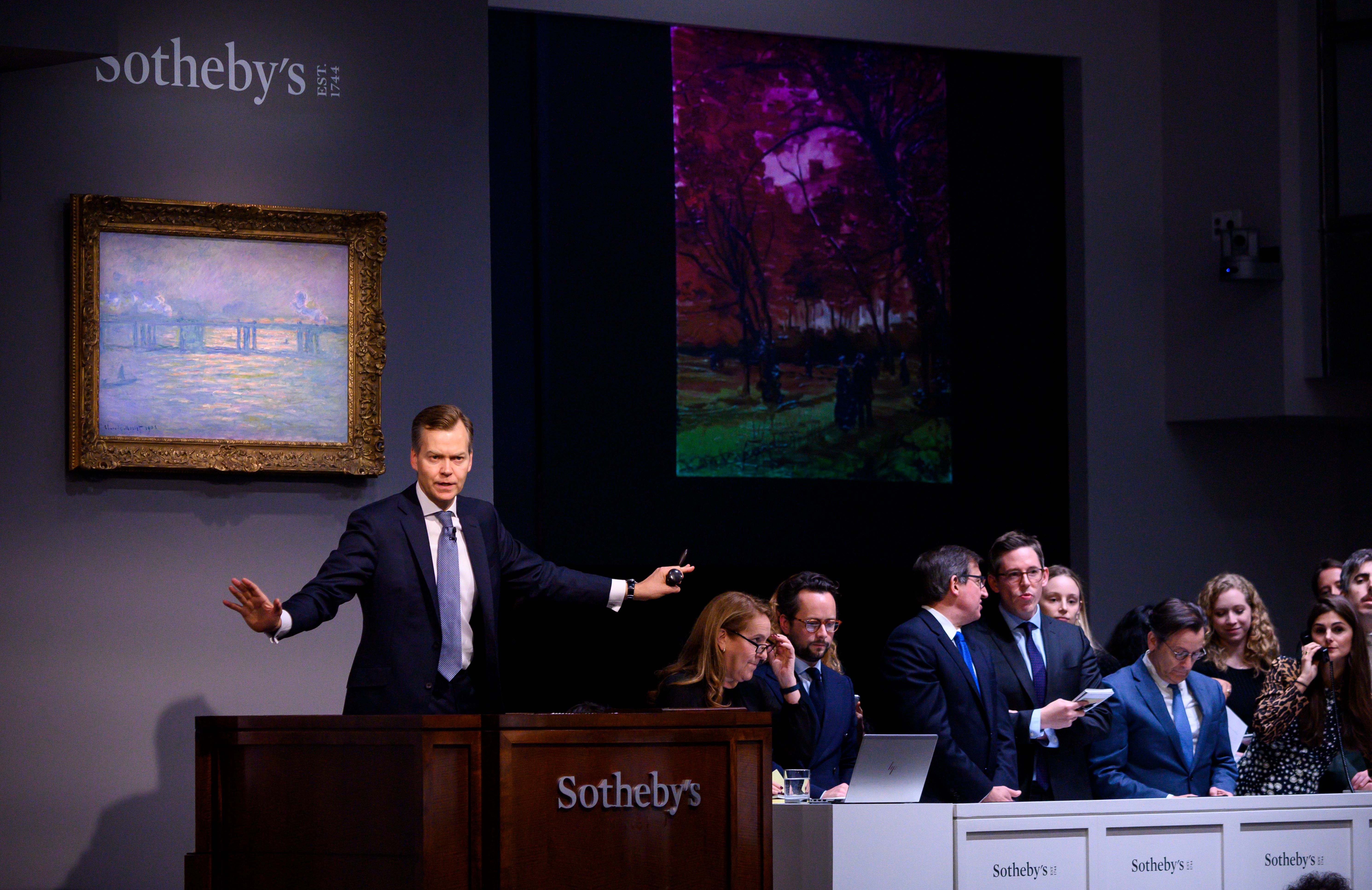
Oliver Barker
JOHANNES EISELE/AFP
“Their interests have evolved although portraiture remains pivotal. There are new works entering the collection all the time,” Barker said.
The Lewis family said they hoped that by taking the “difficult” decision to sell their masterpieces they could encourage new generations to engage with the School of London artists.
“The School of London has been a core focus of the Lewis collection from its earliest days,” they said. “It is a movement that reshaped how artists confront the human condition. We care deeply about its legacy and enduring relevance and wish to support the avant-garde artists of today who continue that same fearless inquiry.”
The four paintings are due to be unveiled in New York next week before being sold in London on March 4.
The School of London categorisation was coined by the American artist RB Kitaj in the mid-1970s. Freud, Bacon and Kossoff, as well as Frank Auerbach and Howard Hodgkin, are associated with it. The school tended to be united by a belief in figurative drawing at a time when abstraction dominated the art world.
Bacon’s 1972 self-portrait is arguably the biggest catch of the forthcoming sale. It was painted after Dyer’s suicide, during a period when Bacon’s self-destructive behaviour was spiralling out of control. Paul Brass, a doctor, was called to Bacon’s studio to reset his eye after he had brawled with a lover. Later that year, Bacon left a paper bag with the painting inside it in the doctor’s surgery.