
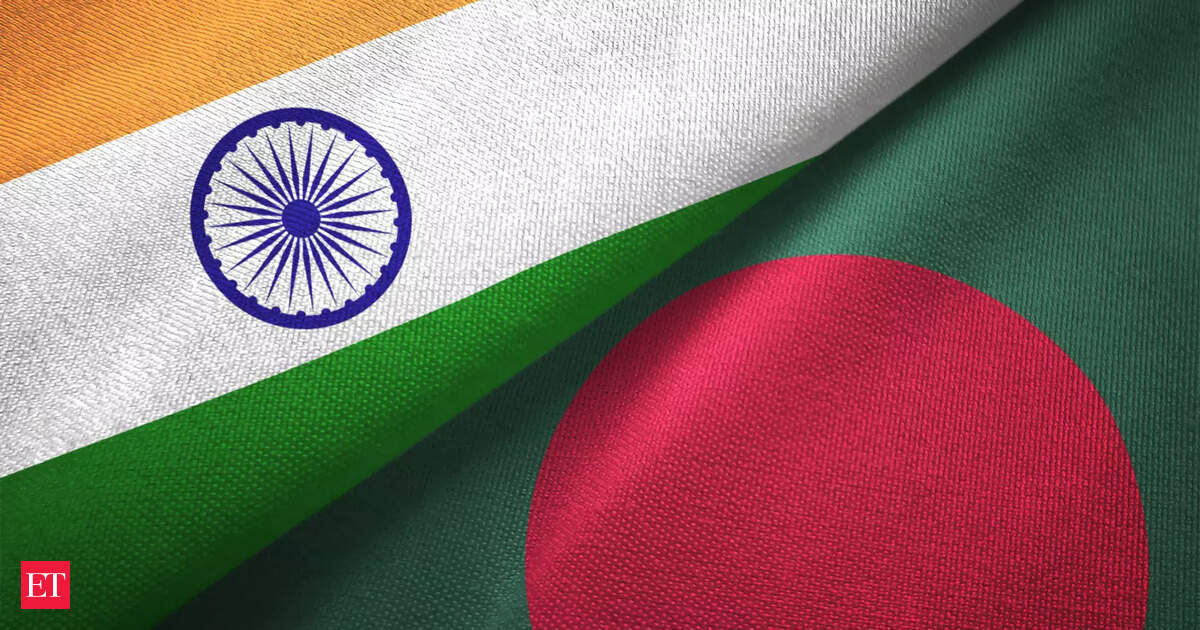
With the Bangladesh Nationalist Party (BNP) emerging as the dominant political force in the general elections and likely to form government, though official results are expected later, the prospect of BNP leader Tarique Rahman becoming prime minister signals both uncertainty and opportunity for India. The defeat of Jamaat-e-Islami and the exclusion of Awami League from contesting have reshaped Bangladesh’s political landscape in ways that could reshape regional geopolitics.
This transition unfolds against a backdrop of fraught history, evolving diplomacy and shifting strategic priorities in South Asia.
Also Read: Profound changes on cards for India, China with the rise of a new power player in South Asia
A political shift in Dhaka
The BNP’s victory is historic not only because it dislodges the Awami League (which was banned from fighting elections), once the central pillar of political life in Bangladesh, but also because it represents a potential break from clan-driven politics. Rahman, the son of former Prime Minister Khaleda Zia and former President Ziaur Rahman, who founded the BNP before his assassination in 1981, returned to Bangladesh after 17 years in exile in London. His leadership now carries high expectations among voters who viewed this election as a turning point. Live EventsThe Awami League’s fall has been dramatic. Sheikh Hasina, once India’s closest partner in Dhaka, now remains in India amid deep controversy. A special tribunal in Bangladesh has sentenced her to death in absentia for crimes against humanity linked to the violent crackdown on the 2024 protests that ultimately led to her government’s collapse. Her continued presence in India has inflamed public opinion in Bangladesh, particularly among the demonstrators who had spearheaded the protests and the radicals.
India’s Bangladesh policy had long rested heavily on Hasina which meant close cooperation on security and trade. The sudden shift in Dhaka’s power structure has forced India to revise its posture by seeking better ties with the BNP which has reciprocated.
Also Read: PM Modi’s old letter to Tarique Rahman had a big hint about India-Bangladesh ties
India’s concerns
India’s stakes in Bangladesh are deeply tied to the security of its northeastern states and West Bengal. The eight landlocked northeastern states are particularly vulnerable to instability and insurgency. A radical or hardline regime in Dhaka advocating the idea of a “Greater Bangladesh” encompassing parts of West Bengal and the Northeast would have been destabilising. The issue gains urgency as West Bengal and Assam are scheduled to hold assembly elections by May, within months of Bangladesh’s national vote.
Historically, BNP governments, particularly during 2001-06 when Jamaat-e-Islami was an alliance partner, provided sanctuary to northeastern insurgent leaders. Each major insurgent group in India’s Northeast operated out of Bangladesh during that period. Indian insurgents maintained links with extremist groups and were allegedly controlled by Pakistan’s ISI.
Also Read: Tarique Rahman: Meet Sheikh Hasina’s arch rival’s son who is set to govern Bangladesh
According to an ET report, Islamabad is reportedly planning to rehabilitate ULFA chief Paresh Baruah, currently in China, in Dhaka. Pakistan is said to be hoping for a favorable regime in Bangladesh that could facilitate the return of Indian insurgents and revive the model pursued during the BNP-Jamaat years. Baruah allegedly played a role in the 2004 attempt to smuggle ten truckloads of arms into Bangladesh via Chittagong port. The consignment was intercepted, but the case implicated Tarique Rahman and a Jamaat leader who was then a minister. Baruah had operated from Dhaka for nearly two decades under the patronage of ISI and BNP-Jamaat before fleeing to China just ahead of the 2008 elections. Experts recall that he ran a business empire in Dhaka under assumed identities.
In contrast, in 2009, Sheikh Hasina handed over all North Indian insurgents operating from Bangladeshi soil to India, a move that cemented her security partnership with New Delhi.
Today, however, the context appears different. While BNP’s past record fuels apprehensions, Rahman has refrained from anti-India rhetoric since Hasina’s ouster. Few of the student leaders who led the movement against Hasina have openly called for annexing India’s northeastern states. Moreover, Jamaat-e-Islami, now defeated and headed to the opposition benches, will not be in government. Its Islamist agenda had long worried India, even though it showed a softer tilt toward India just before the elections. The BNP must now create an atmosphere of trust if it seeks to stabilise and improve ties with India.
Also Read: The political heir who returned to Bangladesh after 17 years in exile
Diplomatic signals
Recent months have witnessed significant positive exchanges between the Indian government and the BNP leadership, suggesting a potential thaw.
Rahman cordially received India’s External Affairs Minister S. Jaishankar in Dhaka following Khaleda Zia’s demise, signalling openness to engagement. Prime Minister Narendra Modi extended warm congratulations to Rahman on Friday after the BNP’s electoral victory, stating on X that the results reflected the trust of the Bangladeshi people in his leadership. Modi affirmed that India would continue supporting a democratic, progressive and inclusive Bangladesh and expressed eagerness to strengthen multifaceted ties and common development goals. Modi’s December 30 letter to Rahman had already hinted at a diplomatic shift. Expressing sorrow over Khaleda Zia’s passing, he described her as a leader of rare resolve and conviction and recalled their 2015 meeting. He also conveyed confidence in Rahman’s leadership.
Modi also spoke to Tariq and congratulated him on the “remarkable victory”.
The BNP has responded positively. According to PTI, Nazrul Islam Khan, a BNP standing committee member and chief coordinator for the 2026 election, thanked Modi for recognising the people’s verdict. He said on Friday that as a democratic country, India’s acknowledgment of the results was welcome and expressed hope that relations between the two nations would be strengthened under Rahman’s leadership. These exchanges suggest that both sides are keen to avoid a rupture and instead build a pragmatic working relationship.
A test for renewed ties
A crucial test of the new government’s intentions will be its stance on transit rights for India to access its northeastern states through Bangladeshi territory. Past BNP governments refused such requests and invoked nationalist arguments. In contrast, the Awami League government granted transit rights, sensitive to India’s security interests and economic rationale, and Bangladesh benefited through royalties to its exchequer.
Rahman’s statements suggest a shift in emphasis. In a recent interview with The Diplomat, he said that if elected, the BNP would pursue an “economy-based foreign policy” under a “Bangladesh First” approach. He emphasised mutual trust, respect and benefit in foreign relations, asserting that national interest must come first regardless of which countries Bangladesh engages with. This framing indicates a pragmatic orientation rather than an ideological one. For India, an economy-centered foreign policy in Dhaka is far less worrisome than a regime driven by Islamist or anti-India ideological impulses.
India and Bangladesh share deep economic ties that are vital for Bangladesh’s economic performance. India will closely watch how the BNP approaches trade, transit and cross-border economic initiatives.
Balancing India, China and Pakistan
Rahman faces a delicate balancing act. Bangladesh has recently deepened defense engagement with Pakistan, resumed direct trade for the first time since the 1971 war of independence, and restarted regular military exchanges. Such moves are bound to unsettle India.
At the same time, China remains Bangladesh’s largest supplier of arms and a major backer of infrastructure and energy projects. For China, Bangladesh is an important node in the Belt and Road Initiative and a strategic presence along the Bay of Bengal. China’s investments are structured to survive political change. India, by contrast, tied much of its leverage to Hasina personally though India too is also inextricably linked to the Bangladeshi economy.
Bangladesh’s greatest leverage now lies in being courted by both powers rather than choosing sides.
Rahman will need to resist tilting decisively toward China and Pakistan so as not to antagonise India. His stated “Bangladesh First” doctrine suggests he is aware of the need to prioritise national economic interests over ideological alignment.
For India, a balanced and pragmatic Dhaka is preferable to a hardline or ideologically driven regime. The defeat of Jamaat-e-Islami and its Islamist agenda is therefore a positive development, even though the party had moderated its tone toward India just before the elections.
The BNP’s victory opens a new chapter in India-Bangladesh relations. Historical baggage, including insurgency, arms smuggling and ISI links, cannot be ignored. Nor can concerns about Pakistan’s possible maneuvering through figures like Paresh Baruah. Yet recent diplomatic gestures, Modi’s outreach, the BNP’s appreciative response as reported by PTI and Rahman’s economy-focused vision, all point toward a potentially constructive phase.
Ultimately, Rahman’s government will be judged by whether it delivers meaningful change at home while maintaining stability abroad. If it prioritises inclusive politics, respects India’s security concerns and focuses on economic cooperation rather than ideological agendas, the India-Bangladesh relationship may not only endure but deepen in new ways. The coming months will reveal whether this political transition becomes a source of friction or a foundation for a more mature and mutually beneficial partnership with India.