
I have to read the acceptance letter from GrubStreet’s Online Novel Incubator program twice to believe it.
Dear Ivy, congratulations on your acceptance to this year’s Novel Incubator. Our review panel was impressed by your application and eager to welcome you aboard.
For a moment, all I can hear is my heartbeat.
I’ve been longing for a rigorous, highly regarded novel-rewriting program like this, something that might finally help bring my stories into the world.
After months of laboring over my latest psychological thriller, the effort finally feels like it’s paying off. I picture my novel propped near the front of a bookstore, the title glowing under bright lights, the cover hinting at danger and secrets. Then my eyes land on the number in the congratulatory email.
Tuition for the year comes to $8,955.
I swallow. Can I really justify this cost, for me?
My mind starts tallying expenses — groceries, utilities, medical bills, car insurance, the random stuff that always pops up.
I imagine calling my mom and hearing her quick inhale over the phone. I know exactly what she’d say — I’ve heard it all my life.
Good daughters save. They don’t splurge.
In her world, money is for stability, not self-improvement. Spending nearly $9,000 on a dream? It sounds reckless. Selfish, even.
After retiring at 50 from my career as a pharmacist by following the FIRE (Financial Independence, Retire Early) movement, I planned every expense with precision. I left San Francisco for a small lakeside town in Mexico, trading city noise for bird calls and dreamy water. My days revolve around writing, something I’ve dreamed of since fifth grade, when I wrote a story about a robot destined to save the world.
Now the opportunity I’ve longed for stands before me, and I freeze.
I counted thrift as virtue for years: home-cooked meals, sale-rack clothes, and an Excel sheet tracking every dollar. Back in California, I kept my hair long to avoid the salon, bought Costco rotisserie chickens and simmered the bones into broth for noodles and soup, froze the meat for tacos and casseroles. In pharmacy school, I borrowed textbooks from the library to save money. After graduation, I worked double shifts for weeks at a time to pay off my student loans.
I didn’t grow up in a rich family. My mom sewed my clothes when I was little, and my dad stretched every grocery trip to its limit. From a young age, I learned that wants were dangerous and that women who asked for more invited disappointment.
Money was never just numbers. It carried moral weight. Every dollar left untouched meant you were disciplined and prepared.
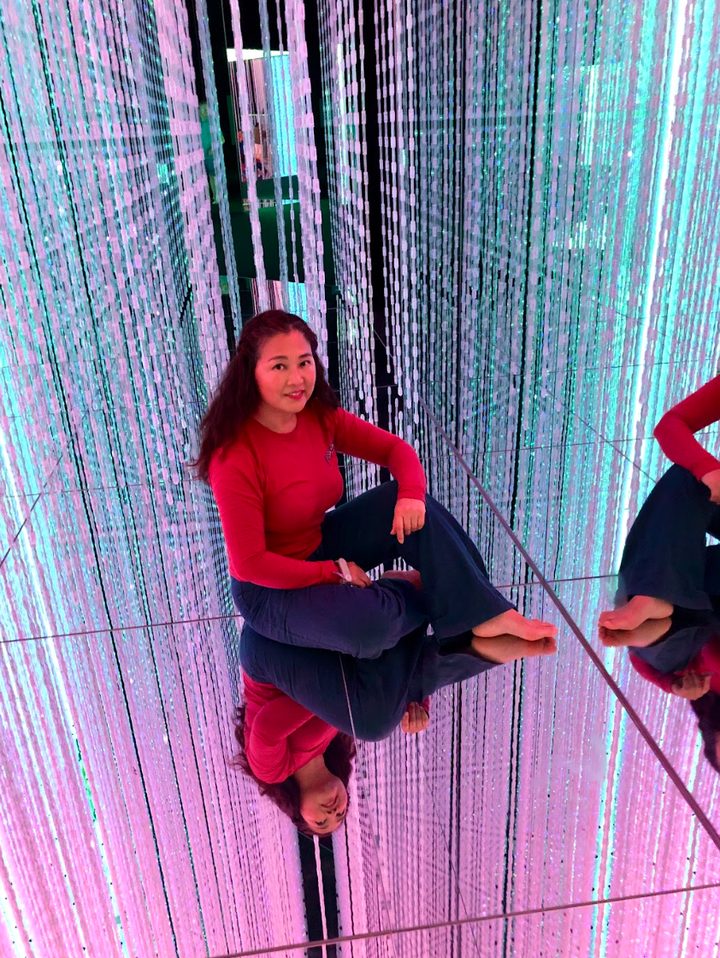 The author at an immersive light installation at teamLab Planets TOKYO in 2024.
To me, for the last 20 years, it’s meant retiring early and enjoying life on my own terms. Every habit I built pointed toward that sense of freedom: no boss, no annual reviews, no performance metrics. Now I wake up when I want. My time is finally my own.
I’d run the numbers before moving to Mexico, factored in living expenses and out-of-pocket health care costs without insurance coverage, and convinced myself I could make it work.
What I hadn’t accounted for was the cost of chasing a dream I’d put off for decades. Freedom, it turned out, was only affordable when I didn’t have to spend money to use it.
My instinct is to ignore the acceptance letter and congratulate myself for a job well done. Being chosen as one of 10 students this year means my writing is, at least, good enough. If I’ve come this far without formal training, maybe I can continue to improve over time.
That question has followed me for decades, tugging at every decision that costs more than $100. Whenever I feel the urge to pursue something costly, I tell myself to wait and see if that urge will pass. If I haven’t needed it before, I can make do without it now.
This habit has kept me from not just big spending but also big dreams.
“This habit has kept me from not just big spending but also big dreams.”
Once, I almost applied to an MFA program — even drafted the personal statement — before abandoning the application. The same old fear whispered again: What if it’s a waste of money? I told myself I’d keep learning by reading and writing, the slow, solitary way.
Then I had the chance to cut my work hours to three days a week and focus on my writing. I slept on that decision for days.
What if I didn’t make enough to support my family?
What if there were major medical expenses I couldn’t cover?
The thought of putting writing first felt daring beyond what I could handle. So I stayed in the same position, even though the stressful work left little room to breathe, let alone to write.
Now, almost three years after retirement, I’ve completed four novels. Once again, I thought about applying to a writing program. When I submitted my application to GrubStreet, I didn’t think I’d get in. I just wanted to test the waters, to see if anyone out there might appreciate my work.
Overwhelmed by the acceptance notice, I try to reason with myself. Yes, $8,955 is a lot of money, but maybe it’ll bring me closer to getting my novels published. Don’t I deserve to invest in a dream I’ve carried for decades?
And yet, the word “deserve” catches in my throat. Every big purchase I’ve made for myself comes wrapped in guilt. Yes, I’ve bought birthday presents for friends and family, paid for expensive dinners, even donated to my pharmacy school and Wikipedia, but the idea of spending that amount on my own ambition feels shameless.
This wouldn’t be the first time I’d spend a large chunk of money. The prior year, I took my mom on a month-long trip to Asia to fulfill her long-held dream of visiting Japan, South Korea and China. Afterward, I deducted that money from my budget and calculated how much more I needed to save until it balanced again.
Unable to decide whether to pay for the writing program, I call a friend. When I tell her the price, she falls quiet. I’m not surprised. She’s put off pastry courses at the San Francisco Baking Institute for years, even as she pays private school tuition for her three kids.
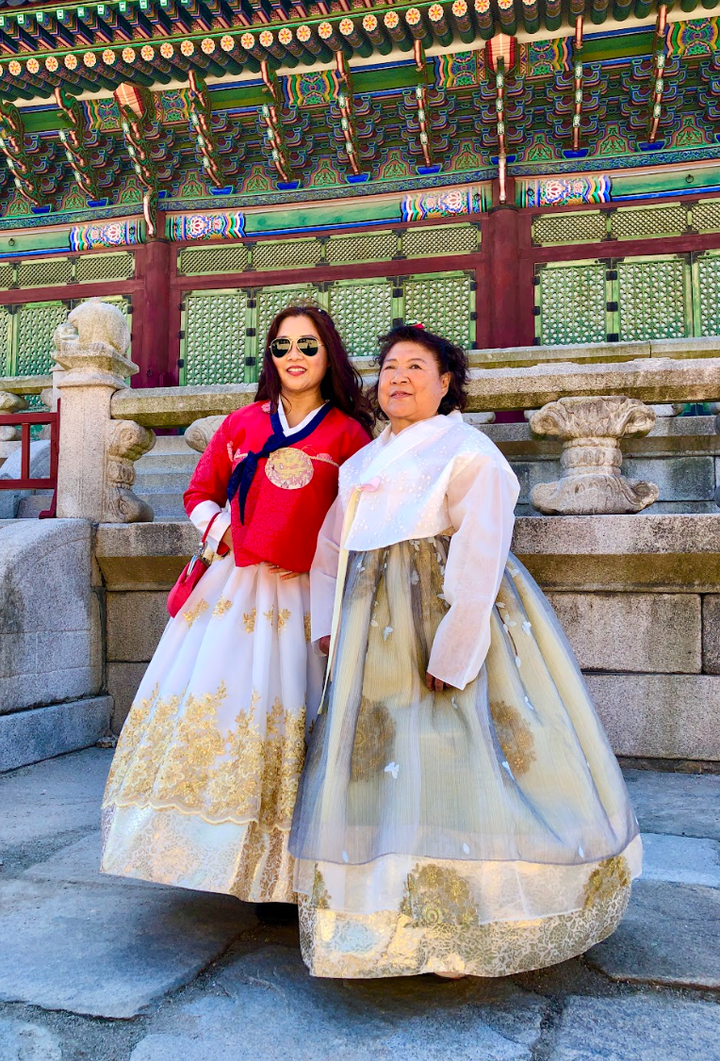 The author (left) and her mother in traditional hanbok at Gyeongbokgung Palace, Seoul in 2024.
Frustrated, I do something ridiculous: I ask ChatGPT what I should do. The answer comes a second later: Go for it.
It’s silly, I know. But part of me just needs to hear it from outside my own head. Like staring at a word so long it loses meaning, I can’t trust my own reasoning anymore.
Looking closer at the issue, I see what’s always been there. Studies show women pour their time and money into everyone else first. We’re taught that good women put others’ needs ahead of our own. They call it the motherhood penalty: the habit of waiting, serving and wearing ourselves down until there’s little left for what we want.
Then I hear that my best friend from high school has died. We were born only two months apart. The last time we saw each other, she had mentioned she hoped to take her dream trip to Europe. She wanted to wait until after her son’s college graduation. Until the timing was better. Until it was too late.
I stay up at night thinking about her. I remember us sitting on the windowsill of our high school’s top floor, facing each other, dreaming about who we might become.
I told her I’d be a writer with stories that reached people everywhere. She wanted to be a travel journalist and visit the edges of the world.
Thirty-six years later, neither of us lived the dream exactly as we’d imagined it.
I can’t help thinking, what good is financial freedom if I can’t invest in myself? At this stage of my life, can I afford not to spend on who I hope to become?
I get out of bed and go straight to my laptop. This time, I type a response to the program director, thank her for the opportunity, and tell her I want in.
When the email whooshes out, I stare at the screen, caught between relief and panic. It feels like stepping past a line I’ve spent my whole life toeing.
This will wreck my carefully balanced budget, but I’ll figure things out. After all, I’ve gotten so good at making do.
But now I know something else: I can’t afford not to try anymore.
Ivy Ge is the author of “The Art of Good Enough.” A pharmacist turned writer, she explores themes of identity, resilience and reinvention through essays, novels and screenplays. She holds degrees in business, engineering and pharmacy, and draws on that interdisciplinary lens to tell emotionally grounded stories about personal transformation. Ivy is also a stage actor and a member of a performing improv troupe. Learn more at ivyge.com.
Do you have a compelling personal story you’d like to see published on HuffPost? Find out what we’re looking for here and send us a pitch at pitch@huffpost.com.