
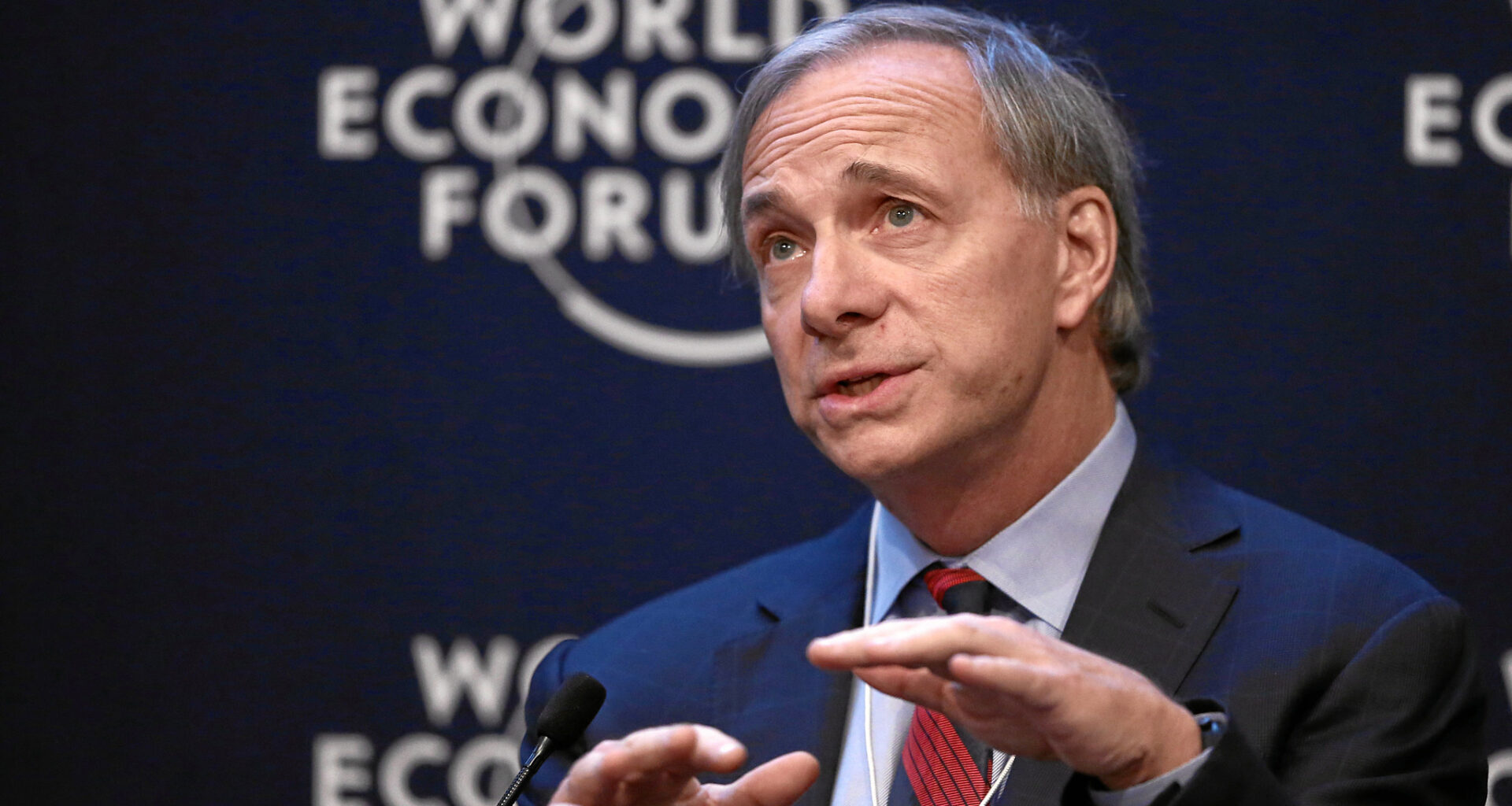
Bridgewater Associates founder Ray Dalio has been warning of a recession for quite some time now. He had said in an interview that US President Donald Trump‘s economic plan could result in ‘something worse than a recession.’
‘Right now, we are at a decision-making point and very close to a recession,’ Dalio told a media outlet in mid-2025. ‘And I’m worried about something worse than a recession if this isn’t handled well.’
Trump policy actions, especially his tariff play, triggered global economic chaos, but Dalio worries that the US could end up isolated as its top trading partners sign cross-border agreements, which exclude the world’s largest economy.
‘But by and large, it’s changing the world order in a way which is making it more inefficient and actually causing growth around the United States,’ the billionaire investor added.
Tariffs along with mounting national debt and a rising superpower challenging the existing superpower, could drive ‘profound changes’ in the world order, and ‘such times are very much like the 1930s,’ Dalio explained.
Introducing tariffs in a stable or chaotic way can make all the difference, and the current approach is akin to ‘throwing rocks into the production system’ or highly disruptive, according to Dalio.
Wealth-to-Money Ratio at Dangerous Levels
In a recent post on X, the former hedge fund manager linked to a clip of his recent interview where he explained that today’s ‘wealth-to-money’ ratio in the US is about 8.5:1, meaning that there is 850% more financial wealth than actual money, which is similar to peaks observed before the market crashes in 1929, as well as the year 2000.
The billionaire investor described wealth as notional asset values and money as spendable purchasing power. ‘Wealth isn’t worth anything unless it can be converted into money to spend. And when there’s a lot of wealth relative to the amount of hard money available — like we’re seeing today — bubbles are created,’ he said in the interview.
Drawing parallels with the 1920s US boom, Dalio believes that people feel richer as asset prices rise, but ‘the wealth isn’t worth anything if you don’t sell it, convert it into money to spend,’ a pattern he says repeats across history. He highlighted that if one sells $50 million of stock at a $1 billion valuation, that person, on paper, is a billionaire, even though ‘nobody would pay a billion dollars for that issue combined.’
Dalio indicated that the imbalance, combined with growing wealth gaps and populist pressure for wealth taxes, could force asset sales and ‘pop’ bubbles.
Despite Dalio’s warning, recent data suggest the US economy continues to grow, despite signs of concern on multiple fronts. While many experts believe the labour market could soften more in 2026, with unemployment potentially rising to 4.5% on average, it is far from ideal but not at the level of the 1930’s Great Depression, as Dalio suggests.
Disclaimer: Our digital media content is for informational purposes only and not investment advice. Please conduct your own analysis or seek professional advice before investing. Remember, investments are subject to market risks and past performance doesn’t indicate future returns.