
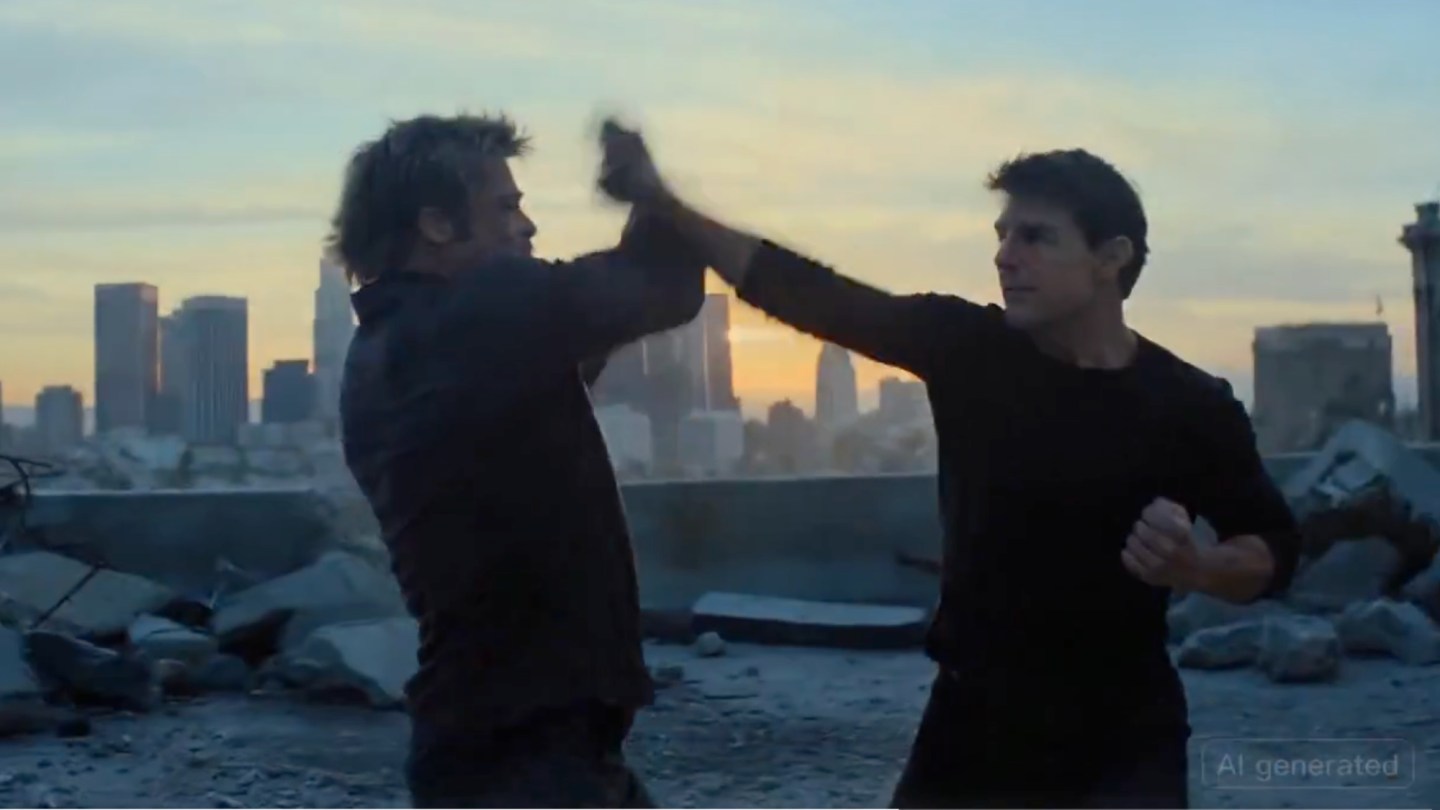
On Thursday the Chinese owner of TikTok released the latest version of its AI-powered video creation model, ushering in a wave of user-created videos featuring Hollywood stars and intellectual property and setting off alarm bells in entertainment.
In just a short time period, Seedance 2.0 users created not only a widely circulated video of Tom Cruise and Brad Pitt engaging in hand-to-hand combat, but also an alternate ending to Game of Thrones and a clip featuring Rocky Balboa and Optimus Prime in a fast-food restaurant.
The reaction from organizations with ties to Hollywood that followed was swift and fierce, similar to when OpenAI’s Sora 2 shocked the industry in the fall of 2025 with its clips featuring iconic Hollywood properties and initial “opt-out” stance. Talent agencies were quick to respond in the latter case, saying they would opt out their clients. OpenAI chief Sam Altman backtracked and offered “more granular” control for IP creators amid the pushback.
Hollywood’s top studios and streamers quickly came out swinging against ByteDance. ”In a single day, the Chinese AI service Seedance 2.0 has engaged in unauthorized use of U.S. copyrighted works on a massive scale,” Charles Rivkin, the CEO of the studio trade organization the Motion Picture Association, said in a statement on Thursday afternoon. “By launching a service that operates without meaningful safeguards against infringement, ByteDance is disregarding well-established copyright law that protects the rights of creators and underpins millions of American jobs.”
Rivkin called on the company to “immediately cease its infringing activity.”
On the labor front, the union SAG-AFTRA — which represents actors like Cruise and Pitt — said on Friday that ByteDance was engaging in “blatant infringement.” Added the union, “The infringement includes the unauthorized use of our members’ voices and likenesses. This is unacceptable and undercuts the ability of human talent to earn a livelihood.”
The union continued, “Seedance 2.0 disregards law, ethics, industry standards and basic principles of consent. Responsible A.I. development demands responsibility, and that is nonexistent here.” SAG-AFTRA has long advocated for the principles of consent and compensation to undergird all uses of A.I. that affect its members.
The Human Artistry Campaign, a coalition of artist and entertainment groups that includes members like the Recording Industry Association of America, the NHL Players’ Association and the AFL-CIO, generally advocates for tech companies to license material for their AI tools and allow artists to opt out.
On Friday the group called Seedance 2.0 “an attack on every creator around the world.” The group added that the alleged theft of human creators’ work is “destructive to our culture” and that the AI-generated clips from the platform “violate the most basic aspects of personal autonomy and should be deeply concerning to everyone.”
These groups were joined by the Copyright Alliance, an advocacy group for creators and copyright, which also called on ByteDance to end the flood of user-created content featuring intellectual property. “The theft of the works of America’s creators by foreign bad actors is a threat to our nation’s creators and our global leadership in creativity and responsible AI innovation and must not be tolerated,” said CEO Keith Kupferschmid.
The Hollywood Reporter has reached out to ByteDance for comment.
If Hollywood follows the same playbook with Seedance 2.0 as it did with Sora 2, some of the industry’s most influential organizations could join hands to push for changes. After the initial release of Sora 2 produced unauthorized videos of Breaking Bad actor Bryan Cranston, he brought concerns to SAG-AFTRA, which then worked with the Association of Talent Agents, UTA and CAA to talk with OpenAI about improving guardrails around likenesses.
Said SAG-AFTRA president Sean Astin at the time, “Bryan did the right thing by communicating with his union and his professional representatives to have the matter addressed… I’m glad that OpenAI has committed to using an opt-in protocol, where all artists have the ability to choose whether they wish to participate in the exploitation of their voice and likeness using A.I.”
The union has been focused on AI for years and hasn’t been afraid to play hardball over what is considered an existential issue for actors: AI regulation was a major concern during the union’s 118-day strike against film and television studios in 2023 as well as in its longer video game strike between 2024 and 2025. AI is again expected to be a top issue as the union negotiates with studios and streamers on its 2026 labor contract. Negotiations began on Monday.