
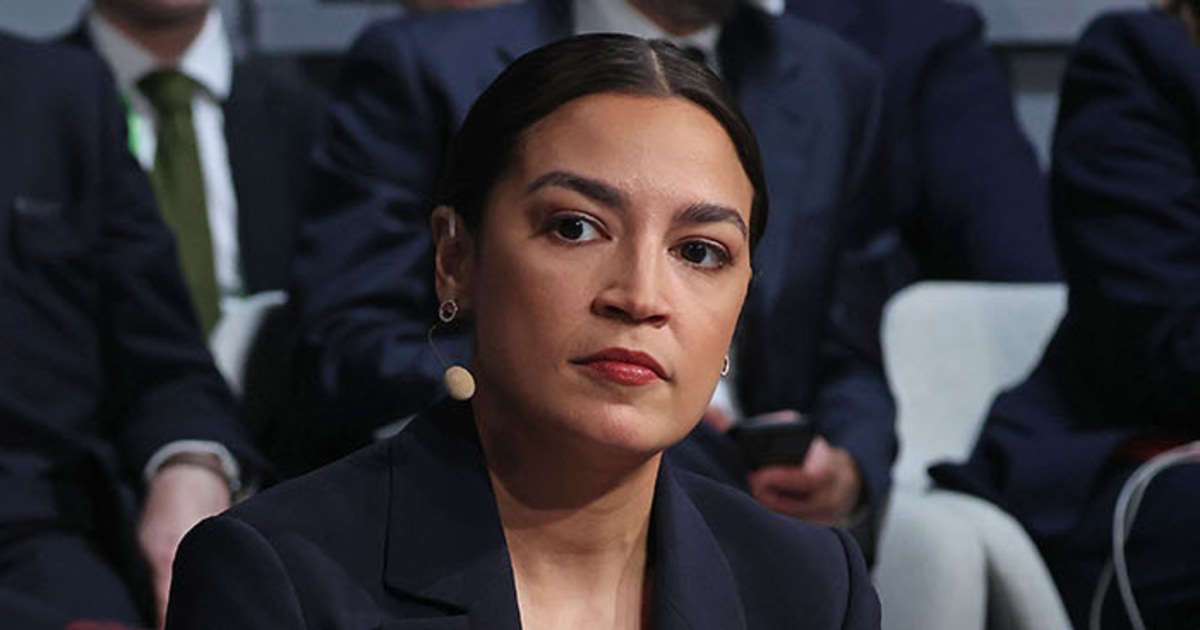
Rep. Alexandria Ocasio-Cortez, D-N.Y., warned Friday at the Munich Security Conference that Western democracies must deliver “material gains for the working class” to defeat the rise of authoritarianism and protect the institutions they value.
“We have to have a working class-centered politics if we are going to succeed, and also if we are going to stave off the scourges of authoritarianism, which also provides political siren calls to allure people into finding scapegoats to blame for rising economic inequality, both domestically and globally,” she said.
The New York congresswoman and progressive Democratic star spoke of “the betrayal that the working class in the United States have felt” toward its elites over many years, while assailing “military interventionism and the Iraq war,” labeling the North American Free Trade Agreement a “failed policy” for many working-class Americans, and inveighing against stagnating wages and the rise of income inequality.
“So it is of utmost urgent priority that we get our economic houses in order and deliver material gains for the working class,” she said. “Or else we will fall to a more isolated world governed by authoritarians that also do not deliver to working people.”
The remarks from AOC, as she is nicknamed, provide a rare glimpse into her foreign policy views as speculations grows about her future political ambitions. She made her debut at the Munich Security Conference, rubbing elbows with world leaders and diplomats at a time of global turmoil and sharply criticizing President Donald Trump’s mercurial attitudes to foreign relations.
Ocasio-Cortez smiled and sidestepped a pointed question from a moderator who asked if she’ll seek to impose a wealth tax or a billionaires tax “when you run for president.”
“I think that we don’t have to wait for any one president to impose a wealth tax,” the congresswoman said. “I think that it needs to be done expeditiously.”
Underneath her comments was a dire warning to the assembled elites: They can debate foreign policy all they want, but leaders who value the “rules-based order” won’t be calling the shots tomorrow if ordinary people don’t think their governments are delivering results to improve their economic conditions.
“That does not mean that the majority of Americans are ready to walk away from a rules based order and that we’re ready to walk away from our commitment to democracy,” Ocasio-Cortez said.
Ocasio-Cortez spoke on two panels Friday, one called “Vox Populi? Responding to the Rise of Populism” and another titled “Breaking (With) the Past: Seismic Shifts in U.S. Foreign Policy.”
Ocasio-Cortez was in her element on the first panel, speaking from her own experiences as a bartender in New York City who didn’t trust that the government — including her own party — was listening to working-class voters. It was the message her foreign policy adviser previewed to NBC News ahead of her appearance.
On the second panel, she took some swings at Trump over an issue on the minds of many at the security summit.
“His threatening over Greenland is not a joke. It is not funny,” she said. “It threatens the very trust and relationships that allow peace to persist. And so, I believe — what I can say is that unequivocally the majority, the vast majority of the American people do not want to see these relationships frayed and they are committed to our partnerships.”
She added, “This is the most powerful seat in the free world, and we can’t just say anything and do anything and pretend that it’s a joke and that it doesn’t have real consequences to our allies and to their sense of trust and safety.”
Ocasio-Cortez warned against U.S. military strikes on Iranian facilities, calling it a “dramatic escalation that no one in the world wants to see right now.” She suggested the U.S. is “looking the other way in a genocide,” a reference to Israel’s actions in Gaza, arguing that “completely unconditional aid” enabled that.
Notably, she dodged a fraught question when asked if the U.S. should commit troops to defend Taiwan against China if it launched an aggressive move.
“We want to make sure that we never get to that point,” she said.