
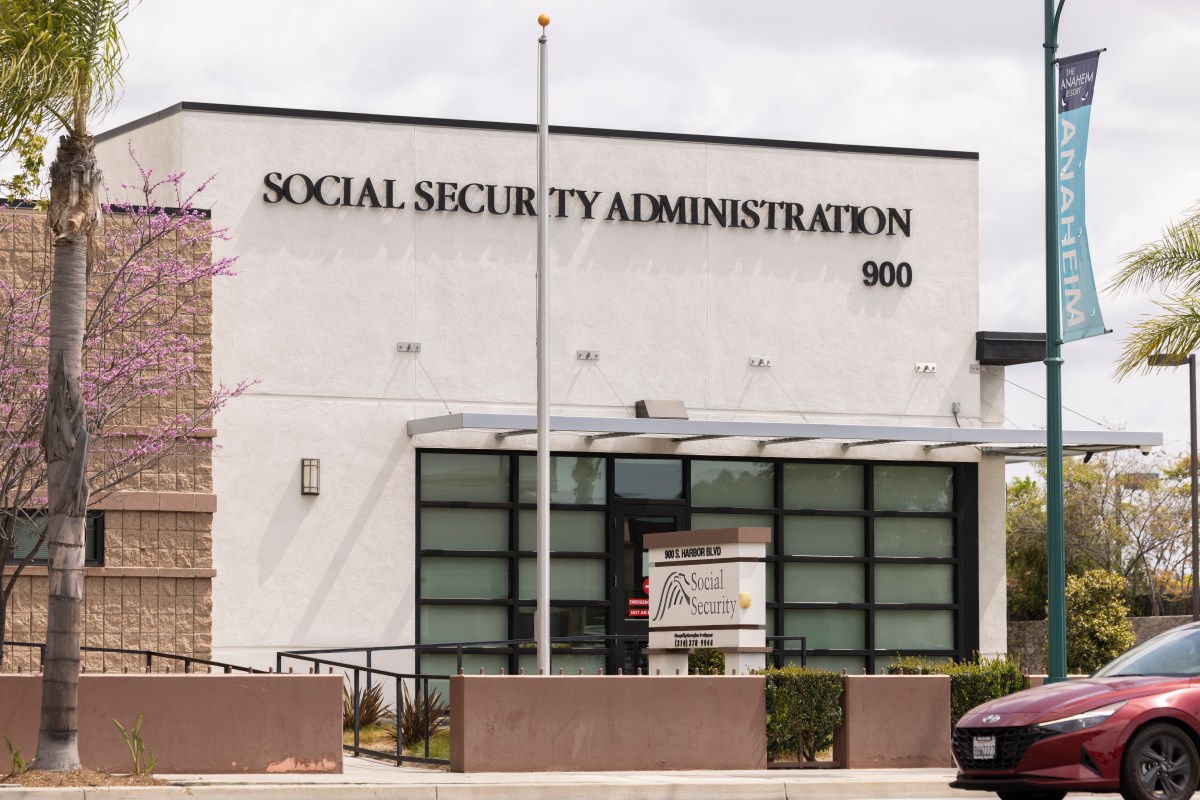
Some Americans could get new Social Security lump sum payments now that several senators are pushing the Social Security Administration (SSA) to update their retroactive payments policy.
Last year, the Social Security Fairness Act went into effect, getting rid of the Windfall Elimination Provision (WEP) and the Government Pension Offset (GPO). That meant many seniors who received pensions earned higher Social Security payments, but some were left out of getting full retroactive lump sum payments.
Why It Matters
The Social Security Fairness Act allowed many seniors who received pensions to get higher Social Security payments. Historically, they received fewer benefits due to their pension income even if they had income from jobs that paid into Social Security.
If the SSA responds to senators’ requests, retirees could earn more retroactive lump sum payments for the time they missed out on the benefits.
What To Know
Under the SSA’s current rules, retroactive payments for pension workers were limited to six months instead of a year for some beneficiaries. This impacted around 2.8 million Americans, the majority of which worked as teachers, firefighters and police officers or were surviving spouses of these workers.
Under the Social Security Fairness Act, these beneficiaries were supposed to earn a retroactive lump sum payment for benefits paid from January 2024 on, but some only received payments for six months based on how the SSA handled the law’s updates.
Now Senators Bill Cassidy, a Louisiana Republican, John Cornyn, a Texas Republican, and John Fetterman, a Pennsylvania Democrat, are pushing the SSA to change this policy.
“We do not fault SSA for not having a crystal ball,” Cassidy, Cornyn and Fetterman wrote in a letter to the SSA earlier this month.
The senators said that because the law’s passage date was unclear, Congress “did not distinguish between new and current beneficiaries in setting the Act’s effective date,” but that the SSA should not follow the “plain text” of the law.
However, there could be some resistance to sending out the lump sum payments for a full year due to the SSA’s current funding crisis, which many experts say could see the agency run out of money for full payments by as early as 2033.
“The Windfall Elimination Provision (WEP) and Government Pension Offset (GPO) were repealed under the Biden administration, originally calling for six months of retroactive payments to affected retirees,” Kevin Thompson, the CEO of 9i Capital Group and the host of the 9innings podcast, told Newsweek.
“Now, some Senators are pushing to extend that to twelve months. While this may provide relief for those hit hardest by inflation, and certainly carries political appeal, it does little to address the larger issue of Social Security solvency.”
 What People Are Saying
Kevin Thompson, the CEO of 9i Capital Group and the host of the 9innings podcast, told Newsweek: “If approved, the real concern becomes taxation. Would this income count in the current year? Could it push more retirees into the 85% taxable Social Security threshold or even into a higher marginal bracket? Events like this require careful tax planning, not reaction.”
Drew Powers, the founder of Illinois-based Powers Financial Group, told Newsweek: “While this rights a wrong, so to speak, it does nothing to help the solvency of Social Security. In fact, it just adds more people to the benefits list. Of course, we all agree these folks should have been receiving benefits all along, but it adds more strain to an already precarious situation. Congress passed this Act, so now only the details remain.”
Alex Beene, a financial literacy instructor for the University of Tennessee at Martin, told Newsweek: “The act didn’t make some elements clear in terms of time, namely what would be the period of time in which retroactive benefits would be received and what, if any, would be the beginning date for beneficiaries to qualify. The result has been a shakier process than expected, with the biggest issue being retroactive payments being limited to six months instead of one year. With bipartisan support on this issue, it’s likely we’ll see this revision eventually come into effect, even if some beneficiaries may unfortunately have to wait for it to become law.”
What Happens Next
There are looming questions about how the lump sum payments would be funded that could stop the SSA from addressing senators’ concerns.
“The bigger question remains: where is the funding coming from? Expanding benefits that weren’t fully budgeted only increases pressure on an already strained system,” Thompson said.

In a polarized era, the center is dismissed as bland. At Newsweek, ours is different: The Courageous Center—it’s not “both sides,” it’s sharp, challenging and alive with ideas. We follow facts, not factions. If that sounds like the kind of journalism you want to see thrive, we need you.
When you become a Newsweek Member, you support a mission to keep the center strong and vibrant. Members enjoy: Ad-free browsing, exclusive content and editor conversations. Help keep the center courageous. Join today.
