
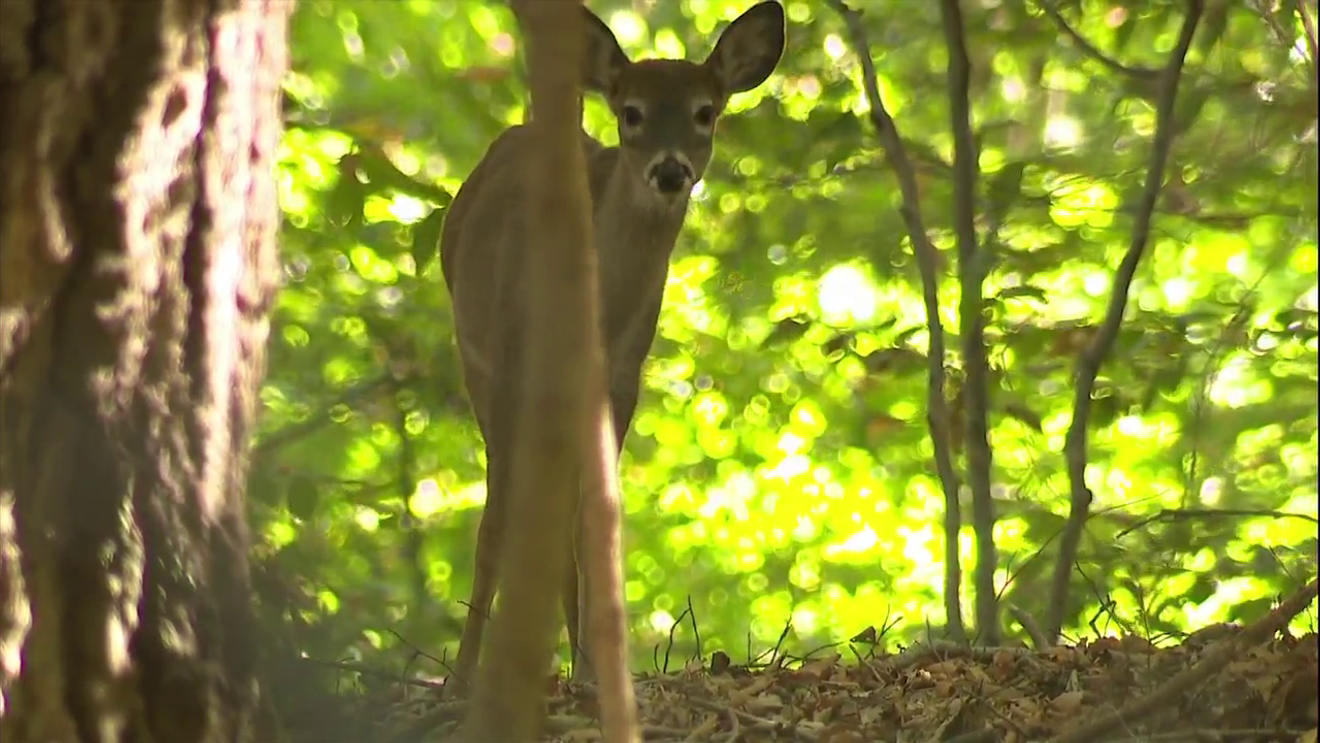
BALTIMORE (WBFF) — The Baltimore City Recreation & Parks (Rec & Parks) launched its first deer management program aimed at protecting park forests and addressing the challenges posed by deer overpopulation.
The city manages more than 2,300 acres of natural areas, including forests, streams, and wetlands. However, these areas are under stress due to factors such as climate change, invasive plant species, and excessive deer browsing, according to Rec & Parks.
“This is the first time Baltimore City has taken a comprehensive approach to managing deer overpopulation, and it reflects our commitment to ensuring our children and our children’s children inherit a healthier city,” Dr. Reginald Moore, executive director of Baltimore City Rec & Parks said, via press release. “This program is the result of extensive planning, scientific analysis and meaningful community engagement and public input.”
Data collected from city parks indicate that deer numbers in some areas exceed the recommended levels by three to 21 times, with experts suggesting that no more than 20 deer per square mile is sustainable for healthy forest ecosystems.
Overpopulation of deer can lead to the consumption of young trees before they mature, damage to native plant species, and the spread of invasive plants.
ALSO READ | Baltimore Rec & Parks facilities reopen with special lunch service for youth
This imbalance also reduces habitat availability for birds and other wildlife, increases deer-human conflicts, and raises the risk of tick-borne diseases, officials said.
“Over time, too many deer can prevent forests from growing back. This program is designed to help restore balance so forests can recover,” the department stated in the press release.
The plan was developed with community input, beginning in January 2025 and continuing throughout the year.
The deer management program was developed through a citywide survey, meetings with “Friends of” park groups and community associations, public information sessions near affected parks, community focus groups that discussed various management options, and ongoing outreach and education.
ALSO READ | Acting director of Baltimore County Department of Recreation and Parks named
Over 3,700 residents participated in the survey, with 94% believing forests add value to Baltimore.
Additionally, 58% viewed deer as a threat to forest health, 62% believed the city should address deer-related issues, and 59% understood that deer management is an ongoing effort.
To implement the program, the U.S. Department of Agriculture’s Animal and Plant Health Inspection Service partnered with Rec & Parks, which is staffed by trained wildlife biologists with firearm expertise and who adhere to national best practices.
Starting in March, the program will concentrate on public parkland in the city’s largest forested natural areas, which include Gwynns Falls/Leakin Park, Herring Run Park, and Druid Hill Park.
Cylburn Arboretum, Powder Mill Park, Hanlon Park, Farring-Baybrook Park, and Moore’s Run Park have been identified as potential sites for future activities.
For safety reasons, parks will temporarily be closed during management activities, officials said.
For more information about the Deer Management Program and Baltimore City’s forestry and natural areas initiatives, visit bcrp.baltimorecity.gov/forestry.