
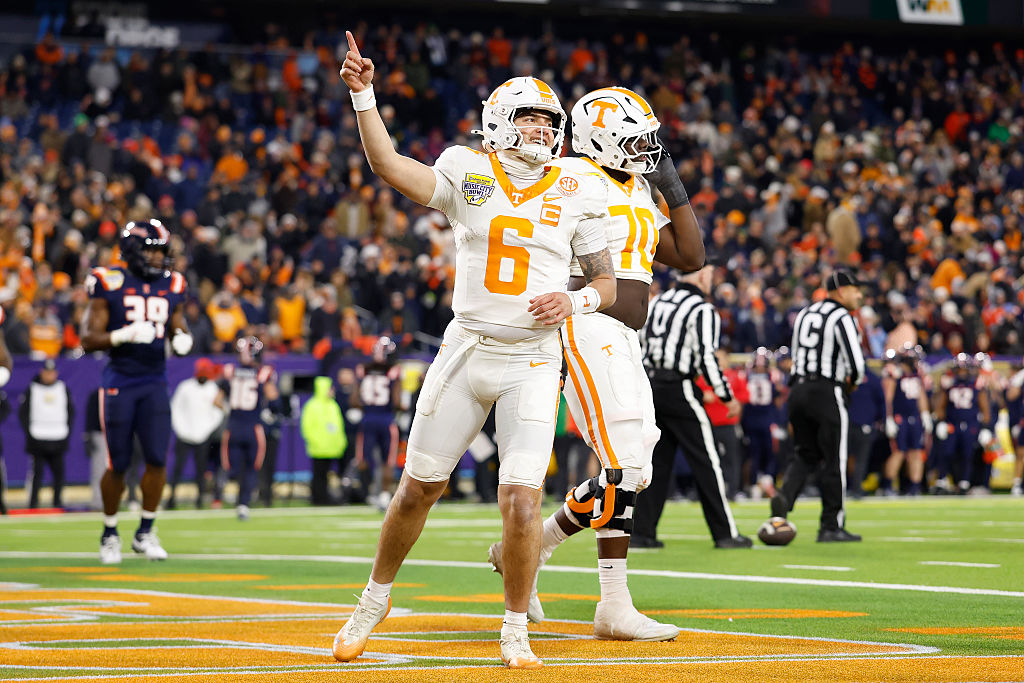
KNOXVILLE, TN — I did not expect to hear a presiding chancellor declare his love for Tennessee football inside a chancery court on Friday afternoon during Joey Aguilar‘s hearing against the NCAA. But, I also wasn’t expecting the attorneys representing both parties to profess their appreciation for the Vols quarterback either.
Just when you thought the Trinidad Chambliss and Charles Bediako cases had it all, a local Tennessee courtroom was the battleground for the latest eligibility case that could have major ramifications on college athletics moving forward.
“I love Tennessee football,” NCAA attorney Taylor Askew expressed to the court while arguing his case. “But, Tennessee is better than this. We don’t have to go to court to get our guy back. We don’t do that in Tennessee. He (Aguilar) is a hero in Tennessee.
“We didn’t know who he was until Nico (Iamaleava) left. You’re a hero to kids around this city. But it doesn’t mean the Vols get something everybody else doesn’t.”
If you didn’t know, NCAA attorney Taylor Askew played football at Tennessee Tech, but graduated from UT Law School, while also being a Knoxville native.
So, it shouldn’t come as a surprise that the guy who was arguing against his favorite team having their quarterback return for the 2026 season bleeds orange.
I’d imagine somewhere deep down inside, he might enjoy seeing Joey Aguilar on the sidelines inside Neyland Stadium again next season, though his bosses won’t be thrilled about how that would transpire.
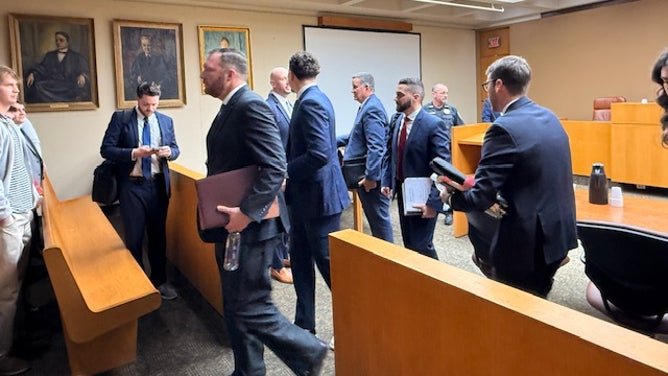
Bourbon Sales, JUCO Rules And Tennessee Fans: Joey Aguilar’s Fight Against The NCAA Had It All
This Lawsuit Is Nothing Like Trinidad Chambliss Or Charles Bediako
But this case, which landed in the local court after Aguilar pulled his name out of the Diego Pavia lawsuit earlier this month, is layered with problems over how the court should rule. That’s not my opinion, it came straight from the mouth of Chancellor Chris Heagerty.
The evidence needed for a preliminary injunction that would allow Joey Aguilar to compete with Tennessee until the trial has been completed to be granted is complicated.
Joey Aguilar Suing NCAA In Local Knoxville Court Seeking Extra Year Of Eligibility At Tennessee
Attorney Cam Norris argued that since Aguilar has only competed in three seasons of college football at the Division I level, he should be granted an additional year that would fall under the guidelines agreed to by NCAA member schools.
The problem for the plaintiff is that he’s also played at the junior college level, which the NCAA counts towards their eligibility clock.
So, in their argument, obviously Aguilar’s team was going to use Diego Pavia as an example, who was granted an injunction last year that allowed him to play for Vanderbilt in 2025.
But, that was granted by a judge in middle Tennessee, who is overseeing a federal case, compared to Chancellor Heagerty presiding over a chancery court.
NIL Became A Main Talking Point, With Whiskey Sales Involved
And, since Aguilar is also arguing that he would lose out on anywhere between $2–4 million next season if he weren’t allowed to play, the court is also weighing the NIL ramifications of whether to grant him another season.
It was at this moment that the proceedings got a bit awkward, since there is no actual proof that can be provided to the court. This quickly went from a case about JUCO rules, to financial losses that both Aguilar and the University of Tennessee would face if they did not have their starting quarterback return for the 2026 season.
The problem is that, since NIL contracts are not public record, and weren’t entered into evidence, Chancellor Heagerty was having a hard time wrapping his head around what actually constitutes ‘damages’ in this case.
Yes, there were examples of what athletes like Arch Manning and Sam Leavitt could be making this year, but no actual proof to back up these claims in a court of law.
We had terms like “Labor Market Harm” and “Consumer Market Harm.” But neither of those can be justified without actual proof, or some type of contractual evidence. Even Chancellor Heagerty pointed out that without data, how would he be able to make an informed decision on what the actual financial ramifications would be for Aguilar?
“I can’t base my decision on conjecture and speculation,” Heagerty said to Aguilar’s attorney, Cam Norris. “You don’t hand them (injunctions) out like popcorn. So tell me what proof you have to show me that the harm in this case, who I respect a great deal, and how it’s going to affect him.”
There was even a point in the proceedings where Chancellor Heagerty went back to his days of selling alcohol, mentioning that having to make a decision in this current NIL era was almost the same as asking a whiskey salesman to project Vodka sales on the final day of prohibition.
As you can tell, this was a confusing time for the plaintiff, along with the court and those within the gallery.
If the NCAA walked into the courtroom thinking that because Chancellor Heagerty was a Tennessee fan, it would make his decision easier in the favor of Joey Aguilar, I would imagine they left the Knoxville courthouse feeling better about their chances.
Who knows how this court will rule? But it was clear that each side, along with the court, bleeds orange, which should not come as a surprise given the playbook athletes are starting to use in fighting the NCAA.
Now, we wait until Chancellor Heagerty can decide what type of “damages” Joey Aguilar deserves, if any.