
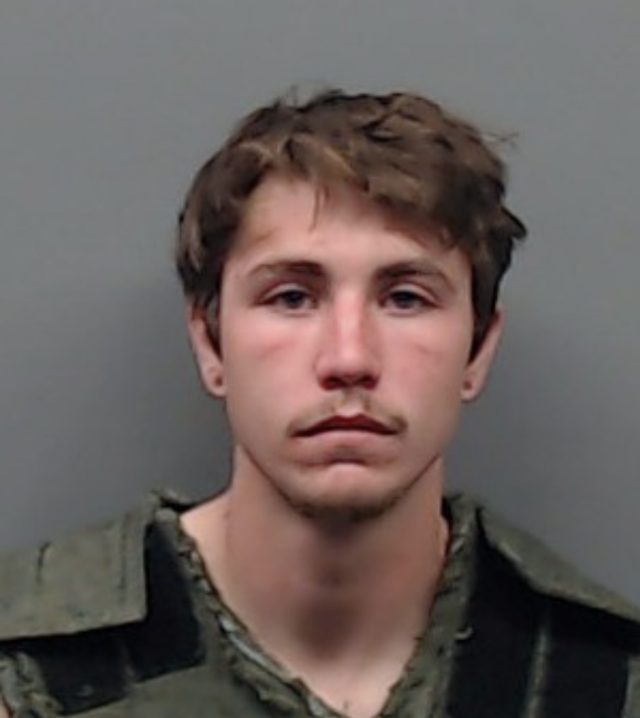
UPDATE: More details released in Tyler road rage shooting; 1 man dead, 1 man charged with murder
Published 9:15 am Saturday, February 14, 2026
A man is dead and another is charged with murder after a road rage incident in Tyler turned deadly, police said Saturday morning.
A few key details have been released about the circumstances of the shooting, but the case ultimately remains under investigation. Tyler Police Department spokesperson Andy Erbaugh said in a Saturday morning update that the man who was shot has died and the man who fired the shot was arrested.
Police say Trevor Julian, 29, of Whitehouse, was a passenger in a Tesla that was behind a pickup truck as both vehicles were stopped at a red light on Grande Boulevard around 5:10 p.m. Friday evening. Erbaugh said the investigation determined Julian got out of the Tesla and approached the driver of the pickup, identified as Dayton Morgan, who was sitting inside the truck.
Morgan, 23, of Ben Wheeler, allegedly shot at Julian through his pickup’s driver’s side window. The bullet struck Julian in the neck.
Julian was taken to a local hospital where he died from his injuries, Erbaugh said Saturday morning.
Morgan, who remained on scene after the shooting, was detained by police Friday night and later arrested on a murder charge. Morgan was booked into the Smith County Jail on a $1 million bond.
The Tesla had a female driver, Julian, and kids inside. Morgan and one other man were in the pickup truck.
Erbaugh called the shooting a “horrific incident.”
The case remains under investigation.
A full force of police units were on scene responding to the incident Friday night. Officers were busy directing traffic as investigators secured the crime scene. The shooting occurred during 5 p.m. rush hour, leading to the closure of Grande Boulevard east and west of Paluxy Drive. The road was closed until about 9 p.m. Friday night before fully reopening for regular traffic.
The terms “aggressive driving” and “road rage” emerged during the 1990s after news reports of several traffic disputes caught the public’s attention, according to the Texas Department of Insurance (TDI). The National Highway Traffic Safety Administration defines road rage as “an intentional assault by a driver or passenger with a motor vehicle or a weapon that occurs on the roadway or is precipitated by an incident on the roadway.”
Examples of aggressive driving include speeding in heavy traffic, tailgating, cutting in front of another driver then slowing down, running red lights or stop signs, weaving in and out of traffic, changing lanes without a signal, blocking cars that are trying to pass or change lanes, and passing a car on the wrong side of the road, according to TDI.
Extreme cases of aggressive driving escalate to road rage, which TDI said can include cursing or making rude or obscene gestures at other drivers, throwing objects at another vehicle, ramming or sideswiping a vehicle, forcing a driver off the road, or physically assaulting another driver.
Only a few states have laws specifically defining and punishing road rage. Gov. Greg Abbott recently signed a bill that will make road rage shootings a first-degree felony in Texas. The bill, which goes into effect Sept. 1, came about after a fatal Houston road rage incident in 2023.
Remaining calm and courteous while you’re behind the wheel can lower your risk of an unpleasant, or potentially dangerous, confrontation with another driver. TDI recommends drivers:
• Avoid eye contact because it can increase the chance of confrontation. Just steer clear of angry drivers and ignore them altogether, if possible.
• Don’t respond to aggression with more aggression. Being reactive can only escalate the situation, so it’s best to get out of the other driver’s way as safely as possible.
• Be tolerant and forgiving. Always assume an aggressive driver’s behavior is not personal.
Aggressive drivers or those who appear to be driving with road rage can be reported by calling 311 immediately. Be sure to include the vehicle description, location, license plate number and direction of travel, if possible. If you feel immediately threatened or are concerned for your safety, call 911 to be connected with local emergency services. Continue driving and find a safe place, like a police station, hospital or fire station.
Drivers can’t have control over others who are on the road, but they can keep their own behaviors and reactions in check.
“Staying alert, remaining calm, and obeying the rules of the road can help decrease aggressive driving and avoid the dangers of road rage,” TDI said.