
(Bloomberg) — Cocoa’s stunning rise and its equally remarkable slump are beginning to shake up the longstanding way of doing business in West Africa, the region that supplies the bulk of the world’s beans.
Ghana, the No. 2 producer, kicked off a process this week to loosen the tight state regulation of domestic prices. Discontent is simmering in top grower Ivory Coast as well, with traders holding off on buying beans for the upcoming mid-crop harvest in hopes of lower costs.
Most Read from Bloomberg
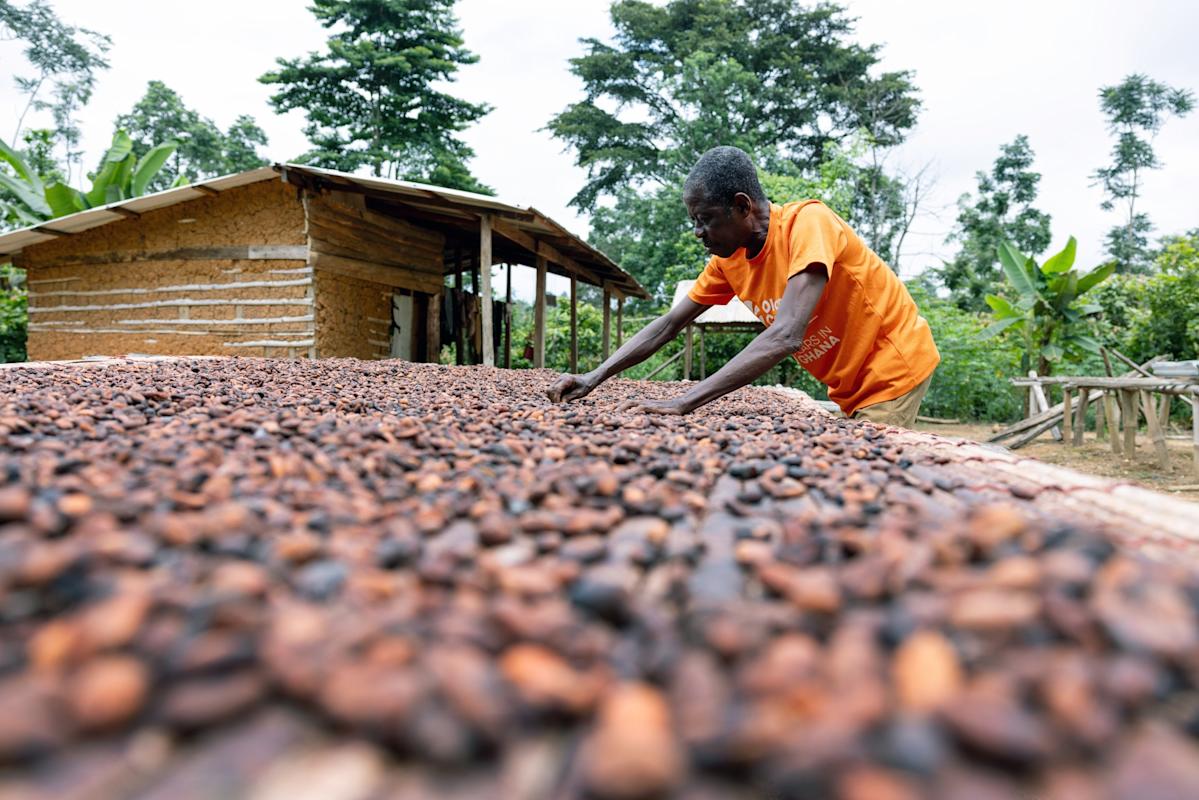
Cocoa sales in the two countries — which grow more than half of global supply — have long been controlled by government regulators that fix farmer pay and market the beans. It’s a structure intended to shield growers, many of whom are smallholders, from the volatility of crop markets.
But as futures surged to an all-time high in 2024, and crashed more than 70% thereafter, the system has made it difficult both for farmers to benefit from the rally and traders to remain profitable on the decline. With warehouses and ports clogged with unsold beans, and cocoa prices still falling, that’s straining the supply chain and sparking changes that could alter the global cocoa market for years to come.
Ghana’s move “is being interpreted as a more sustainable funding solution,” said Andrew Moriarty, senior cocoa manager at crop research firm Expana. “This does potentially remove some risk from supply disruptions looking ahead.”
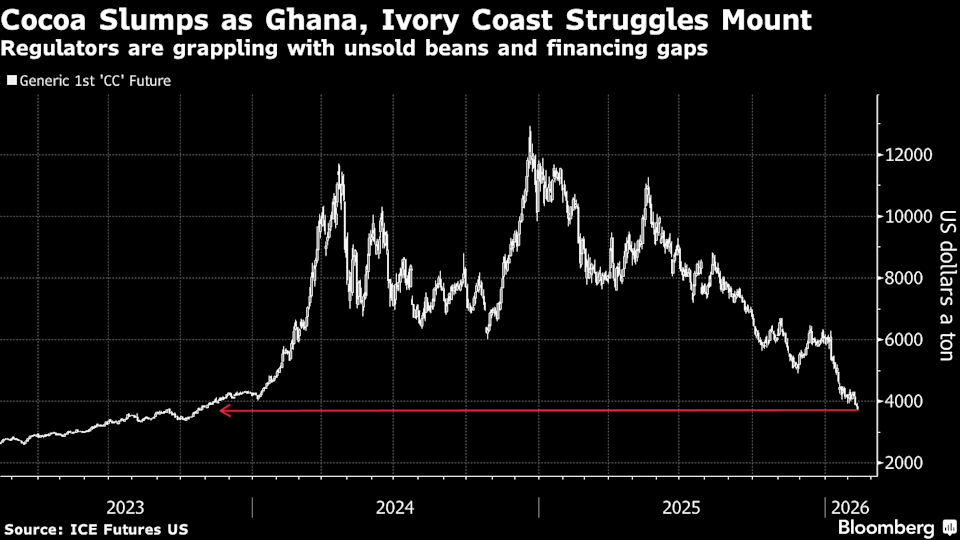
West Africa has long dominated the cocoa industry, with tropical climes well suited for producing the chocolate ingredient. But a mix of crop disease and increasingly extreme weather has weighed on crops, catalyzing a rally that pushed futures to nearly $13,000 a ton in 2024 — quadruple the long-term norm.
Regulators, who sell most of the crop months before it’s collected, couldn’t fulfill all the contracts in that year, rolling some to the next harvest. And chocolate manufacturers were left searching for ways to contain costs. Some tweaked recipes, adding in nuts or cookies, or swapped cocoa butter for cheaper vegetable-oil substitutes.
The cratering demand, coupled with improving production, caused the market to correct quickly. Commodities brokerage Marex Group estimates a 400,000-ton global surplus in the current season, which would be the biggest in International Cocoa Organization data going back to the 1980s.
Story Continues
New York cocoa futures have nearly halved since the start of the 2025–26 season in October, just after state-set prices in West Africa had caught up with the rally. They’re currently hovering around $4,000.
The widening mismatch has eaten into exporters’ profit margins, slowing bean flows abroad. It’s also caused a headache for regulators, who had slowed forward sales at the market’s peak in hopes of capturing even higher spot prices.
“If you look at all of the other cocoa origins, they benefited completely from all the prices as they went up,” said Jonathan Parkman, head of agricultural sales at commodities brokerage Marex Group in London. “Farmers in Ghana and Ivory Coast completely missed out on the way up, and they’ve completely missed out on the way down.”

That was the backdrop for an emergency meeting called this week by the Ghanaian government. The country now plans to introduce a flexible system that would allow for automatic domestic price adjustments when international prices change, Finance Minister Cassiel Ato Forson told reporters.
Going forward, Cocobod, as the regulator is known, will be permitted to issue domestic bonds for bean purchases to raise revolving funds, using cocoa beans as collateral, Forson said.
With the government cutting the farmgate price in tandem, the country will be in a better position to sell the balance of the main harvest and help unclog the system, Parkman said.
The immediate response from Ghana’s cocoa producers was relief at the prospect of their bean backlog being cleared, said Michael Acheampong, a chief farmer who supervises over 1,500 other growers just north of the capital Accra.
Still, the broader change in Ghana’s pricing system will take time. The proposal is set to be sent to parliament for approval later this year, and if passed, would only apply from the next main-crop that kicks off around October.
“What farmers want is that the Cocobod and the government must as a matter of necessity and urgency and in real time be willing to instantly increase the producer prices the very day prices improve on the international market,” Acheampong said.
A spokesperson for Ivory Coast’s Le Conseil du Cafe-Cacao, the industry regulator also known as CCC, wasn’t immediately available for comment on Ghana’s announcement.
“With local producers in Côte d’Ivoire already demanding a significant reduction in farmgate prices, it is really only a matter of time before the CCC follows suit,” Hamburg-based trader Hanseatic Cocoa & Commodity Office wrote in a note.
In the meantime, pressure is mounting. Some Ivory Coast exporters have struggled to fulfill contracts agreed at elevated levels, leaving more than 100,000 tons of beans without buyers. Plus, some traders have diversified cocoa sourcing away from the region after getting burned on postponed contracts and as harvests climb in South America.
Parkman estimates the two countries combined have about 200,000 tons of cocoa from the main crop — which ends around March — that still need to be sold and hedged. With those backlogged supplies and mid-crop beans still left to sell before the close of the season in September, the volumes risk further weighing on prices.
New York futures on Friday touched $3,652 a ton, the lowest since October 2023.
–With assistance from Baudelaire Mieu and Moses Mozart Dzawu.
Most Read from Bloomberg Businessweek
©2026 Bloomberg L.P.