
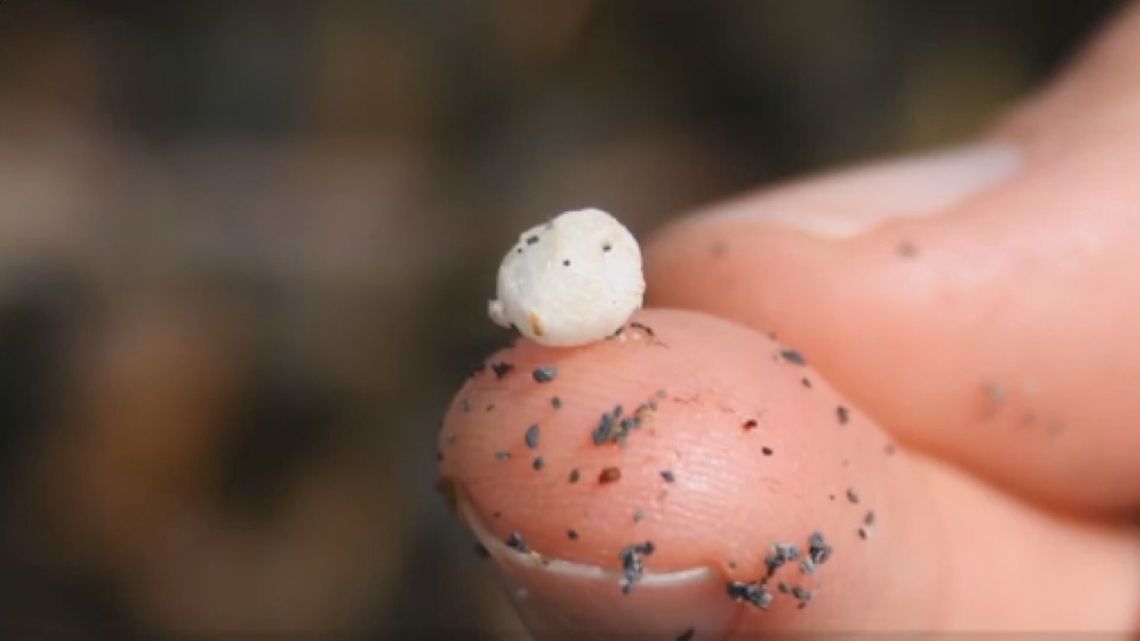
Addressing the environmental threat of plastic “nurdles,” federal legislation aims to prevent their release into U.S. waterways.
GRAND RAPIDS, Mich. — Tiny pellets of plastic, known as “nurdles,” are typically used in industrial factories, but can be toxic if released into the water.
“If you’re going to try to control it, you want to do it at the manufacturing level or upstream in this processing because we spend a lot of time and energy cleaning up after it already gets into the waterways, and by then, you know, you’re basically treating the symptom, not the disease,” said Dr. Allen Steinman, research professor at the Annis Water Resources Center in Muskegon.
Steinman said that addressing microplastics in West Michigan’s waterways is crucial to keeping a clean environment, and there may be some help coming from the federal government.
Congresswoman Hillary Scholten is co-sponsoring new legislation that would set rules keeping ‘nurdles’ out of U-S waterways.
Scholten said in a statement her bill is a “commonsense step” that will “preserve the natural resources that make Michigan such a special place for generations to come.”
Steinman applauded the bill but also said he hopes to see more self-policing from industries that use plastic pellets.
“Ideally, we’d be getting even before the pellet region, we’d be working with the manufacturers so that the pellets that they’re making would be maybe biodegradable, and if they did get into the water, we wouldn’t have that problem,” Steinman said.
It’s not just lawmakers looking to address the issue.
Steinman said that his institute is working on installing what’s known as a “Great Bubble Barrier” in Michigan to remove plastic from the Grand River.
“It’s going in downtown Lansing, presumably in the fall, once all the permitting is approved,” Steinman said. “Right now, we’re doing the pre-sampling, the pre-installation sampling, and then we’ll compare it afterwards to see how well it’s working.”
Scholten said in her statement that the EPA, as of now, doesn’t have any rules on the books specifically targeting plastic pellets.