
A few days before Christmas, Jared Keeling crawled into a bear’s den.
The den was under an abandoned house near Hunters. Neighbors had reported seeing a black bear walking around the property, gathering grass and other den-making material. They were alarmed.
Keeling, a wildlife conflict technician for the Washington Department of Fish and Wildlife, got the call. He went to the property for the first time on Dec. 21. He saw signs that the bear was there, one being a sizeable hole in the foundation, but didn’t see a bear.
The next day, when he returned with a co-worker who could help if something went wrong, he decided to check under the house.
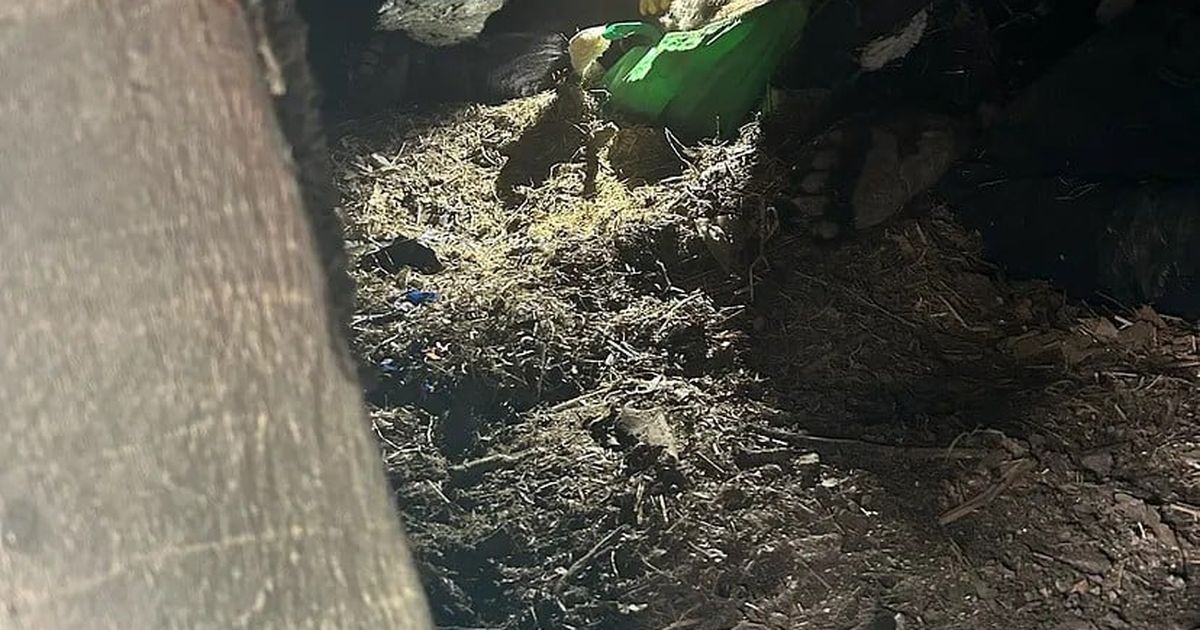
He belly-crawled through the bear-sized hole, inching into the darkness. After he’d gone a few feet, he looked up.
Across the crawlspace, maybe 15 feet away, a set of ursine eyes stared back.
“He wasn’t asleep,” Keeling said. “He was just looking right back at me, wondering what I was doing visiting his home.”
Keeling had never been in a bear den before. The bear had likely never had a human visitor. Things could have gone wrong fast.
Instead, Keeling got a few blurry pictures and backed out of the hole without incident, knowing they’d meet again.
It was just the beginning of what wound up being a nearly three-week-long eviction process for the bear – a big, fat male that made a home in the wrong place.
Bears generally aren’t a problem in the cold months. Some individuals have been known to skip hibernation altogether, but for the most part, bears cap a gluttonous fall by hunkering down somewhere cozy and conserving energy through the winter.
Dens take many forms. They just need a place to curl up and stay for a while. A cave works. So does a hollow tree or a hole in the ground.
“They don’t need much space,” said Annemarie Prince, WDFW’s district wildlife biologist for the area. “The tighter the better.”
Plenty of human creations would make passable bear dens. Culverts, tire piles, maybe some hedges. But when bears make their home too close to people, wildlife officials worry they’ll start causing trouble.
This bear’s home of choice was too residential for comfort, with human neighbors not far away. Fruit trees around and other nearby attractants had WDFW worried about the potential for problematic run-ins with people. The bear needed to move.
Keeling said they wanted to get the bear moved in the least invasive way possible. The best option would be to let it walk away on its own and then board up the hole in the foundation.
It became clear quickly that wasn’t going to happen. Game cameras he’d set up didn’t show the bear coming or going. It just stayed put.
Plan B was drawing it into a culvert trap and hauling it away. The day after Christmas, they set the trap. They baited it with sardines, maple syrup and Safeway doughnuts.
“They love their doughnuts,” Keeling said. “That’s one of our best baits.”
It didn’t work. A cat came by for the sardines. A different bear stopped by a few days after New Year’s, then wandered off for good. Meanwhile, the crawlspace dweller stayed put.
It was time for Plan C – darting the bear with anesthesia drugs and dragging it out of the den.
WDFW had been preparing for this option all along. Emails were sent, a team was formed and a date was chosen. On Jan. 9, the team – which included biologists, a game warden and a U.S. Fish and Wildlife Sevice staffer – gathered in the town of Hunters.
To avoid startling the bear, most of the group hung back at first. Keeling and WDFW bear biologist Lindsay Welfelt went to the den to put the bear to sleep.
Once the bear was out, they called the others. It was time for the hard part.
“At that point, the clock was ticking,” Keeling said. “We wanted to be totally done handling this bear within 45 minutes.”
First, they had to get it out. The bear was too big to drag out on an ice fishing sled. Another option involving climbing ropes was discarded.
Instead, Keeling found himself crawling under the abandoned home once more, this time joined by three other people.
A small hatch a few feet from the bear looked like the easiest exit point. It was a small hole – Keeling said a large dog would have a hard time getting through it – but it was their best shot. The only other option was dragging the bear the full length of the crawlspace.
“We all grabbed a corner,” he said, “and we moved this bear one or two inches with every heave.”
Maybe 20 heaves later, they pushed the bear through the hatch. Its soft fat allowed it to slip right through, going smoother than expected.
Biologists weighed the bear – more than 300 pounds. They checked its breathing and its gums, and they gave it an ear tag.
Another group powerlifting effort got the bear into the culvert trap, which was lined with straw, and then they hit the road.
The bear’s destination had been selected about two weeks earlier. Keeling and one of WDFW’s area biologists spent two days searching for a new den site in the Colville National Forest. They found a large hole formed by the root wad of a fallen tree. With a chainsaw, they cut up a stack of woody material to put on top.
It was snug, but the bear fit. They set up a game camera nearby and left.
They haven’t been back. Keeling said visiting the bear again could make it flee, undoing all their work.
In the spring, they’ll check the camera.
“Hopefully, we’ll be able to see some nice photos of this bear emerging,” Keeling said.