
NASA is facing a race against time to save its 21-year-old spacecraft, the Neil Gehrels Swift Observatory, which has been on a critical mission to study some of the most powerful explosions in the universe, known as gamma-ray bursts. Launched in 2004, Swift has spent nearly two decades observing the cosmos in multiple wavelengths of light, including X-rays and gamma rays. However, recent solar activity has caused an acceleration in the spacecraft’s orbital decay, putting it at risk of uncontrolled reentry into Earth’s atmosphere. In a bid to extend Swift’s mission, NASA has paused most of the observatory’s operations while preparing for a critical orbit boost this summer.
Swift Observatory’s Critical Transition
NASA’s Swift mission has reached a pivotal moment in its operations. With the spacecraft’s orbit decaying at an accelerated pace due to increased atmospheric drag, NASA has been forced to transition the observatory’s operations. As part of this shift, many of Swift’s science operations have been paused temporarily. Principal Investigator S. Bradley Cenko of NASA’s Goddard Space Flight Center explained,
“Normally, Swift quickly turns to view its targets — especially the fleeting, almost daily explosions called gamma-ray bursts — with multiple telescopes.”
However, with the spacecraft’s movement needing to be minimized, Swift will no longer be able to observe these cosmic events with all of its telescopes. Instead, the Burst Alert Telescope will continue to monitor for gamma-ray bursts, but other scientific instruments will remain inactive until the spacecraft’s orbit can be stabilized.
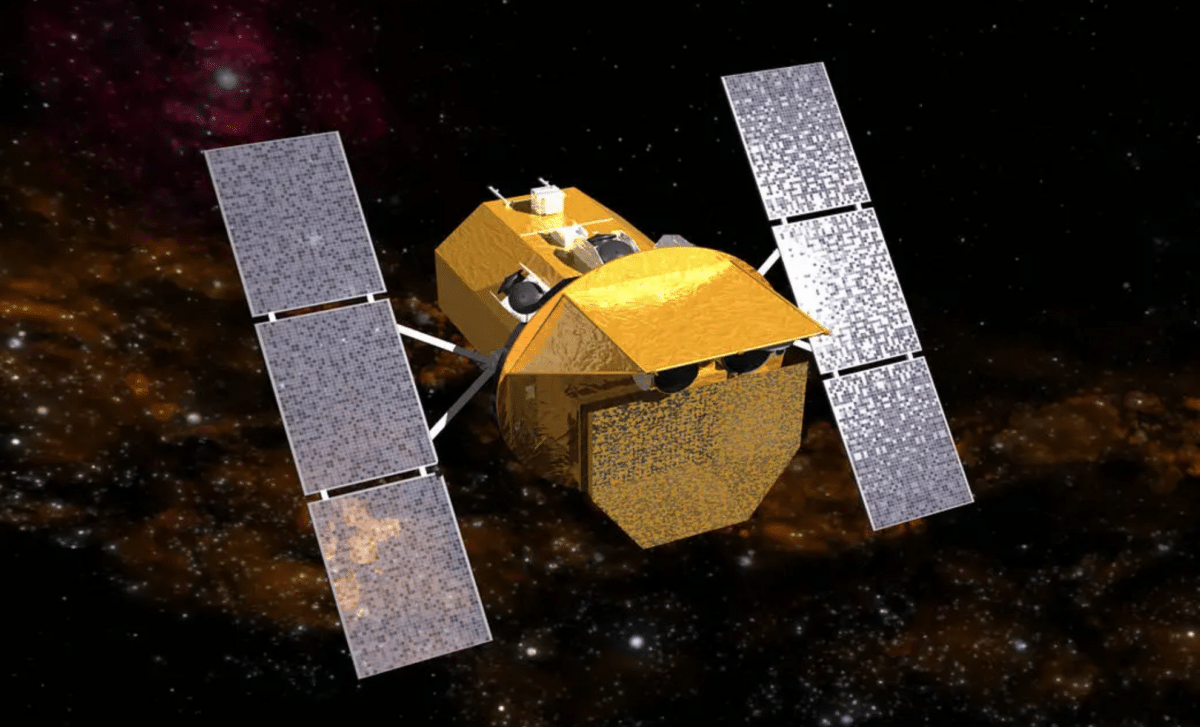
 An illustration of the Swift spacecraft in Earth’s orbit.
Credit: NASA’s Goddard Space Flight Center Conceptual Image Lab
The changes come as Swift’s altitude continues to decrease, largely due to the effects of solar activity. These fluctuations have exacerbated the atmospheric drag that the spacecraft experiences in low Earth orbit. At this rate, Swift faces a 50% chance of uncontrolled reentry by mid-2026. In response, NASA is preparing a rescue mission, with the hopes of stabilizing Swift’s orbit to prevent it from falling too low. Cenko emphasized the importance of this mission, stating,
“We anticipate the reboost mission to launch in the summer, so we’re transitioning operations now to give it the best margin we possibly can.”
The Orbital Decay Crisis
The challenge of orbital decay is a universal issue for spacecraft, and Swift is no exception. Over time, all satellites experience a gradual decrease in altitude, caused by drag from the thin atmosphere they orbit in. In Swift’s case, however, the effects of this drag have been accelerated due to increased solar activity. As the sun’s activity rises, the Earth’s upper atmosphere expands, creating more resistance for spacecraft like Swift. This has resulted in an unexpected shift in Swift’s orbit, which now hovers at a precariously low altitude.
Swift was not designed to withstand such a rapid decline in its orbit. Although NASA has been able to manage this decay for years, the spacecraft’s current trajectory is unsustainable without intervention. In response, NASA began exploring solutions to prevent Swift from falling into Earth’s atmosphere too soon. The upcoming rescue mission, led by the Arizona-based startup Katalyst Space Technologies, is crucial in this effort.
The Lifesaving Reboost Mission
In an effort to save Swift from a premature end, NASA has partnered with Katalyst Space Technologies, which was awarded $30 million to develop a spacecraft specifically designed to boost Swift’s orbit. This reboost mission is set to launch in the summer, with the goal of rendezvousing with Swift and moving it to a safer altitude. The mission’s success is vital to keeping Swift operational, and its precise timing will be key.
The mission is not only a rescue operation but also a testament to the collaborative efforts between NASA and private sector companies. By leveraging the capabilities of Katalyst Space Technologies, NASA is finding innovative solutions to extend the lifespan of its aging space assets. The launch of the reboost mission will likely be one of the most crucial moments in Swift’s life, as it represents a final effort to prevent the observatory from falling victim to the inevitable forces of orbital decay.