
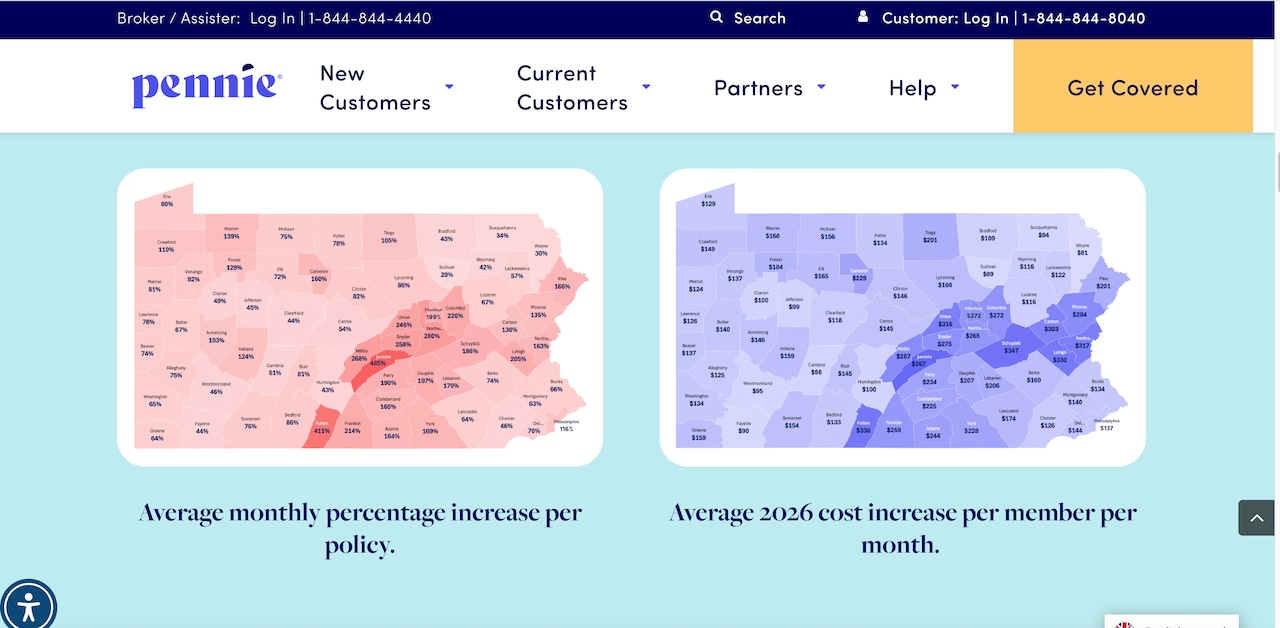
Some 85,000 Pennsylvania residents enrolled in the state’s health insurance marketplace have dropped coverage because of sky-high premium rates.
The health insurance marketplace, known as Pennie, saw its numbers drop to 485,000, as nearly 1 in 5 enrollies were unable to keep their plans, the agency said following the enrollment deadline Jan. 31.
The premium costs, once affordable to those with lower incomes with the help of federal subsidies, roughly doubled in Pennsylvania for 2026 after Congress failed to extend the subsidies put in place during the Biden presidency.
“Pennie enrollees were faced with an average price increase of 102% to remain in their plan for 2026, creating significant affordability challenges for many Pennsylvanians,” Pennie said in its announcement.
Enrollees who dropped the plan were primarily older and living in rural areas, as well as those with incomes just above Medicaid eligbility, Pennie said.
Nearly 80,000 additional Pennsylvanians enrolled in Pennie for the first time this year, but that was 12% lower than last year.
Another 33,000 Pennsylvanians enrolled in plans with lower coverage levels that have smaller premiums, but bring thousands more in out-of-pocket costs should they need healthcare.
Pennie said enrollment terminations are expected to increase over the next several months and that it won’t have a full understanding of the impact until the spring.
Enrollees told Pennie that premiums would eat up 50% of their income and expressed deep concern that without health insurance they would be healthy enough to keep working.
The increased number of uninsured or underinsured people will create “significant strain” on Pennsylanians’ healthcare system — particularly rural hosptals — and the economy, the agency said.
“Higher uninsured populations drive up medical bankruptcy and debt, discourage entrepreneurship and small business employment, and increase uncompensated care costs for hospitals and providers.”
In addition, without insurance, residents are more likely to delay care, leading to worse health outcomes and will rely more on emergency rooms.
“When conditions go untreated, Pennsylvanians are more likely to experience preventable complications, permanent disabilities, and a reduced ability to work and live independently,” the agency said.
Although open enrollment is over, Pennsylvania residents may still enroll if they lose coverage or have a major life event such as moving or having a baby.