
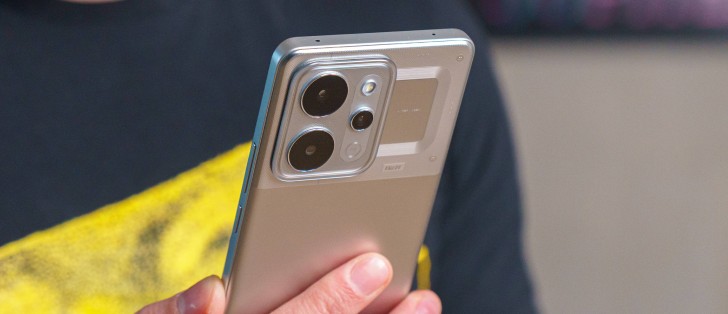
6.8-inch, 144Hz, quad-curved OLED display
The Realme P4 Power shares the same display with the P4 Pro – a 6.8-inch OLED panel with 1280 x 2800px resolution and 144Hz refresh rate. Realme also advertises high-frequency PWM for people with sensitive eyes and 10-bit color depth, along with HDR10+. Even though we don’t necessarily expect Dolby Vision support, some rivaling options offer it.
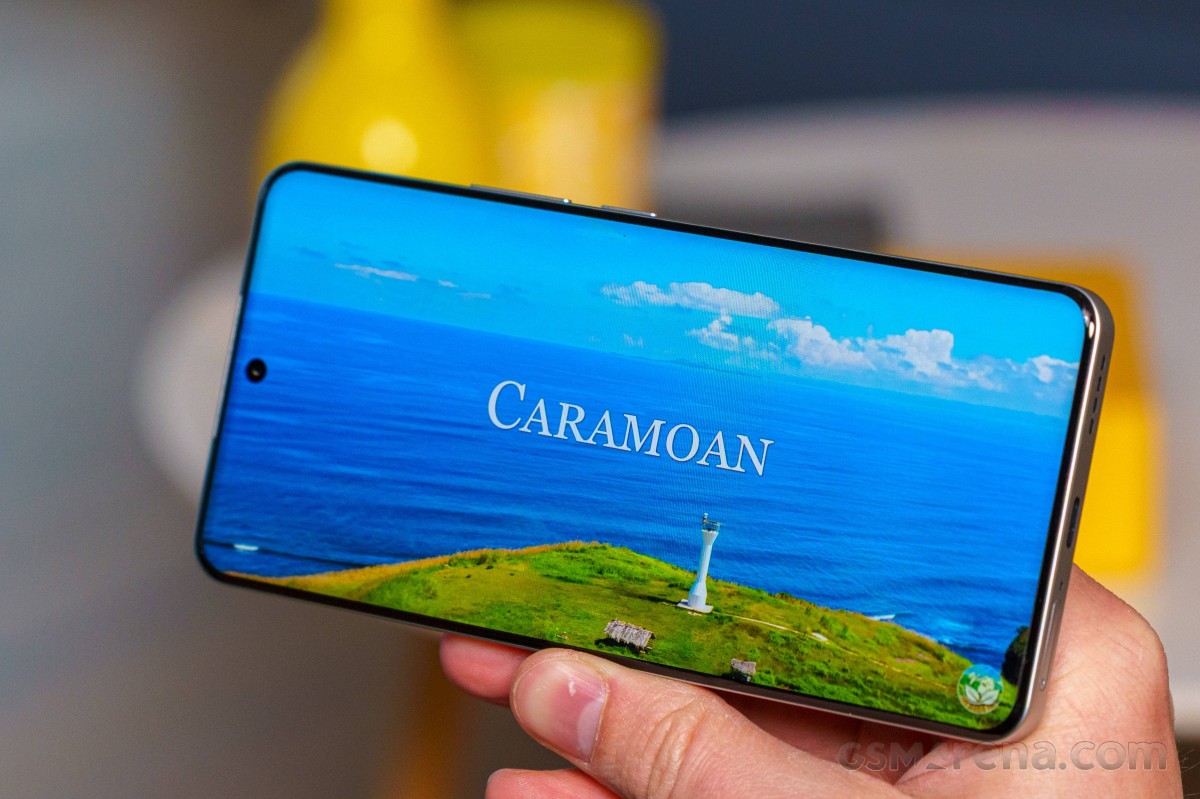
When it comes to brightness, the display had a strong showing. In manual mode with the Brightness Boost setting turned on, the screen reached 949 nits, while the minimum brightness dips below 2 nits – 1.7 nits to be exact.
In auto mode, the screen peaked at 1,780 nits on a 75% white patch, but when reducing the area to 10%, the panel peaked at 2,026 nits. Both figures are good for outdoor use on a bright sunny day and for a proper HDR experience.
Refresh rate
The handset offers three refresh rate modes – Auto, Standard and High. The High option behaves like the Auto, but forces some third-party apps to run at 120Hz instead of 90Hz. For instance, most Google apps, including Chrome, are capped at 90Hz when using the Auto setting, so for the smoothest possible experience, keep it on High.
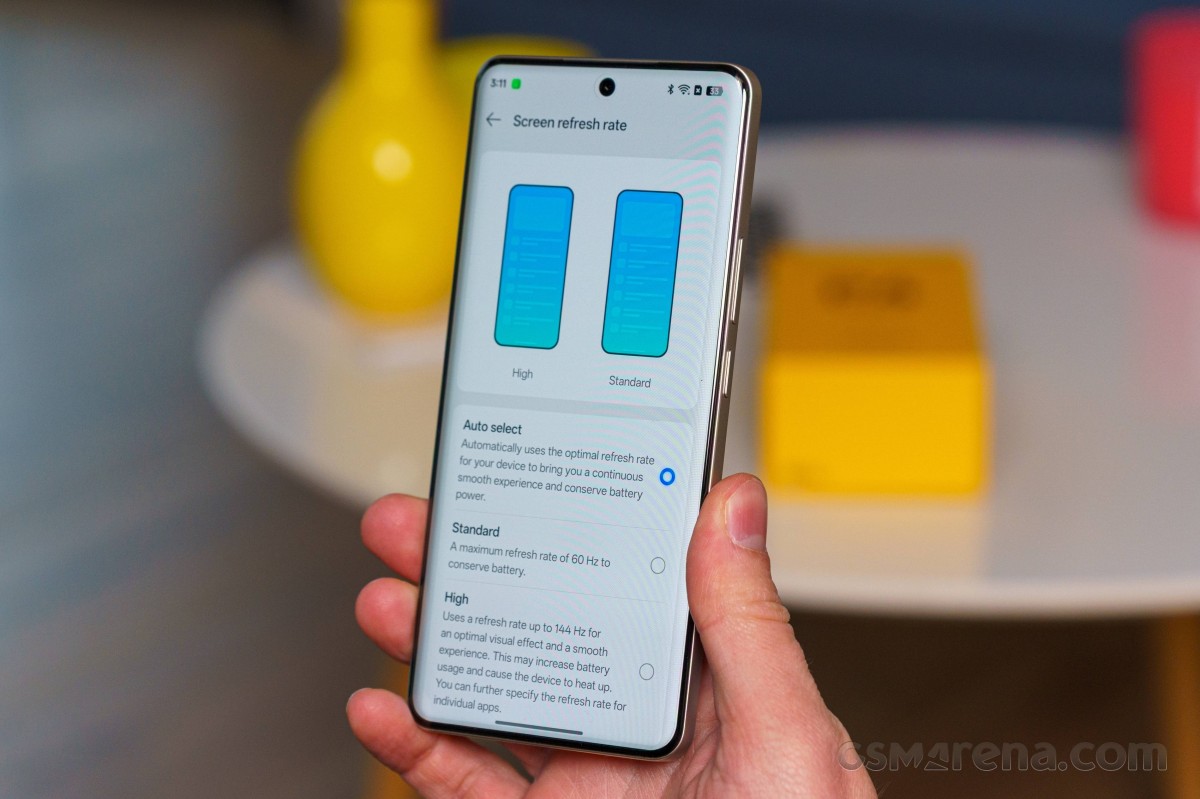
Sadly, we couldn’t find a scenario where the display can boost up to 144Hz, except for a couple of games, such as Real Racing 3 or Sky Force: Reloaded, that have their refresh rate cap removed.
Battery life
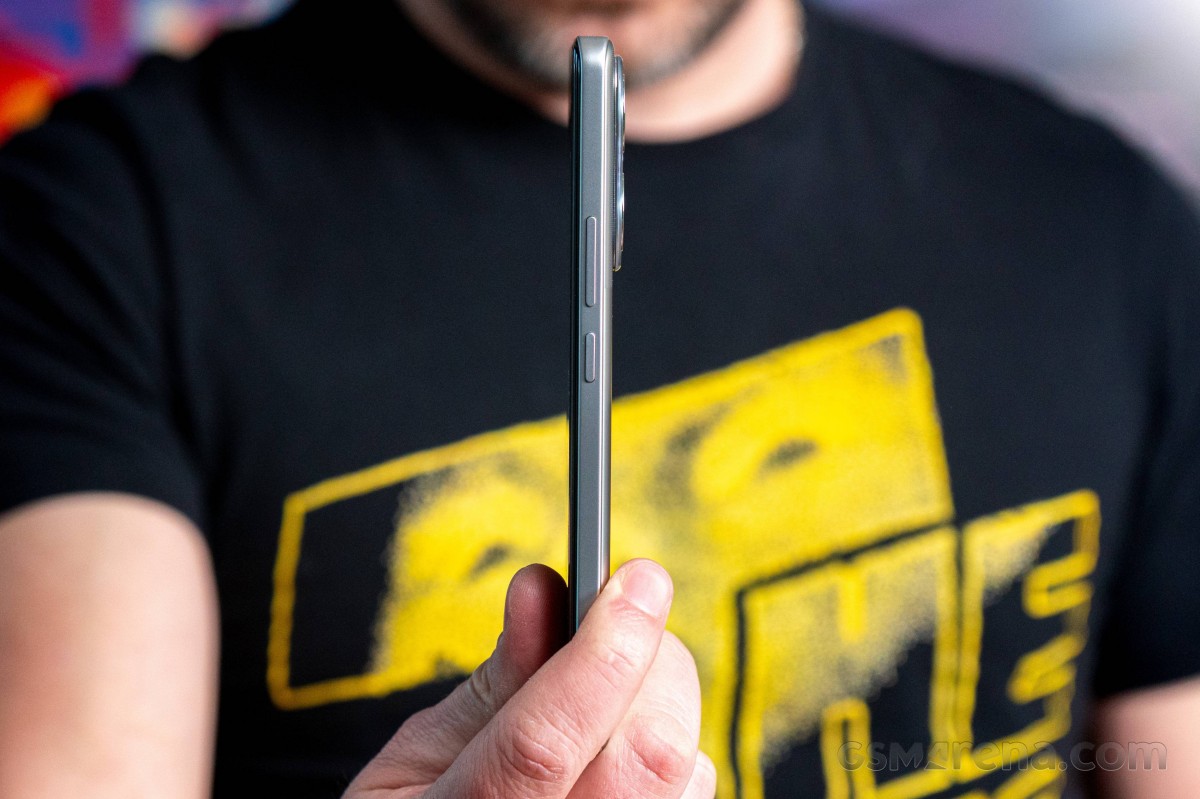
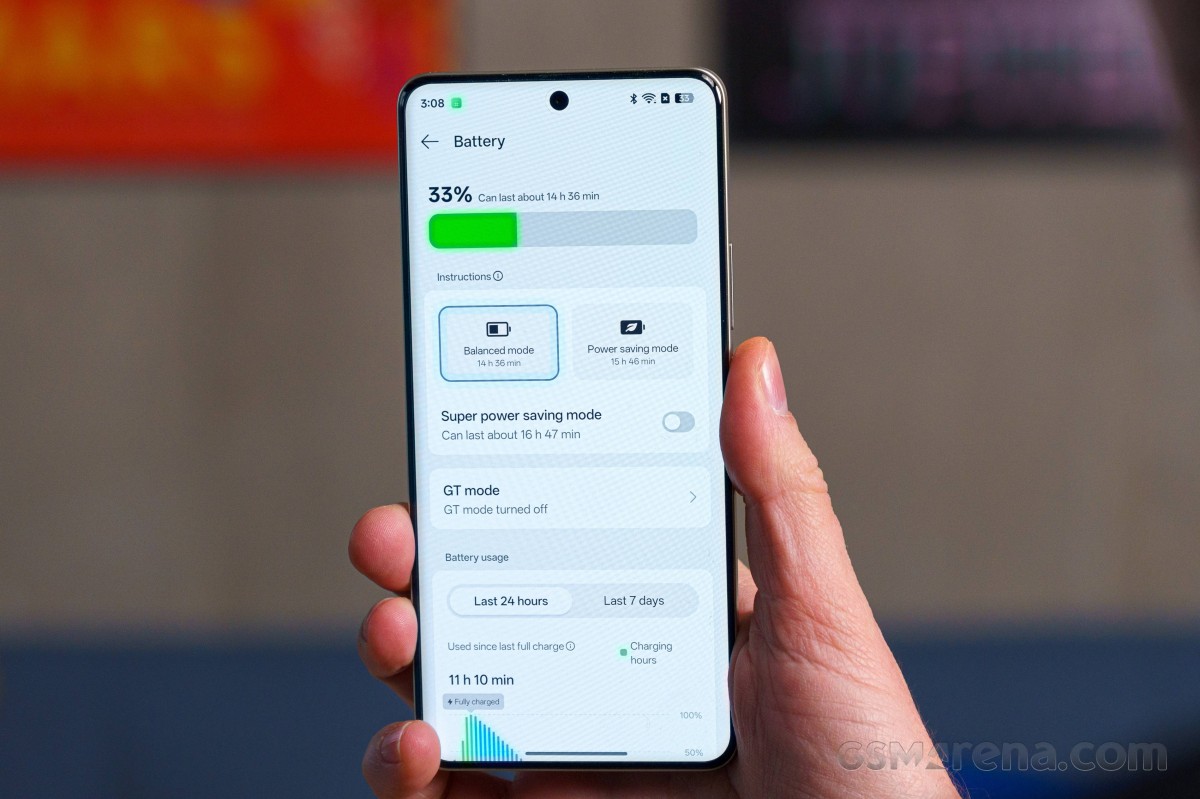
Without a doubt, the Realme P4 Power’s centerpiece feature is the humongous 10,001 mAh battery, which is quite the achievement given that it’s a normal smartphone with regular dimensions. It’s not one of those rugged, 15mm-thick smartphones with huge batteries. It’s a regular old phone with a huge battery.
It’s no surprise that the device topped our all-time battery ranking, achieving an impressive 25:35h Active Use Score. And judging by the extra-long web browsing and video streaming test results, we are confident enough to say that this phone would most certainly last you two full days away from the charger. No competitor comes close to the Realme P4 Power in terms of battery endurance.
Charging speed
The handset supports up to 80W fast wired charging over the proprietary SuperVOOC protocol. It also plays well with certain Power Delivery chargers that support at least 55W with PPS. Interestingly enough, the P4 Power also supports 27W reverse wired charging, which is more than respectable for a phone and decent enough for a power bank, too. Realme claims it’s good enough to charge an iPhone 16 Pro to 50% in just 27 minutes.
Back to the charging itself, the phone charges from 1 to 100% in 1 hour and 19 minutes, according to our test, but more importantly, it can charge to 45% in 30 minutes, which is enough for a normal full day use. Keep in mind that this is a 10,001 mAh battery after all, so even at 50%, you have around 5,000 mAh, which in turn equates to most smartphones on the market.
So even if more than an hour of charging sounds slow, by today’s standards, it’s still very respectable when you account for the battery capacity. We recorded around 50W peak power input, but only for a short duration. The power meter was showing around 30W most of the time.
Since Realme advertises 55W wired charging support with compatible USB Power Delivery chargers, we put that to the test as well. Unsurprisingly, the phone peaked at a lower 40-43W charging power, but maintained it for longer. That explains why we got similar readings in the first 15 to 30 minutes, but longer overall charging time – more than an hour and a half.
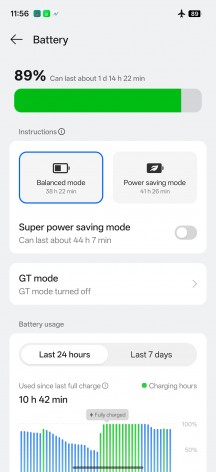
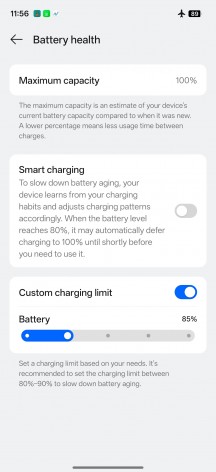
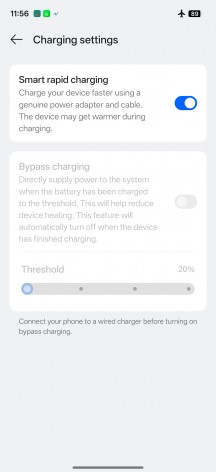
As usual, the software offers a handful of features that extend battery health, like limiting fast charging, smart charging (it charges fully only when needed, the algorithm learns from your charging behavior), bypass charging, or setting a charging cap from 80 to 90% with 5% increments.
Regardless of what battery-protecting measures you take, Realme argues that battery degradation over the years will be negligible. Since this is a huge battery, users won’t have to deal with charging that often, bringing down the number of charging cycles throughout the years. Also, Si/C batteries are touted as more durable compared to lithium-ion cells in general, with Realme citing numbers like 35% slower degradation rate and 392 fewer cycles over the course of four years.
Battery and charging settings
At the end of the day, Realme promises at least 80% battery health retention after 8 years of normal use, which, if true, is quite impressive.
Speakers
The Realme P4 Power uses a set of hybrid stereo loudspeakers. That means the top one acts as an earpiece, and it’s slightly quieter than the bottom one.
In terms of loudness, the P4 Power doesn’t impress, even with the volume boost that extends the volume slider to 400%. The handset achieved a “Very Good” -25.8 loudness score, making it one of the quietest of the bunch.
Keep in mind that the tracks we uploaded are recorded at 100% volume, not 400%, as we found that maximum volume distorts audio quality notably. When the slider is at 100%, though, you get -27.1 LUFS loudness.
Anyway, tuning leaves more to be desired as well. While bass is somewhat pronounced, the mids and the vocals feel lost and muffled. Not ideal for watching movies or listening to podcasts.
Use the Playback controls to listen to the phone sample recordings (best use headphones). We measure the average loudness of the speakers in LUFS. A lower absolute value means a louder sound. A look at the frequency response chart will tell you how far off the ideal “0db” flat line is the reproduction of the bass, treble, and mid frequencies. You can add more phones to compare how they differ. The scores and ratings are not comparable with our older loudspeaker test. Learn more about how we test here.