
A plan to limit how many hours Medicaid will pay caregivers in Colorado is on hold until at least July, but state lawmakers haven’t entirely abandoned the possibility of making those cuts as they face an uncertain budget outlook.
In the second half of last year, Gov. Jared Polis released a series of executive orders to reduce spending after federal tax cuts threw off Colorado’s budget. The state pegs its tax laws to the federal government’s and faced a $783 million hole after H.R. 1, known as the “big beautiful bill,” passed in July.
Lawmakers partially filled the hole by preventing some tax cuts from taking effect at the state level, but largely punted decisions about reducing spending to the governor.
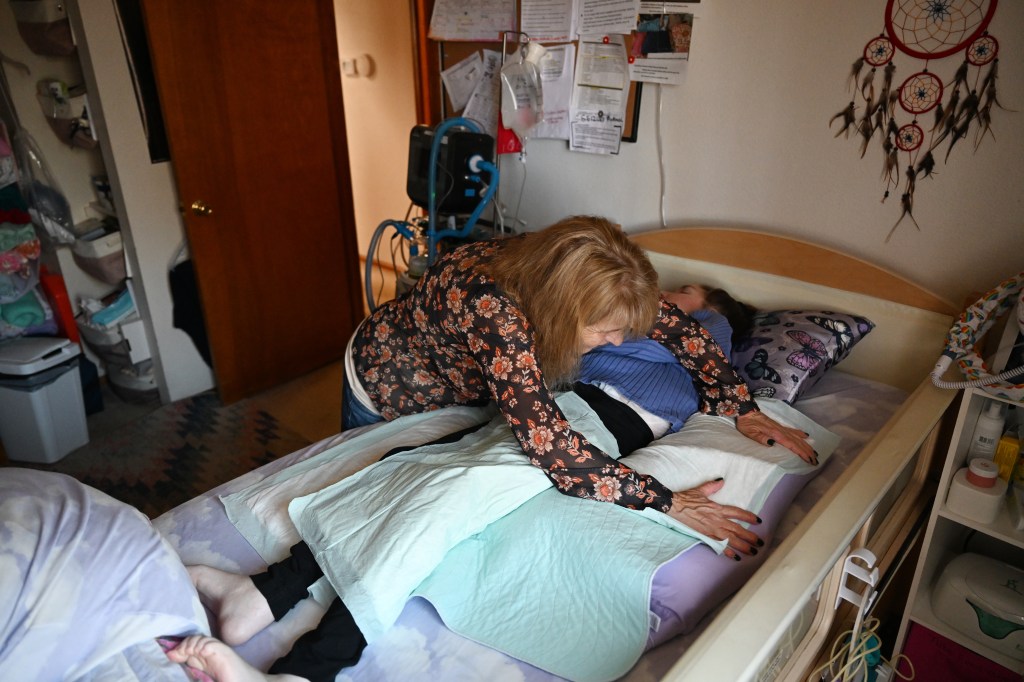
One of the most controversial cuts would have capped caregivers’ paid time at 56 hours per client. Family caregivers have said they can’t find professionals willing to provide home care for their medically complex loved ones, and their budgets won’t work if they have to continue caregiving around the clock without pay.
The Joint Budget Committee accepted most of the governor’s cuts for the current fiscal year, allowing them to take effect, but opted not to immediately cap caregiver hours, said Sen. Judy Amabile, a Boulder Democrat.
Members know they’ll have to make some reductions to Medicaid in the fiscal year starting in July because it makes up one-third of the budget, but how deep those cuts will go depends on what the upcoming revenue forecast shows, she said.
The cap on hours, which had been scheduled to take effect in April, would have saved about $168,000 in the fiscal year ending in June and $1.1 million in the next one, according to the Colorado Department of Health Care Policy and Financing, which runs the state’s Medicaid program.
The department has identified home- and community-based services to people with disabilities as an outlier in the speed at which costs have grown since the pandemic.
If lawmakers determine they have to cap caregivers’ paid hours, they’ll need to give families ample notice so they can start preparing, Amabile said.
“There’s no sacred cows,” she said. “Nothing is off the table, but I want to make sure we’re protecting families.”
Discussions in the budget committee suggest lawmakers want to see a strong exemption process for people in unusual situations before voting for cuts or caps, said Julie Reiskin, co-executive director of the Colorado Cross-Disability Coalition.
Any cut is going to be painful for a certain fraction of the community of people with disabilities, but if the state can’t rein in costs, it may scuttle some types of support entirely, she said.
“I can tell that the legislators are struggling,” she said. “No one wants to do this.”
Most home- and community-based services are optional under federal law, making them a clear target as states face Medicaid funding in the coming years. States have to pay for institutional care for people with disabilities, however, so they risk much larger bills if people who previously lived in the community move to nursing homes.
When states faced a drop in federal Medicaid funds in 2011 following a temporary increase during the Great Recession, all either reduced the number of people who would receive optional services or spent less on each qualifying person, according to a study in Health Affairs. Waiting lists for home- and community-based services increased in roughly half of the states.
While the legislature can’t balance the budget without Medicaid cuts, it also can’t realistically reduce Medicaid spending enough to avoid pain elsewhere, Amabile said. Even if Colorado didn’t have the constitutional requirement to refund tax collections when they grow above a certain amount, the state would still face painful decisions this year, though allowing it to keep more revenue could help in the future, she said.
“If something doesn’t change, next year we’re going to be in the same situation, and the year after that we’re going to be in the same situation,” she said.
The state might be able to find efficiencies that save money without meaningfully impacting benefits, such as identifying when agencies that manage people’s home care are taking a share out of proportion to the services they provide, Reiskin said.
But coming up with those solutions takes longer than the three months lawmakers have left in session, she said.
“These are conversations that are going to take a couple years, and they have to balance the budget this year,” she said. “This is just a very difficult time for everyone.”
Sign up for our weekly newsletter to get health news sent straight to your inbox.