
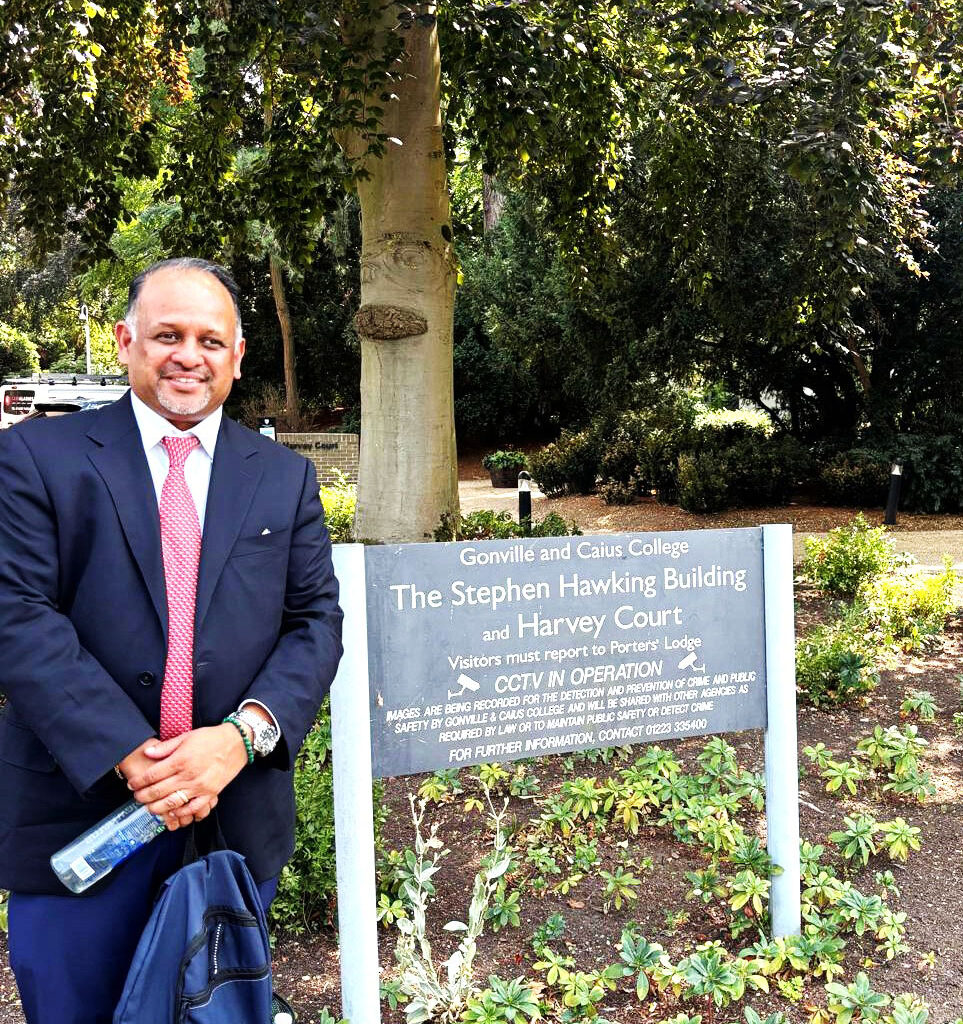
Dr Niven Narain can still remember that day in the hospital 35 years ago when he looked at the x-ray images belonging to his beloved grand-mother, Rukhminia Latchman, who was diagnosed with cancer. It was a devastating blow to him and his family, and although he had his mind set on pursuing a career in Computer Science, his grandmother’s death completely changed the course of his life.
He was just 13 years old at the time she died. It was intriguing to him the way cancer suddenly took over his grandmother and the effect it had on her body, causing her to die just a year after she was diagnosed. “When she was diagnosed, it had metastasised to her lungs; it was in her lymph nodes. I remember looking at the x-ray images in the hospital and just looking at her lungs and all these white spots on her lungs. Those are images that will be entrenched in my mind forever,” he expressed in an interview with Stabroek Weekend recently.
He constantly talked about her death and the cancer, so much so that his Guyanese biology teacher Hector Telford picked up on his interest and urged him to pay some more attention to the subject, since he was already doing well in it.
He took that advice and today, Dr Narain is the President and CEO of BPGbio Inc, a Boston, US-based biotechnology company that uses artificial intelligence to better understand human biology and develop new medicines. Widely regarded as a pioneer at the crossroads of biology and AI, he led the creation of the company’s NAi Interrogative Biology® platform – a system that helps scientists uncover disease patterns and identify promising treatments.
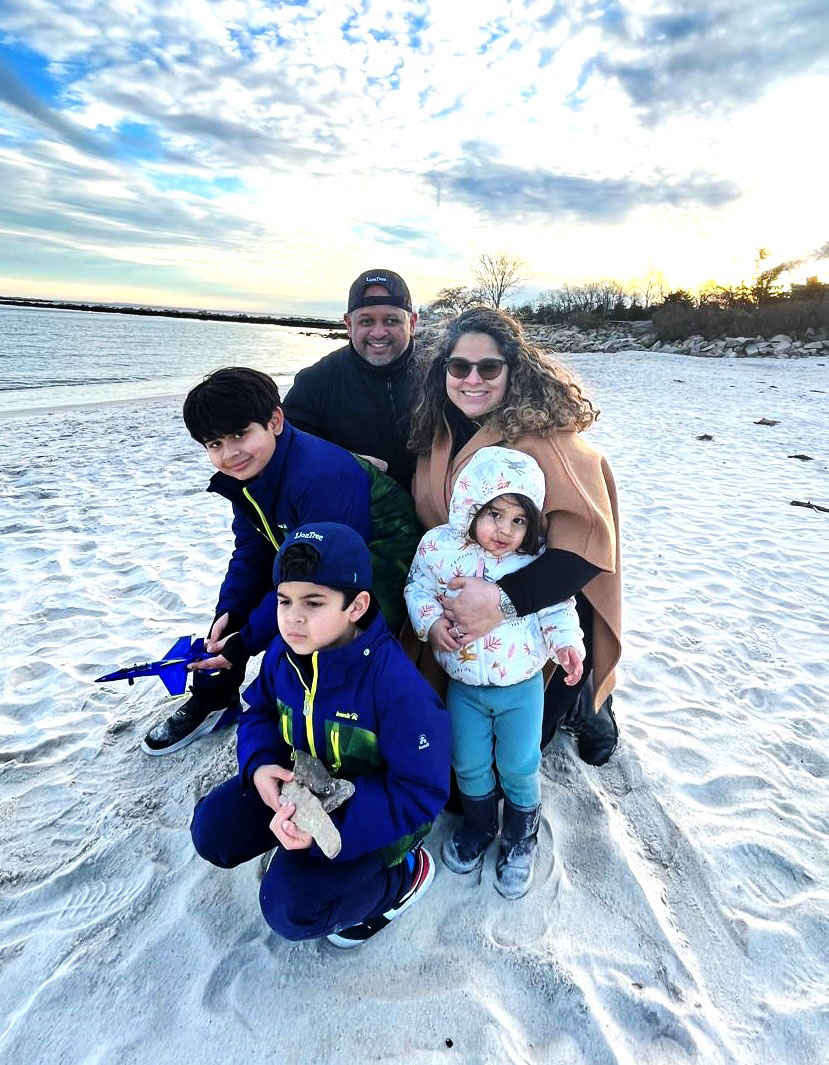 Dr Niven Narain with his wife and children
That work has driven the development of several advanced drug candidates, including potential therapies for cancer, neurological conditions, and rare inflammatory diseases. “My work is using math and AI to firstly understand the make-up of a disease process and in patient populations. Instead of developing drugs based on chemicals – starting with a hypothesis and finding a chemical that may have a different effect on a disease – I flipped the entire model. So instead of using hypotheses to create data, I thought it would be better to use patient data or patient biology to create hypotheses,” he explained.
Named the Science and Technology Laureate of the Anthony N Sabga Awards recently, Narain, 48, was born in Guyana and spent just a few years here before leaving to spend some of his elementary and primary school years in the Bahamas and later, between Florida and New York in the US. Though very young when he left, he can still recall certain things about the land of his birth.
He was born to Ramesh and Leela who both hailed from Berbice and were graduates of the University of Guyana; his dad, a teacher at St Rose’s High, was from Number 64 village on the Corentyne, and his mom, also an educator, was from Number Two village. She taught at Stella Maris Primary and attended the Cyril Potter College of Education.
The family lived on Thomas Street, in proximity to the Georgetown Public Hospital and Narain recalled going for walks to the seawall and visiting Berbice to see his dear grandmother with whom he shared a very close relationship. “Unfortunately, when she moved to New York, she got breast cancer. That really affected me negatively,” he recalled. “In the late 80s to early 90s… everything was all tech; the beginning of the internet, etc. But when she got breast cancer, that’s when I was struck by what cancer can do to not only a patient… but I looked at the effect it had on our family – her children, her brothers and sisters.”
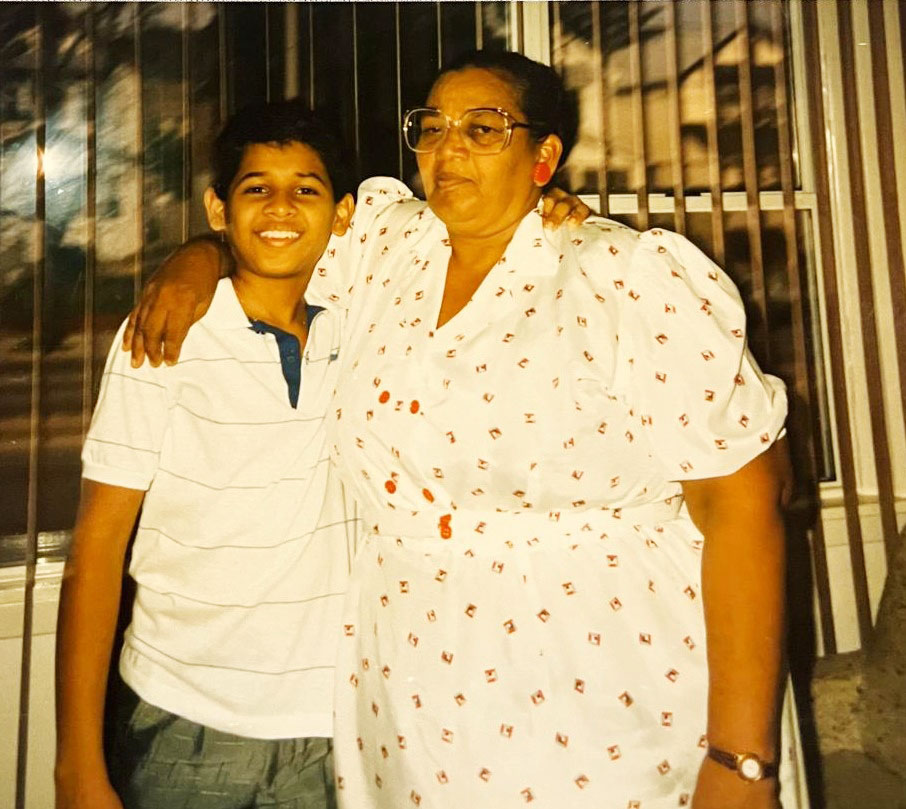 Dr Niven Narain as a child with his grandmother
Rukhminia Latchman
Though Narain didn’t have a real interest in Biology, his grandmother’s experience ignited a love and passion for the field. “The cancer doesn’t end when the patient dies; it lasts; it permeates the family, and I was really struck,” he shared, noting that his Biology teacher also played an important role in fostering his interest in the field.
Since then, Narain has observed that the aggressive cancers present in the Caribbean primarily affect Afro and Indo-Guyanese and Carib-beans. When drugs are developed though, everyone gets the same treatment. He noted that the drugs are not developed on the basis of understanding the biological context of the disease and how it is different in various populations. “What my work has done … I was the first person in the world to use AI in medicine to develop drugs and this dates back to 2010,” he said.
He questioned why patient data and biological samples – including blood, urine and tissue – are not more fully analysed to study genes, proteins and other markers in order to better understand both the individual and the disease. He also questioned how early diagnostic tools can be developed to detect serious illnesses before they progress to advanced stages.
Narain said his team has carried out groundbreaking work alongside the US Department of Defense, as well as researchers at Harvard and Oxford, to develop advanced diagnostic tools, while also designing drugs that are closely aligned with patients’ underlying biology. “So when we give these drugs to people; when we’re developing these drugs, it’s not a one -size fits all. There’s something called precision medicine, which is giving the right drug at the right time to the right patient at the right dose.”
Anthony N Sabga Award
Upon learning that he had won the Anthony N Sabga Award for Caribbean Excellence, Narain said his first thoughts were of his grandmother and the women in his life including his wife, daughter and mother. The moment, he shared, was both humbling and deeply emotional, but it quickly gave way to a profound sense of responsibility. “It was humbling, but it had me thinking, now that I’ve won the award, what am I going to do with it? I really felt this massive social responsibility.”
He said he found himself thinking about Guyanese women who still lack adequate breast cancer screening, even as improvements have been made, and about the broader need to improve cancer outcomes across Guyana and the Caribbean. The award, he expressed, strengthened his resolve to help train the next generation of scientists in the region and left him reflecting not just on the honour itself, but on how he could use it to make a meaningful difference.
Science education in Guyana
Narain said he has already begun working closely with Guyana’s Health Minister Dr Frank Anthony and the United States Ambassador Nicole Theriot as part of a broader effort to bring his work to the region and help lay the foundation for a biotechnology industry in Guyana.
His vision, he explained, is to stimulate the development of a local drug manufacturing and biotech ecosystem that can support innovation, research and high-value scientific careers. Drawing on his experience collaborating with more than 70 global partners, including universities and medical schools, he believes that introducing pharmaceutical and biotechnology innovation to Guyana would be transformative for the country and the wider Caribbean. He noted that these conversations are no longer theoretical, as initial steps have already been taken. A community biology project focused on diabetes has been launched in collaboration with the Ministry of Health, marking an early example of how data-driven science can be applied locally. In addition, discussions are under way on establishing biobanking facilities and exploring opportunities in drug manufacturing.
Beyond industry development, Dr Narain is also turning his attention to education. He has been engaging Professor David Dabydeen of Cambridge University on strategies to strengthen science education in Guyana at both the secondary and tertiary levels. He said he’d love to see the establishment of PhD programmes in biology, physics and chemistry in Guyana.
Dr Narain’s encourages young researchers to embrace failure rather than fear it, seeing setbacks as essential lessons. Science, he says, should also be approached with a sense of joy – a willingness to step back, explore and remain excited about the unknown. He stresses that success in medicine and research is rarely a solo pursuit. Being a great scientist or doctor requires collaboration, openness and the ability to work effectively with others. After 25 years in the field, travelling the world and working alongside global partners, he acknowledges that humanity still does not fully understand diseases such as cancer and disorders affecting brain health. Despite landing on the moon, developing self-driving cars and digitising much of modern life, he noted that the mysteries of biology remain vast. To him, that reality underscores the need for humility.
More than three decades after standing in a hospital room studying his grandmother’s x-rays, Dr Narain is still driven by the same questions that first took hold of him as a teenager – how to understand disease earlier, treat it more precisely and spare families the kind of loss his own family endured. For him, the Sabga Award is not simply recognition of past achievement, but a reminder of the work still to be done.
Dr Narain is married to Paula, a neuroscientist and child development expert and they are parents to Paul, Philip and Margaret. His brother, Stephen, an English lecturer at the University of Miami, is perhaps his toughest critic.
Meanwhile, according to his biography, Dr Narain is the inventor of BPM 31510, a drug currently in late-stage trials for brain cancer, aggressive solid tumors, and rare childhood mitochondrial diseases. He previously co-founded BERG Health, serving as President and CEO, and led its acquisition by BPGbio in 2023, raising over $400 million over a decade. With 20 years of experience in drug development, precision medicine, and artificial intelligence, he has more than 450 patents worldwide and is a frequent speaker at events like the Economist, Bloomberg, Financial Times, Wired, and Aspen Ideas.
He serves on advisory boards for NASA’s Gene Lab, the US Department of Defense on breast and prostate cancer, Meharry Medical College, the Oral Cancer Foundation, Harvard Law School’s Health Law, Policy, Biotechnology, and Bioethics programme, the Healthy Aging Commission at No 10, and the Ditchley Foundation. He has formed partnerships across industry, academia, and government.
Dr Narain has received several honours, including Boston Business Journal Top 40 Leaders Under 40 (2014), EY Entrepreneur of the Year finalist (2018), Deep Knowledge Analytics Top 100 AI Pioneers (2019), Top 10 Transformative CEOs by the CEO Forum (2020), Pharma Voice Top 100 (2024), and the Medicine Makers Power List (2025). He has also been featured on CNN, BBC, CNBC, Forbes, Fox News, the New York Times, and the Wall Street Journal.
He earned a BS in Biological Sciences from St John’s University in New York and a PhD in Biochemistry/Cancer Biology from the University of Miami Miller School of Medicine. He completed a clinical fellowship in cutaneous oncology and went on to serve as Director of Cutaneous Oncology Research in the Department of Dermatology & Cutaneous Surgery, where he remains on faculty. His work has been published in top journals such as Nature Medicine, Science Translational Medicine, and Cell, collaborating with researchers from academia, the NIH, and the Department of Defense.
Beyond research, he is passionate about improving patient care and expanding access to innovative medicines. He is active in STEM education programmes in Massachusetts, serves on the Vestry of Trinity Episcopal Church in Boston, and participates in mission trips to the Caribbean and Africa.