
Checks for hazards after cargo vessel sank near Phuket
PUBLISHED : 15 Feb 2026 at 05:45
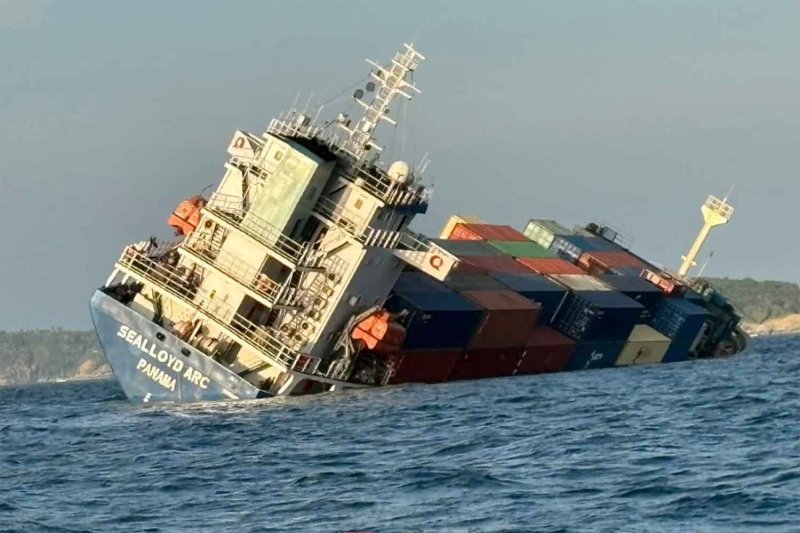
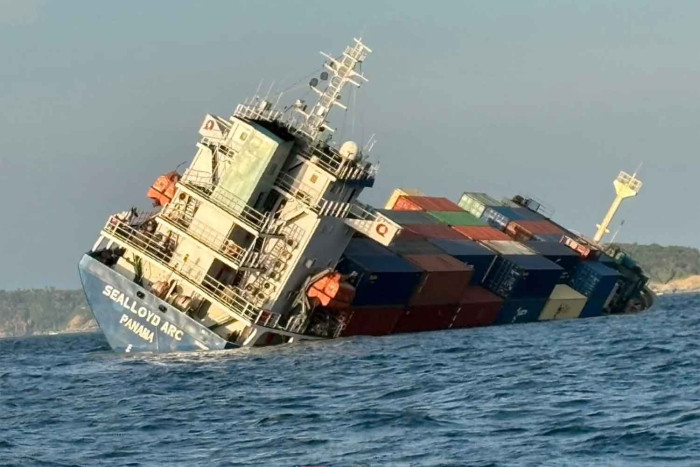
The government has instructed the Pollution Control Department (PCD) to intensify monitoring after the cargo vessel SEALLOYD ARC sank off the coast of Phuket.
Deputy government spokeswoman Lalida Perswiwatthana said caretaker Natural Resources and Environment Minister Suchart Chomklin had expressed concern over the incident and ordered the PCD to monitor coastal seawater quality.
The department is supporting the incident command centre, providing academic advice and ensuring safety during salvage operations.
The PCD has deployed the OILMAP model to forecast the movement of any oil slicks to assess risks and support response planning. Preliminary assessments indicate that any oil residue is likely to drift westward into open waters. Authorities are also monitoring 14 containers onboard the vessel that contain hazardous substances.
The PCD has reviewed the properties and risks associated with the cargo and issued guidelines for dive teams, including identification of hazard symbols, personal protective measures, equipment preparation and procedures to detect potential chemical leaks.
In terms of oil spill prevention and response, the department has advised on the use of oil dispersants and continues to conduct regular coastal water quality inspections.
Ms Lalida urged anyone who encounters drifting containers to photograph their location and any hazardous material labels and report the findings via hotlines 1650 (PCD), 1196 (Marine Department) or 1465 (Maritime Enforcement Command Centre).
Meanwhile, Adm Thadawut Thatphithakkul, chief of staff of the navy and secretary-general of the Thai Maritime Enforcement Coordinating Centre (Thai-MECC), chaired a coordination meeting to review progress in managing the incident near Promthep Cape.
The response is being jointly led by the Marine Department, the Third Naval Area Command, regional maritime enforcement units and provincial marine and coastal resources offices under a single-command structure based on the Incident Command System.
The latest update confirmed the wreck’s underwater position has been clearly identified, safety buoys deployed and patrols intensified to ensure navigational safety. Oil management remains the top priority, relying primarily on natural dispersion and the controlled use of dispersants.