
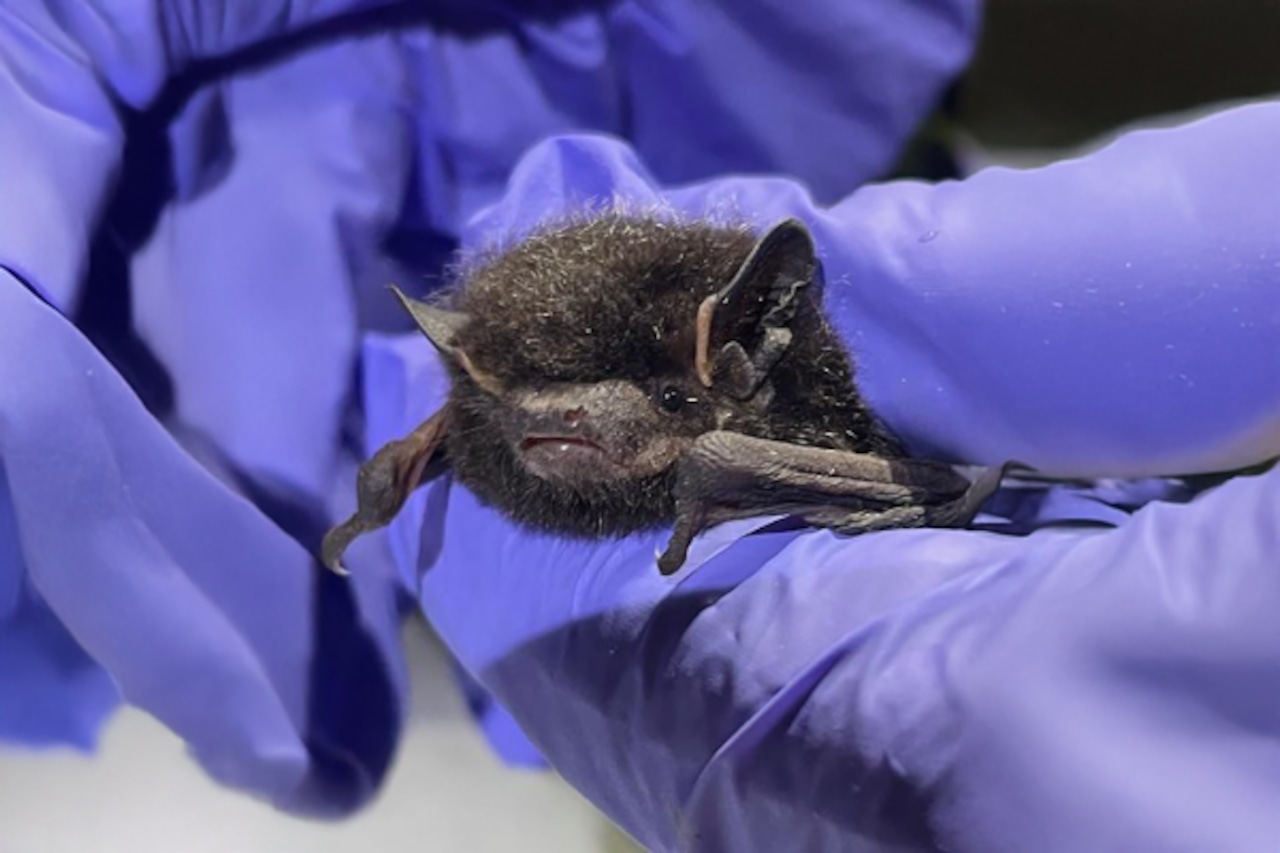
This little bat is spending the winter months in the historic mining shafts of Michigan’s Keweenaw Peninsula.
The silver-haired bat is one of the most common bats in forested areas of America. It’s one of four bat species that hibernate in caves and mine shafts in the Keweenaw region.
RELATED: Explore newly revealed parts of historic U.P. copper mine
Measuring about 4 inches long and weighing about half an ounce, the species is considered medium-sized.
Silver-haired bats are primarily nocturnal, hunting insects just before sunset and throughout the night.
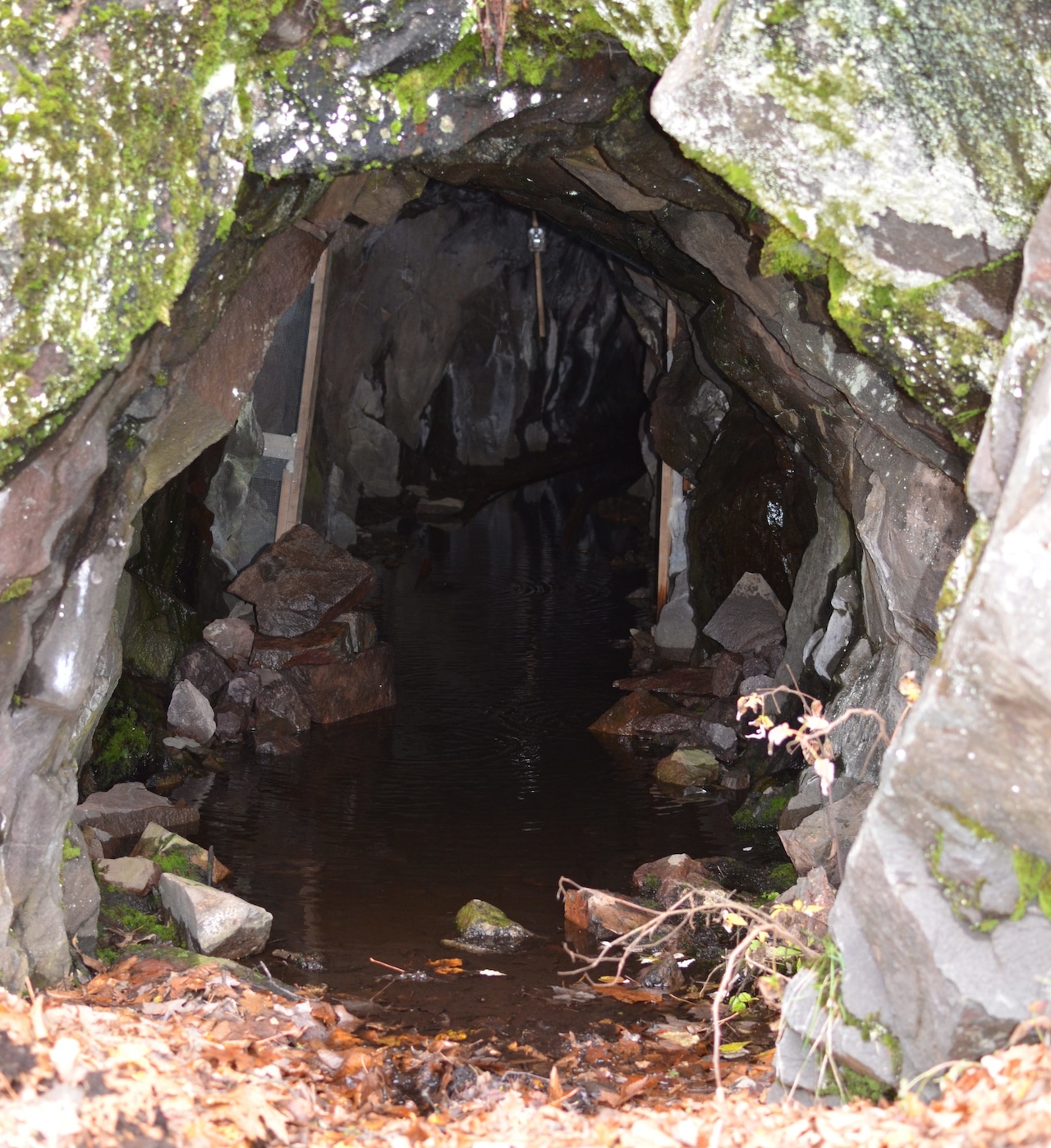 An abandoned mine shaft in Ontonagon County. Located at the base of the Keweenaw Peninsula, the mine serves as habitat for little brown bats.John Pepin | Michigan Department of Natural Resources
They are highly dependent on old-growth forests for roosts, but tend to feed in disturbed areas, sometimes at treetop levels, often in small clearings and along roadways or water courses. Their diets vary widely, but these bats feed chiefly on soft-bodied insects such as flies, mosquitoes and termites.
A single bat can consume thousands of insects in one night, including disease-carrying mosquitoes and crop-damaging pests.
RELATED: These powerhouse pest eaters are vulnerable: Report bat roosts to help recovery
That means bats play a vital role in Michigan’s ecosystem and economy. By naturally controlling insect populations, bats reduce the need for pesticides, with some studies estimating they save U.S. farmers more than $3 billion per year.
For now, they’re sleeping away the winter.
Learn more at Michigan.gov/Bats.