
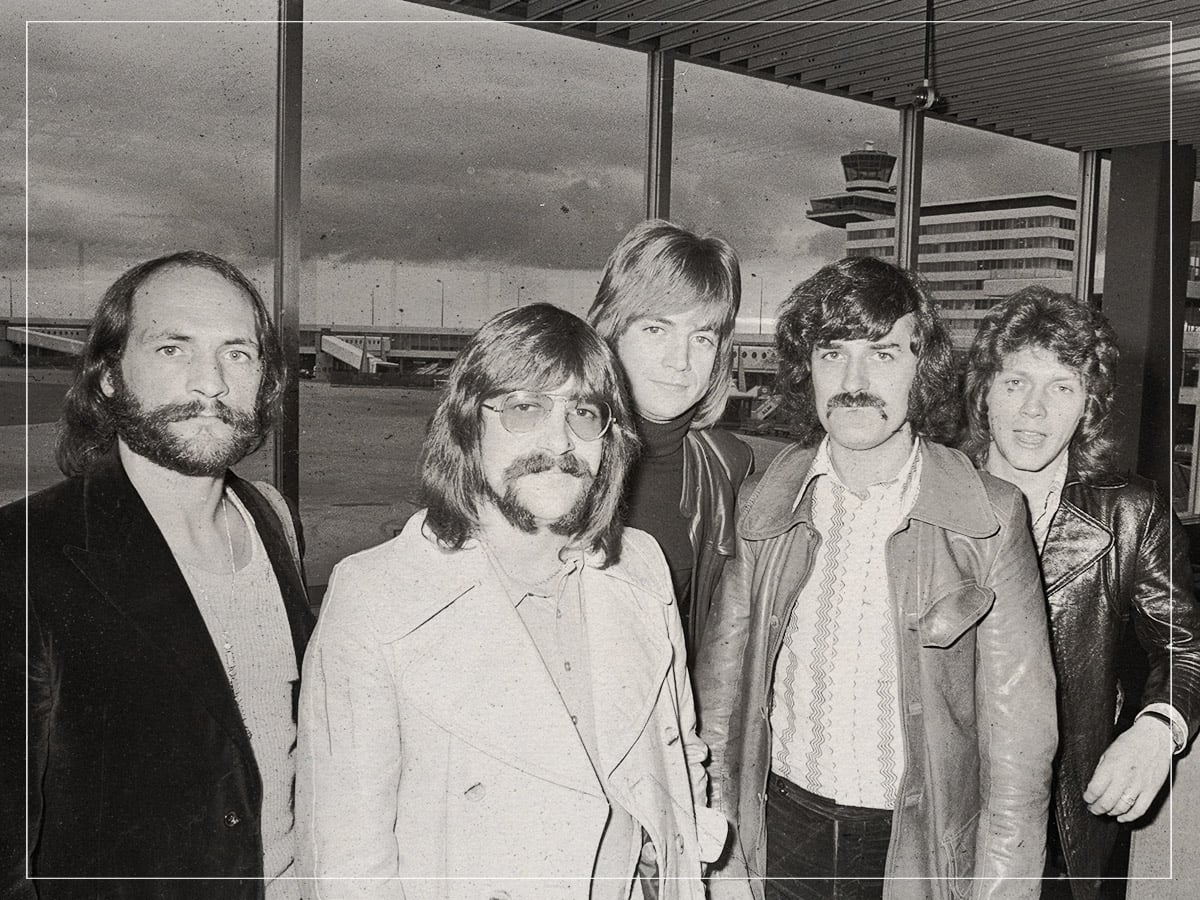
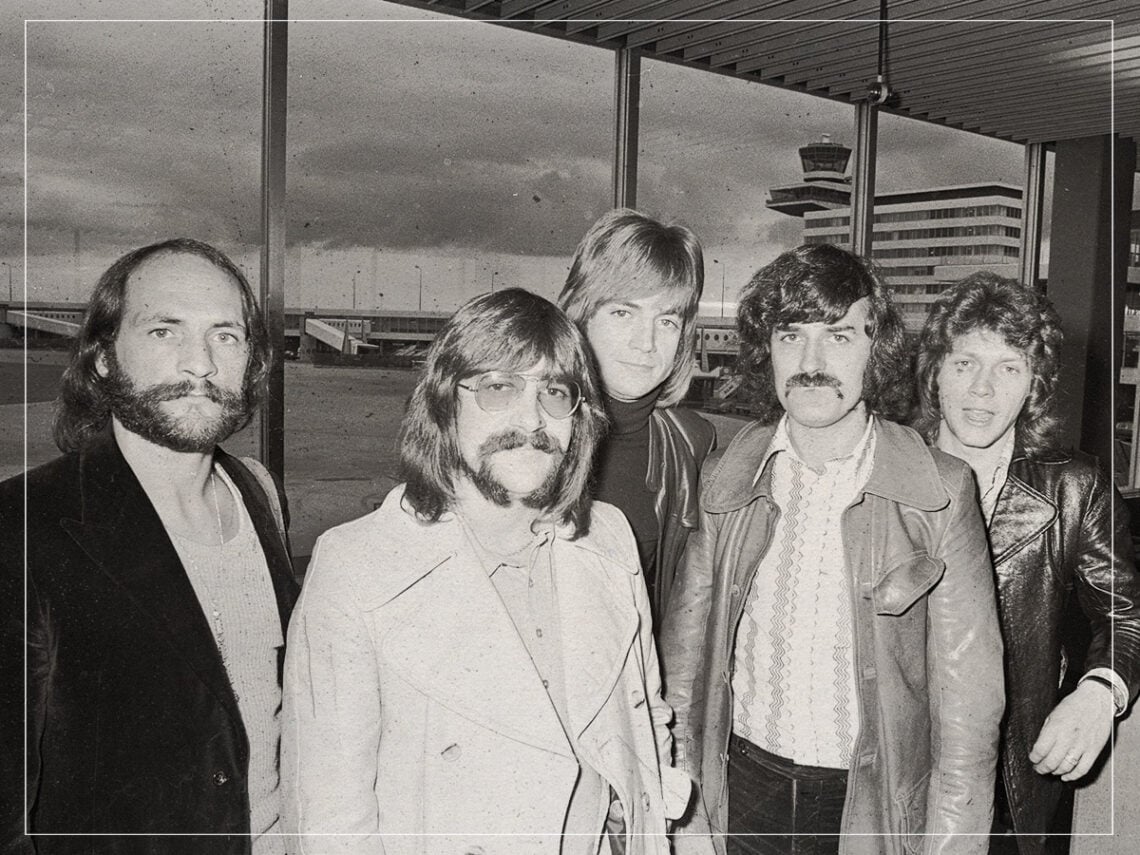
(Credits: Far Out / Nationaal Archief)
Sun 15 February 2026 22:00, UK
The Moody Blues have always existed in a strange space between reverence and ridicule, wherein their 1967 track ‘Nights in White Satin’ painted them as cheesy soft-focus romantics, all orchestral swells and teenage heartbreak to the casual listener.
However, beneath that velvety surface was a band that helped drag British rock out of its R&B roots and into something exploratory, stranger, trippier, and more culturally entangled than their reputation suggests.
Long before they became prog-leaning cosmic travellers, the group fronted by Denny Laine were chart-friendly beat merchants, their early breakthrough coming with ‘Go Now!’, a hit that briefly placed them alongside Britain’s rising pop elite, which found them opening for The Beatles during what would become the Fab Four’s final UK tour, but their real transformation came after that first wave of success began to fracture.
Laine eventually left the band (later resurfacing as a key member of Wings alongside Paul McCartney), forcing a reset that reshaped the group’s identity, while the arrival of bassist John Lodge and singer-songwriter Justin Hayward shifted their sound, and by the late ’60s, they were building lush, conceptual albums powered by the Mellotron, a pioneering electro-mechanical tape-sampler keyboard, helping sketch the early blueprint for progressive rock while also capturing the dreamlike mood of British psychedelia.
In America during the late ’60s, The Moody Blues were immediately embraced by the burgeoning flower power generation, who were both hypnotised by their cosmic meanderings and desperately looking for a new live act to moor themselves to in lieu of The Beatles. This felt quite apt, given that at one time both groups shared the same manager in Brian Epstein, and Moody Blues’ keyboard player, Mike Pinder, claimed to have introduced the Fab Four to the wonders of the Mellotron in the first place.
Moreover, both bands drifted in the same cultural orbit of experimental recording, philosophical lyrics, and heavy flirtation with drugs. “I did acid for a couple of years,” Justin Hayward told Louder in 2025, “It wasn’t my number one drug of choice, but I did it, and I suppose it became a part of our ’60s stuff, our childlike way of looking at things.”
Naturally, listeners began to question whether there was a deeper meaning to songs like ‘Om’, ‘House of Four Doors’, and ‘I Never Thought I’d Live to be a Hundred’, but Hayward himself was less convinced by the supposed chemical mysticism behind their writing: “Oh, I don’t know. I remember having a notebook by my bed during one particular trip, and then looking at it perfectly straight a couple of days later and thinking: ‘What a load of crap!’”
Free concerts, love-ins, mind-expanding psychedelia, the utopian language of the late ’60s created a sense of boundless possibility, but that same openness also allowed darker forces to move unseen through the same cultural spaces. The counterculture produced not only spiritual seekers, but also dangerous manipulators looking to prey on the unmoored, perhaps best manifested in the form of Charles Manson, one of whose earliest followers was Lynette ‘Squeaky’ Fromme, who happened to be a fan of the band.
“Squeaky was a big Moodies follower,” Hayward told Louder, “I think there might have been a time when we almost went to have a look at the Manson ranch. She was, of course, later convicted of trying to wipe out the president who couldn’t chew gum and walk at the same time [Gerald Ford, in 1975]. We’ve always attracted a lot of very, very strange people as well as a lot of beautiful people.”
Very strange and very beautiful, that pretty much sums up the ’60s.