
Dear Henry
Season 4
Episode 6
Editor’s Rating
4 stars
****
Whitney Halberstram’s constructed identity is finally falling apart — and he’s determined to take everyone down with him.
Photo: Simon Ridgway/HBO
For the whole of my early childhood, the bad guys were Russians. Then it was the Arabs coming for the western way of life. Most recently, the super-rich — with their dynastic infighting and grotesque tasting menus — became the villain du jour. Alas, trends are cyclical. Shoulder pads and prawn cocktails are back. Greed is good, cocaine is chic, and, on Industry, the final boss is the OG baddie herself: Mother Russia.
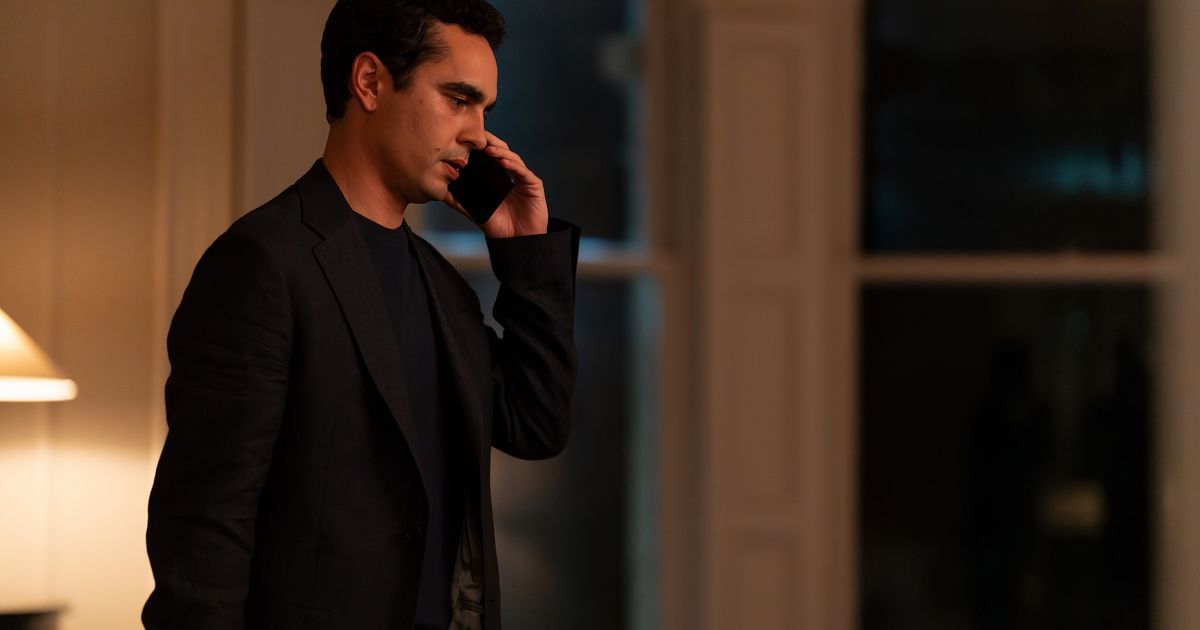
About halfway through “Dear Henry,” Whitney Halberstram hits his lowest ebb. Thanks to Harper’s explosive remarks at the ALPHA Conference, Tender’s stock price is cratering. Hayley — who turns out to be a hooker who does secretarial admin on the side and not an executive assistant who occasionally threesomes — is extorting him for $750,000. Henry is AWOL. Not even Jonah will break from putting notes in strippers’ G-strings to take his call for old time’s sake. Whitney is gazing into the middle distance, contemplating a runner on a Lithuanian passport, when Ferdinand blows the world of season four apart.
I can easily believe that Russia has a state interest in propping up foreign enterprises, particularly those, like banks, that can be wrung for compromising customer data. (I’ve seen 80 percent of No Way Out; I know what the Kremlin is capable of.) But if Ferdinand is to be believed, the FSB is so heavily invested in Tender that they’d assassinate Tony Day — a U.K. national currently on U.K. soil — to stop him from whistleblowing. And I do believe Ferdy, who admits that the SVR carved him a path to the IBN C-suite in exchange for a little credential theft early in his career. Is this a low-key insane plot development? Admittedly, yes. If you want to get off the Industry train right now, I won’t fight you. Personally, though, I’m into it. Who knows, maybe the Lithuanian passport Whitney pulls from his desk drawer isn’t a fake. Maybe Whitney Halberstram is a construction, just like his detractors have been saying all along. (A full Kevin Costner, if you will.)
Yasmin, Tender’s briefly installed head of communications, is the first of Whitney’s flunkies to defect. At the top of the episode, she gets an unfriendly visit from Harper, who plants the seed of doubt in Yasmin’s easily breached mind. Did she trust Whitney too fast? Was Yasmin so desperate to get Henry back on his feet that she didn’t scrutinize who was holding him up? The implication is that Yasmin wouldn’t have advocated for Tender — in the press, in government, with her husband — if she knew about the financial fraud at its center, but I’m not convinced. This is the same woman who platformed Moritz and who continually chooses the security money affords. She doesn’t care how the sausage gets made.
Still, inception is a powerful tool. Yasmin calls Harper a lowlife mercenary to her face, but soon she’ll be parroting Harper’s concerns to Henry and asking Hayley to snoop around Whitney’s calendar. When she catches Whitney ogling her husband in the shower of their home, she loses her shit. Henry doesn’t know Whitney’s watching as he belts out bastardized Gilbert and Sullivan lyrics while making himself gratuitously soapy, but he doesn’t exactly mind either. “You can be homo at school,” he barks at his wife, who dares to ask if the fact that he did some gay stuff at boarding school means he’s into Whitney now. Though I find the sexual dimension of Whitney’s fascination with Henry exquisitely creepy, it doesn’t strike me as meaningful. Focus, Yas. Are you upset because your husband is being set up as the fall guy for a market-shattering financial crime or because someone is hitting on your boyfriend, who isn’t very nice to you anyway?
The Mucks’ marriage might be the one institution imploding faster than Tender. At this point, I can’t remember the last time Henry spoke to Yasmin except to belittle her. He’s drinking again, and she rightly suspects that Whitney poured the first glass. In a fit of defensiveness and arrogance, Henry suggests that Yasmin prefers him off the rails because it gives her otherwise redundant existence a sense of purpose. “I can’t carve you out a place in this world,” he tells her in a quiet voice that’s meant to connote caring. I, for one, hope Yas listens to the angel on her other shoulder, the one whispering, Take everything and leave.
There’s a pleasing pattern to the opening skirmishes of “Dear Henry.” Yasmin shrugs off Harper, then runs to Henry to repeat her allegations. Henry dismisses Yasmin but can’t shake the niggling feeling that his wife isn’t entirely wrong. That night, when he accompanies Whit and Tender’s outside accountant, Jacob, to dinner, it becomes clear that Whitney wined and dined his way to the cleanish audit they presented to the banking regulator. Did Jacob spot financial irregularities on the Tender balance sheet? Of course. But it’s nothing that can’t be explained away by the rounding errors inherent to doing business in Africa, he explains to Henry. Then he helps the TenderBoyz drain the most expensive bottle of wine on the menu, the one he couldn’t afford for himself, not even on his own birthday.
Fast-forward a few hours, and the TenderBoyz have made their way to a gay club, sans Jacob. Whitney shepherds a sky-high Henry from the dance floor, where things were getting steamy, to a glory hole, presumably so the Industry FX guy can show off his derring-do. You actually hear the invisible mouth on the other side of the wall. While Henry gets anonymously fellatioed, Whit drags his hand through Henry’s hair and whispers what his CEO needs to hear: “Everybody wants you.” Afterward, Whitney, still stone-cold sober, leaves Henry sitting on the docks in the wee hours; he’s off to Accra to deal with his Tony Day problem. But Henry’s night is just beginning. When we meet up with him next, he’ll be in a hotel room with at least two hookers.
Meanwhile, Harper’s taking the stage at ALPHA to lay out what SternTao uncovered about Tender in Africa. It’s an odd scene. Everyone in the audience is furiously taking notes as she talks. Eric looks proud, Yasmin looks irate, and Pierre nods along. But the jumble of words coming out of Harper’s mouth is nonsense. She gives no evidentiary basis for SternTao’s short. It’s jargon soup. Maybe that’s the nature of the satire? We thought Harper was storming the podium to present an analysis demonstrating how the market misjudged Tender’s risk profile; instead, she just sort of recycles those words and clicks the slide-clicker with a lot of sass. She calls for a fresh audit, like the one that confirmed fraudulence at Enron and supposedly ushered in a new era of more effective auditing, LOL. Her remarks sound nothingburgery to my layperson’s ear, but, uttered with conviction, they’re enough to make Tender’s stock price fall 28 percent in a single day of trading.
It’s got to be over for Tender. It’s one thing to swipe a billion dollars off Pierpoint, but it’s quite another to steal regular people’s paychecks. I don’t see how the bank survives this. Tender 2.0 is a failure. Whitney is a failure. He is never going to be Henry Muck, and yet he refuses to see the writing on the wall. He can’t entertain the board’s discussion about bridge loans or layoffs, because if Tender doesn’t exist neither does Whitney. This is simply a storytelling error, he assures everyone. He suggests a TV appearance to course correct the narrative for twitchy traders. There is nothing that this man can’t solve with razzamatazz and, of course, kompromat.
Angling to scare SternTao into silence, Whitney sends Eric the video he had made of Eric receiving oral sex from a 14-year-old girl back in “Eyes Without a Face.” But the plan backfires because no one who doesn’t personally know Eric and Harper can understand the peculiar strains of ambition and self-destruction that fuel them. Just when he should be cowering, Eric books himself onto the same CNN morning show, where he’ll sit beside Whitney at the same desk. Eric looks into those beady black eyes and repeats the only refrain that matters: New audit now.
Whitney believes that he has outplayed SternTao and, I suppose, the world. While Sweetpea and Ed Burgess were busy congratulating themselves for securing Tony Day’s damning eyewitness account of Tender’s fraudulence, Whitney threatened his man in Africa back into the fold. Tony was broke when Whitney came calling. They’re not criminals; they’re brothers. (Comrades even.) Tony pops up on CNN in a little over-the-shoulder box to laughably accuse the markets of racism, like there’s some culturally sensitive difference between African math and human math. Eric is shocked to see Tony back at his desk in Accra, but he’s undaunted. He came on TV to scorch the earth, and he’s not leaving until it’s barbecued. Eric tells the international audience of what I imagine is, like, 852 people who tune into the station’s pre-European opening-bell show that Whitney is right: Eric is a bad guy who only cares about making money. But does that mean he’s also wrong? New audit! No more questions, please.
SternTao is dead. Long live Stern Management. Eric won’t tell Harper what he’s running from, but after his virtuoso morning-show performance, he transfers the company to her. Today was his favorite-ever day in finance, and all he wants out of it is the 10 million bucks he put in at the beginning. Harper pleads with him that they can figure it out, but Eric refuses her help, and thank God. She thinks she wants to know what Eric is protecting her from, but Harper absolutely does not want to know what’s on that tape. At the end of the episode, we see Eric walking back through leafy Westchester — as clear a good-bye as any character on Industry has ever gotten. He doesn’t need a share of the profits. Harper has paid him already, he tells her. He’s taught her that he can feel pride for someone other than himself, and that sensation is what’s going to see him through the last third of his life, I guess. Earlier in the episode, Harper reveals to Whitney that she skipped her mother’s funeral, but Eric’s desertion she will grieve. There’s no one left in the world to be proud of her. If she called Yasmin right now, would Yasmin even pick up the phone?
We’re born alone. We die alone. Isolation is the state to which all Industry characters eventually return. Whitney’s top is spinning so hard as Tender’s stock price plummets that he calls Harper — his enemy — for consolation. “Do you have a favorite piece of classical music?” he asks her. He was asked the same somewhat snobby question by a student newspaper back when he was just starting out, and he still doesn’t have an answer to it. (Though, to me, a reasonable answer that’s been right at his fingertips this whole time is “No, not really.”) I can’t take this guy a minute longer. It is annoying not to have been born rich. I get it. In fact, like, 99 percent of the world understands this exact annoyance, so why is it the dude who just flew private to Accra is the one who won’t stop whining about it? Whitney’s problem is that he wants to be retroactively rich — he wants to have grown up in a house where the stereo was always set to BBC Radio 3 and dinner came in courses.
On this point, I think Henry actually does understand Whitney well enough. It’s okay to be middle class, he assures him; you don’t need a wretched Dickensian backstory. “A little character fraud is fine as long as your heart is pure,” Henry adds, which I basically agree with. But what about when your heart is pitch-black and your conscience is absent? After catching Whitney showboating on CNN, Henry fires Jacob, their accountant on the take. The call is coming from inside the house now: NEW AUDIT! Surely it’s too late for that, old boy. Henry needs to resign immediately. He needs to be able to plausibly claim that he learned about this fraud at the same time Harper told the rest of the world.
It’s clear that Whitney won’t let him go without a fight. This episode takes its title — “Dear Henry” — from a letter that he’s been writing and rewriting across the hour. Here is a mere sampling of Whitney’s wild false starts: “Dear Henry, What if I don’t contain multitudes.” Or “To he who has everything, more will be given. But whoever does not have, even what they do have, will be taken away.” Or how about, “Dear Henry, we are hardwired to live.” It’s all unhinged drivel, the crazed lashings of a mind rotted by greed and lust and a fear of Moscow.
In the end, Whitney hand-delivers an incredibly thick letter that lets Henry Muck know exactly what the stakes are. He’s not just the face of the company anymore. Improbably, for the second time in his life, he’s the face of one of the biggest financial frauds ever perpetuated against the British public.
Sign Up for the Vulture Newsletter
Entertainment news, for the pop-culture obsessed.
Vox Media, LLC Terms and Privacy Notice