
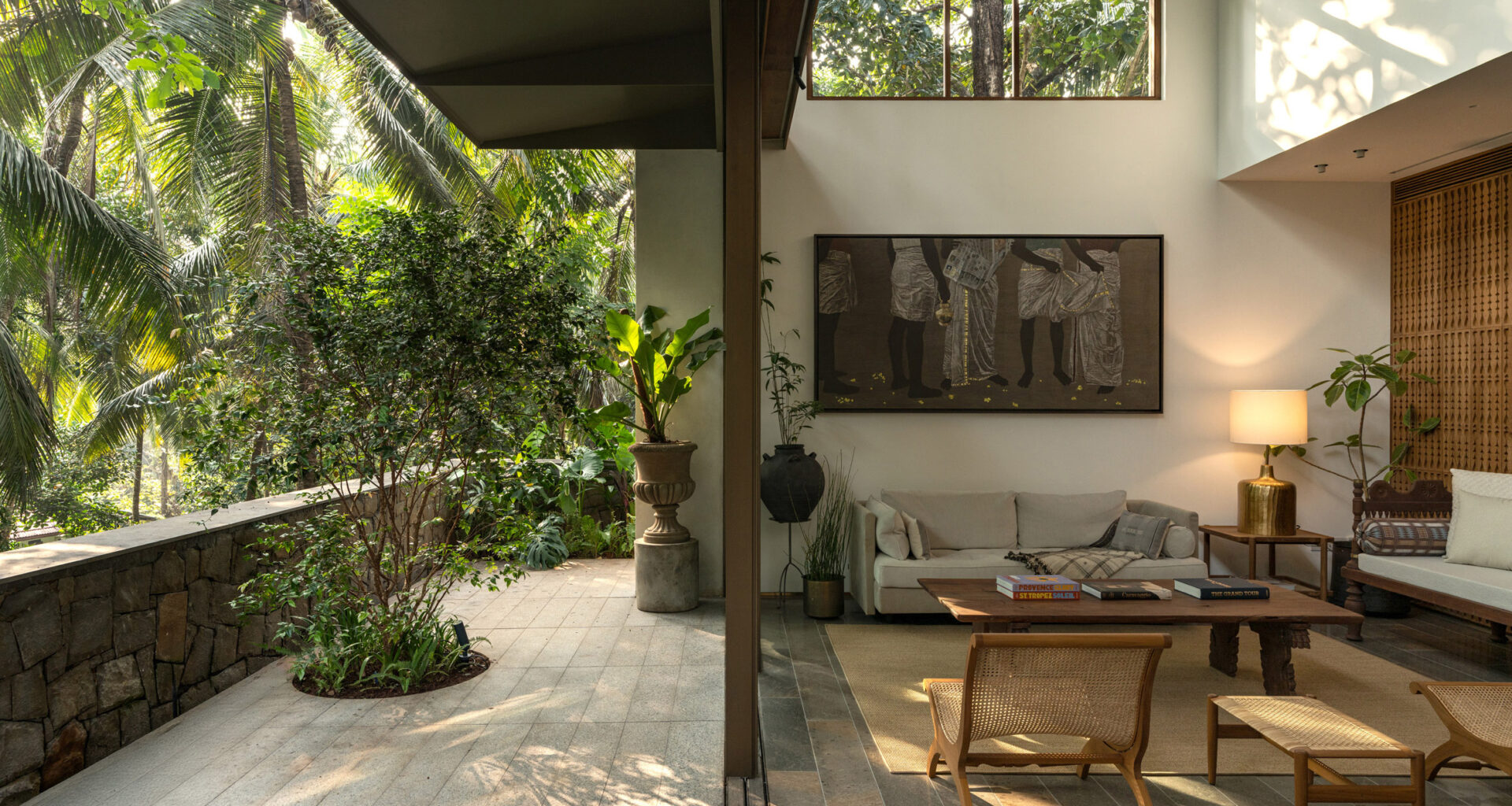
The deep eaves of a large coconut-wood roof shade the bright, airy interiors of this house in Kerala, India, designed by local studio Thought Parallels Architecture as a contemporary response to the region’s vernacular architecture.
Named Ananda after a Sanskrit word meaning bliss or ultimate happiness, the dwelling was designed for a couple based in the USA who desired a residence close to their ancestral home.
Tasked by the clients with evoking Kerala’s vernacular architecture in a contemporary way, Thought Parallels Architecture used a palette of red brickwork, mangalore clay tiles, teak wood and carved fretwork panels, united under an oversized coconut wood roof.
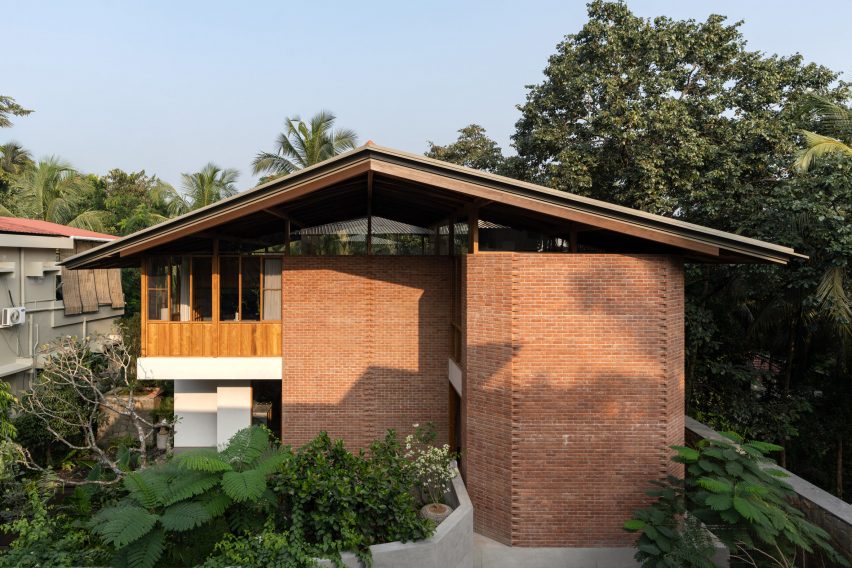 Thought Parallels Architecture has created the Ananda house in India
“The core concept was to design the house in sync with the local architecture prevalent to the region, but with a vocabulary and syntax which speaks of our times, reinventing the old into a contemporary voice,” partners Nikhil Mohan and Shabna Nikhil told Dezeen.
“An unstoppably Indian, natural, local, crafty, artsy, sustainable, cerebral, minimal, contemporary response to vernacular,” they added.
A paved entrance route through a front garden leads into Ananda’s defining space – a double-height living, dining and kitchen area organised around a concrete spiral staircase that draws the gaze upwards to the exposed, diagonal roof beams above.
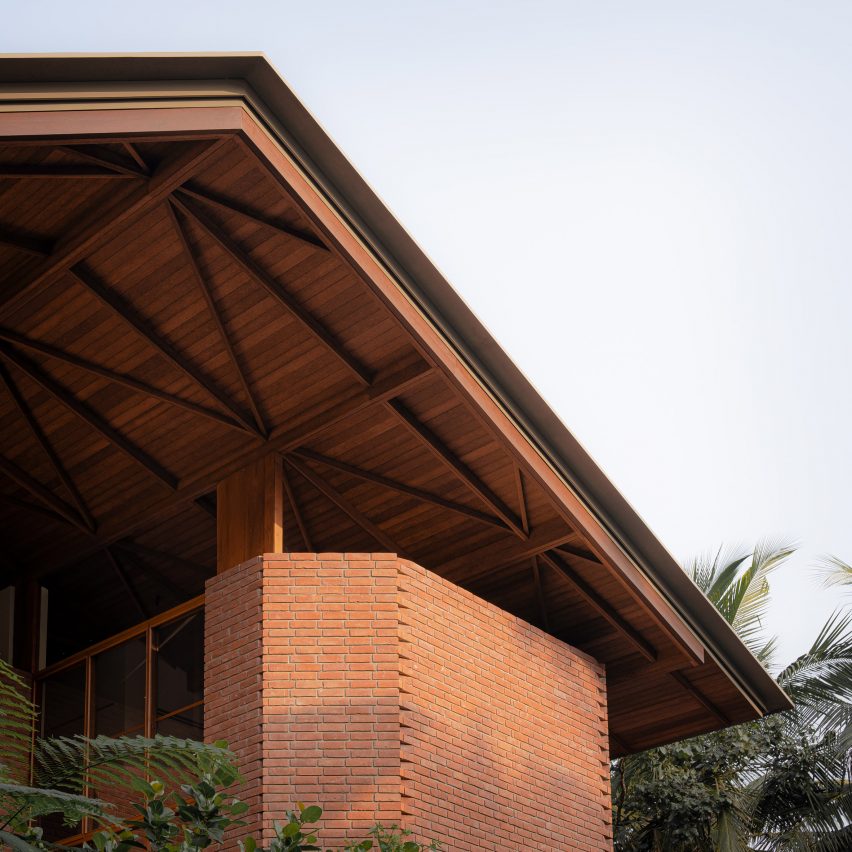 It has a large roof made of coconut wood
“Looking up from the stairway, you can see intricate diagonal-shaped coconut wood roofing. This design evokes a dynamic effect and adds a distinct aesthetic to the space. a modern response to the vernacular of the place,” Mohan and Nikhil said.
“Coconut wood, while traditionally used in Kerala unceremoniously and without precision, lost its popularity in favour of teak. Here, it is utilised as a sustainable and cost-effective alternative,” they added.
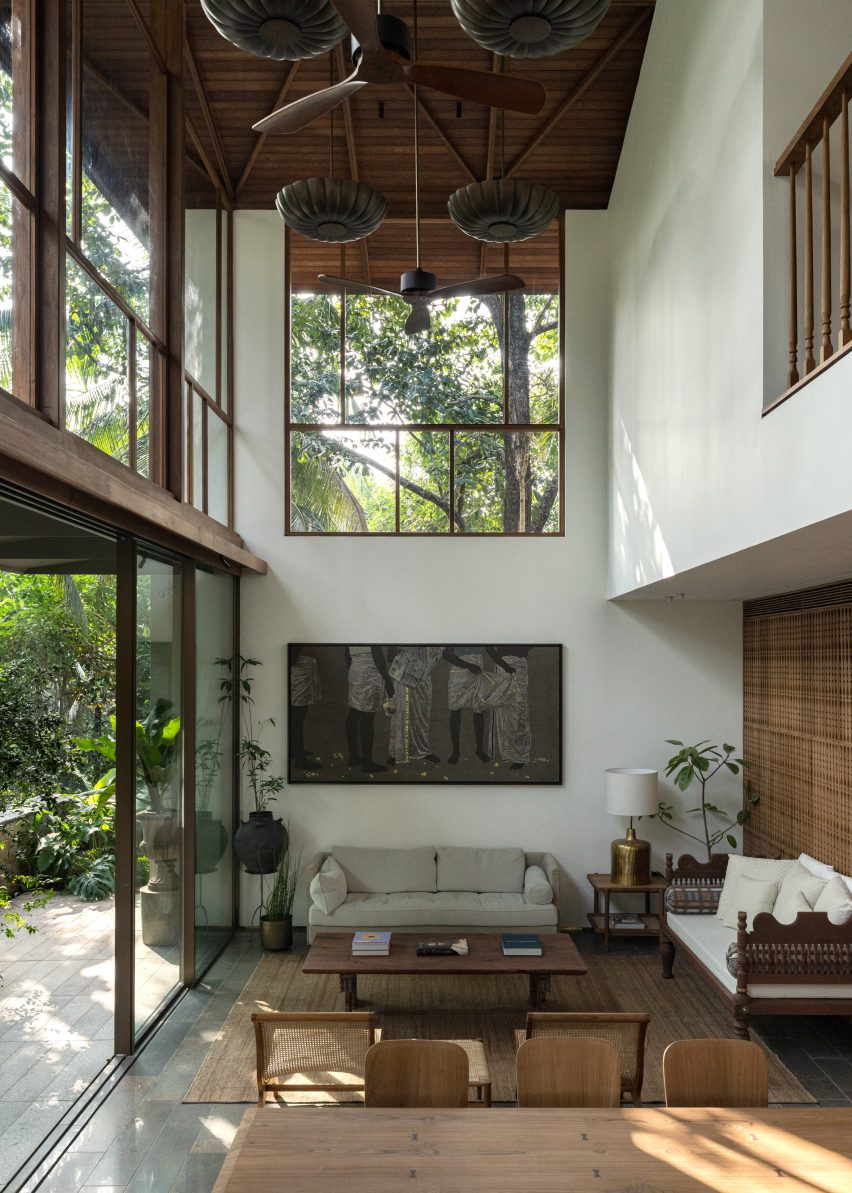 The heart of the house is a double-height living, dining and kitchen area
The northern wall of this double-height space is fully glazed, with sliding doors at the ground floor opening out onto a garden terrace.
On the first floor level, this glazed wall frames the tree canopies from a balcony in the upper living area and an adjacent study, which also overlooks the living space through a small shuttered window.
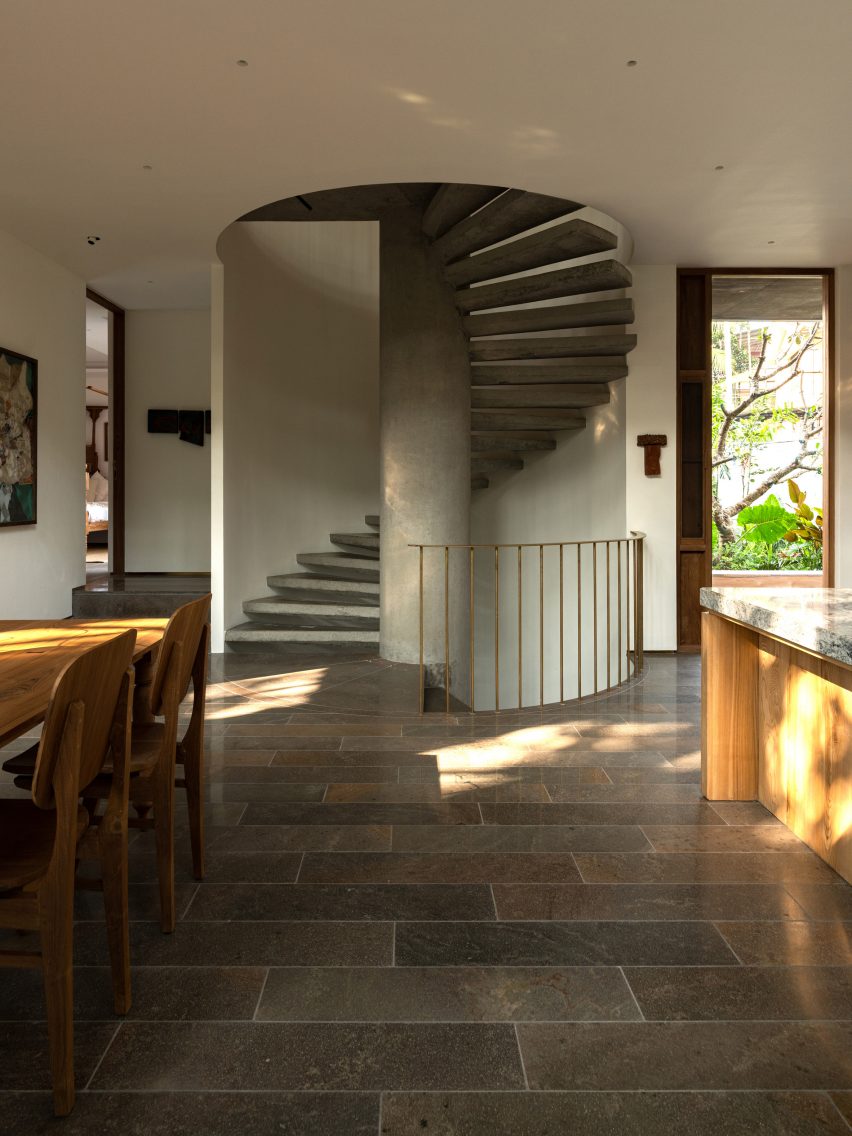 It is organised around a spiral staircase
Opposite this glazed wall, the home’s air conditioning units are concealed by carved wooden wall panels inspired by carvings in the 16th-century Padmanabhapuram Palace.
Teak has been used to frame Ananda’s windows and doors, alongside lime-plastered walls and stone-tiled floors, matching the patio paving on the ground floor to create a sense of continuity between interior and exterior.

Studio Nirvana designs Zenhouse in India to invite “calm and stillness”
Two ensuite bedrooms are stacked at the southern side of the home, with the ground-floor bedroom opening onto a garden patio.
These bedrooms are sheltered from the southern sun by a screen of narrow timber slats on Ananda’s facade, behind which are windows that slide open to offer natural ventilation.
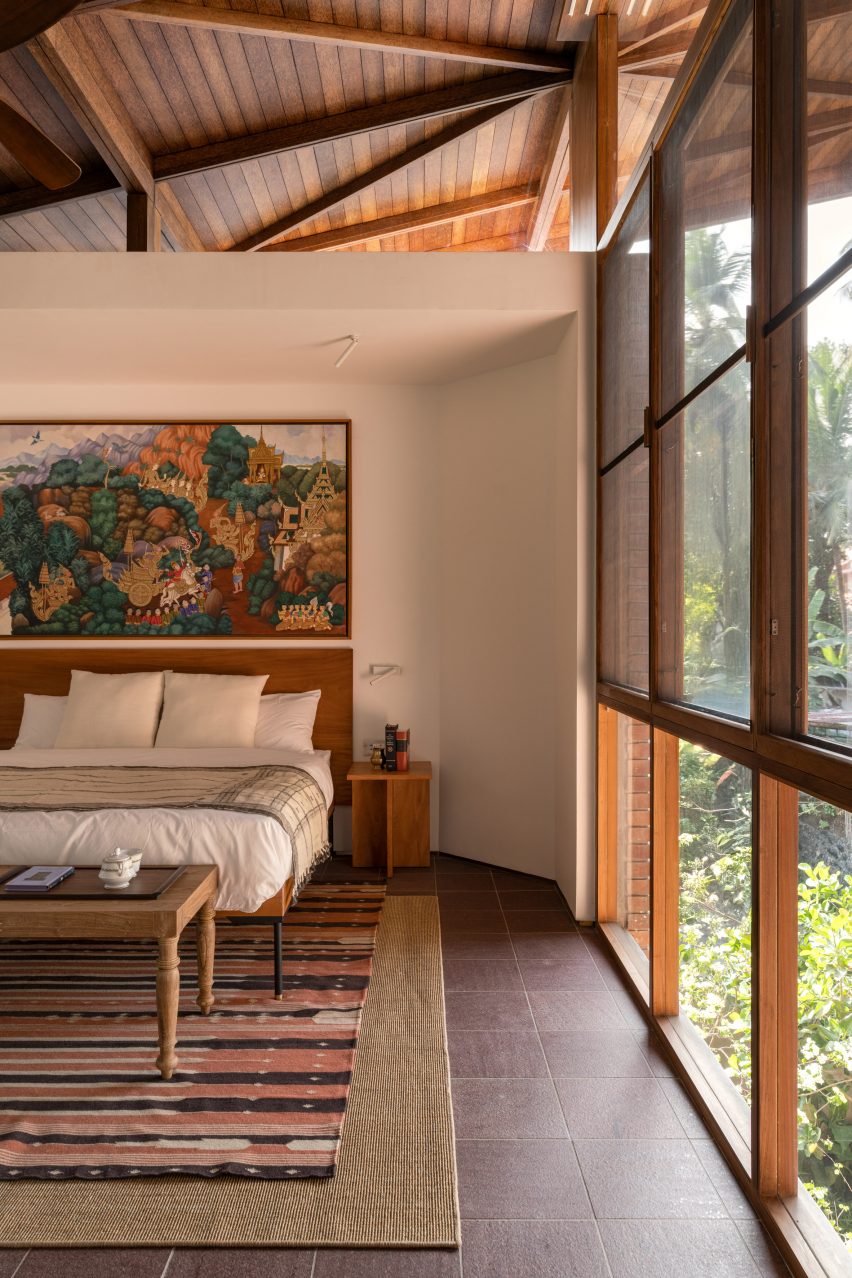 The design pays homage to vernacular architecture
On Ananda’s front elevation, the angular brick walls of the bedroom block have been finished in red brickwork, with a distinctive pattern created at the corners by leaving gaps where courses meet.
At the bottom of the home’s spiral staircase is a basement level sunk into the lower, southern side of the site, which contains a garage and storage areas.
Other homes in India recently featured on Dezeen include the minimalist, concrete Zenhouse in Kerala by Studio Nirvana and the airy, open House by The Grove in Bengaluru by Taliesyn.
The photography is by Syam Sreesylam.