

Riky Ash earns about £150,000 in a good year, but is not saving anything into his pension.
The stuntman, 58, from Nottingham could well be one of the high-earning entrepreneurs at risk of a second class retirement, according to the wealth manager Fidelity International. Its research suggests that 61 per cent of the self-employed workers who pay higher-rate tax and 48 per cent of those paying additional-rate tax — about 167,000 workers in total — are not contributing to a pension at all.
Ash, however, is not too concerned. He may not have a pension but he has invested the proceeds of his 33-year career into cars, gold, and number plates — his collection of five Lamborghinis has an estimated value of £3 million.
Cars are not normally seen as good investments, with new ones typically losing value the moment you drive them off the forecourt. But some classic or rare cars can make financial sense, with supply and demand a huge contributor to their value.
He said: “As soon as a car registers as a classic car, its value starts to rise because of scarcity. And with supercars, it happens faster because of the very minimal production run, and that is what makes them a good investment.”
Ash gets personalised number plates for many of his cars. He said his “Riky X” plate is now worth £50,000. If you have a plate that spells out a name, or a coveted combination of digits, then you could be quids-in.
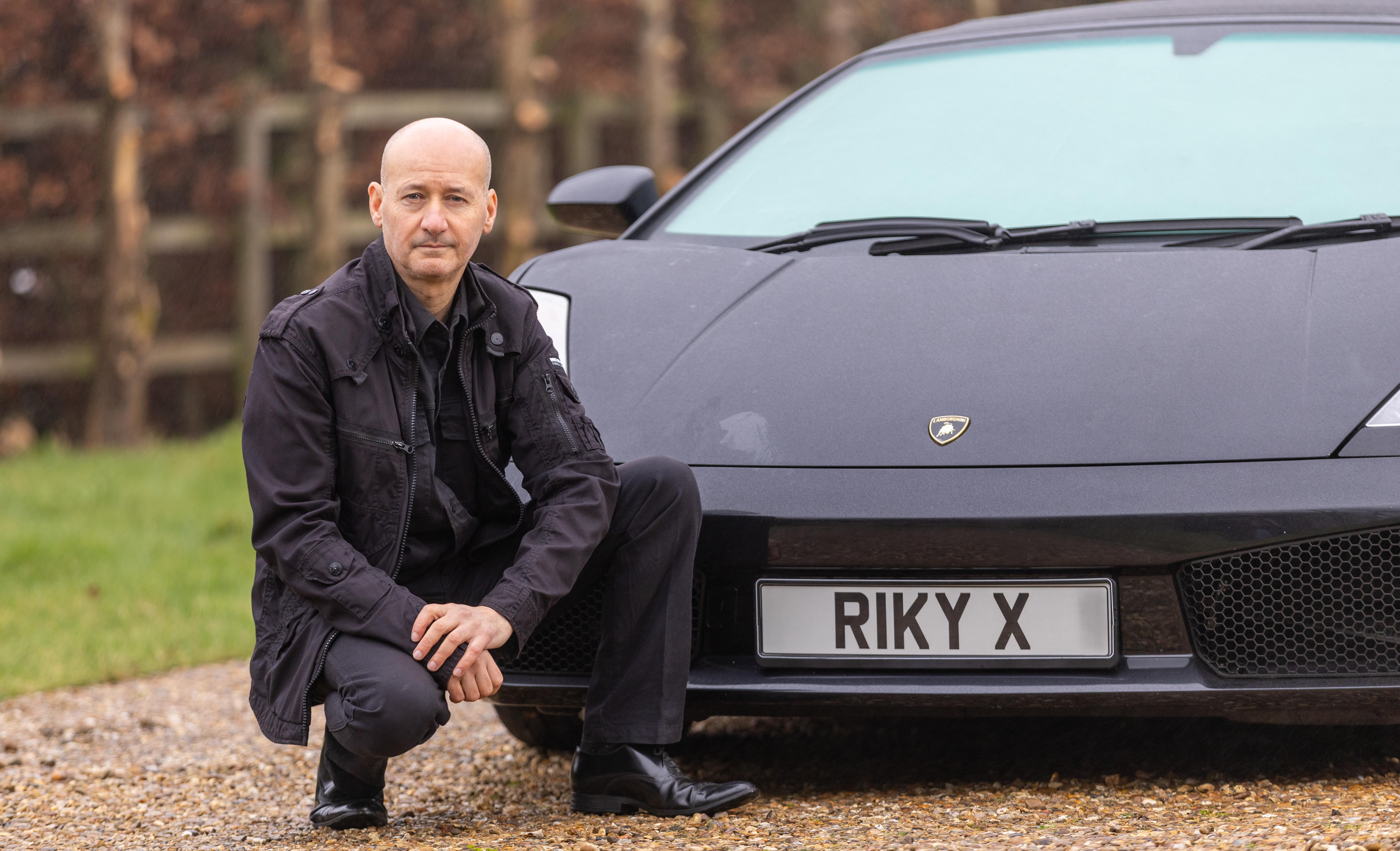
Ash with one of his Lamborghinis and its personalised number plate
TERRY HARRIS FOR THE TIMES
“You could buy a number plate today for as little as £500. If you have a good letter and number combination, I would expect to sell it in five years for about £5,000, which is a very good return.”
• How to pick a car that could make you money
He thinks that saving into a pension is antiquated. “I think those who benefited most from pensions are those who retired in the 1970s and 1980s. They’re the real winners,” he said.
He doesn’t see himself retiring and said he will just become more selective of the work he chooses. He said: “If I get a telephone call and it’s three weeks in Fiji doing powerboat stunts, I’m going to take it.”
In the meantime, he plans to keep investing in tangible assets. “I’ve risked my life to buy those five cars. I don’t like not having control over my own destiny and my own money. I have full control of my cars. I know how much they are worth, and I could only make one phone call, and they would be sold tomorrow.”
‘I’m all about the Isa’
Simon Walker, a self-employed private tutor, prefers saving in an Isa over a pension fund. Any gains made on money held in a pension or Isa are tax-free, but pensions give you income tax relief on what you pay in. Isa withdrawals, however, are tax-free for life whereas you could pay tax on pension income.
Walker, 52, from the Wirral, still has some old pensions from his former employers, which he said account for more than 50 per cent of his retirement savings. But any new savings go into his Isas which now have 35 per cent of his retirement pot, split between cash and a stocks and shares Isa held with the investment platform AJ Bell.
When he was 23 Walker had help from his parents buy his first property in Birmingham for £72,500, and he now owns his home in the Wirral outright with his partner. The couple do not have children.
While Walker said he doesn’t have anything against pensions, he prefers Isas at the moment. “I try to do a little bit of everything,” he said. Walker also keeps 10 per cent of his retirement pot in cash across five bank accounts, which he has opened to make the most of switching bonuses.
From April next year the amount you can save into a cash Isa if you are under 65 will be cut to £12,000, so he may have to tweak his savings habit. “I’ll either invest the £8,000 into a stocks and shares Isa or into one of my pensions.”
• Why higher earners can lose two thirds of savings interest
How the self-employed miss out
Analysis by the Organisation for Economic Co-operation and Development (OECD) group of 38 developed economies suggests that the UK has one of the largest gaps between employees and the self-employed when it comes to pension provision.
Marianna Hunt from Fidelity said: “For many entrepreneurs, it’s not a lack of income or wealth that stops them from saving into a pension. We urgently need to look at the other barriers or beliefs holding them back, so we can avoid a generation of self-employed workers having to face a second-class retirement.”
Self-employed people are twice as likely to have homes worth more than £500,000, according to analysis of Office for National Statistics data by Fidelity. It may be an indication that many of them are relying on property for long-term wealth and security.
Some 18 per cent of self-employed people own homes worth £500,000 or more, compared with 9 per cent of employees, and 25 per cent hold property worth at least £375,000, compared with 16 per cent of employees. Despite holding a range of assets, they are still less likely to have a pension fund.
Hunt said: “Starting sooner, even with modest amounts, gives entrepreneurs greater freedom in later life and reduces the risk of relying solely on a business or property that may not hold its value. Building pension savings adds a vital layer of protection that supports the independence entrepreneurs value.”
Lee Matthews from the wealth manager Evelyn Partners said pension planning was crucial for entrepreneurs because they don’t have a workplace scheme.
They are also potentially leaving billions of pounds in pension tax-relief unclaimed. Savers who pay the higher or additional rate of tax automatically get pension tax relief at the basic 20 per cent rate, but can claim back additional relief at 40 or 45 per cent. It means that a £100 pension contribution would effectively cost someone paying higher-rate tax £60 and an additional-rate payer £55.
To claim back the extra relief you have to do it through your tax return, but it is thought that about 800,000 higher earners a year are failing to get back their extra money.
Matthews said: “When entrepreneurs avoid pensions entirely, they are choosing to pay more tax than necessary and to forego decades of compounding growth on that lost money. Over a working life, that decision can reduce retirement wealth by hundreds of thousands of pounds.”