
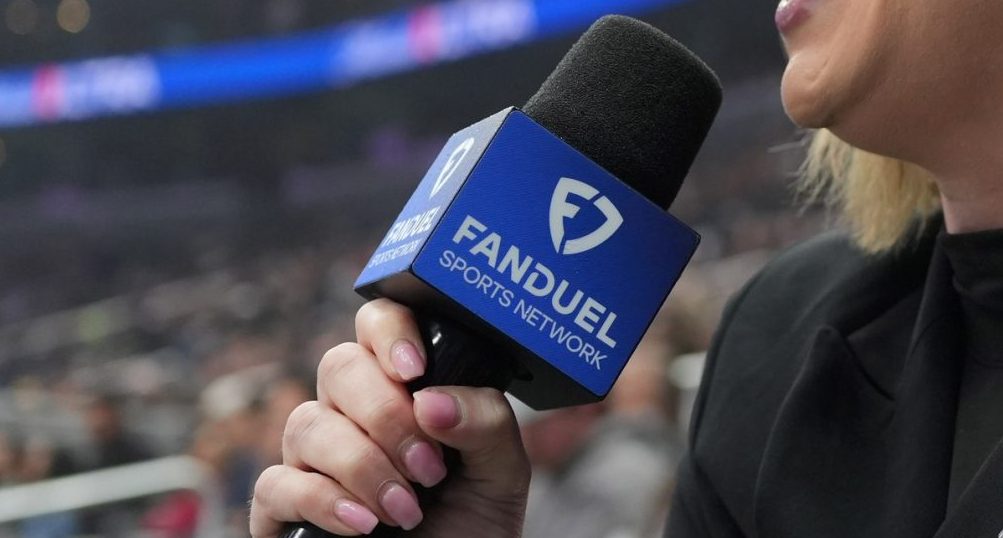
With the almost certain demise of FanDuel Sports Network in 2026, the age of the cable regional sports network has come to an end. The NBA and MLB are both in serious talks with streamers to form “streaming RSNs.” But how did these networks fail so spectacularly, and what will these streaming RSNs look like?
At its peak in the 2010s, the regional sports network proved to be a rare business model that benefited sports teams, fans, and the networks themselves. For fans, these networks were incredibly accessible. If you had cable, which almost everyone did, the basic or near-basic package would come with these networks.
These networks also printed money. In 2010, according to SNL Kagan, the average regional sports network received $137.8 million in revenue.
To explain why these were money-printing machines, you need to understand the economics of cable television. Cable channels charge cable companies per customer for channels. That’s why we regularly have carriage disputes where channels are taken off cable.
Higher-demand channels can charge more for carriage. At the peak of cable, the prevailing view was that people were much more likely to switch providers than stay if a high-demand channel was lost. To keep regional sports networks on their systems, cable companies agreed to pay for them. In 2012, CNN cost cable companies $0.50 per customer, while an RSN cost $2.50 per customer. As you can imagine, that adds up.
The key to the regional sports network is the teams they carry. Without them, the network is worthless. That’s why the final winner of all this is the teams themselves. The networks were willing to pay up to keep teams on their channels. In January 2013, for example, the Los Angeles Dodgers got an $8.35 billion, 25-year deal from the now-defunct Time Warner Cable to start an entirely new RSN. At $334 million a season, that’s much more than Turner Sports paid in 2021 for the national rights to the NHL, including exclusive coverage of the Stanley Cup Finals every other year.
Of course, as the years went by, these channels got progressively more expensive. But this was a time when you were unlikely to also be paying for another streaming service.
Now all the RSNs are dying.
As people cut the cord, the economics of regional sports networks no longer made sense. With fewer customers, cable companies decided that paying the fees regional sports networks wanted just didn’t make financial sense. That’s why you still can’t watch FanDuel Sports Network on YouTube TV, Sling, or Hulu.
The great thing about cable for the regional sports network is that even people who never watched the channel were paying for it. Unfortunately, non-sports fans have cut the cord at a much higher rate than sports fans. So even though local viewership for sports has not meaningfully decreased, the number of people paying $2 a month for a regional sports network has.
Doubly bad is that teams were able to get long-term contracts from regional sports networks. The way these contracts are structured means the money is not tied to how the networks perform. But now it means that the networks are locked into long-term contracts based on revenue and profit from a totally different age.
So now what?
The only thing that seems certain is that the way you watch your local team is going to change. Teams and leagues that have already dumped the regional sports network have done it in many different ways.
Major League Soccer got rid of local broadcasts entirely in favor of a new streaming service with all games and no blackouts through Apple TV. The economics of the service haven’t turned out well. This year, the MLS-specific service is totally gone. All games will air through Apple TV+, which will also carry Formula 1 and MLB’s Friday Night Baseball.
Several NHL and NBA teams have moved their games entirely to over-the-air networks. In primary markets, this has worked out pretty well for fans because a $25 antenna can get you all the games, and these stations are almost always on basic cable. In outer markets, however, games are often carried on subchannels. This means that picking up games on an antenna can be hard, and these channels are not always carried on local cable providers.
MLB and the NBA have also discussed launching a streaming RSN. How exactly this would look is still unclear, but in essence, MLB or the NBA would sell all or most of its local teams’ TV rights to a streamer like Prime Video or ESPN Unlimited. This model could eliminate blackouts. Reports suggest that MLB and the NBA believe such a streaming RSN would be extremely lucrative. If so, that would likely result in the streaming service that holds these rights either raising prices or creating a whole new RSN deal to make up the difference. It’s also unclear, in this scenario, if or how games would be distributed to local television.
It’s also worth pointing out that while the regional sports network is dying, it is still thriving in some places. Cable can still be a lucrative business. Teams, especially in big markets, have not left regional sports networks. After ending their agreements with FanDuel, the Los Angeles Angels and Atlanta Braves are both looking at creating new regional sports networks. The economics of these deals matter a lot, and this is a case where the RSN’s economics differ widely by market size and sport.
While Adam Silver and Rob Manfred talk frequently about making it easier to watch games, don’t take those claims at face value. MLB and the NBA are still businesses at their core. For fans, a streaming RSN with games frequently available over the air or on basic cable would seem to be the best option. However, that model is unlikely to be as lucrative as a standalone streaming RSN would be for these leagues.
When push comes to shove, money tends to win out.