

Over a decade marked by a pandemic and nationwide cuts to health care funding, Marschall S. Runge led Michigan Medicine in a historic triple-leadership position. He served as executive vice president of medical affairs and chief executive officer of Michigan Medicine starting in 2015. In 2016, he was appointed dean of the Medical School, serving in all three roles until 2025.
The University of Michigan credits Runge with doubling philanthropic funding and leading the University to its greatest growth in research advancement. In addition to his administrative roles, Runge conducted research of his own, which was largely centered on cardiovascular topics.
His University responsibilities made him one of the institution’s highest compensated faculty. In 2024, he was the second-highest paid U-M employee with a salary surpassing $2.38 million.
Runge was on another payroll, too.
In 2013, Runge was elected to the board of directors at pharmaceutical giant Eli Lilly, where he served until August 2024. Though Lilly is a known producer of at least one cardiovascular drug, it is unclear whether the research Runge conducted is directly affiliated with the drugs Lilly manufactures.
Runge received at least $2 million from Lilly throughout his tenure as a board member according to Open Payments, a government database that discloses physicians’ external financial relationships.
It isn’t uncommon for doctors to receive compensation from drug and medical device companies for consulting for them. But, an investigation conducted by The Michigan Daily found the payments Runge received from Lilly far exceeded the amounts most of his peers at other hospitals accepted from similar companies, and that the level of outside compensation is not mirrored by Runge’s U-M leadership colleagues.
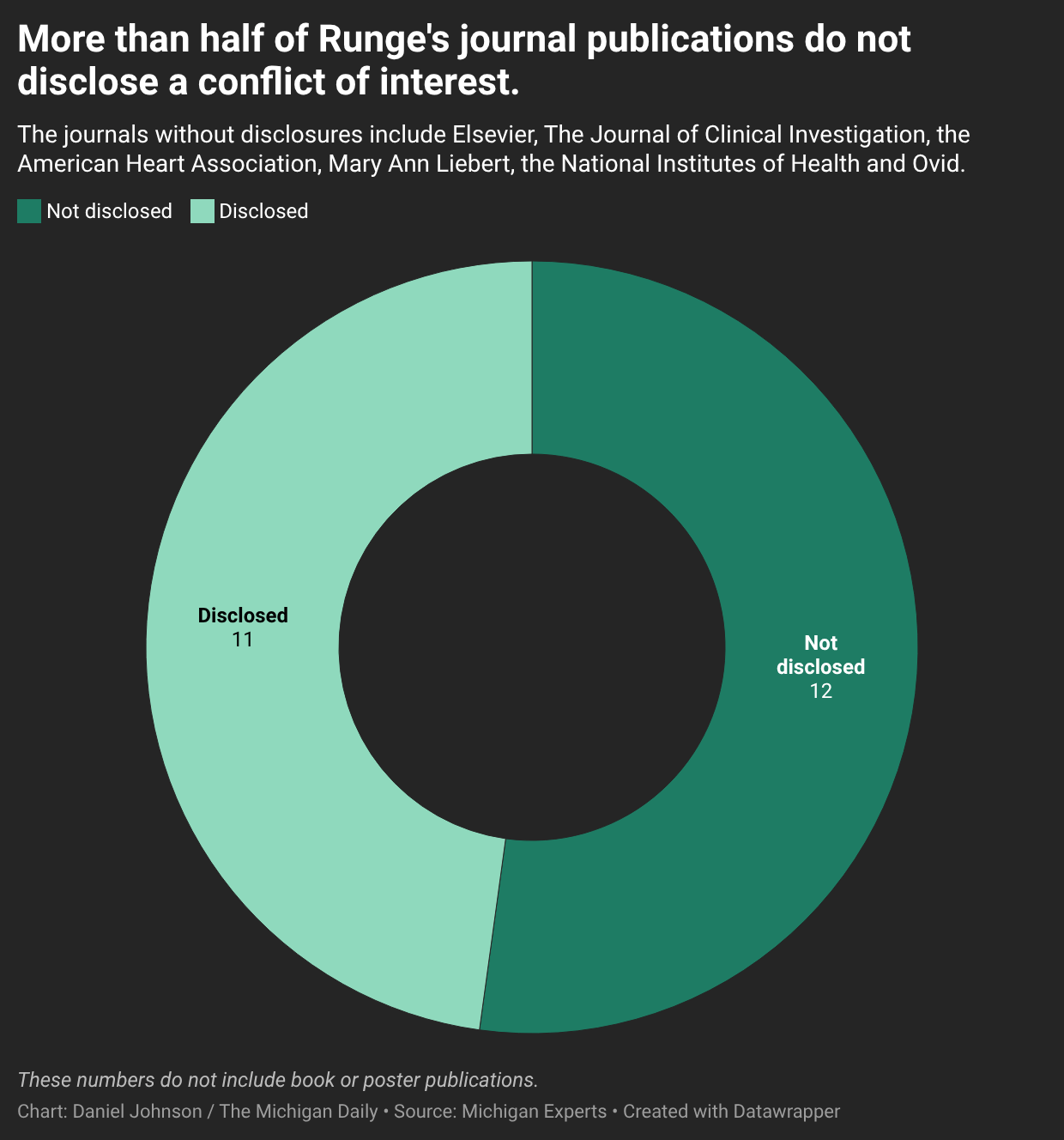
The Daily also found that Runge omitted his financial ties to Lilly in at least 12 of his journal publications. Two of these nondisclosures appeared in ScienceDirect, which is owned by Elsevier.
The Daily requested comment from Elsevier about whether the journal was aware of Runge’s conflicts of interest at the time of publication. In a Dec. 5, 2025 email response to The Daily, Elsevier Communications Director Rebecca Clear wrote the company upholds the highest standards of ethics in its publishing to protect the quality and integrity of research.
“In accordance with our commitment, this case is currently under investigation, and we cannot disclose further information until the investigation is complete,” Clear wrote.
In a Jan. 20 corrigendum to one of Runge’s articles, Elsevier noted Runge’s omission of his board of directors position at the time of the article’s original publication.
“The authors regret omitting to include that Marschall S. Runge was a member of the Board of Directors of Eli Lilly at the time of this publication and apologize for any inconvenience that resulted,” the corrigendum read.
Runge declined The Daily’s repeated requests for an interview. However, Runge provided a statement via Mary Masson, Michigan Medicine senior director of public relations, on Dec. 3, 2025. Runge stated that, during his time at the University, he adhered to all of its school-specific requirements.
“I followed every aspect of the University of Michigan conflict of interest (COI) policy. This included receiving approval from the President and the Board of Regents to join the Lilly Board and providing annual updates on any issues that could pose a conflict,” Runge wrote.
The Daily could not confirm whether Runge’s nondisclosures conflicted with University policies.
In an interview with The Daily, Dr. Eric Campbell, research director at the University of Colorado Anschutz Center for Bioethics and Humanities, said that, while external financial relationships with drug and medical device manufacturing companies aren’t necessarily abnormal, they may pose liabilities.
“When you get to serve on these boards, you can make quite a bit of money,” Campbell said. “It could change the education. It could bias the research. And it also has the potential to leave the impression among the public, elected officials and even the employees that their leaders are essentially trading the reputation of the institution for their own personal benefit.”
While Open Payments data show Runge received more than $2 million from Lilly from 2018 to 2024, The Daily was unable to recover compensation numbers prior to 2018.
Each year, more than 95% of Runge’s received payments were categorized as “compensation for services other than consulting,” a category that includes speaking, training and participating in educational engagements unrelated to continuing medical education.
Runge also received compensation from Lilly in the form of stocks. In 2024, Lilly reported that Runge owned thousands of combined shares and stock units in the company. Based on Lilly’s current share price, they’re valued at more than $17 million.
An analysis by The Daily of the University Medical School’s executive and senior leadership found Runge’s colleagues at the University did not engage in similar financial relationships with pharmaceutical companies.
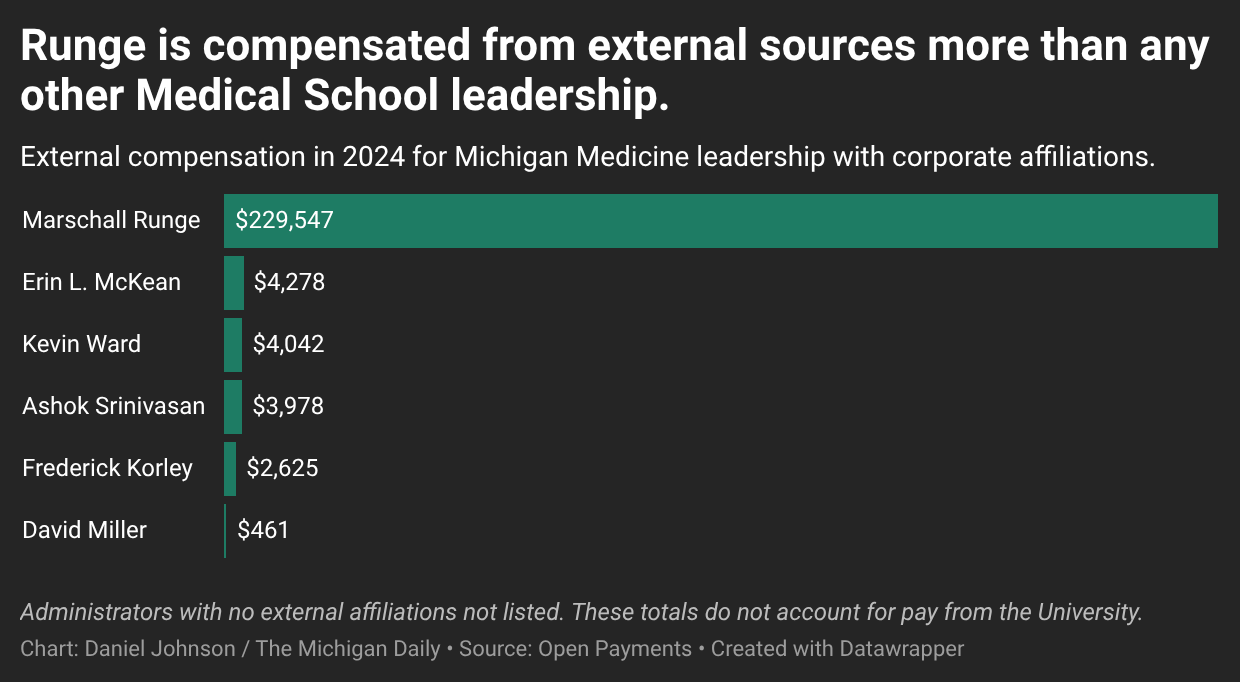
An analysis by The Daily also found that Runge receives the second-highest external compensation among the deans of the top 20 medical schools ranked by research.
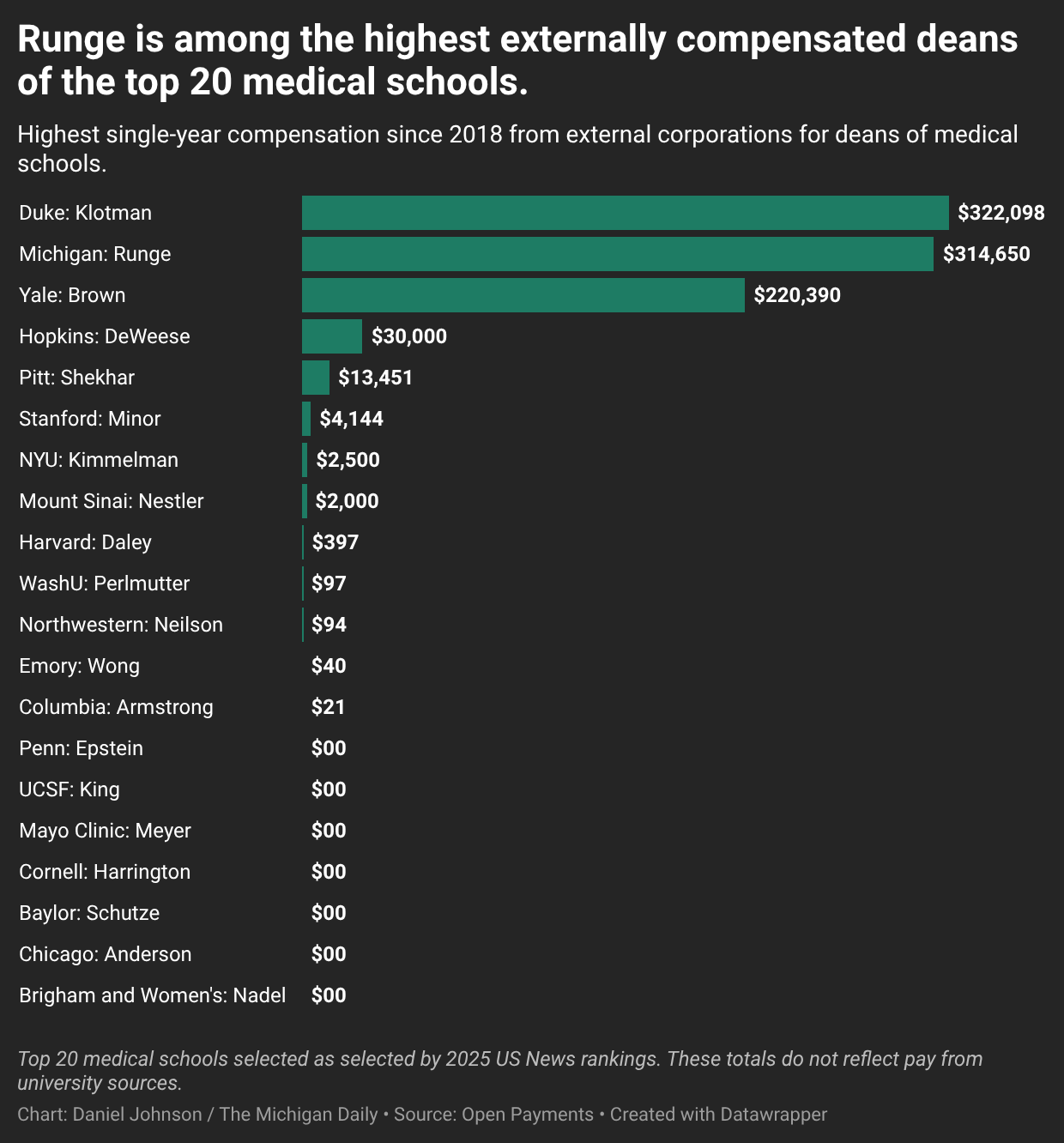
In an interview with The Daily, Dr. Robert Steinbrook, Public Citizen Health Research Group director, said the allegiances of leaders who participate in external financial relationships may be called into question.
“A dean speaks on behalf of the institution, represents the institution and the question arises: ‘What’s the loyalty?’” Steinbrook said. “Is the loyalty to the institution, or is the loyalty to the outside organization, whether it’s a pharmaceutical company or somebody else?”
The industry standard for researchers who have financial ties is simple: disclose competing interests. Professionals far and wide caution authors of research publications to err on the side of disclosure, with top research institutions and journals maintaining this sentiment.
For conflict of interest disclosure policies, many peer-reviewed journals follow the standards outlined by the International Committee of Medical Journal Editors. In a page dedicated to disclosure best practices, ICMJE posits that, while external relationships do not always indicate problematic influence on paper, perceptions of conflict may erode trust in science.
“Public trust in the scientific process and the credibility of published articles depend in part on how transparently an author’s relationships and activities, directly or topically related to a work, are handled during the planning, implementation, writing, peer review, editing, and publication of scientific work,” the ICMJE page reads.
At least three of the journals in which Runge has been published explicitly utilize the ICMJE’s guidelines in their own conflict of interest disclosure policies.
The University has long stood as a pioneer of medical research and innovation, ranking 12th in global research reputation according to the U.S. News & World Report rankings. For U-M employees, the standards for disclosures are clearly defined by the Office of Research Ethics and Compliance: any actual or potential conflicts of interest must be reviewed, eliminated or managed.
Runge sat on Lilly’s board of directors for 11 years, advising its Ethics and Compliance and Science and Technology subcommittees. In that period, he authored 23 journal publications. In 12 of those papers, his financial ties to Lilly were omitted.
Beginning in 2022, Runge began uniformly disclosing his ties to Lilly.
It is unclear whether Runge’s cardiovascular research is directly affiliated with the cardiovascular drug Lilly manufactures.
The Daily could not confirm whether Runge’s omission of his financial relationship with Lilly in these journals violated U-M-specific conflict of interest disclosure standards for researchers. When asked to provide the Michigan Medicine conflict of interest policy, Masson wrote in a Feb. 4 email to The Daily that it is not publicly accessible.
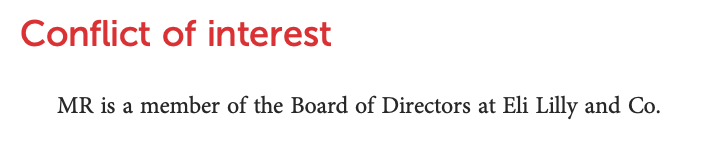
In publications where Runge disclosed his ties to Lilly, there was an explicit statement establishing Runge’s connection to the company.
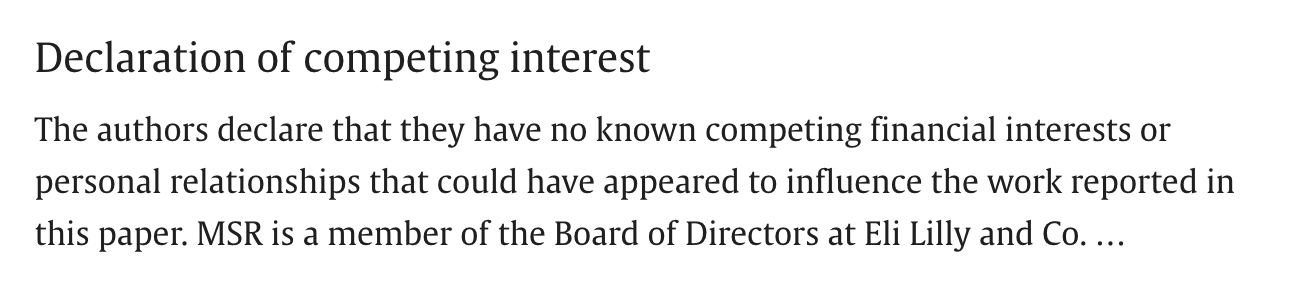
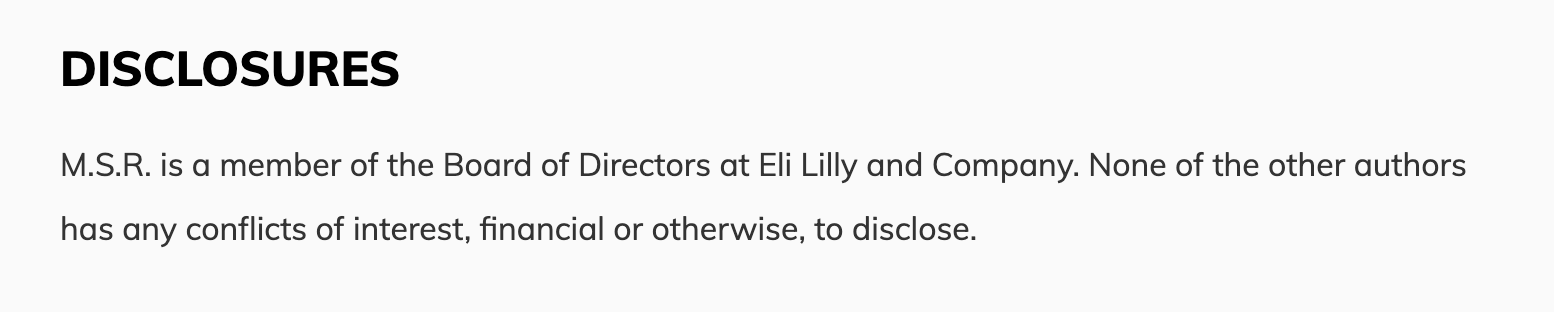
In publications where Runge did not disclose his ties to Lilly, verbiage varied.


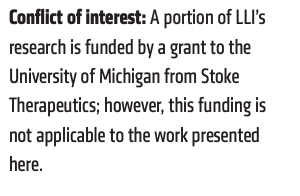


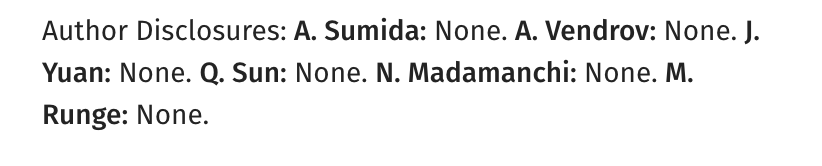
Campbell also maintains that industry leaders, like Runge, should be prudent when deciding whether to disclose their financial ties.
“I firmly believe that, as leaders, they are not naive to this field,” Campbell said. “They, more than anyone, should know the rules, and they, more than anyone, should be as conservative and as open in disclosure as they can be.”
Along with the ICMJE, all of the journals in which Runge is published had the same policy: Financial relationships must be disclosed.

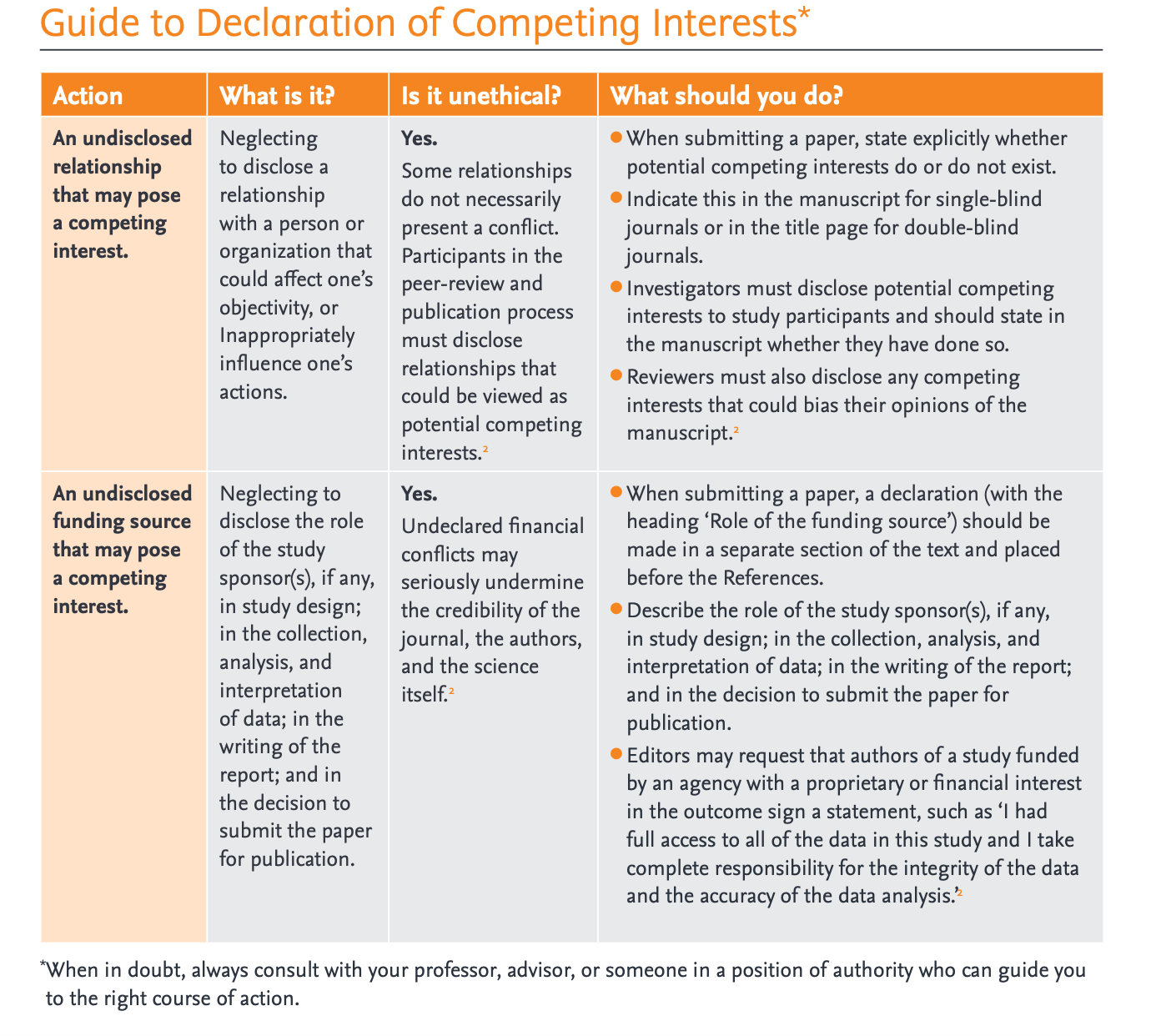
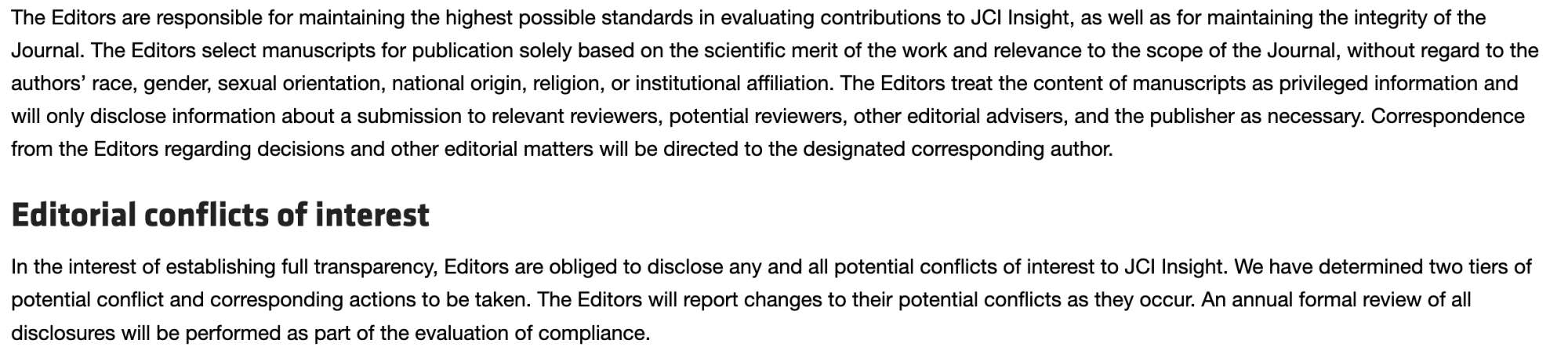
The Daily requested comment from all relevant journal publishers: Elsevier (ScienceDirect), The Journal of Clinical Investigation, the American Heart Association, Mary Ann Liebert (Sage), National Institutes of Health and Ovid. Only Elsevier and JCI responded.
In a Jan. 23 email to The Daily, JCI Executive Editor Sarah Jackson wrote that, while she was not able to comment on a specific case, the journal relies on authors to identify any potential financial conflicts when they submit their manuscripts.
“It is the responsibility of the corresponding author to collect the list of all potential conflicts from each author and to communicate it to the editors with the submission,” Jackson wrote.
In addition to the article corrected by Elsevier, Runge omitted his financial ties to Lilly in at least one other ScienceDirect publication.
Elsevier has issued no other corrigenda.
After the creation of Open Payments as part of the Physician Payment Sunshine Act under the Patient Protection and Affordable Care Act — which was codified in 2010 and requires manufacturers to report financial relationships with physicians and hospitals — high-ranking individuals and institutions began receiving criticism for not disclosing external financial conflicts of interest.
As a result, medical and academic institutions began implementing conflict of interest disclosure policies to mitigate any appearances of impropriety.
In 2012, the University followed suit, requiring researchers to follow the Public Health Service regulations outlined in the Code of Federal Regulations. The policy requires institutions receiving NIH funding to maintain an up-to-date, enforced policy that manages, reduces or eliminates a researcher’s financial conflicts of interest.
In the statement provided by Runge, he wrote that he pioneered the rollout of the Michigan Medicine conflict of interest disclosure policies in compliance with national regulation.
“I abided by the COI policy and led the rollout of the policy to all of Michigan Medicine because I firmly believe it is essential to the honesty and integrity expectations of all faculty and staff,” Runge wrote.
It is unclear what the exact policy that Runge referenced contains, as Michigan Medicine’s conflict of interest policy is not publicly available. But, an anonymous 2025 report given to The Daily alleges Runge’s role in the policy carries a certain irony. The authors express concern that Runge’s external financial ties directly conflict with the standards expected of faculty.
Runge retired this past summer from his three roles as chief executive officer, dean and executive vice president, but still works as both the Frank D. and Agnes C. McKay professor in medicinal science, professor of internal medicine and the special adviser to the Michigan Medicine executive vice president for Medical Affairs.
In the wake of Runge’s departure, his former positions as executive chief officer, dean and executive vice president were divided into two separate leadership roles. Dr. David Miller now serves as the chief executive officer of Michigan Medicine and executive vice president for medical affairs, while the deanship is held by Dr. Thomas Wang. Neither Miller nor Wang serve on external corporate company boards.
In an interview with The Daily, a tenured Michigan Medicine professor said the decision to separate these leadership roles reflects internal tensions within the Michigan Medicine administration. The professor requested anonymity, citing fears of professional retaliation.
“One thing that’s being done right away is that the dean and CEO positions are once again being separated,” he said. “I think that that’s a reflection of the sense that too much power was concentrated in one person who didn’t exercise it well.”
The professor contended that Runge’s external financial relationship with Lilly failed to adhere to the ethos Runge himself expected of Michigan Medicine researchers.
“Here is an instance where it doesn’t appear that the same rules apply to the dean as to the general faculty, and the dean is far afield from the behavior of similar officers in peer institutions,” he said. “I think that negatively reflects on the institution, and within the institution, creates a sense that the leadership believes that they’re above the rules of the faculty.”
Focal Point Co-Managing Editor Anna McLean and Focal Point reporters Elizabeth Rozeboom and Elizabeth Foley can be reached at agmclean@umich.edu, elizaroz@umich.edu and elfoley@umich.edu.
All data referenced in this story can be found here.
If you are a survivor on campus who’s faced challenges in reporting, if you’ve faced discrimination or if you have information on any issue relevant to Ann Arbor or the University of Michigan, please consider sending us your story. You can reach us at tipline@michigandaily.com. This is a private tip line viewable by a small team of reporters committed to this work.
Related articles