
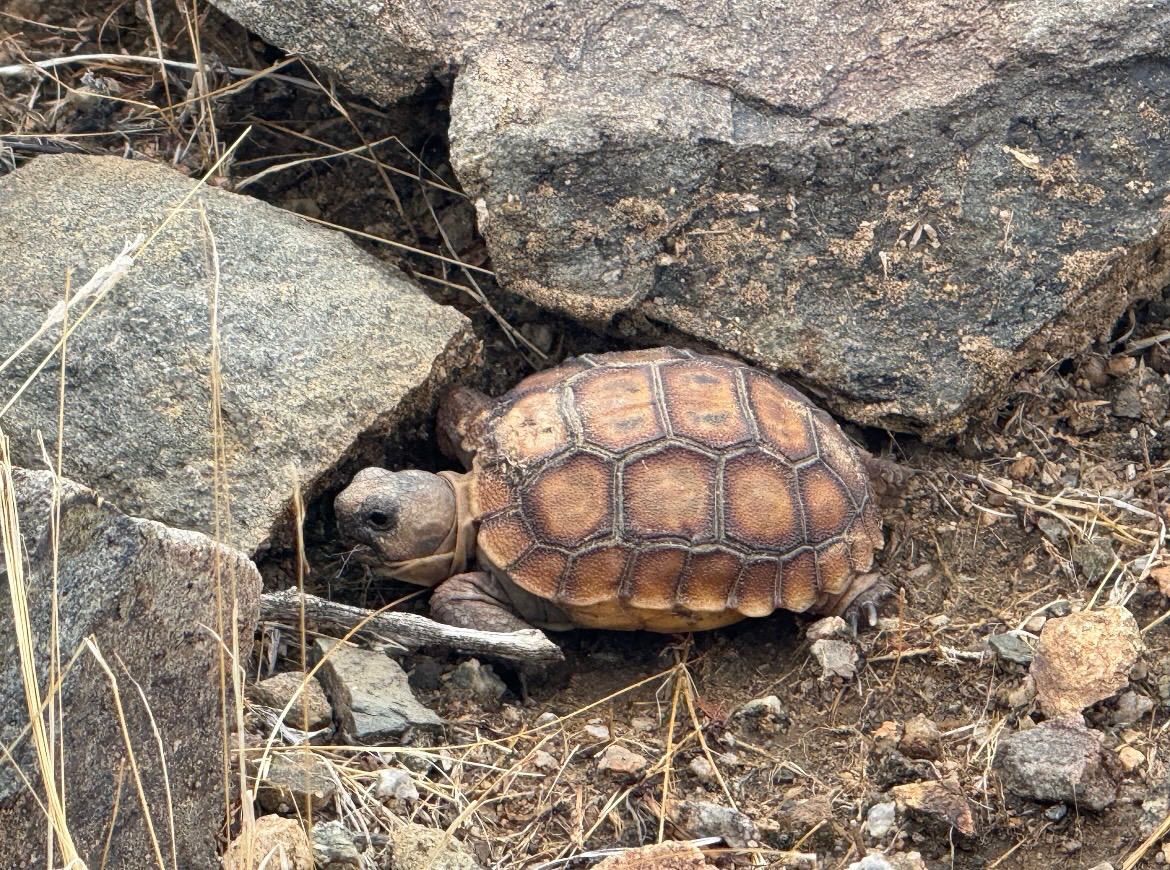
VICTOR VALLEY, Calif. (VVNG.com) — The Mojave Desert tortoise has roamed the desert Southwest for 15 million years, and now local conservation groups are urging residents not only to protect the endangered species in the wild but also to consider adopting captive tortoises in need of homes.
Today, the ancient reptile is endangered in California, and local conservationists say its survival now depends heavily on human action.
Erica Shafer of the California Turtle and Tortoise Council (CTTC) said the species has seen dramatic declines.
“The [Mojave Desert Tortoise] population has declined 90-95% over the last 40 years and in April of 2024, the [species] was uplisted to endangered in the state of California. The decline of the species is primarily due to habitat loss, disease, and animal and human predation,” Shafer explained.
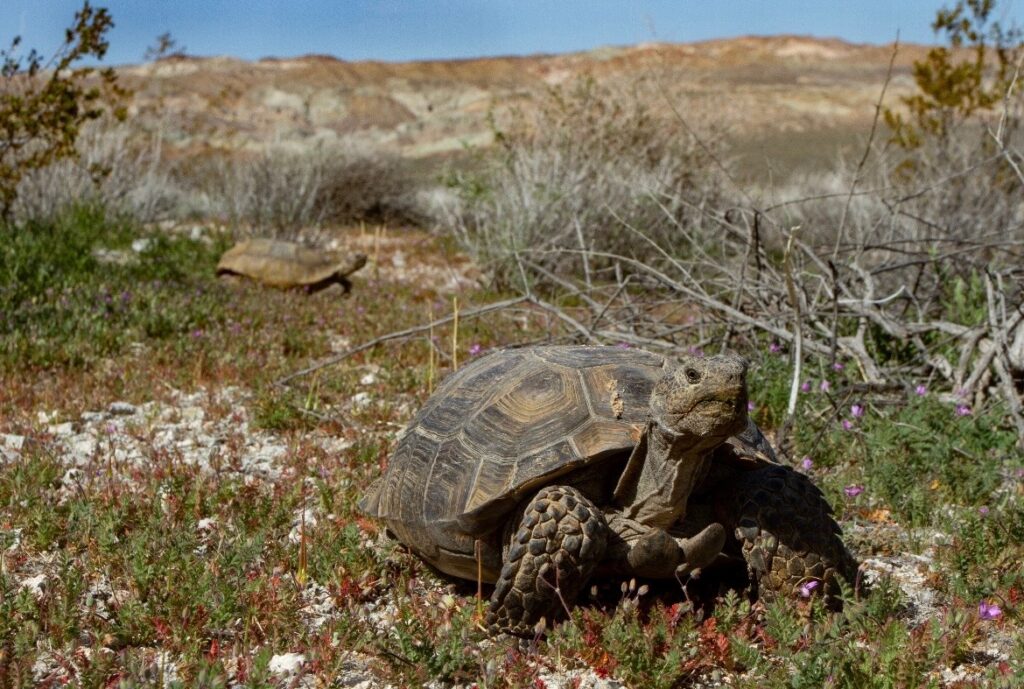
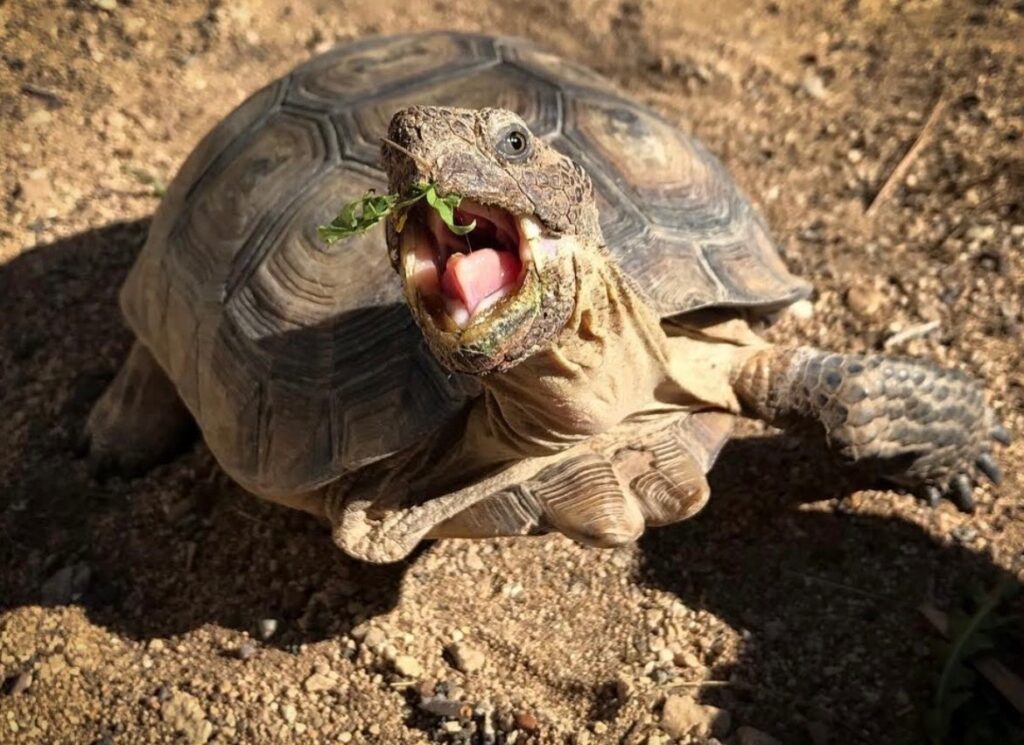 (Adult male tortoise, foraging. Courtesy of Eddie Basulto)
The Raven Problem
Young tortoises face particularly steep odds. Juveniles have been described as “walking ravioli” for predators like the common raven.
Shafer said ravens have become one of the most significant threats to hatchlings and small tortoises.
“Ravens are one of the most significant predators to the Mojave Desert Tortoise and a person can help slow the growth of the raven population by keeping their trash secure, not leaving sitting water on their properties, and never feeding the ravens,” she said.
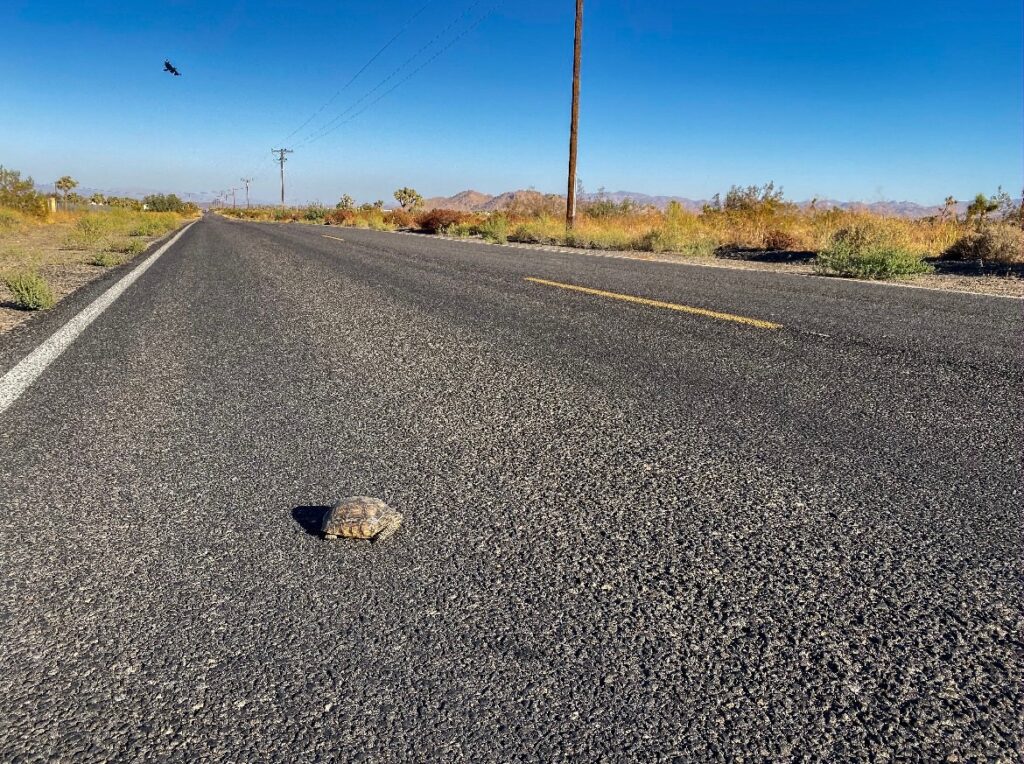
Conservationists say human activity has unintentionally boosted raven populations by providing food, water and nesting opportunities, increasing predation pressure on vulnerable tortoises.
A Keystone Species
Abraham Basulto, founder of the desert tortoise nonprofit Saving Slowpoke, said the loss of the tortoise would ripple across the ecosystem.
“The Mojave Desert tortoise is a keystone species, and as it disappears, the desert ecosystem begins to unravel. Protecting wild tortoises is critical for the survival of the species. With community involvement and education, we really have a shot at saving these slowpokes!” Basulto said.
The tortoise’s underground homes, known as burrows, are used by other wildlife, including kit foxes, burrowing owl,s and various rodents and reptiles. The species also plays a role in seed dispersal, contributing to soil health and plant diversity throughout the desert.
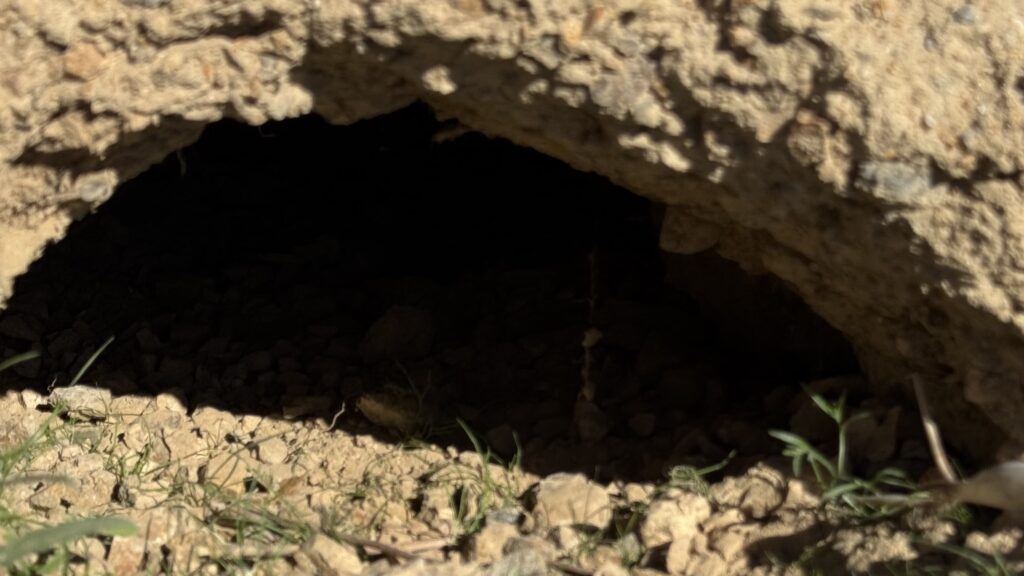 (Mojave Desert Tortoise burrow. Courtesy of Richard JP Myers)
Why Adults and Hatchlings Matter
Ken MacDonald, former chairperson and board member at large for the Desert Tortoise Council, emphasized the importance of protecting both adult tortoises and hatchlings.
“Desert tortoises don’t begin reproducing until they are teenagers. When we lose adults, we’re losing decades of investment in the future population,” MacDonald said.
“By the time a female tortoise lays her first clutch, she has survived nearly two decades of droughts, predators, and disturbance. That resilience is not easily replaced.”
He added, “A single adult female represents 15 to 20 years of survival. Losing her sets recovery back a generation.”
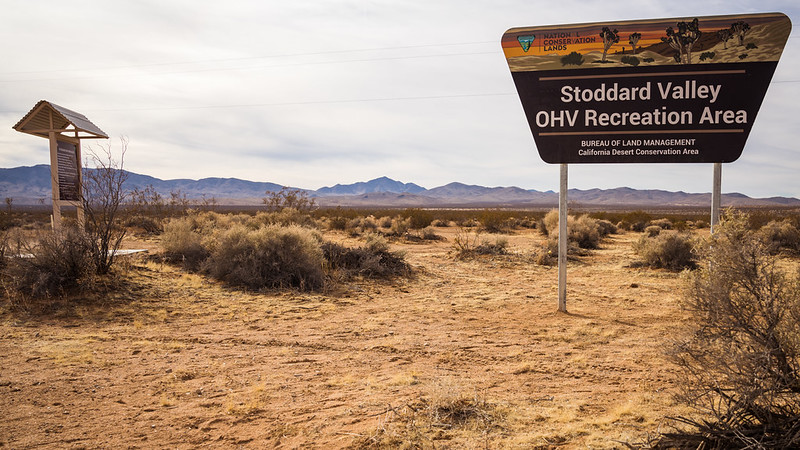 (Stoddard Valley OHV Recreation Area – Courtesy of Bureau of Land Management)
Because tortoises live long lives and reproduce slowly, recovery efforts move at what MacDonald described as the pace of the desert.
“Tortoises live long lives and they reproduce slowly. That means population recovery moves at the pace of the desert; measured in decades, not years.”
“When adult mortality increases, recruitment cannot keep up. The math simply doesn’t work for a slow-growing species.”
MacDonald stressed that juvenile survival is equally critical.
“A good tortoise hatchling year is a down payment on recovery 20 years from now. Protecting nests and young tortoises today determines what the population looks like decades from now.”
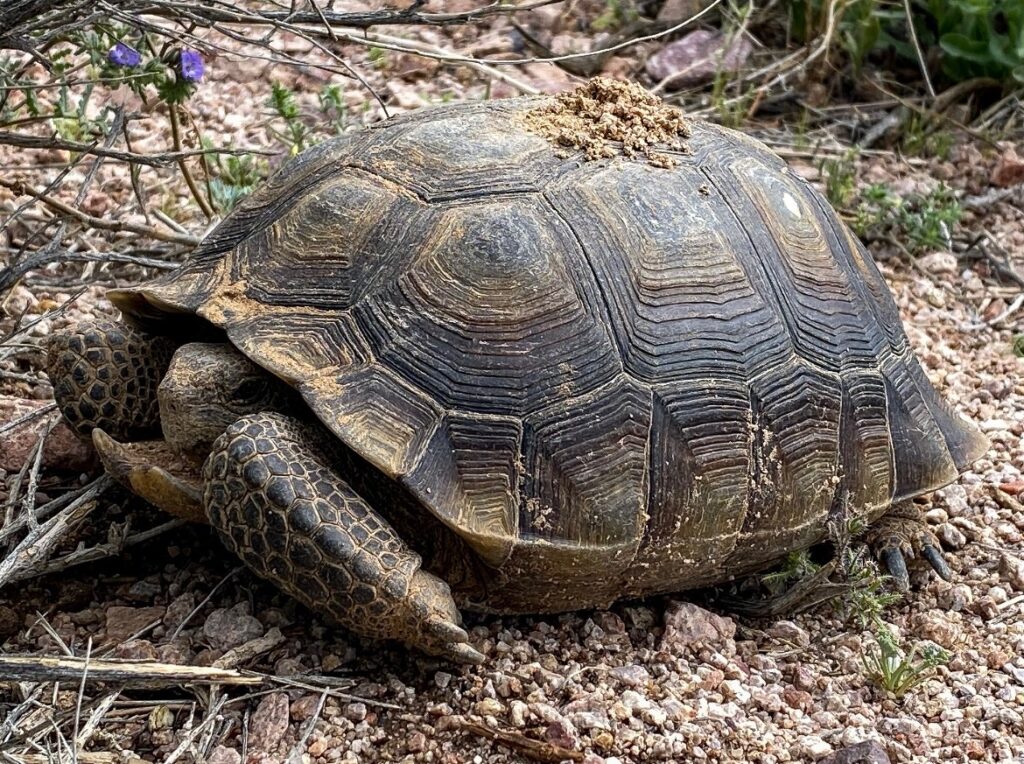 (Photo by Eddie Basulto)
What High Desert Residents Can Do
Authorized biologist Ed LaRue, an executive board member of the Desert Tortoise Council, outlined practical steps residents can take to help protect wild tortoises:
Stay on designated routes when visiting desert areas where tortoises live. Never drive cross-country.
Check beneath your vehicle before driving away to avoid crushing tortoises seeking shade.
Never release sick captive tortoises into the wild, as they may transmit respiratory disease.
Never remove wild tortoises as pets. Every tortoise, especially females, is critical to future population health.
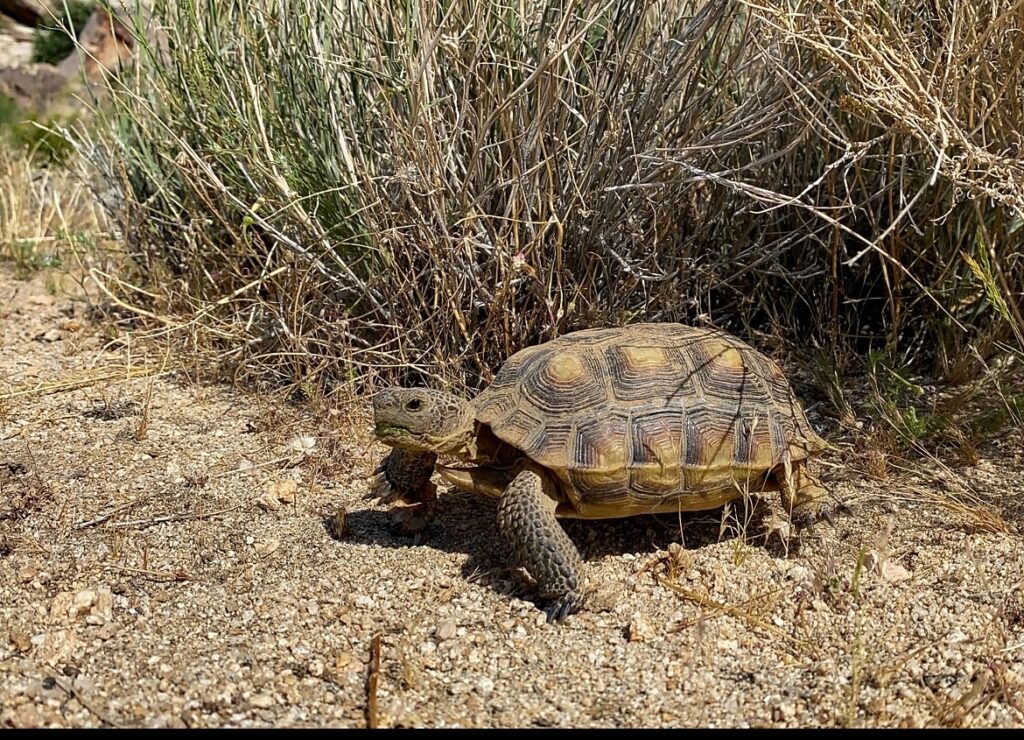 (Photo by Eddie Basulto)
It is also illegal to touch or move a wild Mojave Desert tortoise unless it is in imminent danger on a major roadway where you are legally able to move it to safety in the direction it was traveling.
The tortoise spends about 95% of its life underground and can brumate for up to nine months each year, according to the U.S. Fish and Wildlife Service.
Adopting a Desert Tortoise
More desert tortoises are taken in than are adopted out, leaving many in need of safe, stable homes.
Adoptions are available through Saving Slowpoke and the California Turtle and Tortoise Council.

To adopt through Saving Slowpoke:
To adopt through CTTC:
Residents who want to learn more can follow:
@SavingSlowpoke
@CTTCHighDesert
@DesertTortoiseCouncil
@MojaveDesertLandTrust
With habitat protection, community education, and responsible desert recreation, advocates say there is still hope for one of the Mojave Desert’s oldest residents.
Copyright 2026 Victor Valley News Inc. All rights reserved. This material may not be published, broadcast, rewritten, or redistributed.
📢 Stay connected with the High Desert’s largest news community!
🔗 For more local news, visit VVNG.com.
Note to readers: If you value our reporting and want to see it continue, consider becoming a monthly supporter. Your contribution helps keep independent, local news accessible to everyone. Support local news today!