
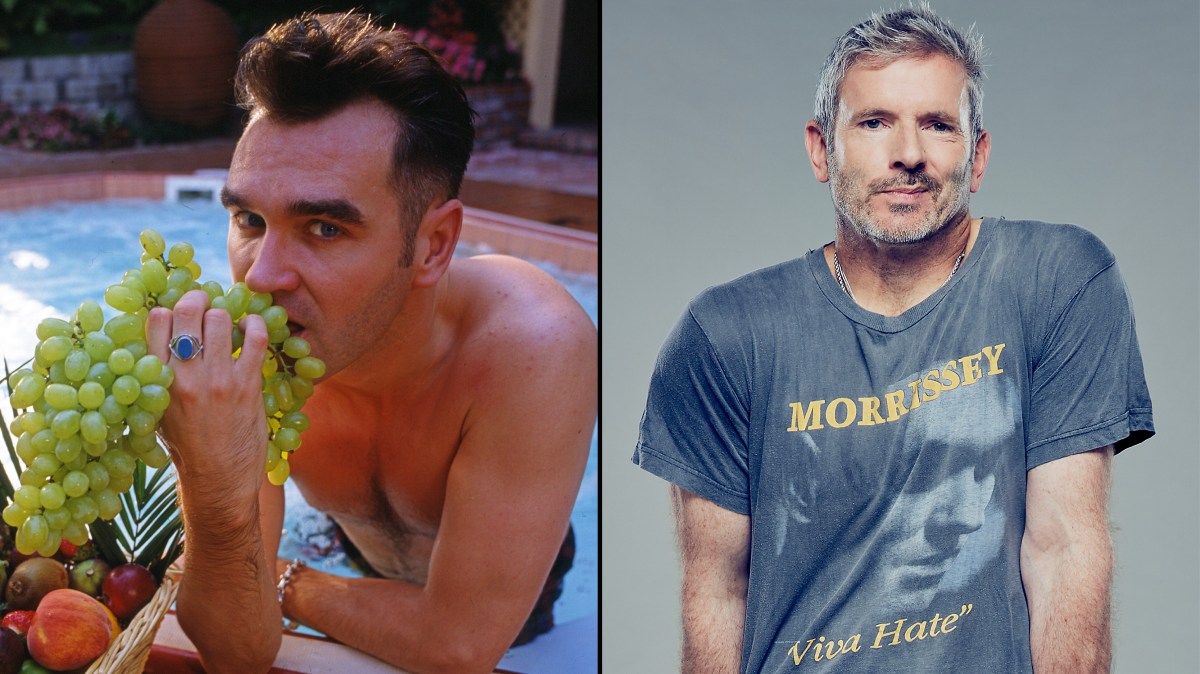
It was my daughter who caught me. I had headphones on and she snuck up behind me while I was at the laptop. Panicked, I tried to slam it shut, but she wrestled it open and, as a politically conscientious second-year university student, she was horrified, repulsed even, and roared: “Muuummmm! Dad’s doing it again! He’s listening to Morrissey!”
“It’s for work!” I cried out, like a mewling incel who’d been caught deepfaking a nude Scarlett Johansson. “Honestly! It’s a new album! Otherwise I can’t stand that old bigot! Haven’t liked him in years, or at least since that time when he called the Chinese a subspecies, or when he said that the gates of England were flooded with immigrants, or when he declared his support for the hateful far-right political party For Britain, or when The Simpsons finally sounded the death knell, in 2021, by proclaiming him, unapologetically, and via a Morrissey caricature voiced by Benedict Cumberbatch, ‘a huge racist’.” No, I said. Morrissey and me? We are done.
This wasn’t, of course, entirely true. As any “ex” Morrissey fan will tell you (or they will if they’re being honest), the 66-year-old former frontman of the Smiths is a hard habit to break. I have loathed his increasingly crude political pronouncements and, as someone who was more than once told, in mid-1990s London, to “go back to where you came from” (in my case Dublin), I find his stance on immigration offensive and not a bit baffling — Morrissey’s parents were both Irish immigrants.
And yet being a former Morrissey fan is like being trapped in an abusive relationship with your first great love. No matter what he does or says, you somehow dust yourself down and immediately hark back to the bliss of early discovery. You default to the honeymoon years of the 1980s when this strange undershot creature infected your very bones with revolutionary new ideas about the nobility of solitude and the pre-eminence of literature, especially poetry, and the power of skipping the school disco for a night under the covers with a cup of Horlicks and the complete works of Oscar Wilde.
• Read more music reviews, guides and interviews
The key question here is whether Morrissey is still creating works of beauty beyond anything most of us can barely imagine. Is he even creating works of beauty at all? He has 2.3 million monthly listeners on Spotify — not top tier but showing a significant fan base. I’ve listened to his new album, Make-Up Is a Lie, about 20 times now. I’m not a music critic, so it’s not my place to review it or pass judgment. I will say that those expecting the great mea culpa will be disappointed.
Musically it’s nowhere near the heights of the triumphant early albums (Vauxhall and I, from 1994, remains the brand leader) and it too often exposes Morrissey’s late-career habit of writing witty phrases and probing one-liners in search of actual songs (see 2020’s I Am Not a Dog on a Chain). There are 12 tracks on Make-Up Is a Lie. Two of them are catchy. One of them is soothing. Nine of them are patchy.
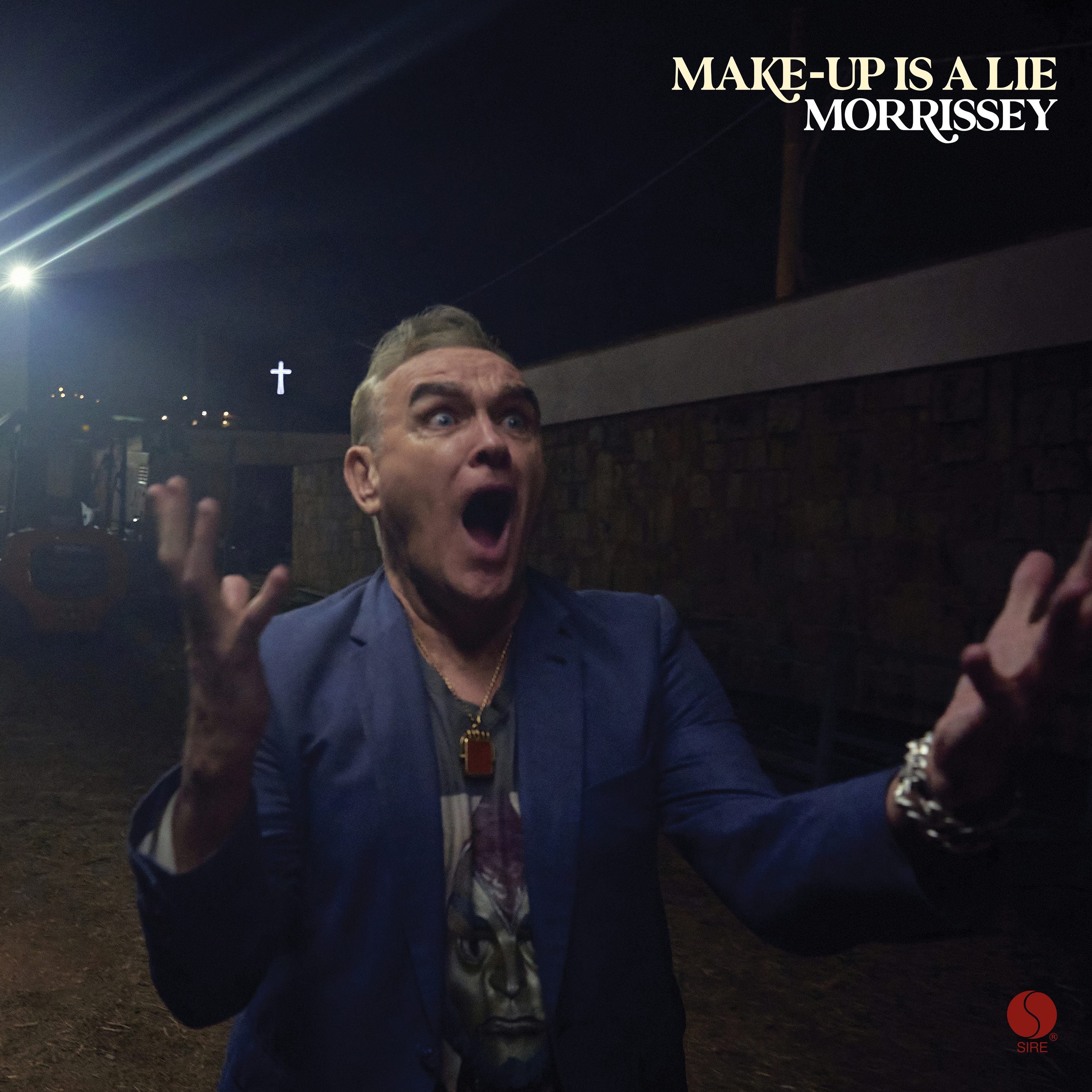
The midpoint torch song Boulevard is close to harrowing: in it, the man who once rattled through “ere thrice the sun done salutation to the dawn” (in Cemetery Gates on The Queen Is Dead) vainly attempts to pad out almost an entire track from the needless and painful warbling of a single word: “Somewhere off the booooo-laaay-vaaarrd, the booooooo-eh-oooooh-eh-ooooo-laaaaaeeeaay-vaaard!!” There’s also the creepy Notre-Dame, which includes lyrics about uncovering who really tried to “kill” Notre-Dame with the 2019 fire, and seems to nudge the listener towards conspiracy theories about anti-Christian arsonists and, yes, them again, bloody immigrants!
I met Morrissey in March 1994 in HMV on Oxford Street. I was researching at the BFI library for my master’s degree in film studies, and I spotted a poster announcing a day of album signing at the London megastore. And so I went along, almost first in the queue. I was tongue-tied when I got to him, led there by security. I nervously held out my copy of Vauxhall and I and said nothing. In return, he did all the work. Where was I from, why was I here, how long was I staying, and did I know this part and that part of Dublin that he knew well? He then lightly made fun of my accent (hint of things to come?), smiled softly and shook my hand.
• Mike Joyce of the Smiths: ‘To call Morrissey complex is an understatement’
I was all a-wobble after that, akin to those hysterical girls on the verge of collapse after meeting Harry Styles, Justin Bieber or Jimin from BTS. It was like encountering God, or certainly a numinous presence who had filled my teenage years with sacred hymns of loss and yearning, and had hammered home a central spiritual credo about (to quote a famous Morrissey lyric) how it “takes guts to be gentle and kind”.
In the 32 years since then Morrissey basically flushed that sanctity down the lavatory. Defending him went from being tricky to being a nightmare to being utterly pointless. One minute he’s decrying the treatment of Tommy Robinson, the next he’s saying that the victims of Harvey Weinstein were probably just “disappointed” that there were no career benefits from their brutal encounters with the producer and convicted sex offender. Was Morrissey making this up? Was it one giant prank? Was he going to suddenly emerge with an ingenious album called Had You Fooled, Didn’t I? Don’t Worry, I’m Still a Sweetie!
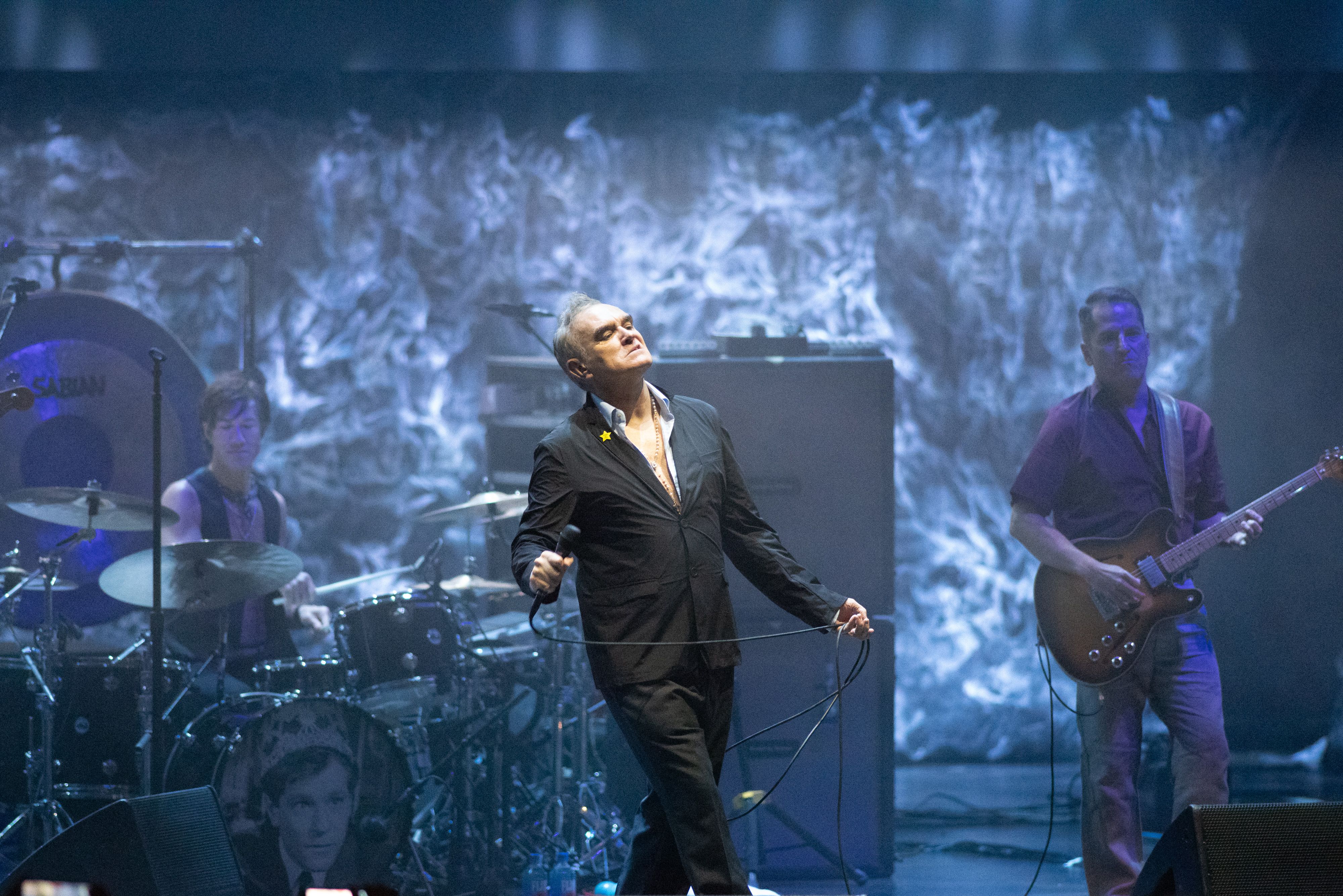
On stage in 2023
GEOFFREY CLOWES
In the early days, of course, Morrissey used to say: “It’s very easy to be controversial in pop music because nobody ever is.” It’s possible that this very Wildean penchant for quippy provocation eventually superseded his capacity for rational thought. That’s one excuse that former Morrissey fans deploy. The other is that he is supported by huge swathes of the Latino community, especially from Mexico, and therefore he can’t be a bigot. And the other, similarly, is that his oft-discussed sexuality, apparently a somewhat fluid thing, sometimes called celibate or “nonpractising bisexual”, demonstrates his outsider status and his allegiance with the “other”, which, again, means that he can’t really be a wrong ’un. As I say, utterly pointless.
The most famous, and indeed thoughtful, defence of Morrissey came in 2019 from the Australian singer-songwriter Nick Cave, who had clearly decided, paraphrasing WB Yeats, to separate the dancer from the dance. In an impassioned blog post Cave wrote: “We should thank God that there are some among us that create works of beauty beyond anything most of us can barely imagine, even as some of those same people fall prey to regressive and dangerous belief systems.”
There is one deeply moving and deliciously addictive earworm on the new album, called Kerching Kerching, that finds the sexagenarian looking back on his life and career, and further back still to the “shy boy” he once was, and wondering aloud: “What went wrong?” In the song he implies that it was simply his blind pursuit of success (the “kerching kerching” of the title) that threw him from the right path. But the rest of us in the real world, especially the former Morrissey fans, could probably hazard a better guess. Just ask The Simpsons.
Do you still listen to Morrissey? Let us know in the comments below