
Tensions are high in the world of women’s basketball.
WNBA players and owners have been negotiating for more than a year on a new collective-bargaining agreement, and the standoff now threatens to delay the season. In Chicago, Sky principal owner Michael Alter is being sued by a minority investor who alleges his stake was unfairly diluted just as the franchise’s value popped.
Together, the disputes reflect a new era for the Sky and the league, one where millions of dollars are at stake.
That’s a big change.
For much of the Sky’s history, ownership meant absorbing losses in service of a social mission, not capturing meaningful upside. As recently as 2023, the Sky had trouble raising money at an $85 million valuation. Now, one investor estimates the franchise is worth closer to $350 million.
“It’s all of a sudden real money for people,” that investor told the Sun-Times.
So what happens when a small community built on belief becomes a booming business?
The Sun-Times spoke with early investors, fans and players to understand how the meaning of the Sky is changing.
What role should the team’s purpose-driven investors play now?
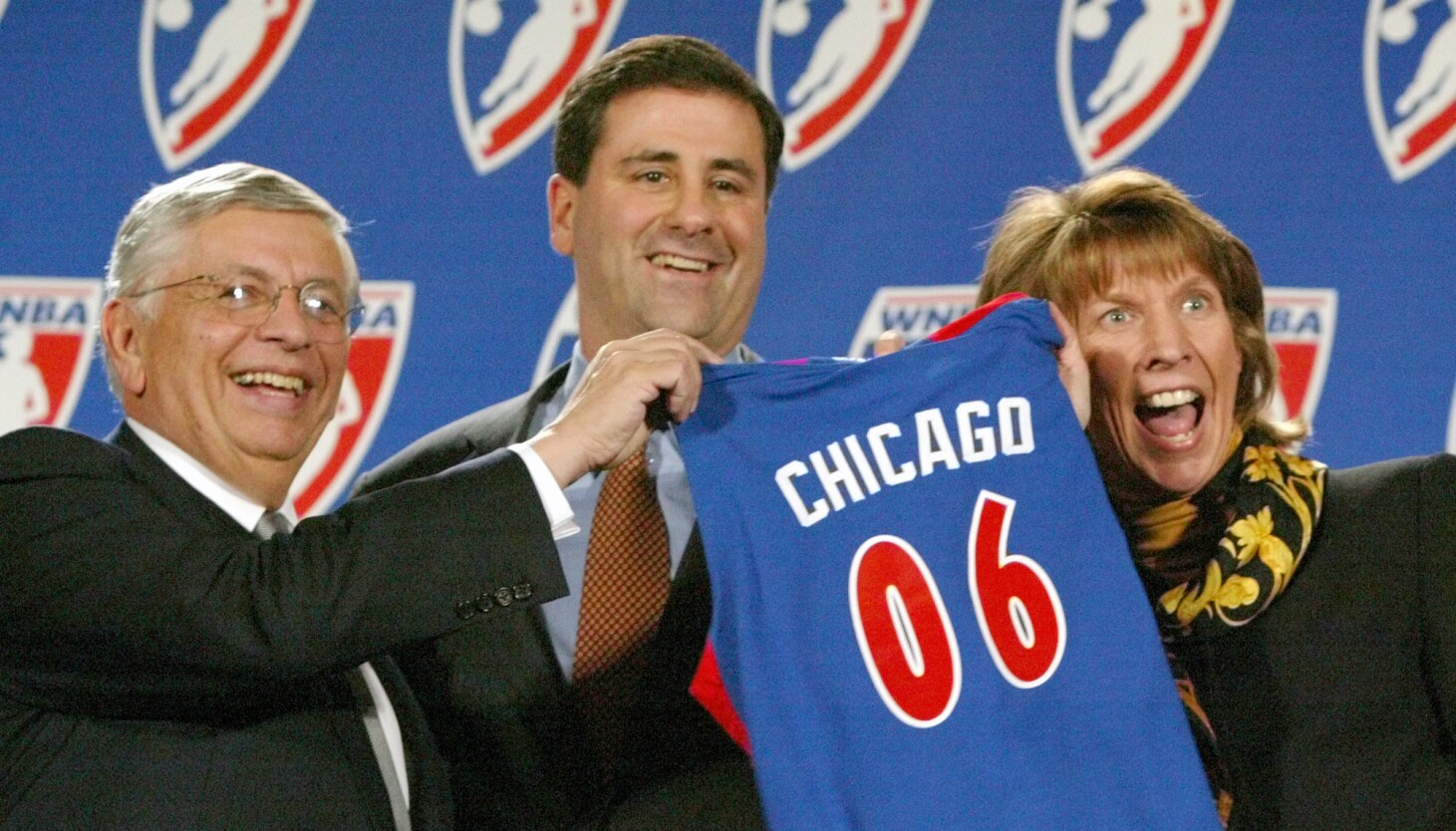
In 2006, Linda Friedman understood that the Sky would be different from an NBA or NFL franchise. Instead of being funded by a single billionaire, it would be backed by a group of mission-driven owners.
Alter pitched the investment to her in feminist terms. He asked her to imagine young boys attending games in jerseys bearing women’s names, and how that might shape their understanding of the value women bring to a team.
It resonated with Friedman, a lawyer whose life’s work, she says, has been “fighting Wall Street on gender and race.”
The mission would be to help create opportunities for players, coaches and fans who otherwise might not have them. Over two decades, she tried to do her part. She bought blocks of tickets and gave them away. She provided pro bono work for the team’s charitable arm.
Meanwhile, Alter absorbed the financial losses. Friedman estimates he loaned the team roughly $30 million over the years to keep the team afloat, and has never gotten proper recognition.
Now, the lawsuit against him bothers her.
“What kills me about that lawsuit is that instead of saying thank you for hanging in there because now I have something of tremendous value, it’s just all the criticism,” Friedman told the Sun-Times. “It’s not about truth. It’s about money.”
Friedman said she never expected a financial return from the Sky. The return, for her, was walking into a Sky game and seeing a different crowd than at Wrigley Field or Soldier Field. Not just “privileged kids from the suburbs,” but families and young fans who otherwise might not have experienced professional sports.
Now she wonders whether that original mission can survive the league’s financial ascent, or whether Wintrust Arena could start to resemble those other venues in a few years.
“A good part of me would like to have my money back to invest in a similar cause because I think it’s so needed,” she said. “I really enjoyed being a part of this, but to me, the ‘this’ has changed. The need to have purpose-driven, mission-driven people support and build a league has changed. The billionaires want a part. And that’s in the last two years.”
What does the boom feel like to longtime fans?
When the Sky announced they would play their inaugural season at the UIC Pavilion in 2006, Leslie Pilot-Gatton was thrilled. Her daughter was just beginning to fall in love with basketball, and season tickets felt like a way to support that interest.
On the city’s South Side, organized basketball opportunities for girls were limited. Pilot-Gatton often found herself driving north so her daughter could play.
“It was really important to have the Sky, for girls to be able to go out and watch women play basketball and have something to look up to,” Pilot-Gatton told the Sun-Times.
When the team moved to Rosemont’s Allstate Arena from 2010 to 2017, she attended fewer games. But when the Sky returned to the city at Wintrust Arena near McCormick Place, Pilot-Gatton bought season tickets again, this time some of the best seats in the house.
Her fandom reflects the sense of pride and stewardship many women’s basketball fans feel. She tries — and often succeeds — at getting others hooked. She once brought her trainer, a father of young girls, to a game, and he became a season ticket holder the following season.
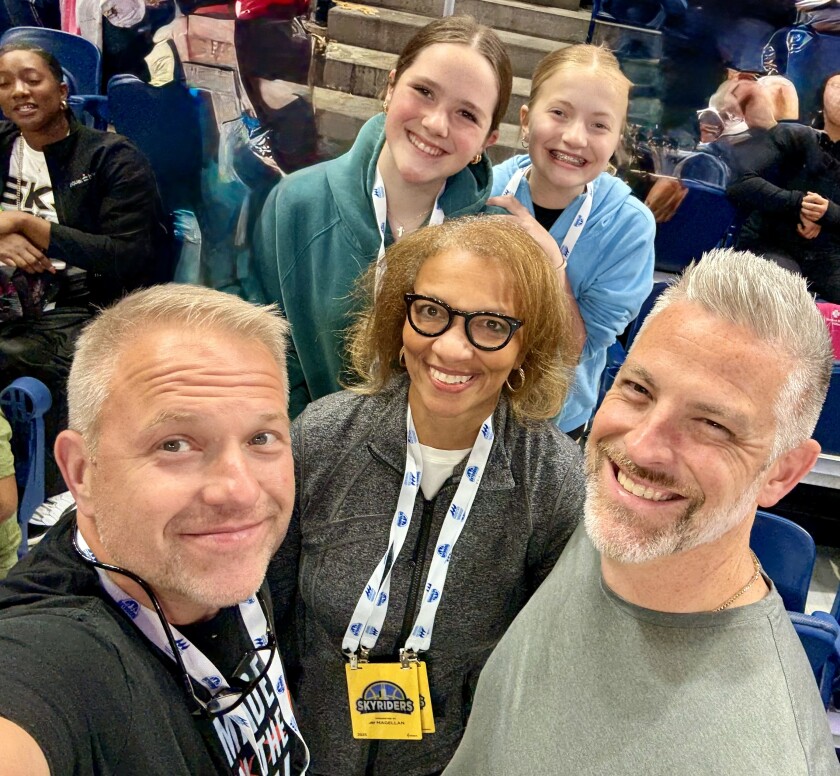
Leslie Pilot-Gatton (center) converts her personal trainer (Erik Treese, left) and family into a season ticket holder.
Despite her love for the Bears and White Sox, she calls the Sky “the best game in town” because they play more of a team game. It excites her the way the energy in the stadium has grown as the league’s profile has risen.
During the 2025 season, the Sky played two sellout games at the United Center and averaged nearly 10,000. Popularity, however, has come with rising prices: Pilot-Gatton paid $30 per game during the 2021 championship season. Now those same seats cost about $145.
She worries about what that could mean for the crowd’s makeup. Part of what she loves about the Sky, she said, is that fans come in “all shapes and sizes and ages and colors.” But she plans to renew as long as she can afford it.
“We don’t want them to leave,” she said.
She just hopes rising ticket prices will translate into higher salaries and better resources for players — and that those players can become “more a part of the city.”
How has player power changed?
Holding tightly to what you have has long been part of women’s basketball, especially when the WNBA was young and resources were slim.
In the Sky’s inaugural season in 2006, minimum salaries for players were $30,000. The team practiced at Moody Bible Institute. Their athletic trainer also served as equipment manager and director of basketball operations.
Still, the circumstances didn’t bother Chelsea Newton, then in her second year in the league.
“You got to understand: I came from Sacramento in the expansion draft. We just won the championship,” Newton told the Sun-Times. “You’re on cloud nine. Like, this is amazing. I don’t care how much money I get paid.”
Housing was covered. Cars were paid for. Mostly, they were grateful to have a league to play in.

Chelsea Newton (second from right) and Sky teammates from the 2006 inaugural season.
The league had barely existed for a decade. Three of the original eight teams folded in the mid-2000s, including the storied Houston Comets. Players felt a sense of precarity.
Still, Newton pushes back on the notion that women’s basketball has only just burst onto the scene. The year Newton won the championship in Sacramento, the team drew as many fans as Angel Reese’s rookie season with the Sky.
Waves of interest and pockets of support for women’s basketball have existed for decades.
In the modern era, though, television exposure and social media have propelled player profiles. In 2021, the NCAA changed the rules to allow players to profit off their name, image and likeness. That led to endorsement deals and accelerating visibility for stars.
Reese now has more than 5 million followers on Instagram, and the 2023 national championship game between LSU and Iowa drew almost 10 million viewers.
Those numbers validated something that Friedman and other early Sky investors admit they didn’t see coming: women’s basketball has tremendous market potential. WNBA franchise valuations have soared in anticipation of further growth.
Players are no longer “just grateful” to have a league. During collective-bargaining negotiations, they have rejected proposals that include salaries topping $1 million, pushed for a revenue-sharing model closer to major men’s leagues, and authorized a strike if necessary.
“I love the fact that the players stand up for themselves,” Newton said. “I love the fact that these are the talks.”
Newton is close with many current WNBA players, including the Sky’s 2021 Finals MVP Kahleah Copper, who she coached at Rutgers. She lived the league’s fragile beginnings and now mentors the NIL generation as an associate head coach at Texas A&M.
That dual perspective informs her view of the moment.
“I just want it to work out for both sides and to make sure that the players get what they need and the league survives and continues to grow,” she said.
How should the WNBA deal with resource disparities?
When money floods into a space, it rarely distributes evenly. Newton is living the disparities NIL has created in the college game, as programs without deep pockets struggle to keep up.
The same dynamics apply in the WNBA. Some teams have built gleaming practice facilities and robust medical and performance staff. Other teams are still playing in tiny arenas and practicing in shared spaces.
That’s why players are fighting for minimum standards in the next CBA. Discussing the latest round of negotiations on her podcast, Liberty star Breanna Stewart said players are demanding that every team provide resources that support performance, including chefs, massage therapists and dedicated practice facilities.
Stewart even suggested that owners who can’t meet the new standard should consider selling.
From a current player’s perspective, it’s tempting to boot the stragglers and invite in the billionaires. But history is a cautionary tale.
As Newton’s experience in Sacramento showed, an owner’s willingness to endure the lulls matters as much as investment during boom times. The Monarchs’ owner abruptly folded the team in 2009 after attendance dipped, shifting his focus to the NBA’s Sacramento Kings.
Even as the league booms, long-term commitment should count for something.
The Sky score highly on the commitment-o-meter: Alter and company are the longest-tenured independent (non-NBA affiliated) owners in the league.
It’s the willingness-to-adapt category where the Sky are unproven.
They’ve taken steps to modernize the team, with a new practice facility coming in Bedford Park. But a resistance to change lingers. They were the last team in the league to separate the coach and general manager roles, and as of the 2025 season, the team’s strength and conditioning coach was still organizing travel logistics.
Alter has choices to make. In a league reshaped by money and modern expectations, the Sky’s mission may need reimagining.