
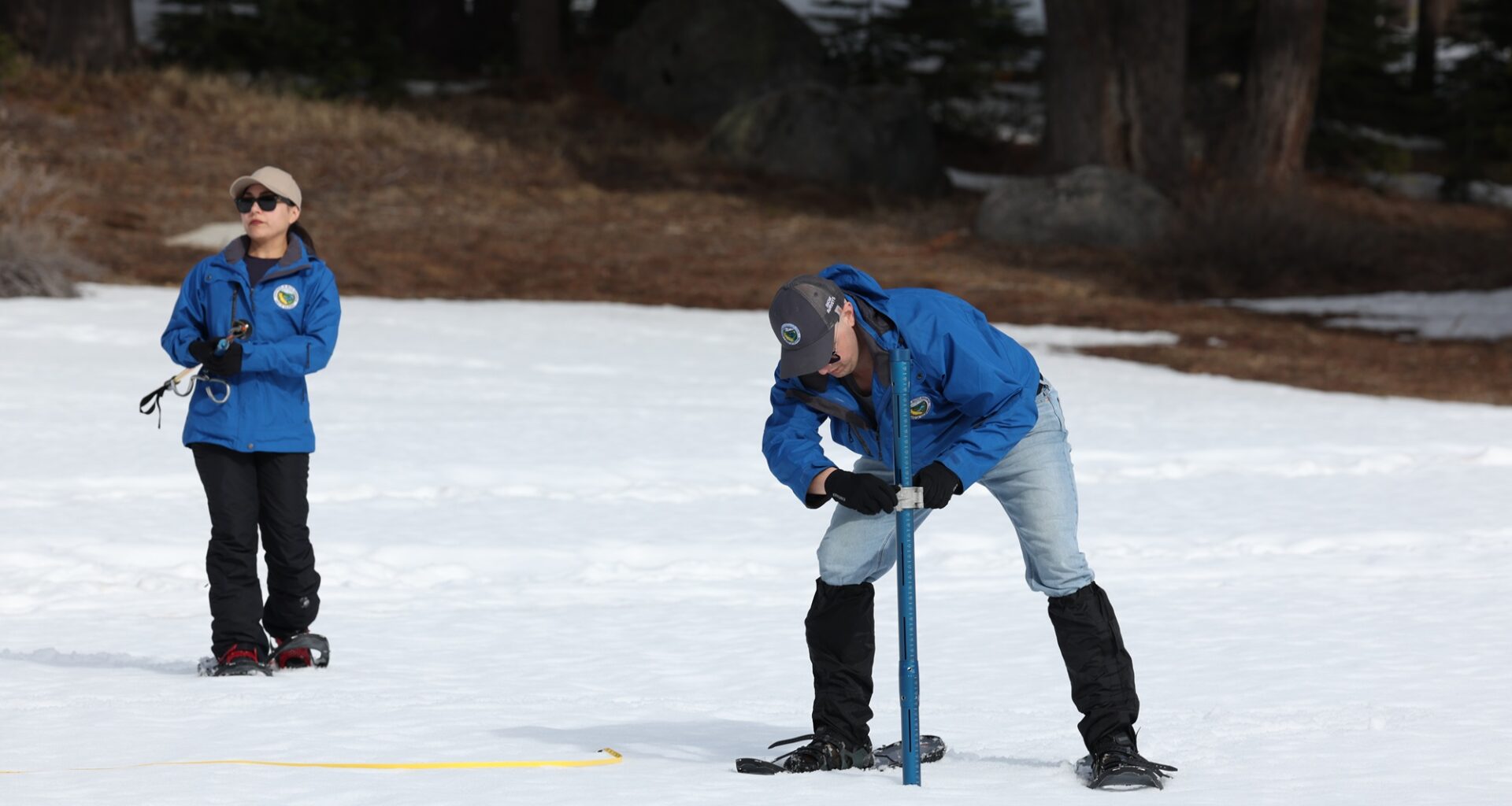
That brings challenges, according to Anderson. “In the Northern Sierra Nevada, there’s not a whole lot of watershed above 7,000 feet for snow to accumulate,” he said, meaning “there’s not much land for that snow to build up on.”
The potential consequences of lost snowpack put experts on edge.
For starters, there’s the possibility of greater fire risk. As the snowpack melts, water running down the Sierra helps keep vegetation and soils moist when the weather dries out. The ecosystem has grown to rely on that replenishment; without it, dry vegetation could become fuel for wildfires.
Snowpack also refills reservoirs as it melts. Without it, we don’t have that steady stream to replenish our water supplies.
This year, reservoir levels are at more than 100% of their historic average overall, according to the California Department of Water Resources. That’s thanks to plenty of rain and solid snowpack from previous winters.
But if a warm winter like this one follows after a few dry years, experts say a weak snowpack could force Californians to curtail water use in the summer.
“In a year where we really might need it, if it’s not there, that is the kind of situation where people everywhere in California are gonna notice,” Swain said.
Right now, the statewide snowpack is sitting at 69% of the normal for this time of year, with the Northern Sierra lagging the most, according to the Department of Water Resources.
Looking ahead, Anderson said he’s hoping for a run of colder storms later this month and in March, with lower freezing elevations that can rebuild a healthier snowpack. If dry or warm stretches drag on for two weeks or longer, he warned, “you’re backsliding a little bit” and possibly losing ground on snowpack, he said.
The current storm could help snowpack — but don’t celebrate yet
The storm moving through the state may bring the Sierra snowpack closer to normal. But this year’s warm weather is part of a pattern that experts expect to continue, thanks to climate change.
Fortunately, as Desert Research Institute climatologist Dan McEvoy points out, California is still benefitting from a few good years of snowpack.
In particular, a cold, wet winter in 2023 produced a solid snowpack that put the state in strong shape heading into the current season. All of that stored water acts as a buffer, helping California ride out a year when snowpack is weaker.
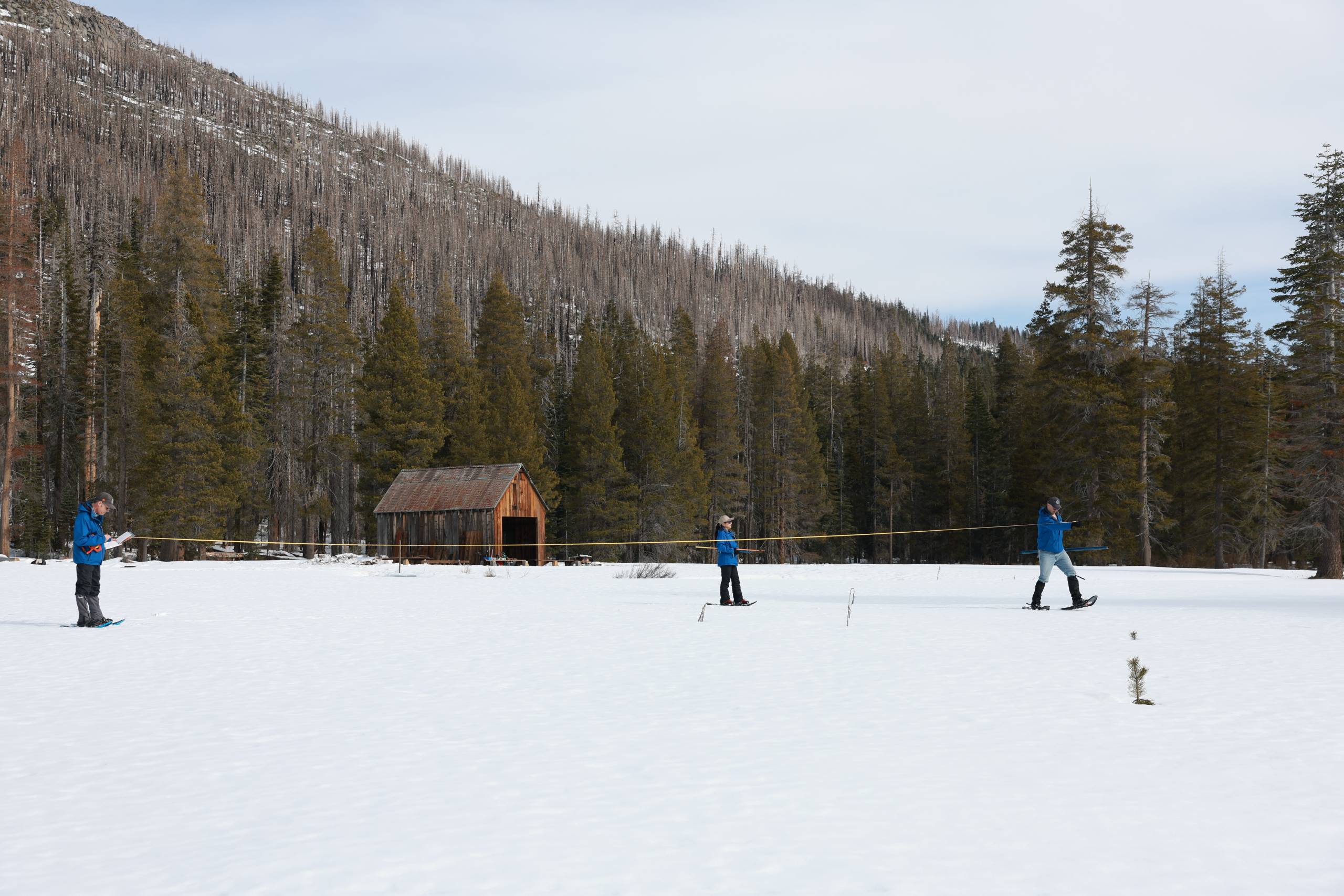 California Department of Water Resources (from right) Engineer Jacob Kollen, Hydrometeorologist Angelique Fabbiani-Leon and Snow Survey and Water Supply Forecasting Unit Manager Andy Reising, take measurements during the second media snow survey of the 2026 season at Phillips Station in the Sierra Nevada, on Jan. 30, 2026. (Andrew Nixon/California Department of Water Resources)
But experts aren’t ready to say that the 2026 water outlook is worry-free.
“Just missing two or three [storms], not having those [cold] storms show up during the winter, can make or break a drought year,” McEvoy said.
As UC climate scientist Swain put it, this season’s high temperatures, high freezing line and low snowpack “would be less concerning if this were just a totally aberrant anomaly.”
Unfortunately, he said, our changing climate means “it’s part of a sustained trend.”
So while things may be looking better after this week’s storm, the bigger problem isn’t going away.