
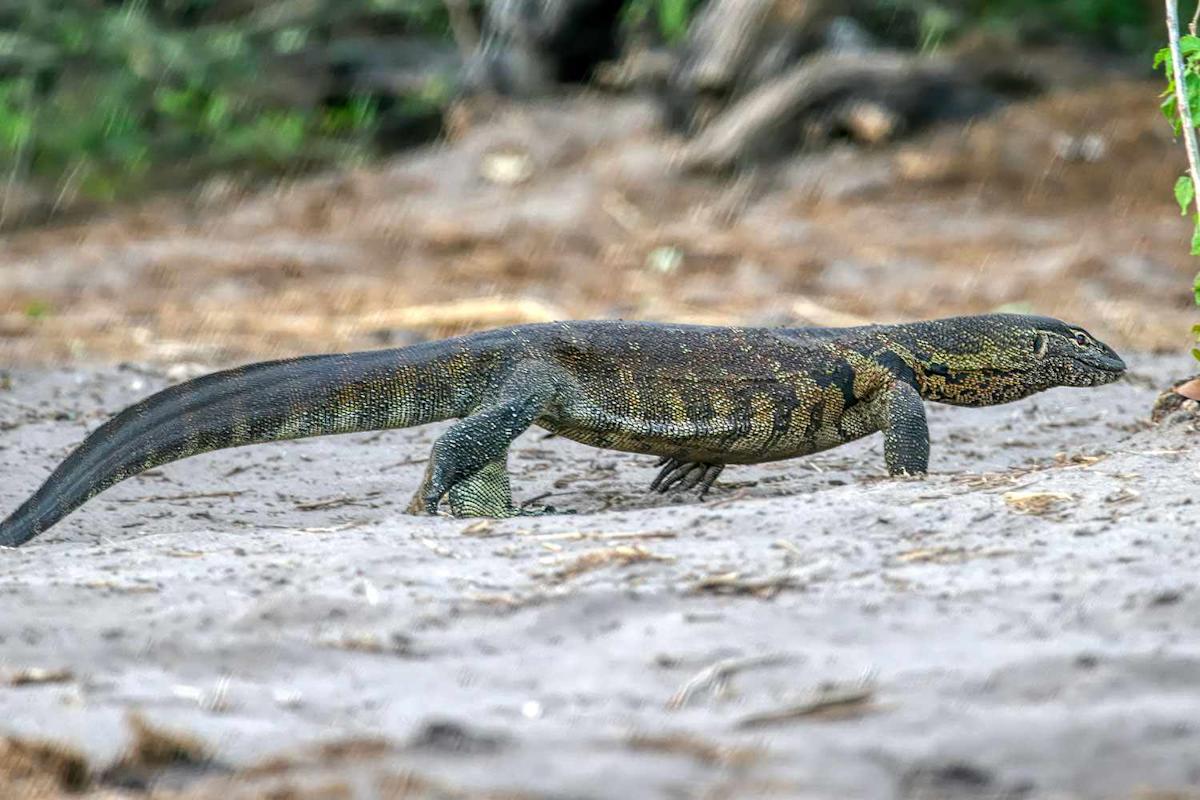
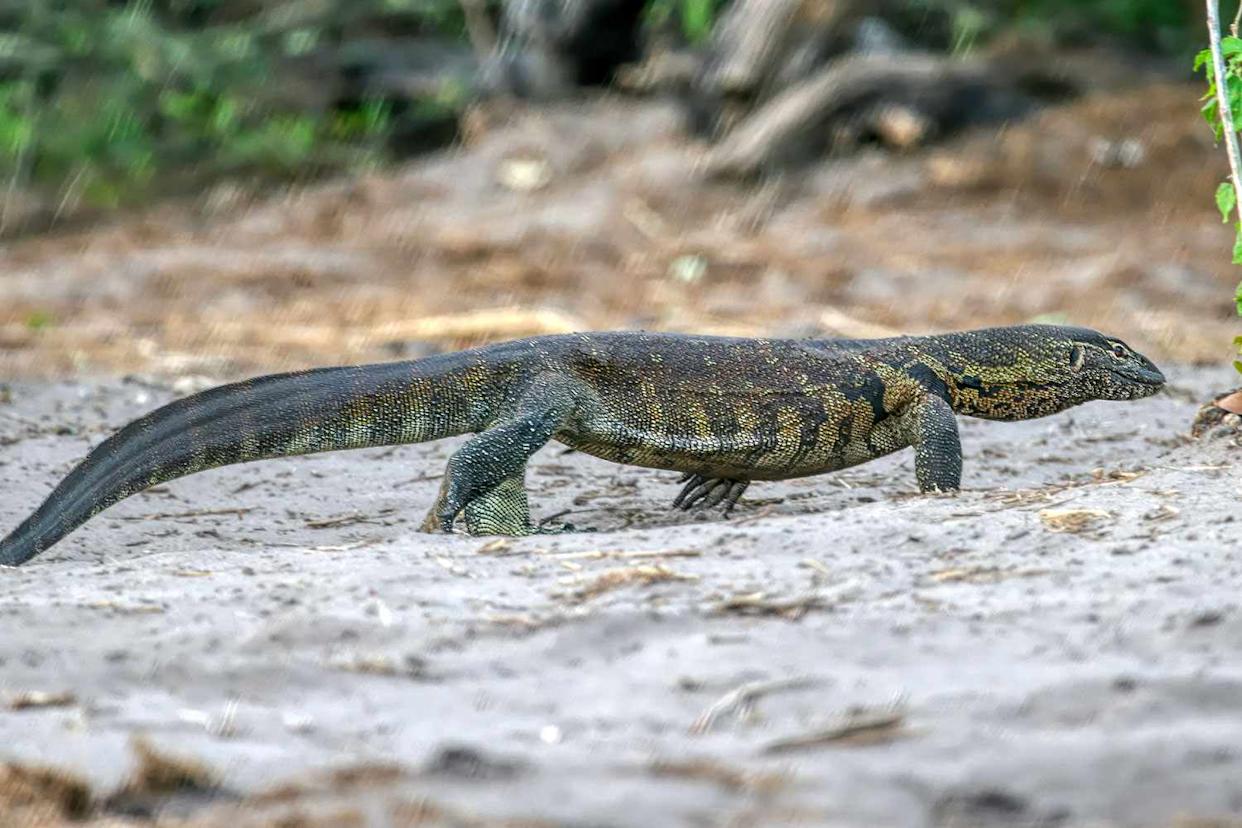
 A nile monitor lizard in Botswana
Getty
NEED TO KNOW
Nile monitors, unlike iguanas, are highly adaptable to sudden drops in temperatures
The invasive lizards can grow over 6 feet long and are highly defensive
Officials urge residents to report sightings
Floridians are used to invasive species making headlines — from iguanas falling out of trees during cold snaps (and made into unique eats) to Burmese pythons slithering through the Everglades.
However, wildlife officials say another reptile deserves attention. According to the United States Geological Survey, the Nile monitor (Varanus niloticus) is the largest and reportedly the most dangerous invasive lizard species currently established in the United States.
Native to sub-Saharan Africa, the powerful reptiles have established breeding populations in many counties across Florida, leading to at least 25 sightings as of 2024. Other sightings have also been reported in Arizona, California, Georgia, Texas, and Virginia.
Unlike iguanas, which become sluggish in cold weather, Nile monitors, which are olive green to black with yellow or cream striping along the jaw, head, and back, are highly adaptable. They are skilled climbers and strong swimmers, capable of remaining underwater for up to 12 to 15 minutes, as explained by the Florida Fish and Wildlife Conservation Commission (FWC).
Adult Nile monitors can reach up to 6.5 feet in length and weigh over 22 pounds, though most average around five feet long and 15 to 18 pounds. Their lightly banded tails, which are nearly double the length of their bodies, act like rudders, helping them navigate canals and waterways that may serve as dispersal routes across South Florida.
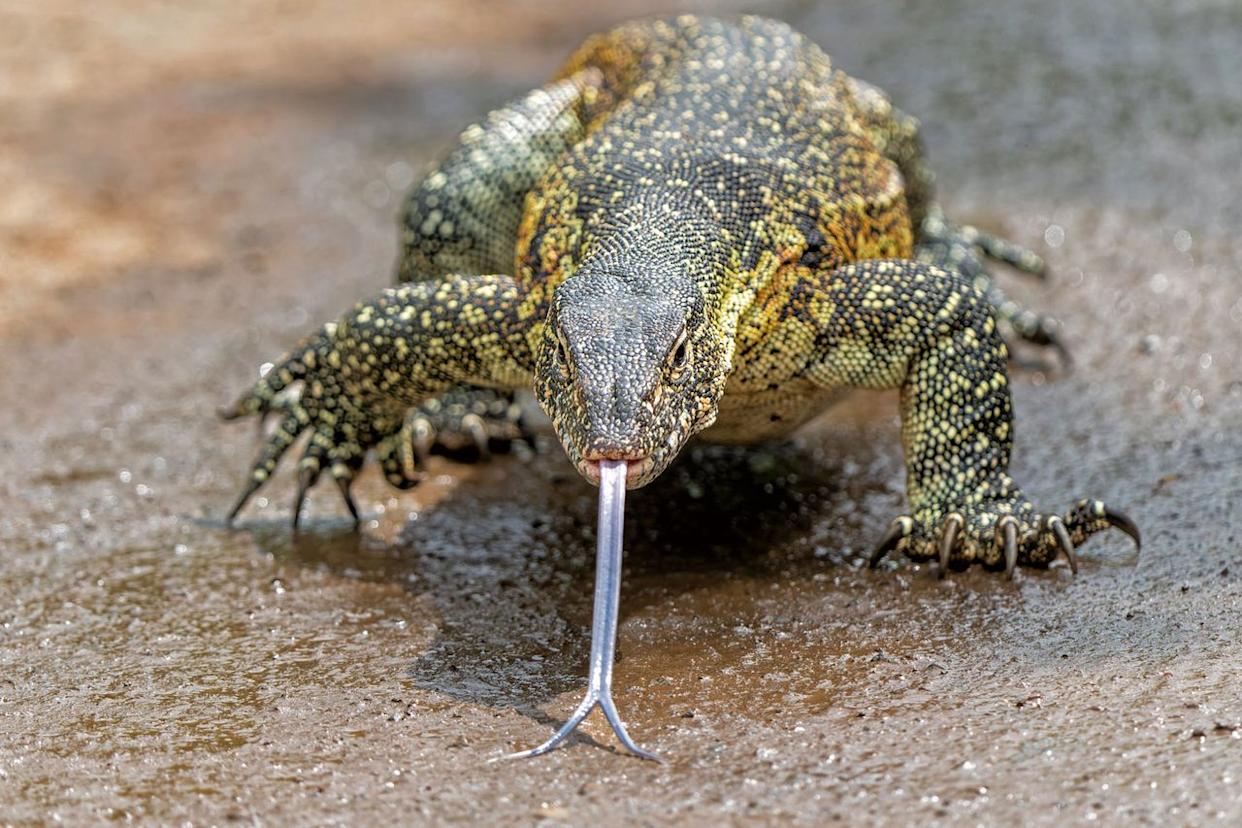 Water Monitor Lizard (Varanus niloticus) or Nile Monitor Lizard searching for food in Hluhluwe National Park in South Africa.
Getty
While not venomous, they are considered dangerous due to their size, strength, and defensive behavior. The lizards can bite with their sharp teeth, slash with their claws, and whip their muscular tails if threatened. Their saliva may also carry bacteria capable of causing serious infection. Wildlife experts believe Florida’s population originated from escaped reptiles from the illegal pet trade and from intentionally released pets.
Nile monitors are classified as invasive and are not protected in Florida except under anti-cruelty laws, according to the FWC. The species may be humanely killed year-round without a permit on private property with landowner permission and on designated FWC-managed lands.
In 2021, Florida added Nile monitors to its Prohibited Species List, restricting legal possession to research, educational exhibition, or eradication efforts. Owners who no longer wish to care for the reptile as a pet may surrender the animal through Florida’s Exotic Pet Amnesty Program.
Never miss a story — sign up for PEOPLE’s free daily newsletter to stay up-to-date on the best of what PEOPLE has to offer, from celebrity news to compelling human interest stories.
Officials stress that residents should never attempt to capture the lizards. Instead, sightings can be reported through IveGot1.org, the IveGot1 hotline (888-483-4681), or the IveGot1 smartphone app, ideally with a clear photo and location details.
Read the original article on People