
As a child growing up in Mexico in the Sixties, hardly anybody recognised Cristina Kahlo’s surname. “They would say, ‘Calvo?’ And I’d say, ‘No, no: Kahlo. K-A-H-L-O.’ I had to spell out my surname.”
That changed in 1983 with the publication of Hayden Herrera’s Frida: A Biography of Frida Kahlo. “People started asking me, ‘Are you linked to Frida Kahlo?’” recalls Cristina, 65, a photographer and the artist’s great-niece. “Especially women, feminists, started to identify with this Mexican woman.” Now her image is so well known that sometimes when Cristina talks to journalists they “come dressed like Frida Kahlo” or, she says, “they are waiting for me to come dressed like Frida Kahlo”.
Frida, who died in 1954, is the most famous female artist in the canon. Last November her painting El sueño (La cama), aka The Dream (The Bed), sold for £41.8 million at auction at Sotheby’s in New York, far exceeding the previous record for the most expensive work by a woman (£28.8 million for Georgia O’Keefe’s Jimson Weed/White Flower No 1 in 2014). Her influence extends far beyond the art gallery, however. In 2003 Salma Hayek became the first Mexican woman to be nominated for the best actress Oscar, receiving the nod for her portrayal of the artist in Frida, a film based on Herrera’s book. In the Nineties Madonna developed an obsession with Frida, dressing like her before starting to collect her work. For the Mexico City leg of her Celebration tour in 2024 the pop star brought Hayek out on stage, dressed as the artist. “It’s really madness,” says Herrera, 85, with a baffled laugh. “I’m still very astonished at her fame.”
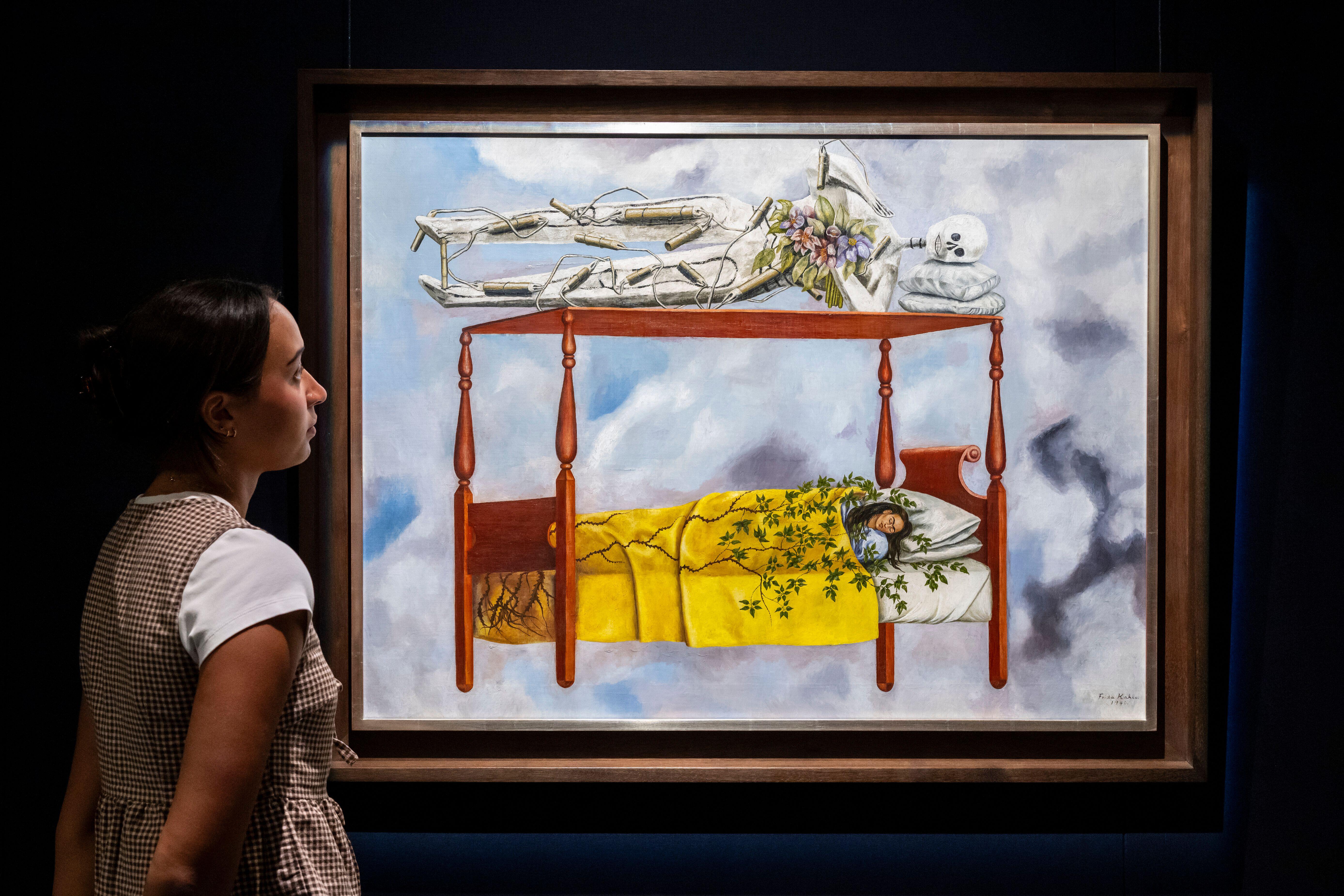
El sueño (La cama) sold for a record £41.8 million in November
STEPHEN CHUNG/ALAMY
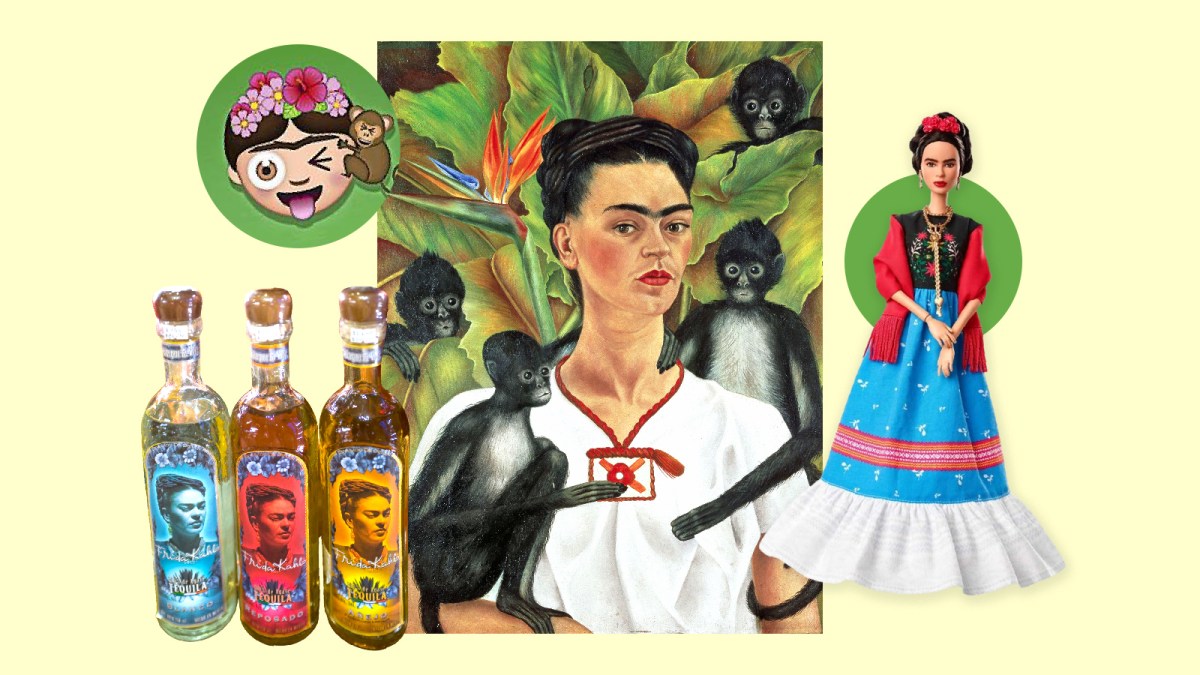
Today Kahlo’s beautiful, angular, monobrowed face is ubiquitous, not only in galleries across the world but on every possible permutation of tat — there are Frida watches (£96), scented candles (£44) and branded tequila, trainers from Vans, clothes from the Chinese fast-fashion brand Shein, cushions and phone holders (£17) decorated with “FridaMojis”.
Behind much of this lies the Frida Kahlo Corporation (FKC). Last month this organisation unveiled a Frida-themed luxury apartment block in Miami. Prices range from $500,000 to $1.6 million. “The design ethos at Frida Kahlo Wynwood Residences draws inspiration from Frida’s unmistakable strength and spirit, shaping spaces that feel both expressive and intentional,” the website says. “Luminous interiors, balanced by moments of contrast, create a refined interplay of light throughout the residences, revealing her influence in subtle, expressive ways.” There are even Frida sanitary pads. And a controversial Barbie, of course, of which more later. And don’t forget the Frida bracelet Theresa May wore in 2017 when she was prime minister.
This year a Tate Modern exhibition, Frida: The Making of an Icon, will display her art, of course — though it will include none of the pieces owned by Madonna as they were not available — as well as exploring Fridamania and her “transformation into a global brand”. More than 200 objects, including the tequila bottles and sanitary pads, will be on display. This section will lead straight into the gift shop.
• ‘Frida Kahlo was Mexican, so why is she being sent to Spain?’
Which means even more merchandise. In 2005, during its last Kahlo retrospective, the gallery made £737,000 in gift shop sales. The Tate told me it is “quite confident” it can exceed that number this time. But what would the artist herself make of all this stuff? Is there a limit to how much an artist should be commercialised? And who is benefiting from it?
Frida was one of the photographer Guillermo Kahlo’s six daughters — the third of the four from his second marriage. Only one of them became a mother: Frida’s younger sister Cristina, who had two children, Isolda and Antonio. Antonio’s daughter Cristina never met the artist but tells me on a video call from Mexico City that her father told her “loving” anecdotes about his aunt Frida “that made me laugh a lot”.
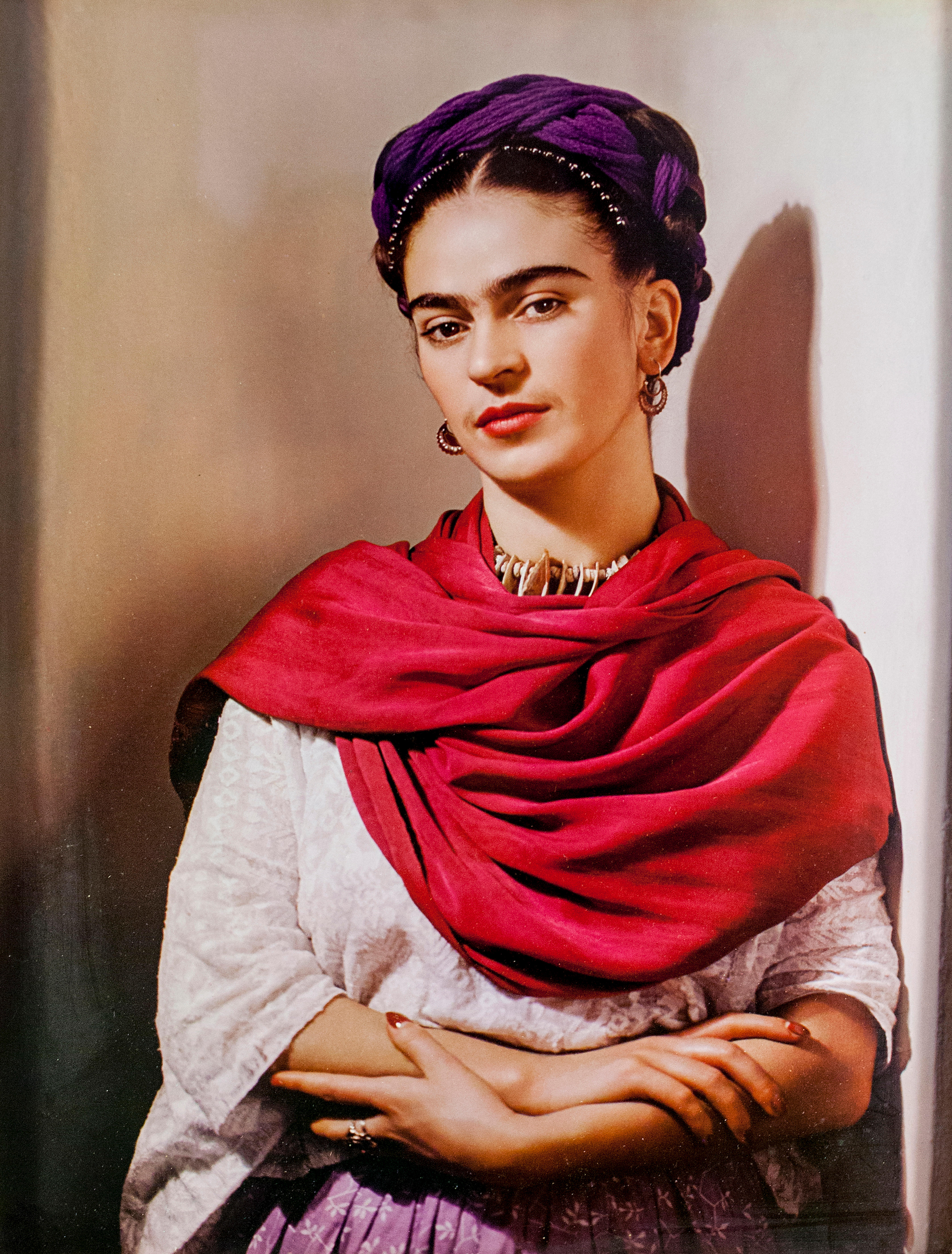
A Frida Kahlo portrait from 1939
ALAMY
“She had a very strong personality,” she says. “My father would often tell me a story of when they went to the cinema in Mexico City. Frida was dressed in her Tehuana costume you see in photos. That wasn’t common in Mexico City — it’s a costume used in Oaxaca on festive days. They were in the queue to buy the cinema tickets and a woman and her friend were making fun of her. Frida went up to the woman, slapped her and said: ‘Whatever you have to tell me, say it to my face.’”
Antonio and Isolda fell out at some point after their mother died, and Cristina and her brother and sister have no relationship with their cousins. They also have no association with the FKC, a company set up in 2004 by Isolda and her daughter, Maria Cristina Romeo Pinedo, in association with a Venezuelan businessman, Carlos Dorado, which has since registered dozens of trademarks and turned Kahlo into a global brand.
• Read more art reviews, guides and interviews
Visit the FKC website and you will be directed to its partnership with Amazon, which has a whole section dedicated to Frida merchandise, including the FridaMoji range, phone cases (£24) and a new collection of T-shirts for International Women’s Day with the caption “I’m my own muse” (£26).
Cristina has mixed feelings about these developments. “It’s been a double-edged sword. On the one hand, commercialisation means Frida Kahlo’s image is better known. But it’s better known in the wrong light sometimes because if you don’t know Frida Kahlo’s story then you are buying a figure you really don’t know anything about. It’s an image, nothing more. I think this in some way distorts what she really was: a great artist… You have to study her by looking at her art.” When you put someone’s face on objects there is “an ethical question”, Cristina says. “[Frida] can’t give her opinion and say, ‘I like this, I don’t like that.’”
I contacted the FKC to talk about the brand but no one was available for comment.
A prominent bone of contention has been the Frida Kahlo Barbie ($30), a collaboration between Mattel and the FKC that was launched in 2018 to uproar from fans who said it went against the artist’s feminist and leftist principles — she was Trotsky’s lover, after all. Plus, the Barbie didn’t look like her. It didn’t even have a monobrow. “She wouldn’t have liked it at all,” Cristina says.
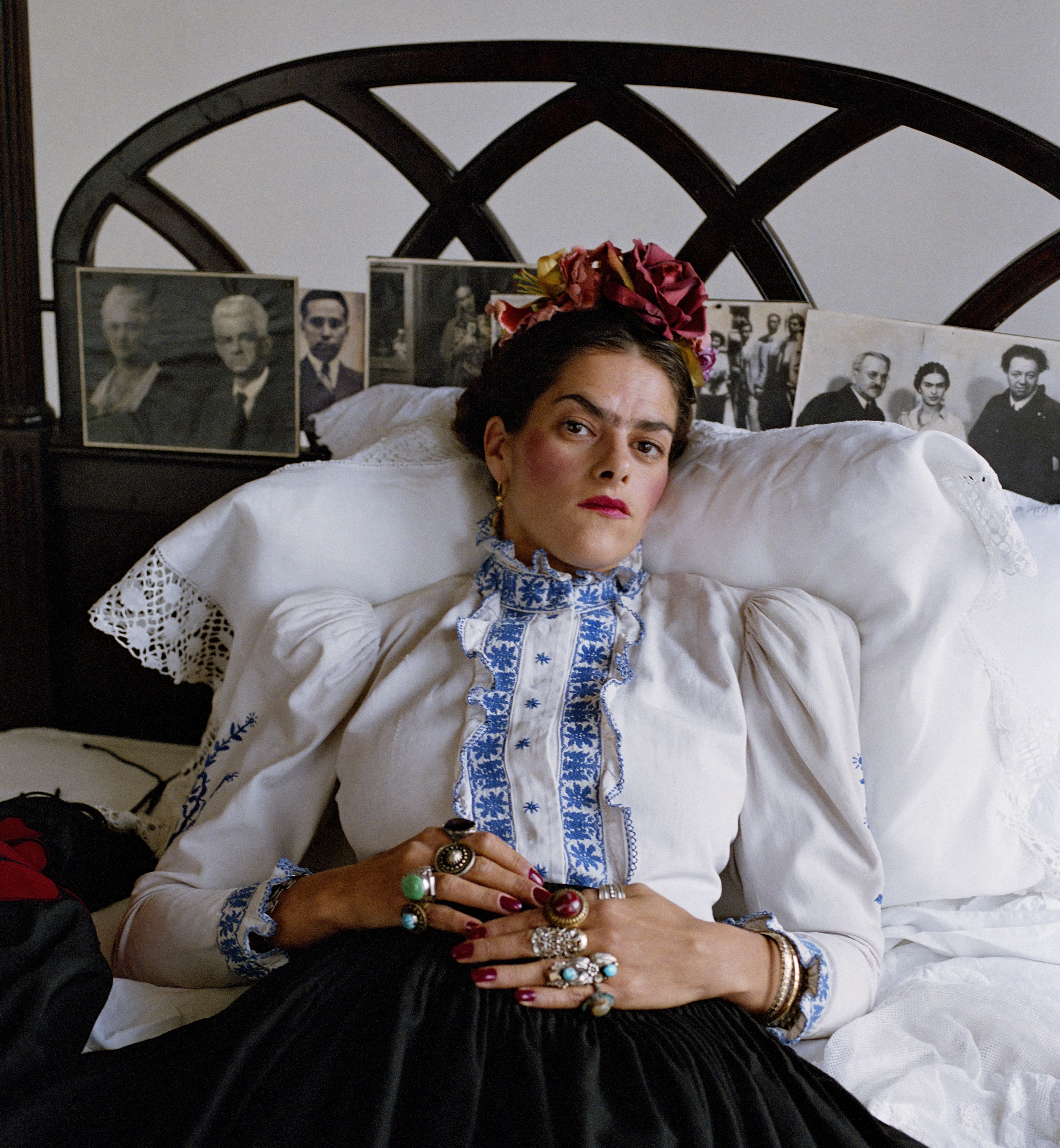
Tracey Emin dressed as Frida Kahlo
MARY MCCARTNEY
• Are you ready for Frida Kahlo and Tracey Emin at Tate Modern?
It also marked the beginning of internal trouble in the FKC as the family members on the board objected to the doll’s appearance and sued the FKC. Sales in Mexico were banned after a court granted an injunction. But the FKC countersued, claiming Isolda and Maria “sought to attack the validity of FKC’s ownership of ‘Frida Kahlo’ related trademarks and to misappropriate such trademarks”. In 2021 Mexico’s Superior Court of Justice ruled in favour of the FKC, allowing Mattel to sell their Barbies.
Ultimately the family has lost control of the brand, because Dorado owns 51 per cent of the FKC. “What I find very sad about all this is that in the end the name Frida Kahlo as a brand, as a trademark, no longer belongs either to the family — or to Mexico,” Cristina says.
The rules around which content can and cannot be used are complicated. Jon Sharples, a lawyer at Howard Kennedy who specialises in art disputes, says that the copyright for Kahlo’s artwork lapsed in the UK in 1975, 20 years after her death, because when she was alive that was the length of copyright in Mexico (the duration of copyright in Mexican law has since been extended to 100 years but does not apply retrospectively). But if you want to use her name or likeness, the FKC has a number of trademarks registered in the UK and many more in the US, including some of her paintings.
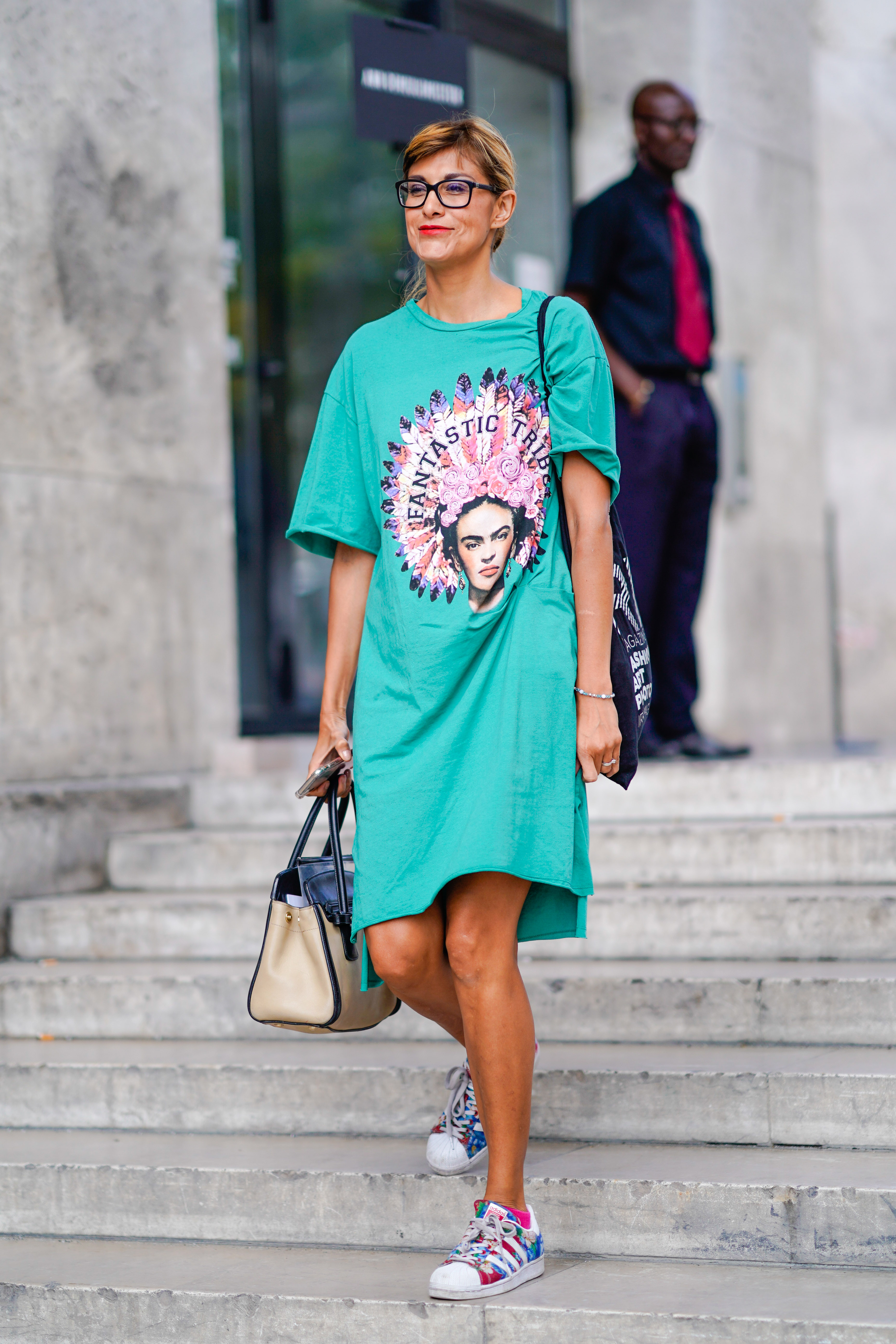
A guest at Paris fashion week wearing a Kahlo t-shirt dress
EDWARD BERTHELOT/GETTY IMAGES
Sharples believes “selling Frida tat is pretty low-risk in the UK because it’s so ubiquitous as a kind of fan art that consumers are unlikely to be misled into believing that it has been licensed or otherwise endorsed by the estate”. Search “Frida Kahlo” on Etsy and you’ll find thousands upon thousands of items. The FKC filed two lawsuits against Amazon merchants in an Illinois district court in 2024, alleging that they were selling products in an unauthorised capacity, and demanding all associated profits or $2 million for each trademark infringement, but it does not appear from public records that FKC has ever achieved a positive court judgment outside Mexico.
Her biographer, Herrera, believes Frida wouldn’t have minded the merch. “I think she would have loved it because a lot of her life was about getting attention,” she says. “She would have probably used the word ‘cursi’, which is a Spanish word for ‘corny’. She would have thought some of them are pretty hackneyed and silly but she would have been amused. She had a great, great sense of humour.”
There are limits. “Maybe the Barbie doll was a bit too much,” she adds. I also tell her about the Amazon partnership. “That’s a bit disgusting,” she says. “She was very leftist. She wouldn’t have approved of becoming a corporation and making a lot of money. She doesn’t need Amazon to be any more famous.”
Herrera first heard about Frida in 1973 when her mother’s friend, who was an editor at Artforum, told her she should go to see an exhibition in Mexico City. “I was just blown away by seeing the actual painting, including The Two Fridas, which is probably the only existing large painting. I realised there was something there and decided to write my dissertation for a PhD about Frida Kahlo.”
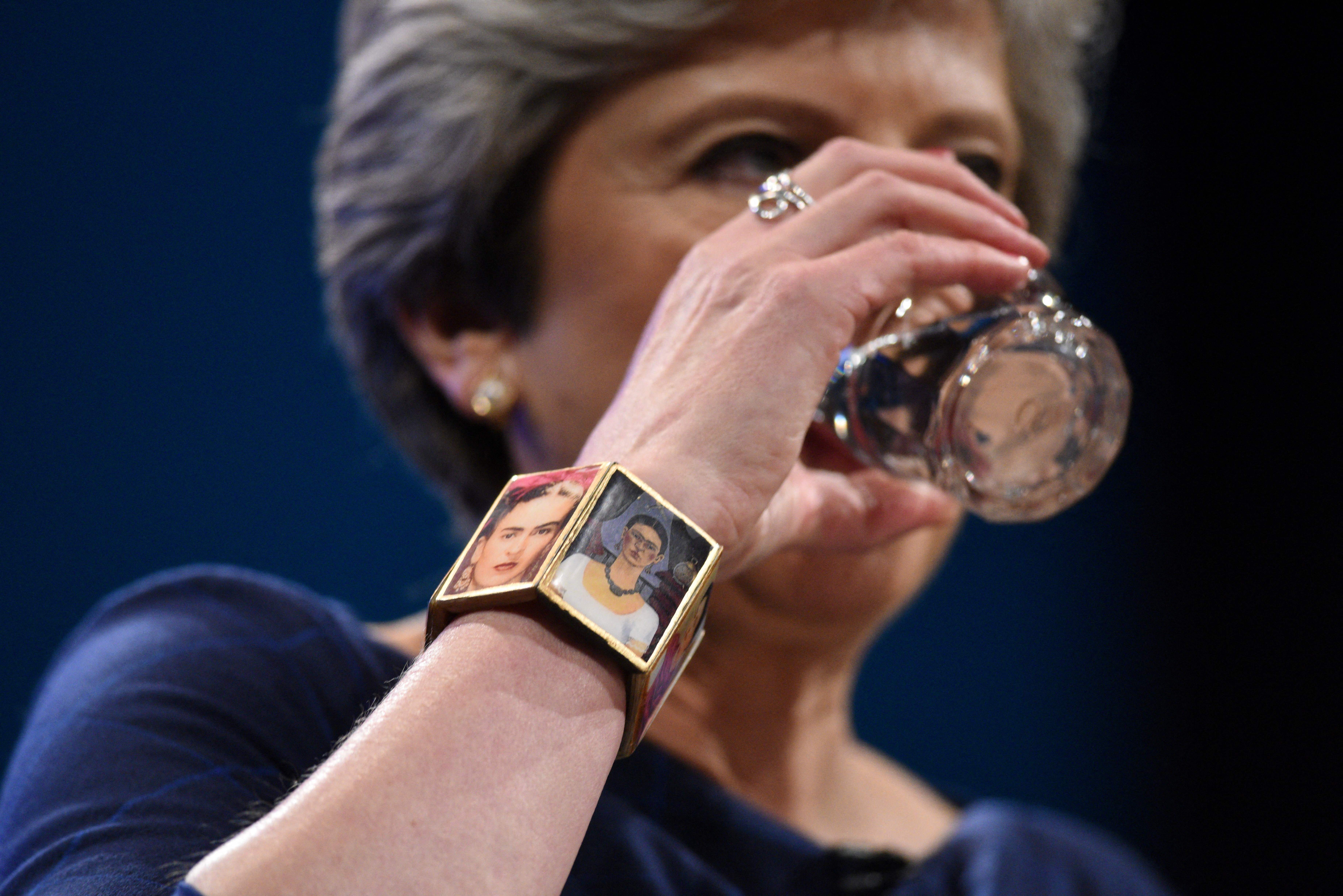
Theresa May, then prime minister, wears a Frida Kahlo bracelet
OLI SCARFF/AFP
She spent a lot of time in Mexico interviewing people who knew Frida and who were surprised that this “gringa” wanted to write about her. At the time Frida was still mainly known as “Diego [Rivera’s] fabulous wife. And a lot of people thought her paintings were pretty odd.” Isolda even tried to sell her a painting of her mother, Cristina, by Frida but Herrera didn’t go for it. “She wanted $2,000 and I didn’t really like the portrait very much… I regret it.”
Herrera’s book became a word-of-mouth sensation in New York feminist circles and then blew up, selling in 25 different countries. It changed Herrera’s life financially and continues to provide her with a “little income”. She was also paid $100,000 for the Frida film rights. Why does she think the artist had and continues to have such an appeal?
“The central thing is her expression of pain and her need to communicate it,” she says. “Everybody has pain, and they’re very attracted to knowing about other people’s pain. She was also incredibly strong. A lot of sick people, depressed people, have taken Frida Kahlo as a talisman.”
A talisman available in the form of extraordinary million-dollar artworks and… sanitary pads.
Frida: The Making of an Icon is at Tate Modern, London, Jun 25 to Jan 3