
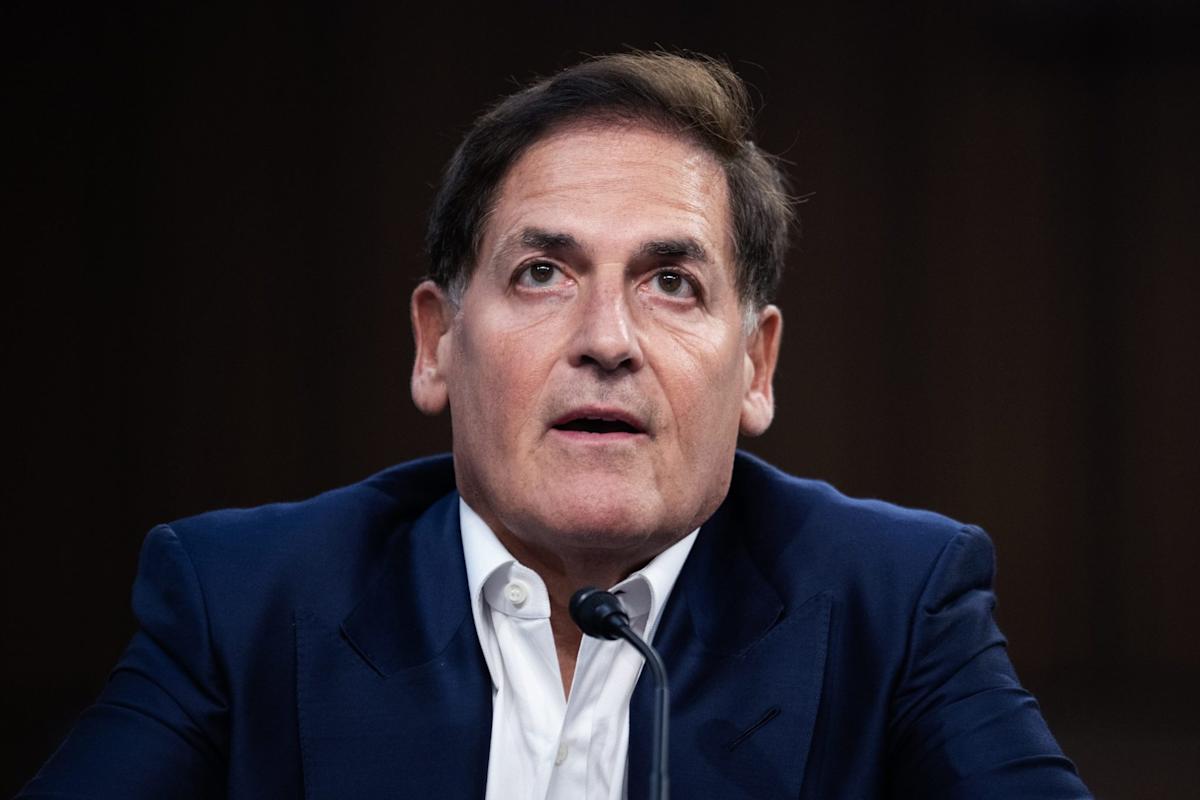
Despite ongoing fears that artificial intelligence could wipe out entire career fields, billionaire Mark Cuban says the concerns may be overblown—for now.
The former Shark Tank star took to X to respond to a viral clip from the All-In podcast, in which investors Jason Calacanis and Chamath Palihapitiya revealed the real-world expense of deploying AI agents to enhance productivity: In some cases AI agents are costing more than $300 per day—adding up to over $100,000 annually. For Palihapitiya, founder of Social Capital, the price has forced him to rethink the budget he’s willing to give top developers, warning that otherwise, “I’ll run out of money.”
For Cuban, that reality is the “smartest counter” he has seen so far to predictions that AI will replace large numbers of workers—at least in the short term.
Even if the technology is capable, he said, companies still need to prove the economics make sense, and he’s not convinced the high price tag outweighs the value humans continue to bring.
“Humans have a far greater capacity to know the outcomes of their actions,” Cuban said. “Agents, and LLMs as well, never do.”
AI systems still lack real-world judgment in ways that make replacing workers risky, Cuban added. He pointed to a simple example: An 18-month-old who pushes a sippy cup off a high chair quickly learns the consequences from their parents’ reaction. AI, on the other hand, lacks awareness.
“Agents can tell you the sippy cup will fall,” Cuban said. “But they have no idea of the context and what will happen next.”
The technology also lacks consistency, often “spac[ing] out” and failing to recognize why and when mistakes occur, he said—a level of competency on par with the youngest Gen Z talent.
“Agents are still like college interns that come in hungover, make mistakes, and don’t take responsibility for them,” he added.
Taken together, Cuban’s argument suggests that the biggest obstacle to AI replacing workers may not be the technology itself—but whether companies can trust it to perform consistently at a price that makes sense.
Cuban declined to elaborate further after Fortune reached out for comment.
Despite AI’s current flaws, business leaders continue to warn that rapid technological advances could soon reshape the workforce.
Dario Amodei, CEO of Anthropic, has warned that AI could disrupt half of entry-level jobs within one to five years. More recently, he suggested the technology could become capable of performing most jobs, if not all, in “much less than five years.”
OpenAI CEO Sam Altman has echoed similar concerns. He said this week that the world may be only a “couple of years away” from the kind of superintelligence that could replace CEOs—including himself.
So far, however, large-scale AI-driven layoffs have yet to materialize. Analysts at Oxford Economics said companies “don’t appear to be replacing workers with AI on a significant scale.” Instead, companies may be overstating AI’s role in workforce cuts—a phenomenon described as “AI washing.”
“I don’t know what the exact percentage is, but there’s some AI washing where people are blaming AI for layoffs that they would otherwise do, and then there’s some real displacement by AI of different kinds of jobs,” Altman said at the India AI Impact Summit on Thursday.
In his view, Cuban said, companies still need to weigh factors beyond pure productivity metrics as they determine how far to push automation.
He wrote on X: “Are there qualitative issues like morale, morality, whatever, that can’t be quantified, that need to go into the decision?”
This story was originally featured on Fortune.com