
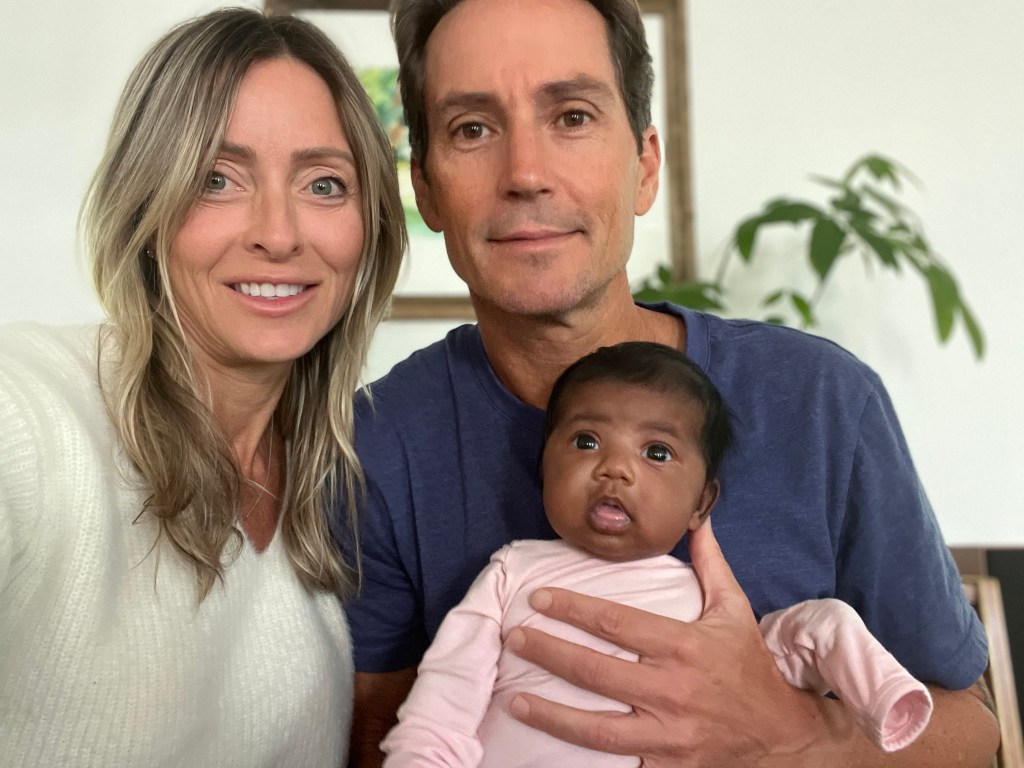
An unnamed woman has told attorneys she became pregnant through the same fertility clinic and gave birth the same month as a Central Florida couple who is suing the clinic after delivering a baby girl who is not their biological child.
The unnamed woman and her husband, who learned from reading news reports of an “embryo mishandling,” could be the baby girl’s biological parents — though no genetic tests yet prove that, according to a recent court filing.
Tiffany Score and Steven Mills, a Brevard County couple, are suing the fertility clinic after learning their baby girl born in December is not genetically theirs, meaning the wrong embryo was implanted in Score as part of an in vitro fertilization process.
The unnamed woman told Score and Mills’ attorneys that the couple’s baby has the same complexion as her husband’s, based on photos she saw in the media. That woman gave birth to a baby boy in December, and told them she had an embryo implanted the same day Score did.
The baby boy, based on photos, does not share a complexion with Score and Mills, nor with the baby girl the couple have been raising, the court filing said.
Score and Mills are suing Dr. Milton McNichol and IVF Life Inc., which operates Fertility Center of Orlando in Longwood, for the embryo mix-up. They want to identify their baby’s biological parents and want to know if one of their embryos was mistakenly implanted into another woman, who could be raising their biological child.
The couple and their attorneys are frustrated with the clinic, saying it ran a sloppy operation and is now being slow to identify other patients who might be part of the “uncontested embryo mishandling,” their court filings show.
The lab, for example, used “ad-hoc handwritten labels” on the containers that held eggs, sperm and embryos, the filing says.
Hatfield — of West Palm Beach, who is one of Score’s attorneys — said her firm checked the woman’s public Facebook page, and a photo revealed that her husband has a similar dark complexion as Score’s baby, verifying what the woman told the firm.
Hatfield refers to the woman as “most likely a co-victim in this case.”
Score and Mills, who are Caucasian, realized the baby girl was not of the same race soon after the birth. Genetic tests ordered by the couple confirmed the baby was not their biological child.
The other woman said she is willing to undergo genetic testing, but Hatfield’s filing said it was not clear if those tests had been done or when they would be available.
The filing provided no other information about the woman or her infant boy, including where they reside.
The court document also suggests that Score and Mills’ baby might be the result of an embryo that was donated by an “Indian couple.”
That is because another clinic patient has told them that they requested a donor embryo of “African-American and Latin American” ethnicity.
“They were told the only minority ethnicity embryos in storage were that of an ‘Indian’ couple,” the filing said. “If that couple is in fact Southeast Asian Indian, and they had their embryos stored originally on March 30, 2020 . …That could be the reciprocal patient in this case of embryo mishandling,” Hatfield said in the filing.
At an emergency hearing Tuesday, Score’s attorneys asked Circuit Court Margaret Schreiber to order the clinic and its lawyers to move faster in providing more information of its investigation regarding the embryo mishap.
Hatfield said “time is of the essence” as Score and Mills continue bonding with the infant girl, who recently turned two months old.
They love her and are happy to raise her but feel obligated to find her biological parents and also worried that someone could demand custody and take the baby from them, attorneys have said.
They want Schreiber to order the clinic to reveal what happened with other clinic patients and for the clinic to pay for the genetic testing of any child born under the clinic’s care in the past five years.
They think the mix up occurred either in late March 2020 when Score had her eggs retrieved and then combined with her partner’s sperm, or in early April when an embryo was implanted in Score.
The clinic had informed the Central Florida couple that three viable embryos were created and frozen. One was implanted in Score’s uterus February 2025, but it did not result in a successful pregnancy.
Lawyers for the clinic and McNichol said they are not stalling the couple’s requests, but are struggling with how to comply with providing the information without violating patient confidentiality.
They pointed to the federal Health Insurance Portability and Accountability Act of 1996, also known as HIPAA, that says health care providers are prohibited from disclosing information about a person’s health, unless the patient agrees in writing. That would include those receiving in vitro fertilization.
Schreiber ordered weekly status hearings that attorneys for both sides must attend. She also ordered the clinic to provide certification that patients who used the clinic from March 2020 to April 2025 were contacted and provided with an option to sign a waiver of confidentiality “so they can seek testing” if they choose.
The first status hearing will take place virtually at 3:30 p.m. on Tuesday.