
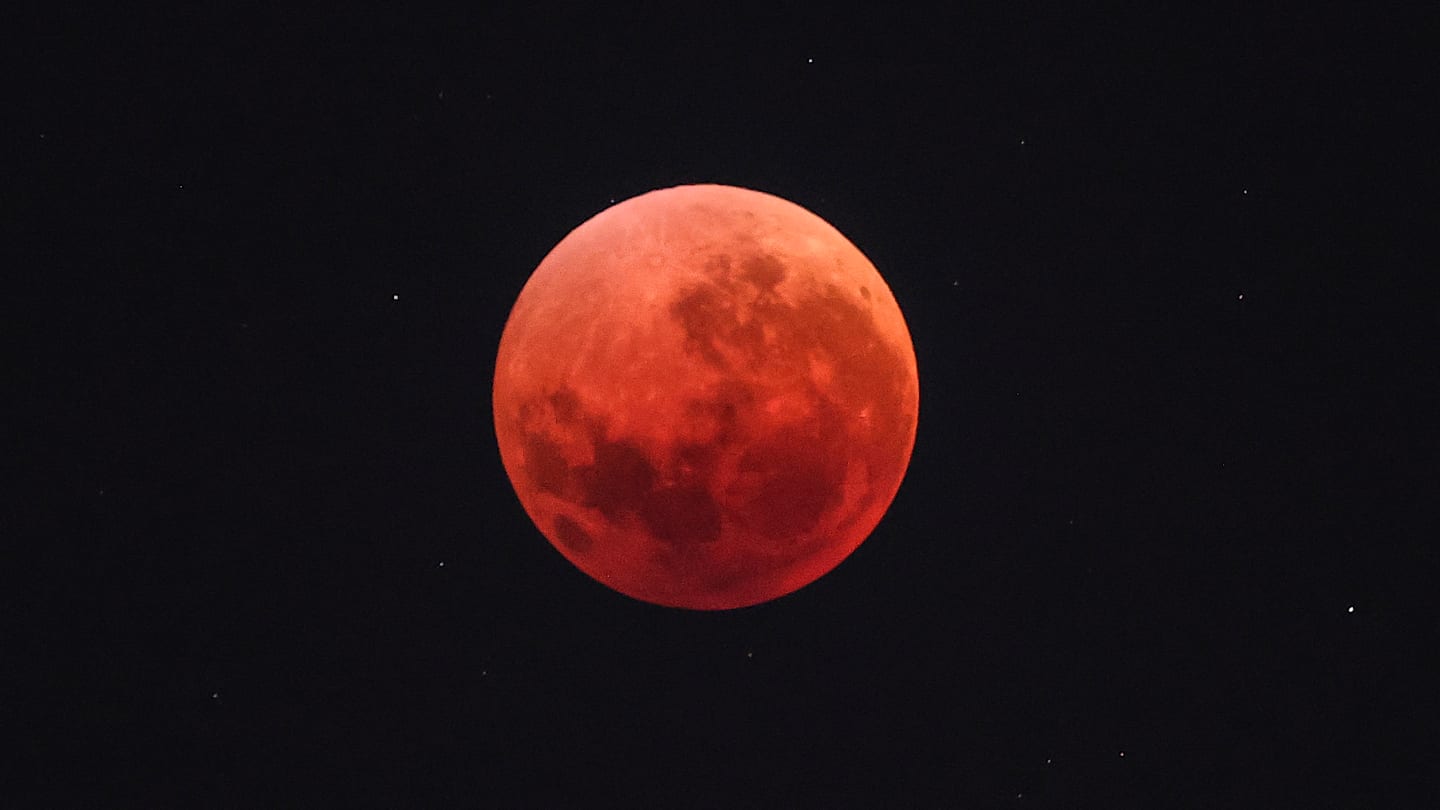
After a long winter, it may feel like March couldn’t come any sooner. But spring isn’t the only thing that Mother Nature will bring. On March 3, a total lunar eclipse will put on a sky show. And it’s not just any eclipse: this one coincides with the Worm Moon, creating a so-called blood moon eclipse and making the stargazing spectacle extra exciting. As the name suggests, this eclipse will turn the moon a deep red—but not everyone will be able to see it.
Front-Row Seats
Like the 2025 total lunar eclipse, this year’s event will be visible from North America, Australia, eastern Asia, and the Pacific Ocean, but not from Europe or Africa. Skywatchers in North and Central America will get to start the morning with the blood moon eclipse, while observers in Australia and eastern Asia will see it in the evening. Sailors and islanders in the Pacific Ocean will get the night show.
During a total lunar eclipse, the sun, Earth, and moon line up, allowing Earth’s shadow to cover the moon fully. The entire event unfolds over several hours, though the dramatic “totality” phase—when the moon takes on a copper hue—generally lasts less than an hour. Unlike a solar eclipse, a lunar eclipse is totally safe to view with the naked eye, no special glasses needed.
As for exact timings, the March 2026 total lunar eclipse will unfold in the early morning hours for viewers in the Eastern time zone. The partial phase begins at 4:50 a.m. EST, when Earth’s shadow first starts sliding across the moon. Totality begins at 6:04 a.m., with peak viewing around 6:33 a.m. By 7:02 a.m., the moon will begin emerging from Earth’s shadow as the eclipse gradually winds down. A phase-by-phase schedule for different time zones is available on NASA’s website.
The Moon’s Many Monikers
SAI AUNG MAIN/GettyImages
From “Blood” to “Worm,” the full moon goes by many colorful names, and each one tells a story. During a total lunar eclipse, the moon can take on a reddish-orange glow, earning it the nickname “blood moon.” That color comes from sunlight filtering through Earth’s atmosphere on its way to the lunar surface. Shorter wavelengths, like blue and purple, scatter out, while longer wavelengths, like red and orange, pass through, turning the moon into a mirror of Earth’s sunrises and sunsets.
March’s full moon also has another moniker: the Worm Moon. Native Americans called it this because it marks the time when worm trails begin to appear in thawing ground, signaling the end of winter and the start of spring. And while the Worm moon comes around every year, this March blood moon will be the last total lunar eclipse that anyone on Earth will be able to see until December 31, 2028.