
SPRINGFIELD, Ore. — The Oregon Fish and Wildlife Commission is formally denying a petition from environmentalists regarding protections for whales during crabbing season.
Environmentalists had submitted a petition asking for stricter rules on the commercial Dungeness crab industry on the Oregon coast.
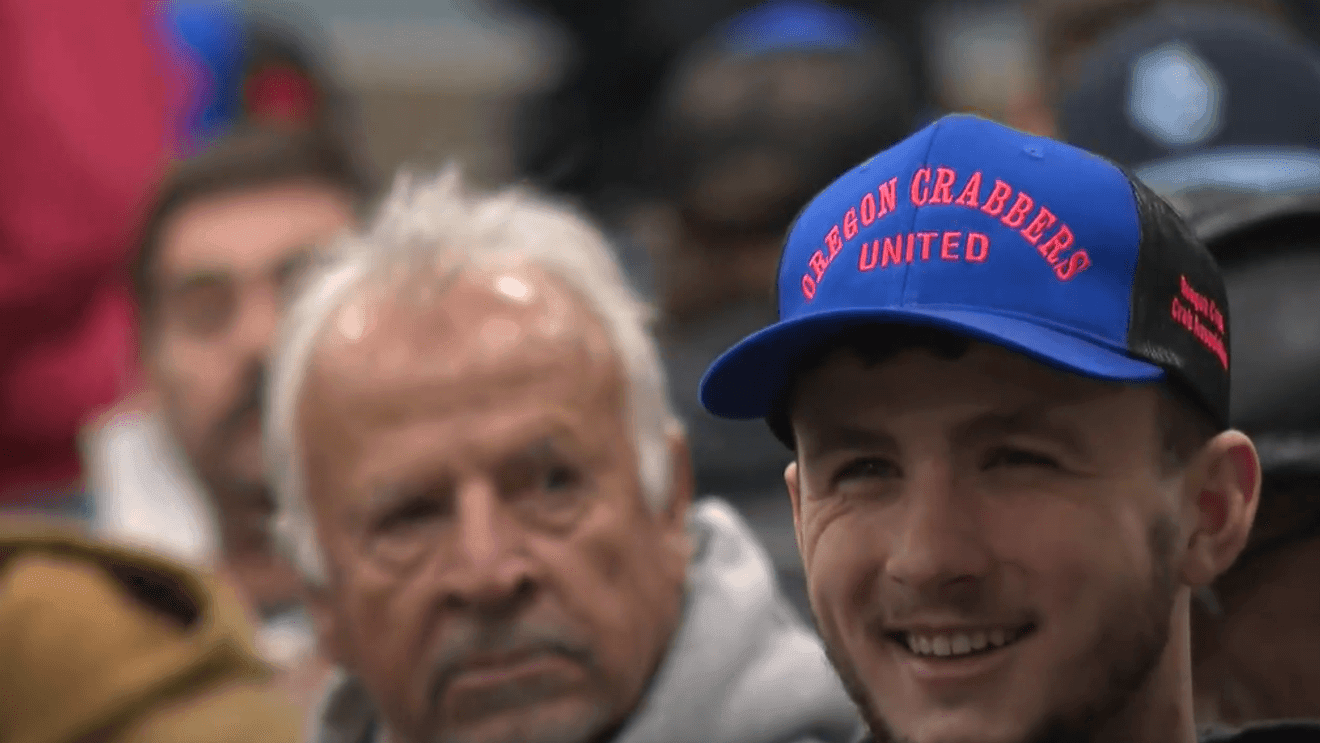
Friday night, the crabbing community got a win after showing up in big numbers at the public meeting in Springfield where where fishermen said the proposed changes in the discussed petition could derail their industry.
KVAL -{ }Crabbers cheer as Oregon rejects whale-protection petition, costly gear changes avoided
Nearly 100 people lined up to speak at the meeting Friday.
This all stems from ODFW asserting that endangered whale entanglements have been rising since 2014.
ODFW confirmed during the meeting that over the last two years, seven entanglements of endangered whales were due to Oregon crabbing gear.
All day, petitioners and fishermen made their case about proposed rule changes.
They included changes to pop-up crab pots instead of lines; they argue that that could cost up to $200,000 per vessel.
Another rule – a reduction of pots in the water by 40 percent, rather than 20 percent, at the end of the season.
Petitioners are concerned about the safety of endangered whales – while fishermen are fighting for their livelihoods.
“The financial burden on the proposed rules would wipe out about a third of Oregon’s fishing fleet,” said Coos County Commissioner Drew Farmer. “We’ve seen where this goes in the past. When in the early 90s, the timber industry collapsed, the drug epidemic surged into Coos County, and we received no help with that.”
“There are threatened endangered whales that get wrapped up in the vertical lines of the crab pots,” said Ben Enticknap, the Fisheries Campaign Director at Oceana. “And this is becoming a serious problem. So, we need more action now to reduce these entanglements. We’re also suggesting the use of this innovative pop-up fishing gear, which is a way to remove that threat of the vertical lines.”
“A lot of the vessels in our association, if not more than half, would be put out of business to be able to abide by the rules put forth in the petition. Over a third of Oregon’s economic viability is linked back to Dungeness crab,” said Cari Brandberg, Treasurer of the Oregon Coast Crab Association.
Fishermen say the said pop-up gear hasn’t been researched enough – but ODFWsays the petition would come with research into how well the gear would work.
Hearing two competing viewpoints, we asked ODFW directly: what is it doing to find the balance between protecting whales and protecting fishermen’s livelihood?
“Our position is that we can find a solution that will protect the fishery, and we can have an economically viable fishery, but also have regulations that help protect the whales,” said Justin Ainsworth, program manager of ODFW’s Marine Resource Program. “So, our job is to try to find that right balance. Our recommendation of accepting the petition is just saying that we feel that there is a need to do some more rulemaking around marine life entanglement. That doesn’t mean that we are endorsing what’s in the petition.”
Early in the meeting, commissioners acknowledged they are already working on a conservation plan that would comply with the Endangered Species Act – and that this petition is essentially a duplicate of that.
They say any expansion of the rules would make the process longer – calling it inefficient and inappropriate.
Both sides of this say they want to protect the ocean – with fishermen saying a healthy ocean is best for the industry.
The state says it plans to continue to address ways to prevent entanglements, regardless of that outcome.