
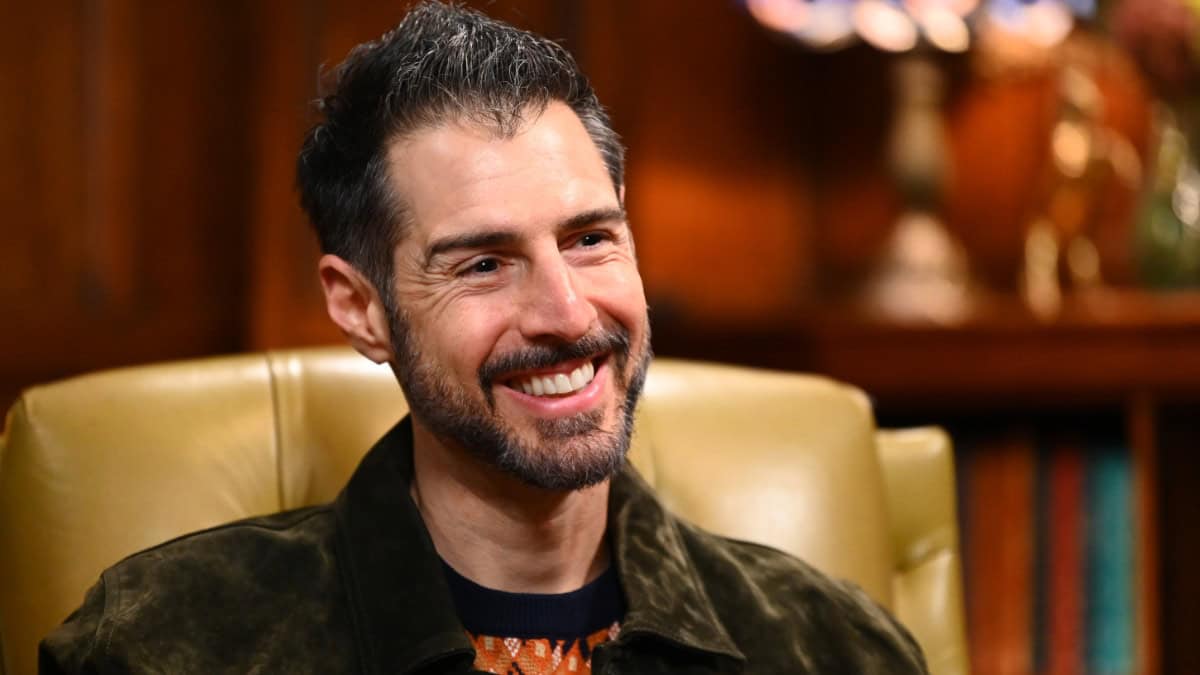
► Editor’s note: Rob Cesternino’s early exit from The Traitors was disappointing, as we were deprived of seeing the player Jeff Probst famously called “the smartest player to never win” Survivor.
Just before The Traitors began, I saw this Survivor Reddit thread: “This book from 2007 said Rob Cesternino ruined the game.” It was a photo of two pages, with this line highlighted:
But Survivor ceased being a test of ethics some time ago. Players nowadays “play the game” from day one, they come into the game ready to deceive and undermine, and you can trace it all back to the teachings of Rob Cesternino.
That’s fascinating—and so was the ensuing discussion, a mix of dismissal and discussion of the essay’s argument: that if every player is just a gleeful, remorseless backstabber, Survivor loses a core part of what made it interesting as a television show and game.
So I reached out to the essay’s writers, Mario Lanza and Brad Wolgast, and got permission from them and the book’s publisher, BenBella Books, to reprint that chapter from The Psychology of Survivor.
For me, the essays is both a time capsule—this was published 19 years ago, and thus only draws from very early seasons—and a fascinating lens through which to consider the game today. Are Survivor’s players, even on Survivor 50, still following the path Richard Hatch, Vecepia Towery, Rob Cesternino established? —Andy Dehnart
► Author’s note: I just wanted to throw in a bit of backstory before you read these excerpts—mainly because every time someone runs across this (very old) essay now, they think I’m taking digs at RHAP, and I always get hate mail, LOL.
This essay has nothing to do with RHAP or with Rob as a podcaster. It is actually a follow-up to an earlier essay I had written back in 2003, called “Attack of the Vee Clones.” In that, I pointed out that if every player on Survivor started playing like Vecepia (just hop alliances all the time, have ties to no one, play the game fluidly), it would eventually become very boring to watch, because everyone would be playing the same.
That essay got a lot of positive press at the time, especially from former players, so when this book “The Psychology of Survivor” was announced back in 2006, I was approached by my friend Brad Wolgast. He suggested I rewrite that chapter and just update it a little for modern times—make it about the current alliance-hopping master, Rob C., and not Vecepia. So Brad and I worked on updating my essay, and what you see here is the result.
This subject was a lot more topical in 2007 than it is now, in 2026, where basically everyone plays like Rob. Again, I’m friends with Rob in real life, and this chapter never had anything to do with him as a person, or his podcast. It was actually written three years before RHAP even started. So please don’t send me your hate mail. Thank you. —Mario Lanza
The Rise of the Heartless Mercenary: Sole Survivor? Or Sociopath?
 Rob Cesternino interviews Jeff Probst at the Survivor: Winners at War premiere
One of the most important steps in a child’s development is the ability to learn how to empathize with others. This stage can begin as early as age two and, in many ways, is as important as learning to walk or talk. Because if a child misses this stage, and somehow never learns how to relate to other people, he or she faces the very real prospect of one day developing into a sociopath.
What is a sociopath? Well, according to Hare (1995), sociopaths (or psychopaths, as he calls them) are “predators who use charm, manipulation, intimidation, and violence to control others and to satisfy their own selfish needs.” These are people who seemingly have no positive connection to the world (or society) around them.
They exhibit only the most limited human emotions, and even then are basically only putting on an act by essentially mimicking what they think would be the normal adult response to a given situation. It is because of this mimicry that sociopaths will often be able to cooperate with other people. True, they may be doing it only to have their own personal needs met, but on the surface it would appear that they can actually be part of a group. Deep down, however, there is very little actual human interaction going on. The only reason a true sociopath would cooperate would be to get some thing out of it for personal gain.
The most troubling aspect of sociopathology is the fact that sociopaths demonstrate no concern for the well-being of others, nor do they feel remorse or guilt. Even worse, they will usually display a complete disregard for the consequences of their actions. They have no experience of empathy for the suffering of others, as they feel that they are too special or too smart to conform to the laws and mores of society; it is for this reason that sociopaths are often predisposed to become criminals (or used-car salesmen).
So is it true that if a person lacks basic human empathy, he or she is destined to become a career criminal? Of course not. Resiliency research shows that there are plenty of other variables able to provide support and context for a person to develop connection with other people. But empathy remains, in many ways, the most important factor.
The ability to understand and relate to those around you is extremely crucial in what every human culture would consider a healthy adult life, and its absence from the development of a normal child can lead to chronic difficulty in connecting with others, or worse. After all, it’s no coincidence that nearly every serial killer from the past twenty years has at some point been diagnosed as a sociopath.
Why bring up sociopathy in a chapter on Survivor? Easy. Because Survivor is a game that forces the average person to think and act like a heartless and emotionless sociopath.
No, Survivor doesn’t turn people into criminals or serial arsonists. And, so far, no Survivor player has yet been arrested for hacking people up at the local summer camp. But there’s no denying the fact that Survivor is an inherently cruel game: a game that attempts to undo years of social conditioning in a normal human psyche.
Because, honestly, in what other game are you expected to systematically eliminate your friends until you, and only you, remain standing? And in what other game are you expected to think of those around you as human chess pieces, to be moved and discarded when you no longer feel they are needed?
You guessed it; we’re not talking about Battleship. We’re talking about Survivor. We’re talking about arguably the single creepiest game show ever designed. After all, it’s the only competitive game show on prime-time TV that rewards those who can act, talk, charm, and lie like serial killer Ted Bundy (who would actually be pretty good at Survivor, all things considered).
Survivor wasn’t always like this, however. It wasn’t always the “do anything to win” contest that we now see every Thursday. In fact, most people forget that the first season of Survivor was a lot different, and is almost unrecognizable when compared to the show we know and love today.
In the early days of Survivor, the line between being a good player and being an outright sociopath was very well-defined. This line may have been different for each individual player, but it was still very much defined. Players knew exactly what line they were unwilling to cross, they knew exactly how far they would go to get the million dollars, and it became one of the most fascinating aspects of the first few installments of Survivor.
We watched, season after season, as players such as Gabriel Cade (Survivor: Marquesas), Sean Kenniff (Survivor: Borneo), and Gretchen Cordy (Survivor: Borneo) struggled with their own ethics and tried to adapt to a game in which you were required to vote out your friends.
We watched their inner turmoil, and we were fascinated by it, because this was one of the purest psychological experiments ever put before a mainstream television audience.
How far are you willing to go, and how able are you to turn on your friends? In fact the subtitle for the first four Survivor seasons might as well have been “Outwit, Outplay, and Undermine Your Pals” because that’s very much the dilemma that play ers found themselves up against.
In the early days of Survivor, the focus of the storyline was about ethics just as much as it was about strategy. A lot of fans tend to forget this fact, but Survivor was once a social experiment just as much as it was a game show.
It was a clever experiment designed to test one’s character under extreme stress, while at the same time being an open-ended abstract game with few defined rules for the players to obey.
In fact, for the most part the players were expected to decide their own rules, and few things were as fascinating that first season as watching player after player struggle to determine what his or her ethics were supposed to be. Should I play for the team all the way? Should I join an alliance? Are alliances even fair? Would I feel good about myself if I won that way?
Yes, it may seem archaic now, but at one point in time the concept of joining an alliance was seen to be little more than outright cheating. Back in the first season, the words “voting bloc” were spoken through angry gritted teeth, and any mention of the idea around camp was bound to get you glares of disgust. “A voting bloc? In a social game where you have to learn to get along? What fun is that?” That’s the exact argument that most players used during the first season of Survivor. They didn’t want to join an alliance because it wasn’t considered an honorable way to win.
This type of thinking may sound quaint now, but it was a very valid and accepted viewpoint among players in the first season’s cast. Most players were unwilling to go the alliance route. It went against everything they’d been taught about good sportsmanship, ethics, and gamesmanship, and thus, was a line in the sand they were unable, or unwilling, to cross.
Joining an alliance was seen as a cowardly way to win, and all parties involved (audience, players, producers) seemed to be on the same page in regard to this subject.
In fact, the producers were so convinced about this that they hadn’t even considered the fact that players might actually band together to get further in the game. Mark Burnett wrote in his season-one book that he hadn’t planned for that sort of outcome in the slightest. The idea of “alliances” hadn’t crossed his mind for even a second.
So who gets the credit for coming up with the first Survivor alliance? That’s right; it was Richard Hatch, the puppet master of the Borneo season. Richard was smart, he was a meticulous planner, and right off the bat he saw that alliances were the way to win this thing. He knew an easy way to victory when he saw one, so he jumped right into his plan with the greatest of zeal. Richard formed a four-person alliance made up of like-minded players, they coasted all the way to an easy victory, and Richard became the first-ever Survivor millionaire.
Was Richard universally loved and respected for being the first play er to figure out how to win the game? Um, not so much. In fact, Richard Hatch may have actually been the most unpopular Survivor winner of all time.
The reason for this is that a good deal of the Survivor fan base felt that Richard had cheated. People were furious that he would take such a “cowardly” path to victory. Armchair psychologists were horrified that he had turned a social experiment into a strategic game of chess. They were aghast that he had turned people into pawns for his own benefit.
In fact, some experts even classified Richard’s win as one of the darkest days on TV, simply because he had taken the sociopath’s route to easy victory. They were particularly worried about the ease with which he had systematically dismantled his competition, and they feared that it would set a bad example for the impressionable children watching at home. Because what would happen if America somehow canonized Richard for the ruthless way in which he had approached the game? Wouldn’t that be a very bad thing for society in the long run?
So Richard won Survivor, and Richard was now routinely alluded to as a cold-hearted emotionless sociopath. Survivor fans hated him. Psychologists were frightened by him. Sociologists were practically apologizing for him. Meanwhile, Richard Hatch (the king of Survivor) was sitting there in interviews, protesting this treatment vociferously, and defending his actions as loudly and as often as he could.
“I didn’t do anything wrong!” he would protest. “How can you say I played the game unethically? All I did was create a numbers bloc out of strategic necessity. I used strategy in a strategic game, and now everybody is coming down on me for it. Why on earth was that such a wrong thing to do?”
Richard Hatch was legitimately baffled by the angry reaction to his win, and who can blame him? Because if you look back at Richard’s actions during Borneo, you will see that his statements are true. He was never particularly unethical during the game. Nor was he especially cruel. In fact, the worst thing you can say about his actions in Borneo is that Richard was probably a little too cocky. But in no way was he a dangerous and unethical sociopath.
No, if you wanted to see a real Survivor sociopath, you’d have to wait four seasons to watch Survivor: Thailand.
Mister Freeze
Survivor: Thailand was the season where we were introduced to the most cold-hearted player of them all, one-time used-car salesman and former porn actor Brian Heidik. And he was an entirely different beast altogether from Richard Hatch.
Heidik came into Survivor with the personality of a detached gunslinger, he ran through the competition with little display of emotion, and at no point in the game did he display any sense of guilt or remorse over the way he had dispatched his friends.
It was the easiest win in Survivor history, and in many ways it was also the most frightening. Because what Brian did was essentially show us the way that a sociopath thinks. He betrayed friends. He showed no regret. He showed no empathy. He showed no emotion. It was business from day one, and Brian showed no mercy to anyone who dared stand in his way.
The most interesting thing about Brian’s win was that it was met largely with apathy. You would expect that the audience would have been outraged by Heidik’s complete indifference toward his tribemates in general, but for the most part the audience didn’t really seem to care. It was almost as if they didn’t know what to make of Brian; as if his cold, flat affect made people unable to relate to him as a human being.
And for this reason Brian Heidik remains one of the most forgettable Survivor winners of all time. When an emotionless, unempathetic cyborg wins a million dollars using cold, hard business, few people stand up to applaud or hiss. They just shrug indifferently, move on to the next season, and hope that the next Survivor winner is somebody they will be more able to relate to.
Richard Hatch and Brian Heidik were both top-notch practitioners of the unemotional side of Survivor strategy. They were two of the very few players from the first five seasons who had the ability to separate logic from emotion, and treat every other player like they were disposable pawns on an imaginary chessboard. And in many ways, this ability to detach made Richard and Brian two of the best Survivor players of all time.
They both won the game easily, neither had any serious competition along the way, and both were heralded by hardcore strategists as two of the only players who ever really understood the game. In fact, among armchair Survivor experts, Richard Hatch and Brian Heidik are held in the highest of strategic esteem, even to this day. And this is specifically because they had the ability to play and think like a sociopath.
One interesting parallel between Brian and Richard is the fact that neither one was all that popular among his fellow players. Even though Brian and Richard both won the game, even though they both outwitted, outplayed, and outlasted, other Survivors have never described them as being particularly nice or likable people.
In fact, it could be possible that no Survivor alumnus has ever spoken a nice word about Brian Heidik. If you read interviews and chat transcripts from other Survivors, you will notice over time that Brian’s name is never mentioned, not by any of them. Ever. Among Survivor alums, Brian Heidik is quite possibly the least respected player in the history of the show. And that’s stunning when you realize he was actually a winner!
So Richard Hatch and Brian Heidik both won Survivor. Richard Hatch and Brian Heidik both won without the slightest bit of competition. Yet Richard Hatch and Brian Heidik were never really embraced by fellow players afterward, or by the general television audience overall.
Is this a coincidence?
In a game like Survivor, the most successful players will always be the ones who can separate emotion from strategy. In fact, it is a game designed to test that very trait.
How capable are you of stabbing your best friend in the back? How easily can you lie to people right to their faces? And how far are you willing to go to outwit, outplay, and outlast?
These are the most obvious questions that come up in Survivor, because this is a game designed to test ethics and personal character. It’s a characterological litmus test on a thirty-nine-day scale. And, again, it’s designed to reward you for the ability to think and act like a sociopath.
In other words, of course it’s no coincidence that Brian and Richard were not especially popular. The best Survivor strategists are inevitably going to be disliked after the game is over-that’s just the way that sociopathy works.
This is the inherent flaw in the game of Survivor, and it’s amazing that it has never come back to bite the show in the rump. It’s also amazing that the producers didn’t foresee this problem when they first sat down to design the game. After all, wouldn’t they be the first to realize that most of their winners were inevitably going to be disliked?
In direct contrast to cyborgs Richard and Brian, the most interesting (and fascinating) Survivor players throughout the years have been the ones who weren’t particularly all that good. These were the players who were unable to separate emotion from the cold, hard facts of the game, and these were the players who inspired the most widespread appeal.
Why? Because watching an ordinary human being struggle with ethics is a dilemma we all can relate to. This behavior is wholly relatable to viewers at home, and this in turn is what brings in a large and diverse television audience.
We watch the players struggle with feelings of guilt, betrayal, and torn loyalty, and we think about what we would do if faced with the same situation. We sit there at home watching ethical people being forced to make unethical choices, and this leads to, in large part, the psychological appeal that has always been an aspect of the show.
In the early days, there were plenty of players like this: relatable everyday people who were not particularly skilled in how to play the game. These were the players who could not vote out a friend in the final three (Colby Donaldson), would not join an alliance because it some how seemed unfair (Gretchen Cordy), would not cast legitimate votes because they didn’t want to hurt anybody’s feelings (Sean Kenniff), or were totally ruled by emotion and would make impulsive, irrational decisions just because they felt it “in [their] gut” (Lex van den Berghe).
These players might not have won a million dollars, but they were fascinating precisely because they had this inherent strategic weakness. Their flaws made them appear human, their humanity made them appear real, and this in turn made them much more relatable than Brian or Richard.
We as a TV audience could never relate to emotionless gunslingers who marched through the game without a care. But we could relate to people who struggled with their consciences. And in the greater scheme of social psychology, wouldn’t that be considered a good thing? Wouldn’t it be much more troubling if the audience could relate to the sociopathic thinkers like Richard or Brian? And wouldn’t you be worried if America had taken in Brian Heidik like a favorite son?
This is the way that Survivor worked for the first five seasons. Sure, the cold-hearted mercenaries might do well strategically, but for the most part they were never really embraced by the audience. Oh, the audience might respect the fact that a sociopath had won, but their victories were never really the touchy-feely fan favorite moments that the producers probably would have liked.
In fact, the most fan-friendly winner of the first five seasons, Africa’s Ethan Zohn, was largely considered to have won because he was “lucky.” Fans didn’t like Ethan because he was the best player in Africa. No, fans liked Ethan because he genuinely seemed to be a nice guy. Women adored him because he was likable, he was an introvert, and he was cute.
In fact, you really couldn’t have found a more popular winner than Ethan, and this is despite the fact that he wasn’t even all that great at the game of Survivor. Although, come to think of it, maybe that’s precisely why Ethan Zohn was so popular. Maybe the fact that he was the complete opposite of Richard Hatch had more to do with it than we thought. . . .
Enter Cesternino
This is where we come to Rob Cesternino. You may remember Rob Cesternino as the “mastermind” from the sixth season of Survivor, set in the Amazon. Rob was a twenty-four-year-old computer whiz from New York who knew the game of Survivor inside and out, and he would one day be known as “the player who changed the game of Survivor forever.”
Right from the start, Rob was a very different breed of Survivor player. We had literally never seen someone of his kind on the show before, and it started and ended with his unique Survivor background.
Why was Rob so incredibly different? Well for starters, he had almost zero camping experience. He was not the sort of “outdoorsy adventure enthusiast” that the producers normally cast on the show. In fact, Rob was exactly the opposite. He wasn’t outdoorsy, nor was he particularly in shape. In fact, by most accounts Rob was a guy who never even liked to leave the house.
He was just a twenty-four-year-old kid who lived at home, who studied Survivor like he was preparing for a test, and who came on the show just to prove he had this thing all figured out. In other words, Rob Cesternino was officially the first “armchair Survivor expert” ever to be cast on the show. He stood up off his couch at home one day, he reported for duty in the middle of the Amazon, and he proceeded to cut a trail of Survivor carnage that, to this day, people still talk about with reverential awe.
Rob came to the Amazon prepared. Rob had definitely done his strategic homework. And he had figured out (ahead of time) that the game of Survivor was not about being in the dominant alliance, and it was not about always being the one in control.
In Rob’s mind, the player running the game was the player who was always going to be targeted. Everybody else would want this person’s head on a platter, and Rob realized very quickly that there was no visible advantage to being this guy. So Rob set out to turn this game upside-down, simply by never being the guy who was standing at the head of the pack.
Rob had also figured out that Survivor had nothing to do with loyalty (or outdoor ability, for that matter). Nor did it have anything to do with riding your alliance to the end.
No, in Rob’s mind the easiest way to get to the end was to jump from alliance to alliance, always taking the best deal possible. In this manner you could keep your options open, and always keep yourself away from the dreaded vote.
Rob didn’t care about Survivor loyalty. He didn’t care a thing about making friends. And he didn’t care about being true to the people who trusted him. All Rob cared about was giving himself some flexible options, and always taking a good deal when it was presented to him. And in this manner he would alliance-jump his way to a million-dollar check.
Does Rob’s strategy sound particularly unique? Not really. Nowadays any Survivor fan knows that the best way to win is always to keep your options open. You have to give yourself multiple paths to the end of the game, you should never look a gift horse in the mouth, and you shouldn’t feel guilty if you have to abandon your original plans.
This is the way that Survivor is played now, and we have come to accept this as strategic fact.
But it wasn’t always like this. In fact, before Rob Cesternino, alliance hopping would have been the fastest way to get voted out of the game. It would have branded you a traitor for life, and there’s no possible way you ever could have won a final vote. After all, remember what happened to Shii Ann Huang in Thailand? Traitors never prospered before Rob Cesternino. Before he came along, this sort of tactic never would have succeeded.
Anyway, here comes Rob Cesternino in the Amazon to dispel every stigma attached to being a Survivor “traitor.” Because not only did Rob turn his back on his allies, he did it multiple times, and he actually did it with glee.
Rob loved nothing more than switching the game around when he didn’t feel comfortable with what was going on. And in doing so, he “unwrote” every rule in the Survivor rulebook.
Loyalty to your friends in the alliance? Not important! Sticking to promises you made early in the game? That’s for fools! Rob treated every player like a human chess piece, he had no compassion or mercy for anybody who stood in his way, and, most important, he did it behind the façade of being a goofy kid from Long Island who was just happy to be here and wanted to make everybody laugh.
This last part of the Cesternino package is the piece that was most significant, because it disarmed the other players and kept them from seeing Rob as the most dangerous player in the game. Because if you just gave him a quick once-over, you would see a player who was particularly unremarkable.
Rob Cesternino was just an immature kid who lived at home with his parents. He was a wannabe stand-up comedian who could reel off corny jokes at the drop of a hat. In fact, Rob didn’t appear to be the least bit dangerous if you just looked at his bio on paper. And it was this “wolf in sheep’s clothing” disguise that was probably the single most effective weapon in Rob’s formidable arsenal.
He was able to dominate the game, and he was able to get away with it because he came in the perfect package for a sneaky Survivor mastermind. Nobody was the slightest bit frightened of Rob because Rob was just a kid. And every body knew there were bigger fish to fry than this joke-telling twenty four-year-old clown.
Rob Cesternino dominated the game in the Amazon until the final three, and then he turned around and met with the general public. And was Rob hated and despised like earlier Survivor masterminds Brian and Richard? Of course not! Rob Cesternino was met with virtual adoration. He wasn’t just well-liked; in many ways he was positively worshipped.
Fans practically deified him right there at the reunion show. They adored this new Survivor “mastermind” for what he had done in the Amazon. They adored how much he had brought to their favorite show. And they adored the way he had “finally showed the world how you were supposed to play Survivor.” In fact, it’s safe to say that Rob was a legend before he ever showed up at the Amazon reunion.
Rob Cesternino was received entirely differently than Brian Heidik and Richard Hatch, and the psychology behind this response was absolutely fascinating. Because here you had three people who had done essentially the exact same thing (turned Survivor into a game of human chess), yet one was loved while the other two had been cast out in shame.
Heck, even Jeff Probst was raving about Rob Cesternino, calling him “the smartest player never to win,” and this was in reference to a player who had played dirtier than anybody who had ever played the game before him. And yes, that includes Richard Hatch and Brian Heidik.
Rob Cesternino was beloved, yet Rob Cesternino had used dirtier tactics than either of them! And this is where the big question inevitably comes up: Why was the reaction so much different to Rob Cesternino? What was the factor that allowed him to get away with things that nobody previously had been allowed to get away with?
Most Survivor experts would agree that in addition to his charm and disarming humor, Rob’s age probably had something to do with it. He was well-liked, in large part, because he was so young, as well as being so eager to make people laugh.
This kid was not a cocky corporate trainer who liked to parade around naked (Richard), nor was he a cold used car salesman who would one day be arrested for shooting a puppy with an arrow (Brian).
No, Rob was just a genuinely funny young kid who could get you to laugh simply by opening his mouth. You immediately liked him the first time he started talking, you genuinely rooted for him despite his sociopathic game play, and it marked the first time ever that we had a player who could personify the difference between “game play” and “personality.”
Because one look at Rob Cesternino told you he wasn’t a trained social assassin. He was just a kid who had figured out how to play Survivor. No one expected him to be a heartless villain after the game and, indeed, he wasn’t. Rob was just a normal, humble, genuinely likable kid. And this was the factor that set him apart from the previous Survivor masters.
After the Amazon season, Rob did a lot of interviews explaining how people were supposed to approach a game like Survivor. He did it in a very logical, systematic way, he did it through humor, and he demonstrated very clearly that you don’t have to be a heartless sociopath in real life to be good at this game. In fact, you don’t even have to be a bad guy at all.
One’s gameplay can be entirely independent from one’s out-of-the game personality, and this was a lesson that the general Survivor audience had never really accepted before. People had always assumed that the best Survivor players would somehow be scumbags in real life, but with Rob there was a curious difference.
Rob made it somehow okay to be a good Survivor player, so long as you did it with style and a sense of humor. And in one fell swoop, Rob Cesternino managed to kill the stigma that had long been attached to being a successful Survivor strategist.
What was Rob Cesternino’s legacy in Survivor history? Well for starters, he made it possible for every player after season six to play the game without guilt. Starting from Pearl Islands on, the players became smarter, more strategic, more dangerous, and much more willing to switch alliances.
Rob converted almost every single player into a heartless mercenary Cesternino-type clone, and he did it by removing the stigma that had previously been attached. No longer would “traitors” be seen as scumbags destined to lose. No longer would “being good at Survivor” be something that suggested unsavory assumptions about a person’s character.
Rob taught players that it was okay to look beyond that. He taught players that they could ignore their social conditioning, they could ignore their inherent feelings of empathy, and that they should treat this game like the chessboard that it really is.
In fact, Rob was such an influential player that he completely changed the way that people looked at the game. Every post-Cesternino season has been a cutthroat one, and every player has had improved strategic ability. Players got smarter after Amazon, players got better after Amazon, and Rob Cesternino is the man you can thank (or blame) for nearly all of that.
At what cost, the Cesternino era?
Hearing that “Survivor players have gotten better” suggests that something good has happened for the show. After all, if the competition and the talent are better overall, that can only lead to a better product, right? Isn’t that the way that all competitions work? The better the talent, the more superior the game. Right?
Unfortunately this was not a good thing for Survivor. In fact, it was the single most devastating thing ever to happen to the game.
Because the minute Rob Cesternino killed the stigma of the Survivor winner, the show lost a lot of its heart and soul. After all, what’s the fun of watching trained snipers try to out-sociopath one another? It is a horribly drastic change from the way Survivor started out in season one. Where is the social experiment in that? Where are the important ethical dilemmas? What fun is it when every player suddenly has no qualms operating like your everyday, garden-variety sociopath?
As we stated before, Survivor: Borneo was as much a social experiment as it was a strategic game show. It was essentially a giant psychology experiment designed to test the character and ethics of people exposed to extreme stress. It started out as a hypothetical game of “what if?” and this aspect of the show went a long way toward explaining its over whelming appeal.
Back then viewers at home could put themselves in the players’ shoes, and it wasn’t hard to do. After all, we weren’t watching strategic masterminds trying to outwit one another. We weren’t watching Survivor experts using tried-and-true strategies that they knew were going to work. What we saw (and liked) were flawed human beings like ourselves who were thrust into a chaotic and immoral game, and the ethical dilemmas it brought out in all of them.
We saw normal human social conditioning being put to the test, we saw a situation that was designed to make people think like sociopaths, and we debated the next day if we would have done what the players had done on the island.
In fact, in many ways the first season of Survivor was almost interactive. We literally felt like we could be the ones who were out there on the island, and it’s why the show was so fascinating to so many people. It was compelling precisely because it was so darn relatable.
But this is where the show changed drastically after Rob Cesternino-because when Rob showed the players how to excel, he also showed them how to be much less interesting to an everyday viewing audience.
Rob taught future players how to ignore the Survivor stigma. He converted future players from flawed everyday humans into heartless mercenary strategists. And it’s how he single handedly managed to kill the show Survivor.
Survivor hasn’t been a watercooler topic for a long time, and probably never will be again. Because that’s what happens when you end up with players who aren’t relatable to a TV audience. You may end up with better players (from a strategic standpoint), but they are missing the humanity and “spark” that much weaker players from earlier seasons would have possessed. And this is exactly why the first few Survivor seasons look so crude and barbaric (yet warm and refreshing) compared to the slickly produced strategy-fests we’re apt to see today.
Survivor stopped being a national phenomenon around the time of Survivor: Pearl Islands in the fall of 2003. And this happened to be the first Survivor season after Rob Cesternino had played the game. The correlation between the two cannot possibly be ignored.
Did Rob Cesternino ruin the game of Survivor? Well, that probably depends on your definition of the word “ruin.” But Survivor ceased being a test of ethics some time ago. Players nowadays “play the game” from day one, they come into the game ready to deceive and undermine, and you can trace it all back to the teachings of Rob Cesternino. This explains why some fans refer to Survivor seasons as being either B.C. (before Cesternino) or A.C. (after Cesternino). Because, in nearly every manner possible, the two Survivor eras are almost like completely different shows.
Rob Cesternino often gets credit for saving Survivor from becoming predictable. Yet at the same time he altered the game by obliterating its original humanity. He is not the only person who could have done this. Indeed, if it hadn’t been him, it would have been someone else. But since Rob was the right person at the right time, he’s the one who has to take the fall. With great power comes great responsibility, and what he did was like throwing an open flame onto a pile of gunpowder. He’s the one who made everything explode.
Rob taught people how to play the game, he showed them the path to success, and then he sat back and watched as his minions did as he taught. And you’d be hard-pressed not to see the parallels to another classic sociopath, Charles Manson. In fact the parallels between the two cult leaders are downright eerie. Like Manson, Rob Cesternino might not have done the dirty deed himself, he might not have changed the game completely on his own, but he was directly responsible for the actions of his “disciples” down the road. And that makes him just as guilty and culpable of malfeasance, at least in the eyes of the law.
In summary, the game of Survivor has changed a lot in twelve seasons. It started as a social experiment disguised as a game show, yet along the way it morphed into a game show disguised as a social experiment.
There was once a negative stigma attached to being a successful player, but nowadays the only negative stigma is for unsuccessful players. And while some may tout this as a good thing, in the end all it has done is make the players that much less relatable.
Is it still a fun show to watch? Of course. But you’re fooling yourself if you think Survivor has any more social relevance. All we’re doing now is watching When Sociopaths Attack!
Reprinted with permission from The Psychology of Survivor (2007, BenBella Books)
All of reality blurred’s content is independently selected, including links to products or services. However, if you buy something after clicking an affiliate link, we may earn a commission. Learn more.