
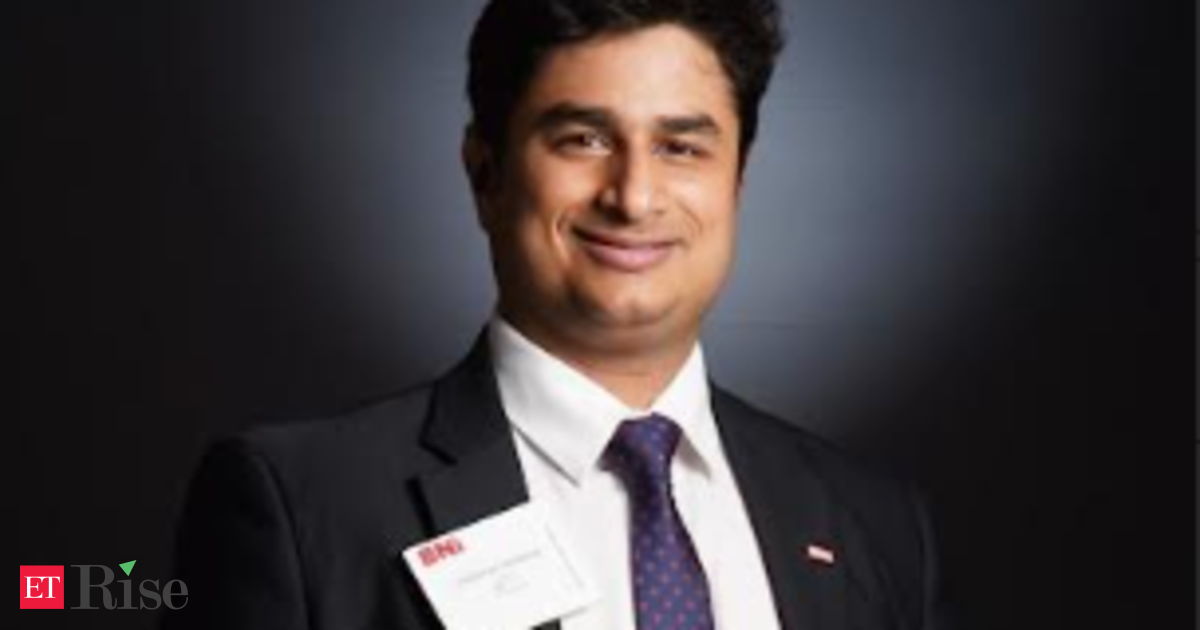
Founders in India’s changing luxury hospitality sector require the discipline of financial oversight within an industry driven by emotion. For Chaitanya Tendolkar, Founder of Westbay Resort & Spa and Villas by Westbay, building a premium resort in Ganpatipule was as much about disciplined capital allocation as it was about crafting guest experiences. In a conversation with The Economic Times Digital, Tendolkar discusses how his Chartered Accountant experience shaped his strategies for scaling hospitality businesses, handling regulatory challenges, and implementing an asset-light, system-driven expansion across Maharashtra’s up-and-coming regions.
Economic Times (ET): You began your career as a Chartered Accountant before founding Westbay Resort & Spa. How did your financial background influence the way you structured and scaled your hospitality venture?
Chaitanya Tendolkar (CT): My background as a Chartered Accountant fundamentally shaped how I approached hospitality. While many hospitality ventures focus heavily on design and guest experience, they often underestimate financial discipline.
Being a CA helped me build Westbay with strong cost controls, liquidity planning, structured capital allocation, and tight compliance frameworks from day one. Hospitality is an emotionally driven industry, but without financial governance, it becomes unsustainable.
Our growth has always been backed by structured financial modelling, break-even mapping, and long-term liquidity planning, not just optimism.
 Live EventsET: Setting up a luxury resort in Ganpatipule was both a business and emotional decision. What were the biggest strategic challenges?
CT: Ganpatipule is pristine, but geographically distant from metro hubs like Mumbai and Pune. That meant higher logistics costs, delays in material procurement, and challenges in hiring skilled manpower willing to relocate.
But the larger challenge was mindset, convincing guests and stakeholders that luxury hospitality can thrive beyond established destinations like Goa. We had to build not just a property, but confidence in the destination. That required sustained branding, marketing, and reputation-building.ET: or entrepreneurs looking to establish a hotel chain today, what are the three fundamentals they must get right?
CT: The first fundamental would be liquidity and patience. The first year is brand-building, and not profit-making. The second would be reputation management. Online reviews and guest feedback are currency in this industry. The third would be continuous marketing and adaptation. PR, sales promotions, technology integration, and AI-driven insights are no longer optional. Hospitality is not a static asset business. It is a dynamic brand business.
ET: Where do first-time hotel founders underestimate complexity?
CT: They underestimate time to break-even and regulatory exposure. Land acquisition, fire compliance, environmental clearances, operational licenses- these are serious layers of complexity. One regulatory lapse can shut down operations overnight.
Hospitality demands thorough SWOT analysis and compliance readiness before construction even begins.
ET: What changes when you move from running one property to building a chain?
CT: When scaling, you move from owner-driven operations to system-driven governance. At Westbay, our expansion strategy is management-led rather than asset-heavy. Through structured management contracts, we partner with standalone properties and bring branding, PR, revenue management, sales strategy, and operational optimisation. The focus shifts from ‘running a hotel’ to ‘building a hospitality system.’
ET: With Villas by Westbay, you are expanding into curated luxury villas. How does this model differ from traditional resort operations?
CT: The villa segment operates on asset-light, experience-driven economics. Unlike a resort, villas require curated positioning, hyper-local marketing, dynamic pricing, and strong distribution networks.
What makes Villas by Westbay strategic is its regional focus. While national players exist, the 400-km Konkan belt from Dapoli to Malvan remains underrepresented. By leveraging our existing brand equity in Ganpatipule, we are building first-mover advantage in Maharashtra’s emerging destinations- Ambaghat, Alibaug, Ratnagiri, and beyond.
ET: What determines whether a resort becomes sustainably profitable?
CT: Occupancy and ADR matter, but brand positioning and marketing liquidity matter more. Hospitality has heavy upfront capex. Without sustained marketing investment and brand recall, occupancy fluctuates.
On the other hand, profitability comes from strong brand image, operational efficiency, strategic pricing, experience monetisation (F&B, spa, activities) and reputation capital. When managed correctly, hospitality is not low-margin; it is brand-sensitive.
ET: How do you evaluate sustainability investments like solar or water recycling?
CT: Sustainability is both environmental responsibility and cost optimisation. Solar panels, water recycling, and energy-efficient systems reduce long-term operating costs. But such investments must be pre-planned in capex allocation. Sustainability cannot be an afterthought, it must be built into financial structuring.
ET: How do you consistently deliver personalised experiences?
CT: Luxury today means engagement. At Westbay, we focus on immersive in-resort experiences including activities for all age groups, curated dining options, relaxation-driven environments, and service personalisation. The goal is to create a self-contained experience ecosystem.
ET: How do you manage online reviews and how do you handle criticism publicly?
CT: We treat reviews as operational dashboards. Our staff is encouraged to proactively request detailed feedback, which ensures accountability at every touchpoint. Real-time monitoring allows us to identify patterns and make corrections quickly.
Negative reviews are inevitable. We respond transparently, address issues within scope, and provide honest explanations when required. Reputation is built not by avoiding criticism, but by handling it with professionalism and accountability.
ET: s you scale, how will you maintain service quality and what is your 3–5 year roadmap?
CT: Training and morale will be the key. We invest in periodic staff training, team engagement initiatives, celebrations, and structured internal culture-building. A motivated team is the backbone of service excellence.
Our strategy is asset-light expansion through management partnerships and curated villa listings under Villas by Westbay. Capex will largely be allocated toward marketing, brand-building, and distribution systems rather than asset acquisition.
Our vision is long-term sustainability, destination development, and creating a scalable hospitality ecosystem across Maharashtra, one property at a time.
Add  as a Reliable and Trusted News Source