
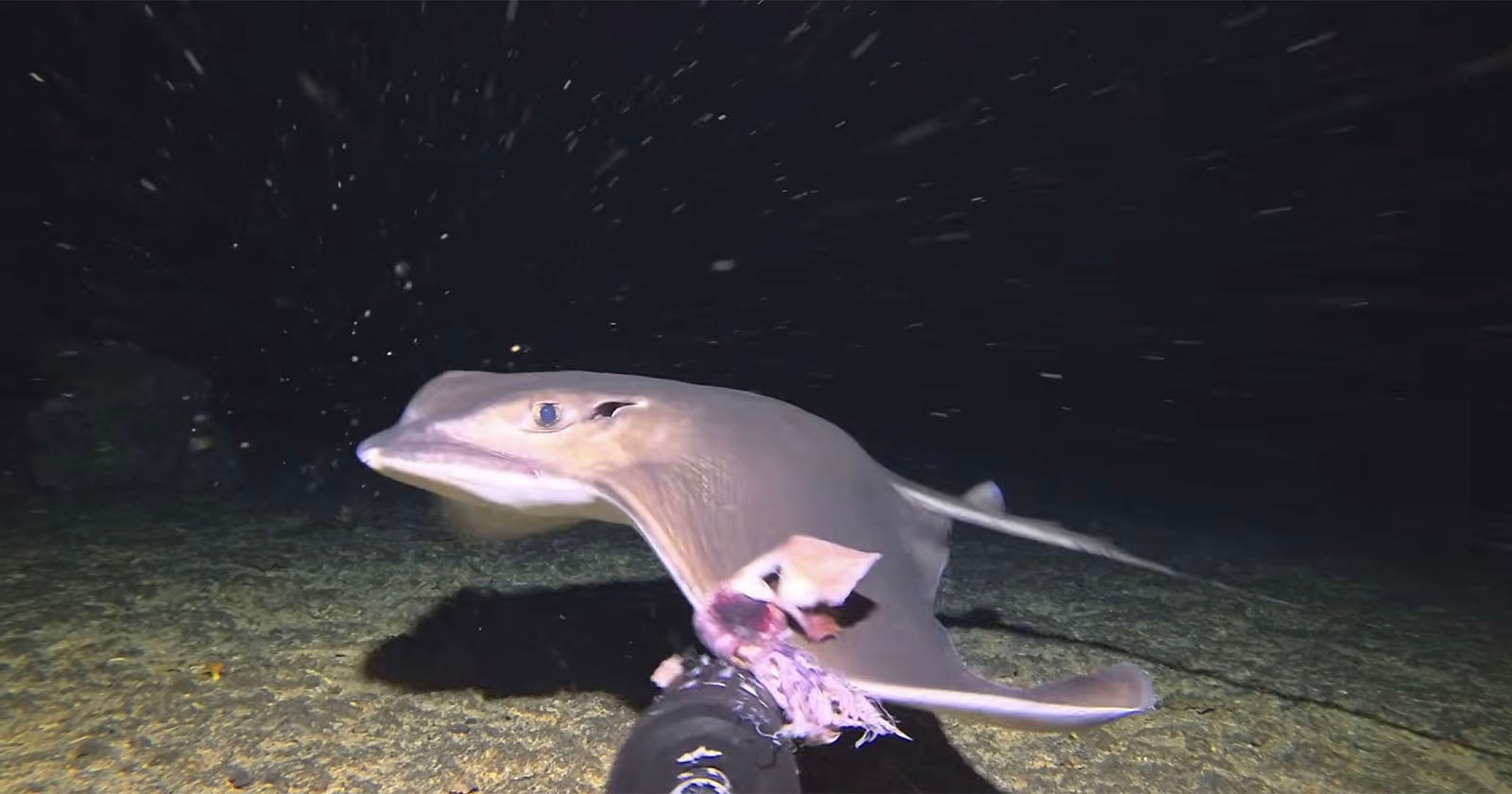
A YouTuber is continuing his quest to discover previously unknown species that live on the ocean floor by dropping cameras deep in the Indo-Pacific region. He recently visited Indonesia’s Nusa Penida, also known as Black Magic Island.
Like many other divers, Barny Dillarstone has swum in the pristine reefs around the island before but very few have explored the deep waters of Nusa Penida — an island with a history of sorcery.
Dillarstone lowered an Insta360 Ace Pro 2 roughly 600 feet (170 meters) where strong currents prevent sessile life from getting a foothold. “Despite this,” Dillarstone adds. “Predators still thrive.”
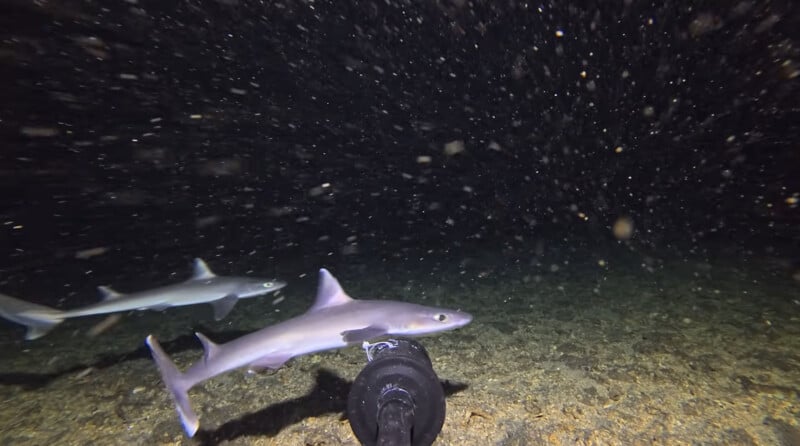 Spurdog sharks
The first animal he came across was a spurdog shark, or dogfish, which immediately went for the bait attached to the camera rig, which also includes a light. Remarkably, the dogfish, later identified as a western highfin spurdog, is believed to be the first-ever individual filmed alive in the wild. Later on, many other individuals arrived and were caught on camera.
Those first few camera traps also captured a houndshark, but it didn’t come very close to the camera. Dillarstone explains that creatures that live on the surface tend to avoid the light of his camera, while species that spend their entire lives in the darkness have no issue with it — and might even be attracted to it.
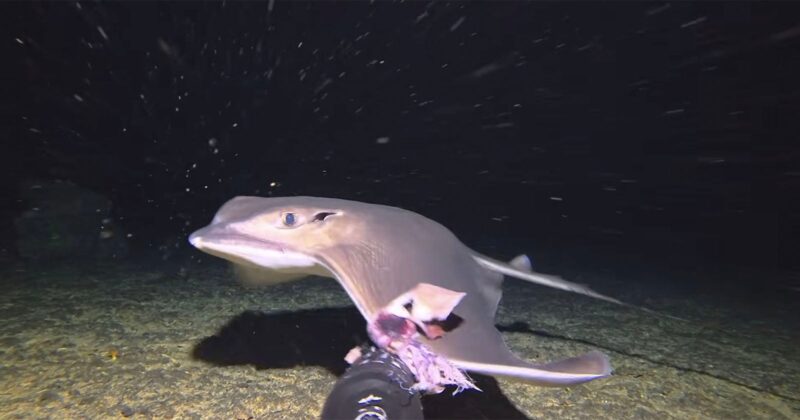 A purple eagle ray
On the final day of his expedition, Dillarstone once again lowered the 20kg rig (44 lbs) to a 600-foot depth and it attracted an Indonesian wobbegong, a type of carpet shark. But perhaps more intriguingly, a purple eagle ray appeared on camera.
“Like the western highfin spurdog sighting, this discovery is particularly exciting because it’s likely that this is the first footage of this species alive in the wild,” the YouTuber says.
“The effort was all worth it because we managed to record perhaps the first ever footage of at least two large, deep-water species swimming around in the wild.”
PetaPixel previously covered his expeditions into the Bali Sea as well as his slow-motion foootage of a Bobbit worm.
For more adventures, head to his YouTube channel.
Image credits: Barny Dillarstone