
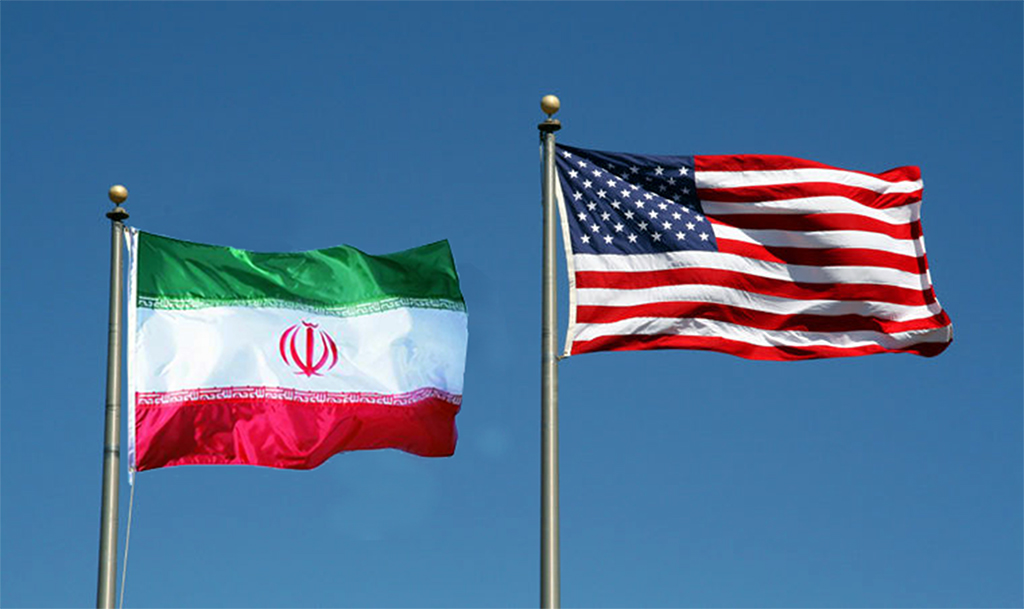
Growing tension between the United States and Iran
MEPC.ORG / COURTESY
Elaina Batista, Asst. Social Media Editor
Top military officials have informed President Trump that the military is ready to move forward with attacks on Iran as soon as Feb. 21, but officials say that the president has yet to make a final decision.
Regarding the ongoing Iran negotiations, the president stated on Feb. 19 that “we’re either going to get a deal or it’s going to be unfortunate for them,” and projected that a deal may be reached in a “pretty much maximum” of 10 to 15 days. Concerns over oil supply in the event of military action in Iran pushed oil prices up almost 2%.
One source stated “He is spending a lot of time thinking about this”. In Geneva on Feb. 17, Iranian and U.S. negotiators passed notes for three-and-a-half hours. Then on Feb. 18, White House press secretary Karoline Leavitt said Iran was expected to provide more details on its negotiating position “in the next couple of weeks.” Then went on to say, “Iran would be very wise to make a deal with President Trump and with his administration.”
On Feb. 28, U.S. Secretary of State Marco Rubio is scheduled to visit Israel to meet with Israeli Prime Minister Benjamin Netanyahu and provide him with an update on the Iran negotiations. Since the middle of January, the U.S. military has moved its aircraft and naval forces to locations close to Iran, and more carrier strike groups are scheduled to arrive in the area.
Iran’s diplomat, Abbas Araghchi, said both sides agreed on a set of “guiding principles,” However, U.S Vice President JD Vance said the Iranians had not acknowledged “red lines” set by U.S President Trump. Some of Trump’s allies, including Israel, think Iran should also agree to strict limits on its ballistic-missile arsenal and end its support for militias across the Arab world.
A station in central Jordan has emerged as a crucial hub for the U.S. military’s preparation for potential strikes on Iran, according to new satellite images and flight monitoring data. Representatives Gregory W. Meeks of New York, Adam Smith of Washington and Jim Himes of Connecticut said in a statement, “Absent a broader diplomatic framework, military strikes would be destabilizing, dangerous and counterproductive to efforts to achieve peace in the Middle East.” Additionally, Democrat Ro Khanna of California posted on X, “Trump officials say there’s a 90% chance of strikes on Iran. He can’t without Congress.”
The Middle East has also seen the landing of numerous other U.S. fighter jets and support aircrafts. A group of approximately 30 open-source analysts known as the Military Air Tracking Alliance, saw dozens of fighter jets, including F-35s, F-22s, F-15s and F-16s, departing bases in the U.S and Europe, making their way to the Middle East.
Sources say that this is the biggest development of military forces since the 2003 invasion of Iraq. Yet in a letter to the U.N. Security Council on Feb. 19, Amir Saeid Iravani, the Iranian ambassador to the U.N., said that while Iran does not seek “tension or war and will not initiate a war,” and that any U.S. aggression will be countered “decisively and proportionately.”
Like this:
Like Loading…