
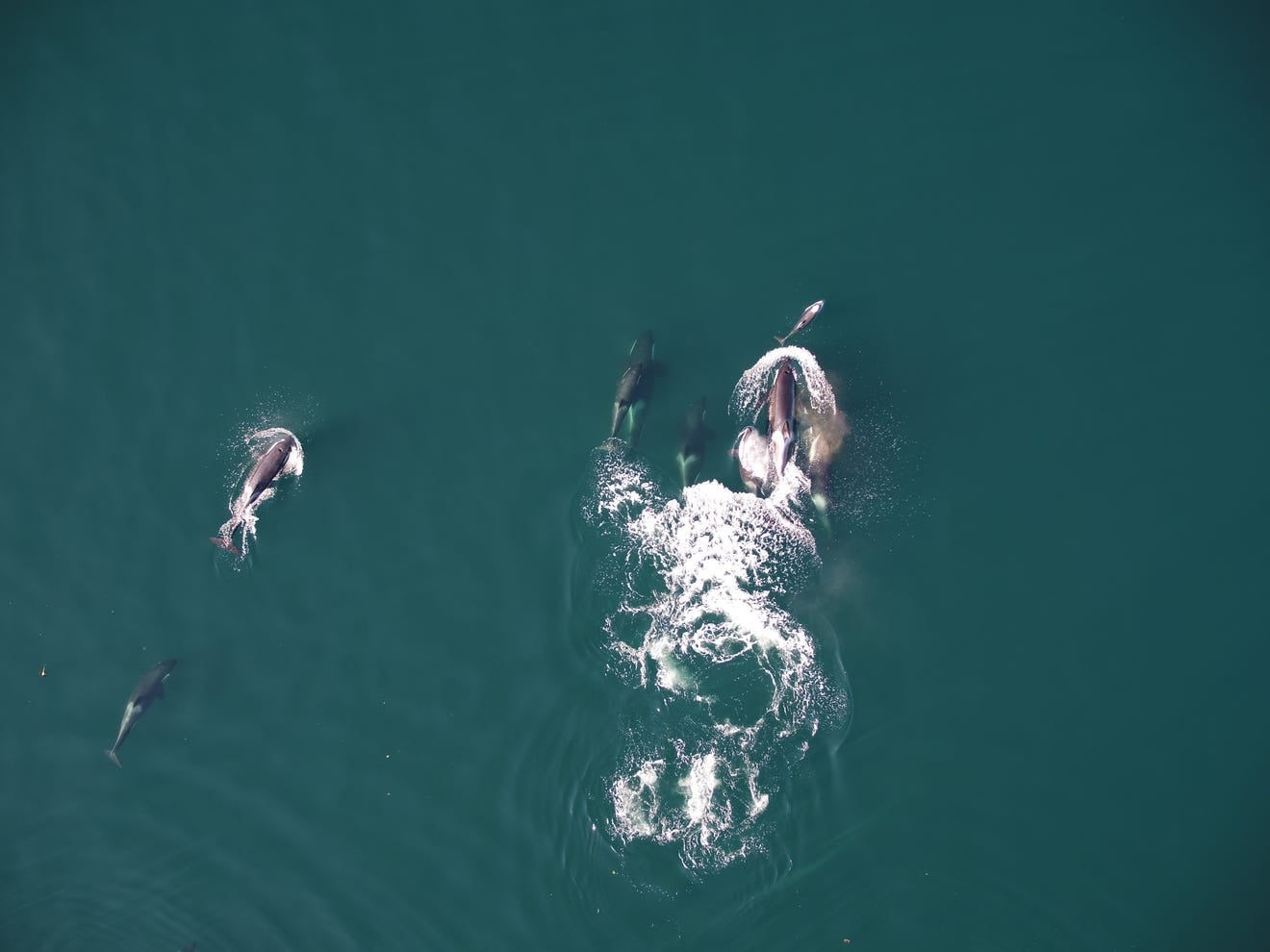
 A dolphin is seen with a pod of northern resident killer whales (Credit: Dalhousie University, University of British Columbia)
Two marine predators once thought to simply share the same waters may actually be hunting partners. In a rare example of teamwork between species, northern resident killer whales (orcas) and Pacific white-sided dolphins have been seen hunting together off the coast of British Columbia, Canada.
This unlikely alliance centers on the pursuit of Chinook salmon. The dolphins use speed and echolocation — a series of clicking sounds that bounce off objects — to locate schools of salmon. The orcas then take over, relying on their strength and skill to capture the fish. Once an orca catches a salmon, it breaks the fish into pieces. This allows the dolphins to feed on leftover fragments.
“As they were chomping down, there’d be bits of fish that would escape the [killer] whale’s mouth — like a cloud of blood and scales,” said Sarah Fortune, lead author of the study.
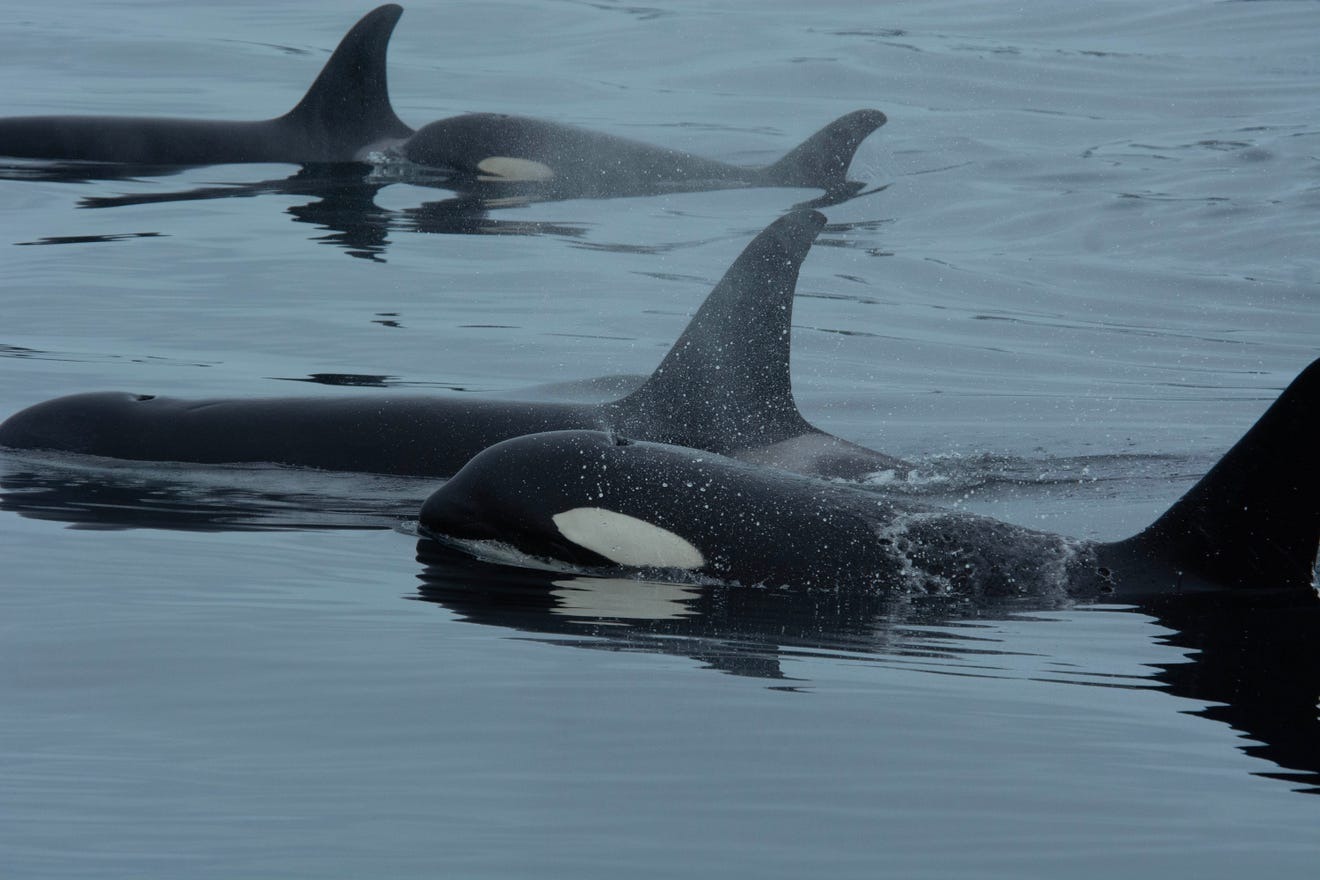 Pod of northern resident killer whales traveling together (Credit: Dalhousie University, University of British Columbia)
The study was published in the journal Scientific Reports in December 2025. It was led by researchers from the University of British Columbia. The team collected their data by attaching small suction‑cup tags to the whales. These tags recorded video, sounds, and movements, giving the scientists a clear view of how the orcas and dolphins worked together underwater. The researchers also used drones to observe the animals from above. Altogether, the scientists documented 25 distinct occasions where orcas and dolphins hunted together. This shows the animals were probably working together, not just meeting by chance.
“These whales are top salmon hunting specialists. They’re highly specialized and highly skilled predators. To see them following dolphins as though they were leaders was really counterintuitive — and really exciting,” said Fortune.
The researchers believe this partnership benefits both species. The salmon are too large for the dolphins to catch alone. The orcas, meanwhile, save energy by letting the dolphins locate the salmon.
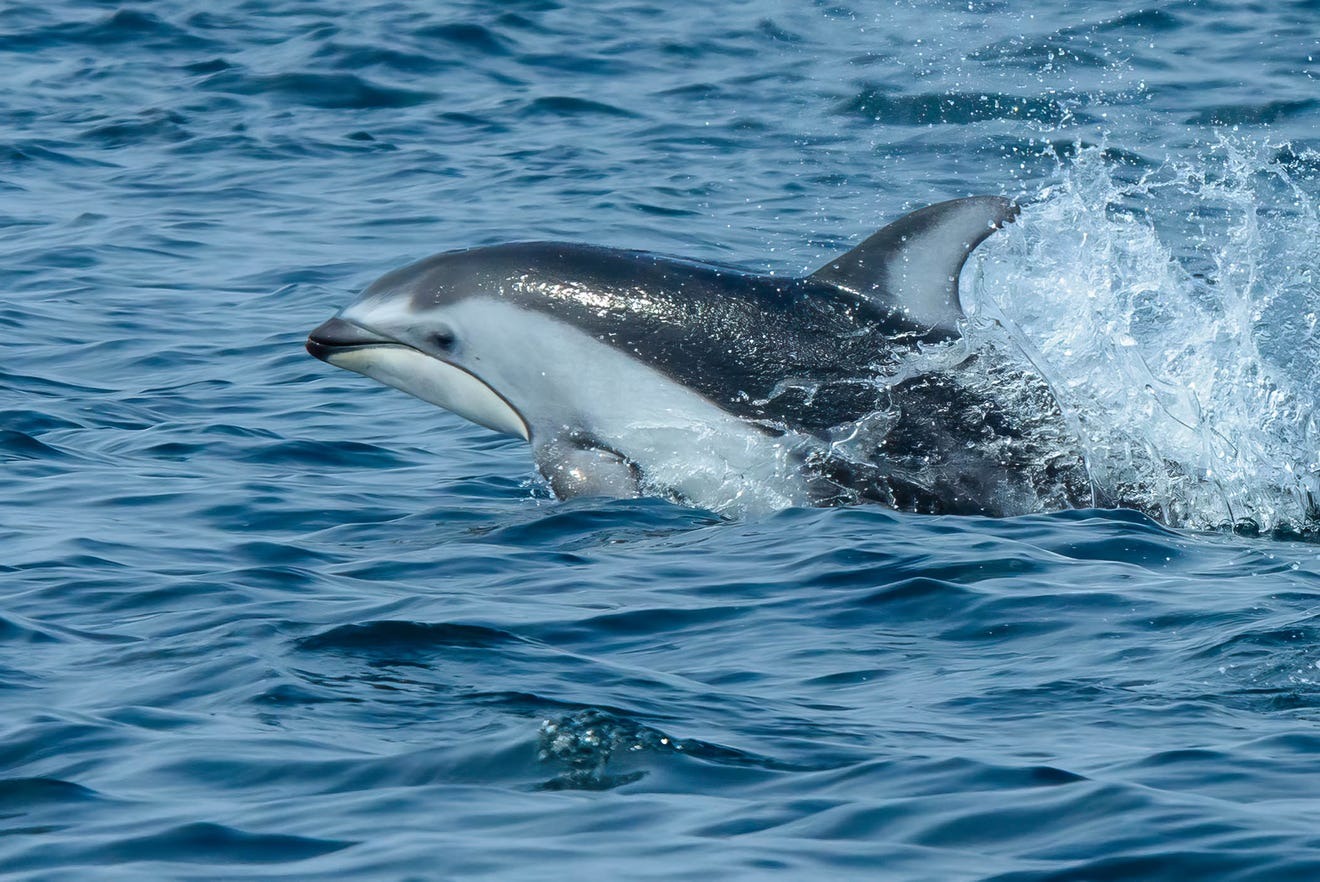 Pacific white-sided dolphin (Credit: Dalhousie University, University of British Columbia)
Beyond feeding, the dolphins may also gain protection from the whales. The orcas in this study primarily ate fish, but other groups are known to hunt mammals, including dolphins. Staying close to these orcas may help reduce the dolphins’ risk of becoming prey.
The scientists say this unusual partnership shows how animals can find creative ways to survive and thrive together in the ocean. They now plan to investigate how often these cooperative hunts occur and what long-term impact they may have on both species.
Resources: USAtoday.com, theguardian.com, Earth.com