
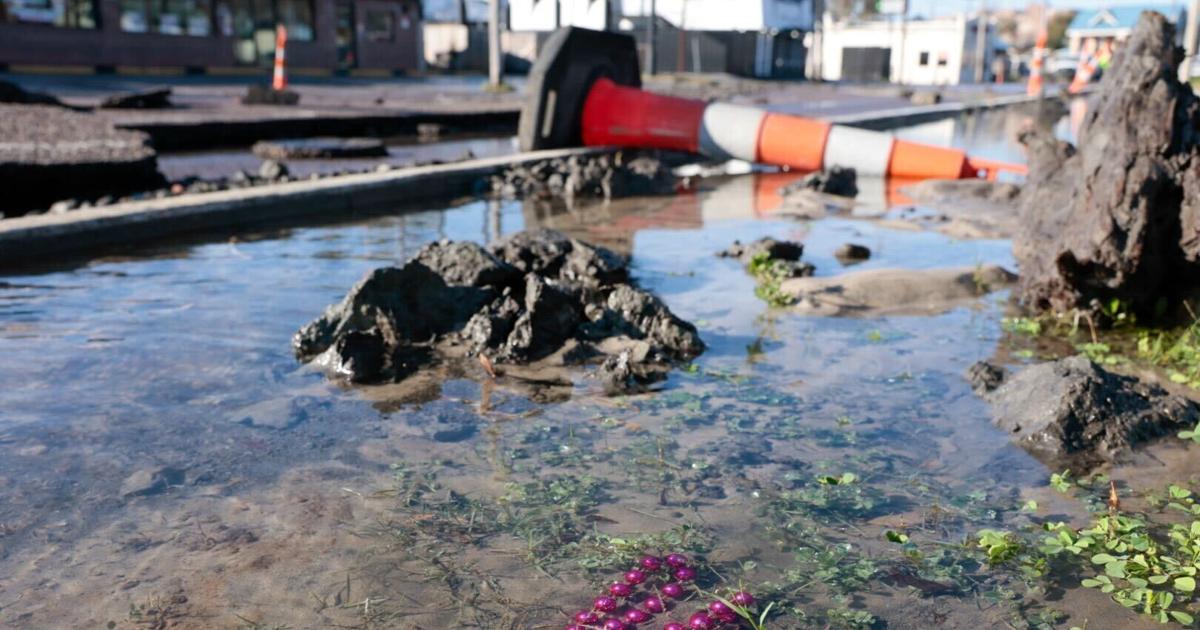
The Sewerage and Water Board on Tuesday lifted a boil-water advisory for a large portion of the East Bank, following a massive water main break on South Claiborne Avenue the previous morning that stifled water service and forced more than a dozen schools and several businesses to close.
The advisory — which spanned across the French Quarter, the Central Business District and most Uptown neighborhoods — lasted a little over 24 hours. The initial boil water advisory included parts of Mid-City and Tulane-Gravier, but S&WB officials later said they made a mistake and removed those areas.
Although sample testing showed tap water is free of bacteria, parents at some of the affected schools were still waiting Tuesday afternoon to learn if students would return to class on Wednesday. All affected schools finally announced they would reopen on Wednesday, with several announcements coming just before 5 p.m.
Officials said water pressure would remain lower than normal through the end of the week while repairs are made, and some school administrators were concerned about unworking toilets and fire suppression risks.
“Reliable water pressure is essential for safe school operations, including the use of drinking fountains, restrooms, handwashing stations, and other essential systems,” the Orleans Parish School Board said in a press release.
The 48-inch underground water main near the busy intersection of South Claiborne Avenue and Toledano Street burst early Monday, causing water to gush up through the roadway and flood several blocks. The cause of the break is under investigation, although officials noted the 88-year-old water main is nearing its end of life – as is much of the 1,600-mile New Orleans water transmission network.
“The bottom line is we have an old system, and until we have a repair program that routinely replaces and repairs the system, we’re going to have situations like this,” S&WB Executive Director Randy Hayman said on Tuesday.
A state road construction project was also underway at the break site, with work focused on milling the asphalt surface, pavement repairs and new asphalt overlay, according to Daniel Gitlin, a state Department of Transportation and Development spokesperson. The $3.2 million project started this year and is expected to wrap up this summer.
The spokesperson, Daniel Gitlin, said there is no indication the construction work had anything to do with the break.
Neighbors reported seeing frequent water leaks on South Claiborne Avenue over the last several weeks, starting around the time of the hard freeze in January. Hayman said the S&WB had been scheduled to inspect the leak on Monday before the water main broke.
The break on South Claiborne was the second major water main rupture in less than a month. A break on Panola Street in January also caused a boil water advisory and street flooding.
S&WB officials have long warned that the city’s water mains need replacing but that it lacks the funding to do so. Hayman’s predecessor, Ghassan Korban, said in November 2024 that half the system is more than 80 years old and nearing the end of its life span.
Hayman said the agency is looking for ways to detect early leaks, analyze pipe conditions and come up with additional ways to stabilize old pipes – as opposed to seeking funding for a system-wide replacement.
“These are all things that we’re able to do in 2026,” Hayman said. “We will challenge the entrepreneurs in the business sector to bring us new ideas that we can use.”
Securing the system to prevent regular water main breaks would cost around $200 million, he said. The cost of replacing all the aging water mains is unclear.