
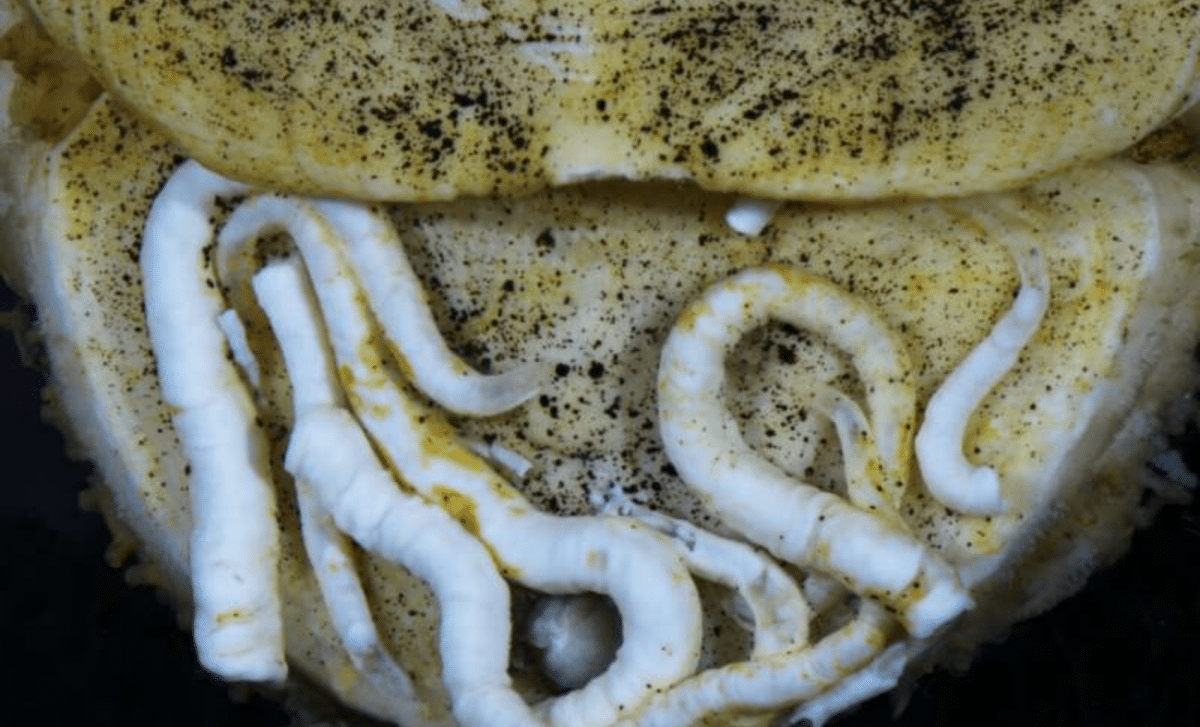
Scientists have uncovered a new species living nearly 18,000 feet below the ocean’s surface in the Izu-Ogasawara Trench. This creature has developed a unique adaptation: a tongue coated in iron to help it scrape food in a harsh, food-scarce environment. Found on a piece of sunken wood, this deep-sea mollusk highlights the extraordinary evolutionary strategies that enable survival in one of the planet’s most extreme and unexplored ecosystems.
The Discovery: A Mollusk with a Tongue of Iron
The discovery of this extraordinary mollusk species occurred at a depth of 5,500 meters in the Izu-Ogasawara Trench, a submerged region off the coast of Japan. Researchers were examining a piece of sunken wood when they found the creature, which was clinging to the log on the ocean floor. What sets this species apart is its unique tongue, which is coated in iron, allowing it to scrape organic films and algae from surfaces without the constant wear and tear that other mollusks typically face. This specialized adaptation is believed to help the mollusk survive in the food-scarce environment of the deep ocean.
Dr. Julia Sigwart, a leading researcher on the study, explained that “it can take 10, if not 20 years, for a new species to be studied, scientifically described, named, and published.” This highlights the painstaking effort involved in identifying and classifying deep-sea species, which can take years of research and observation. The Ferreiraella populi, as the new species has been named, was identified not only by its iron-coated tongue but also by its armored body, which is characteristic of chitons, mollusks known for their tough, overlapping plates.
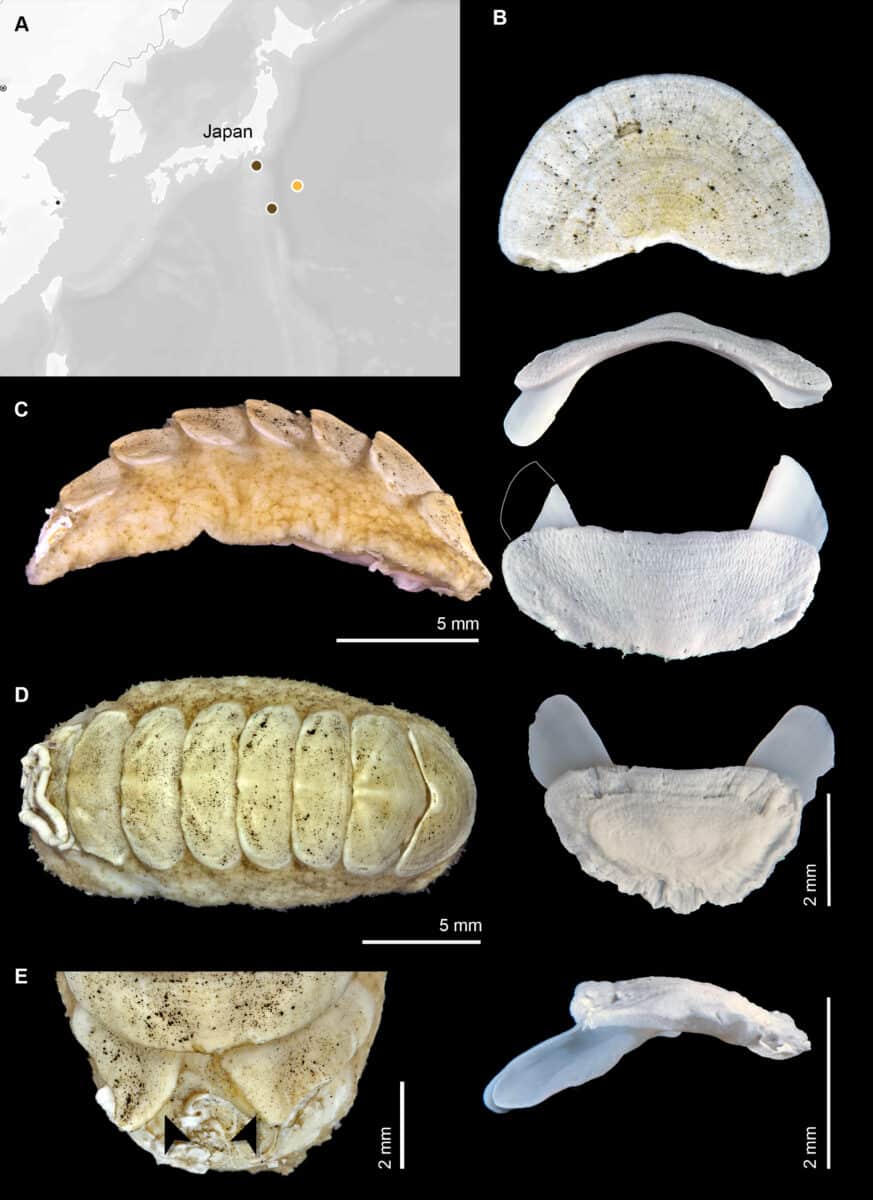 Ferreiraella populi sp. nov. A Schematic, non-scaled outline map provided for geographic orientation to the type localities of Japanese species in the genus, including the new species (coloured dot). B Valves from holotype (SMF 383139) showing (from top to bottom) valve I, valve III (anterior view), valve III (dorsal views), valve VIII and valve VIII in lateral view; valve VIII was cleaned to remove epibionts prior to photographing. C Holotype SMF 383139, lateral view prior to dissection. D Paratype SMF 383138, dorsal view. E Paratype SMF 383142, dorsal view of posterior part showing split-valve teratology on valve VII.
The Role of Iron in Survival
One of the most striking features of this mollusk is its ability to grow iron-coated teeth. These teeth, which line a ribbon-like structure known as a radula, help the mollusk scrape food from the surfaces of the submerged wood it feeds on. The mineralized iron in its teeth allows them to stay sharp even after repeated use, enabling the mollusk to efficiently harvest food in a harsh and abrasive environment. This adaptation may have evolved to help the mollusk thrive in a deep-sea habitat that lacks the abundant food supplies found in shallow waters.
The ability to harness minerals like iron is a rare trait among deep-sea creatures. Most species living in these extreme environments have evolved unique strategies to conserve energy and maintain their physical functions despite the constant pressure and limited food supply. For the Ferreiraella populi, the use of iron in its teeth may be a key factor in its survival, allowing it to remain effective in scraping food even when resources are scarce.
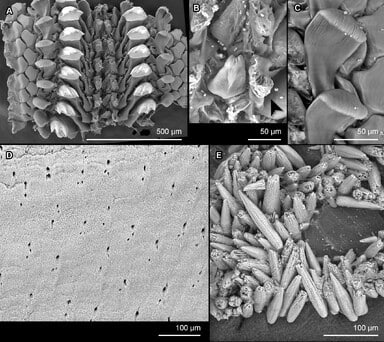 Ferreiraella populi sp. nov. holotype (SMF 383139), SEM micrographs: A Radula. B Radula first (inner) lateral tooth indicated with arrowhead. C Radula major uncinus (sweeper) tooth. D Aesthete pores, shown from the anterior central margin of valve III. E Girdle scales (perinotum).
A New Understanding of Deep-Sea Habitats
The habitat where the Ferreiraella populi was discovered, on a piece of sunken wood, also provides a fascinating look at the intricate ecosystems that exist in the deep ocean. When wood falls to the ocean floor, it becomes a valuable resource for a variety of marine life. Bacteria and fungi break down the wood, creating an organic film that smaller creatures, like the mollusk, can feed on. In this dark and food-scarce environment, the ability to feed on decomposing wood is a crucial survival strategy.
Interestingly, the deep ocean is not a static environment. The sunken wood on which the mollusk was found provides a temporary habitat for many species, and these habitats are often short-lived. As the wood decays, it disappears, and the organisms relying on it must either adapt or move on. This constant turnover of habitats in the deep ocean presents a unique challenge for species that live there, making it all the more impressive that the Ferreiraella populi has developed such specialized features to thrive in this ever-changing environment.
Implications for Deep-Sea Conservation
The discovery of the Ferreiraella populi raises important questions about the future of deep-sea ecosystems, particularly in light of the growing interest in deep-sea mining. As industries begin to explore the ocean floor for valuable resources, many habitats, including those that support species like the Ferreiraella populi, are at risk. The removal of seafloor layers and the disturbance caused by mining activities could lead to the destruction of these fragile ecosystems before scientists have had a chance to fully study them.
This study, which has been documented in the Biodiversity Data Journal, serves as a reminder of the delicate balance of life in the deep ocean. As research into these ecosystems continues, it is crucial to consider the potential consequences of industrial activities and the importance of preserving these unique and unexplored habitats for future generations.