
All eyes may be on robots and artificial intelligence, but seasoned investors are looking somewhere far less futuristic for their next gains.
As excitement builds around AI breakthroughs and automation, one Wall Street veteran is reminding investors: sometimes the safest bet is the business that already works.
Josh Brown, chief executive of Ritholtz Wealth Management, says that after several years of AI stocks dominating headlines, US investors are rotating into commodity producers, fast-food chains and industrial manufacturers – companies with tangible products and durable demand.
Among the recent winners are McDonald’s, whose shares have climbed roughly 12 percent over the past year, tractor maker John Deere, up about 18 percent, and Exxon Mobil, which has gained approximately 15 percent.
Other resilient companies drawing investor interest include Coca-Cola, up 10 percent, Procter & Gamble, up 9 percent, and defense giant Lockheed Martin, which has advanced about 14 percent.
For retirement savers with money in stocks, experts say companies companies could offer stability.
Explaining the appeal, Brown told the WSJ: ‘These are the companies that you cannot type something in a prompt and disrupt.’
His argument is straightforward. While AI can streamline services and generate content, it cannot replace a burger, pump oil from the ground or manufacture heavy equipment.

Josh Brown, chief executive of Ritholtz Wealth Management, says that after several years of AI stocks dominating headlines, US investors are rotating into commodity producers, fast-food chains and industrial manufacturers
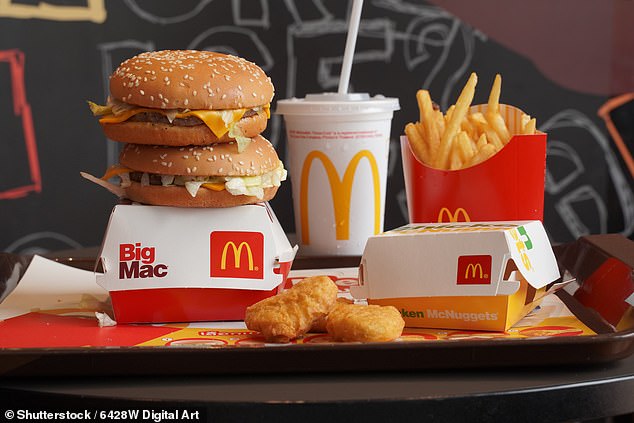
Among the recent winners are McDonald’s, whose shares have climbed roughly 12 percent over the past year
Other resilient names drawing investor interest include Coca-Cola (up around 10 percent)
These businesses produce physical goods and essential services that remain in demand regardless of technological hype.
Brown says the shift away from pure technology plays toward results-driven, cash-generating companies is even visible within industries.
Take travel. In February, shares of Delta Air Lines rose 5.4 percent, while online travel platform Expedia Group saw its stock slide 23 percent over the same period.
AI may be able to find the cheapest hotel room or flight in seconds, but it cannot replace the aircraft, crews and infrastructure required to move passengers across the country.
Confirming the trend, Jed Ellerbroek, portfolio manager at Argent Capital Management, said investors have been seeking safer bets amid a turbulent market.
‘What I see is investors hiding out,’ he said.
‘I do think we’re in a new chapter, and I think that chapter is going to be defined by companies proving it. Hype isn’t cutting it anymore.’
The rotation comes as US stocks struggle relative to international markets. The S&P 500, which tracks America’s largest companies, is down about 1 percent so far in 2026.
Join the debate
Is chasing tech hype risking your retirement savings, or should investors stick with tried-and-true companies?
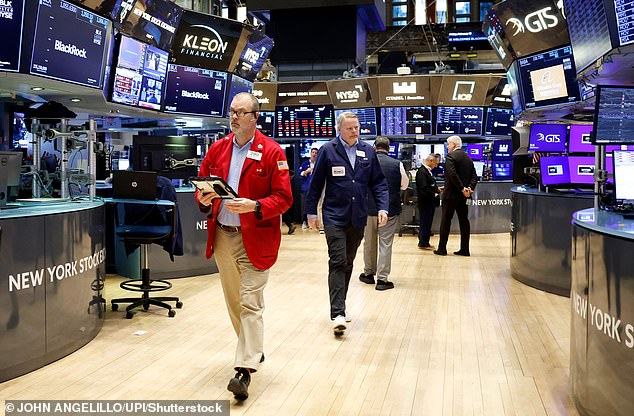
The rotation comes as US stocks struggle relative to international markets

Explaining the appeal of tried and tested companies, Brown told CNBC: ‘These are the companies that you cannot type something in a prompt and disrupt’
By contrast, the MSCI ACWX index – which measures stock returns outside the United States – is up roughly 8 percent.
It is unusual for US stocks to lag the rest of the world, though it also occurred during the years following the dot-com crash in the early 2000s and briefly in 2022.
According to data from Goldman Sachs, the current performance gap is the widest since 1995, when Europe and Japan were rebounding from deep recessions and the US dollar, as today, was weak.
The divergence began last year.
Over the past 12 months, international markets have climbed around 30 percent, compared with gains of about 10 percent for US stocks.
Several forces are weighing on American equities. Investors have grown uneasy about geopolitical risks, including renewed tariff threats and foreign policy tensions.
Tariffs introduced – and repeatedly expanded – by Donald Trump have sent US stocks on a rollercoaster ride over the past year, while controversial comments about claiming Greenland as US territory added to global uncertainty.
At the same time, the US dollar has fallen sharply, denting returns for international investors when converting profits back into their home currencies.
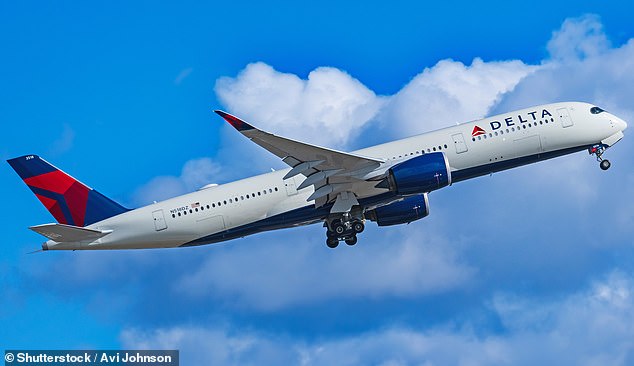
AI may be able to find the cheapest hotel room or flight in seconds, but it cannot replace the aircraft, crews and infrastructure required to move passengers across the country

Among the recent winners is tractor company Deere & Company, up about 18 percent over the past year
For years, US stocks were seen as the superior bet, with American companies delivering stronger growth and higher returns than overseas peers. That advantage has faded.
‘For global investors, the re-pricing of [the US dollar] and erosion of the spread between U.S. companies and others was brutal in 2025,’ Viktor Shvets, head of global desk strategy at Macquarie Group, wrote in a note to clients.
Valuations are another concern. One common measure compares share prices to company profits – the price-to-earnings ratio – showing how much investors are willing to pay for every dollar earned.
After the 2008 financial crisis, US valuations were broadly in line with global markets.
But over the past decade, the explosive growth of Big Tech pushed American price-to-earnings ratios dramatically higher. Today, US valuations sit roughly 40 percent above those of global peers.
For investors rotating out of hype-driven sectors, the message from Wall Street’s veterans is clear: in uncertain times, boring can be a better bet – and sometimes, resilience is the real innovation.